
I will never forget the cold sweat I broke into when I saw that spinning “searching for drivers” wheel while standing next to a Fortune 500 executive. I thought I was being tech-savvy and efficient. I was not. I was being reckless. That afternoon taught me that relying on a consumer-grade app for high-stakes business is like trying to secure a vault with a zip tie. It looks like it is working until someone actually pulls on it. The reality of corporate travel is that “good enough” usually ends in a disaster that your reputation cannot afford.
Don’t Gamble with Your Career on a Consumer App
When I first started managing executive travel, I made the classic mistake of thinking that a “Gold” or “Platinum” status on a ride-hailing app meant the driver was a professional. It does not. It just means they drive a lot. I once booked a car for a multi-city roadshow, only to have the driver cancel because he simply did not feel like going that far. If you have ever had to explain a missed keynote to your board, you know that the logic behind choosing a professional chauffeur over on-demand apps is not just about luxury—it is about survival. Professionalism in transportation is not a setting you can toggle in an app. It is a dedicated service model built on why safety and timeliness matter in a corporate context. When you use a personal app, you are not really the client; you are just another data point in an algorithm that prioritizes the driver’s convenience over your physical security.
Is the “Save Ten Dollars” Mentality Killing Your Safety Protocol?
You might be wondering if it is really that much of a risk. The answer is a resounding yes. According to a report by the Global Business Travel Association (GBTA), “duty of care” is the primary responsibility of any corporate travel planner, yet many still rely on platforms that lack rigorous, face-to-face vetting. Personal apps often skip the deep-dive checks. For instance, do you know how to verify a private vehicle’s commercial insurance in seconds? Most people do not, and most app-based drivers are only covered by personal policies that often vanish the moment a business transaction begins. We have all been there—trying to save a few bucks on the company card. But have you ever stopped to consider why shared rides are a security risk for executives or why a random driver should not have access to your home or office address through a non-encrypted personal profile? Today, we are going to dismantle the myth of app-based safety and show you how to build a protocol that actually protects your team. Have you ever had a ride-hailing app fail you at the exact moment you needed it most? I want to hear your close calls.
Mastering the Precise Window of Professional Arrival
To build a truly reliable travel protocol, you have to stop thinking about your pickup time as a ‘suggestion.’ In the world of high-stakes logistics, if your car arrives exactly at the scheduled time, you are already behind. I learned this the hard way during a freezing winter morning in Chicago. I had a 4:30 AM flight, and the app-based driver I’d gambled on kept ‘recalculating’ until he finally vanished from the map. It was a wake-up call that the only way to ensure your 4-am-ride actually shows up is through a dedicated reservation system, not a gig-economy lottery. Professional chauffeurs operate on a different clock entirely. They treat the arrival as a staged event.
Why Most On-Time Drop-Offs Start with a 10-Minute Early Arrival
The secret to a stress-free departure is the pre-arrival buffer. A professional doesn’t aim for the minute you walk out; they aim for the minute before you even think about leaving. This is why most on-time drop-offs start with a 10-minute early arrival. This isn’t just about being polite; it’s about absorbing the variables of life—elevator delays, a last-minute phone call, or a misplaced briefcase. When the car is already idling at the curb ten minutes early, the psychological weight of the trip vanishes. You aren’t rushing toward a vehicle; the vehicle is waiting to serve your schedule.
Check These Identity Markers Before You Ever Open the Door
Safety isn’t a feeling; it’s a checklist. One of the most dangerous things an executive can do is step into a car simply because it matches the color on a phone screen. I now insist that every member of my team knows how to verify your drivers-identity without being rude. It starts with the eyes. A professional chauffeur will make eye contact, greet you by name, and display a level of vehicle maintenance that a casual driver simply cannot sustain. You should be looking for official credentials immediately. Learning the 7 tactics to verify your drivers-commercial-license-in-seconds is a non-negotiable skill. If they can’t produce a commercial permit or if the vehicle lacks the proper livery tags, the ride is over before it begins. Your safety is worth the thirty seconds of awkwardness it takes to be certain.
Trust Human Intel Over a Glitchy GPS Algorithm
We’ve all seen it: a GPS suggests a ‘shortcut’ that leads directly into a construction zone or a dead end. Personal app drivers are often tethered to these algorithms because they lack local experience. A professional, however, understands the difference-between-gps-routing-and-professional-road-knowledge. They know that on a Friday afternoon, the side streets near the stadium are a trap, regardless of what the blue line on the screen says. This ‘tactical routing’ is the ‘meat’ of a professional service. It’s the difference between making your keynote and apologizing from the back of a stationary sedan. When you book a pro, you are paying for their brain, not just their brawn.The biggest mistake I see seasoned travelers make is assuming that “on-time” is a universal standard. It is not. In the high-stakes world of executive transport, if you are not fifteen minutes early, you are already behind. Many planners believe that point-to-point bookings are the most efficient way to manage a busy day to save on costs. However, in my experience, why point-to-point booking fails for executive roadshows becomes painfully clear the moment a meeting runs five minutes over. You lose your car, your driver is reassigned by an algorithm, and you are left stranded. Professionalism requires a dedicated asset, not a temporary transaction.
The AI Trap That Actually Causes Delays
We have been conditioned to believe that the “Real-Time ETA” on our screens is gospel. It is a dangerous trap. According to research from the MIT Center for Transportation & Logistics, algorithmic predictions frequently fail to account for “non-recurrent congestion”—the kind caused by a double-parked delivery truck or a sudden local detour that a human would spot instantly. This is why manual dispatching still beats AI for real-time accuracy. A human dispatcher understands the local nuances that an algorithm misses entirely, providing a layer of security that software cannot replicate.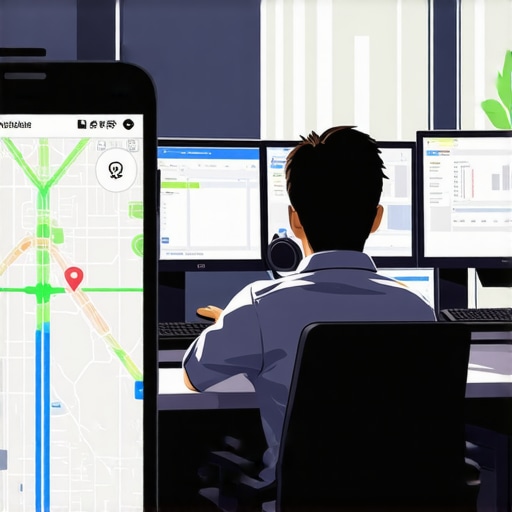
Why Do Hourly Rates Actually Save You Money on a Busy Day?
It seems counterintuitive to pay for a car to sit and wait, but the reality of why hourly rates save more than money for business travelers comes down to the “re-booking tax.” Every time you have to find a new ride, you are wasting twenty minutes of billable productivity. More importantly, how hourly rates eliminate the stress of traffic jams is by removing the driver’s incentive to rush. When a driver is on an hourly reservation, their only priority is your physical security, not racing to catch the next algorithm-driven ping. The final nuance most people miss is driver condition. An exhausted driver is as dangerous as an impaired one. I have learned to use the stealth way to confirm your driver is not fatigued simply by asking about the start of their shift. If they have been behind the wheel for twelve hours straight because a consumer app kept feeding them rides, your safety is compromised. Have you ever fallen into this trap? Let me know in the comments.
Stop Micromanaging and Start Automating Your Schedule
I used to spend hours every Sunday night cross-referencing flight numbers and pickup times for my team. It was a recipe for burnout and human error. Now, I rely on a specialized stack of digital tools that bridge the gap between my executive assistant’s planning and the chauffeur’s actual dispatch office. The first thing you need to master to scale your travel needs is how to sync your calendar directly with your chauffeur. When the flight is delayed in London, the automated system updates the driver in New York before the executive even steps off the plane. This isn’t just convenience; it’s a failure-proof safety net that ensures your transport is always ready, regardless of airline hiccups or last-minute meeting shifts. By treating your schedule as a dynamic data feed rather than a static note, you eliminate the single biggest point of failure in business travel: the communication gap.
The Digital Toolkit That Actually Saves Your Sanity
Beyond the calendar, you need to understand the limitations of the tech you use to manage on-time performance. I always run the accuracy test for modern live tracking links before any high-profile day. If you do not know why your real-time tracking link might have a 30-second lag, you might panic when the map shows the car a block away when it’s actually already pulling into the driveway. For professional security, I follow the American Society for Industrial Security (ASIS) guidelines, which emphasize that a digital manifest must be verified before the passenger ever approaches the vehicle. You can do this easily by learning how to confirm your secure booking link is using https to prevent man-in-the-middle attacks on your sensitive location data. When you are dealing with high-net-worth individuals, your digital footprint is just as important as the physical car.
How do I keep this high-level travel protocol running month after month?
It comes down to what I call a ‘Monthly Logistics Audit.’ Once a month, I review the route history of my most frequent trips to see how to audit your drivers-route-history for accuracy and safety. We look for patterns—are we hitting more construction lately? Is the buffer you need for friday afternoon transit schedules still sufficient, or has local traffic worsened significantly due to new development? Long-term results require this kind of proactive maintenance. Maintenance isn’t just about the car; it’s about the data hygiene of your entire operation. If your provider isn’t explaining why modern reservation systems use encryption for your credit card and personal data, they are not a long-term partner; they are a liability waiting to happen. You need to ensure that reservation security measures are updated as often as your phone’s operating system.
Where the Future of Executive Transport is Headed
We are moving toward a world of ‘Zero-Trust’ logistics. In the next few years, I predict we will see a massive shift from simple app confirmations to encrypted biometric handshakes between the passenger’s device and the vehicle’s onboard computer. This will eliminate the risk of ‘phantom’ drivers or fraudulent pickups entirely. Until that technology is standardized, my best advice is to stop treating your transportation like an afterthought or a commodity. I want you to try one thing today: take five minutes to how to vet a chauffeur-service before your first-ride and establish a direct communication channel with their senior dispatch. It is the single most effective way to ensure your team never gets left in the cold. True professionalism is a commitment to the process, not just the pickup.
Hard-Won Lessons from the Front Lines of Executive Logistics
One thing most travelers miss is that a driver’s rating on a consumer app tells you nothing about their ability to handle a crisis. I’ve seen ‘five-star’ drivers panic in simple gridlock because they don’t know why on-time performance depends on local knowledge over GPS. Another insight: if you aren’t looking for the commercial livery tags, you are effectively uninsured the moment you close that door. I have learned the hard way that true reservation security measures start with you verifying the driver’s ID before you ever touch the door handle. Finally, remember that consistency is better than a one-time ‘luck out’ with a good app ride; building a relationship with a service that understands your guide to on-time reservations at any hour is the only way to scale your business travel without scaling your stress levels.
My Go-To Resources for Fail-Proof Travel Planning
I personally rely on the safety benchmarks set by organizations like the American Society for Industrial Security (ASIS) to vet my providers. For those who want to dig deeper into what makes a driver truly elite, I highly recommend studying the punctuality habits of the worlds best professional drivers to see exactly how the pros differ from gig workers. I also suggest keeping a close eye on your data footprint; always ensure you know how to confirm your secure booking link is using https before entering sensitive meeting locations. For long-term planning, I keep a curated list of contacts who specialize in why safety and timeliness matter in a corporate context, rather than relying on the random rotation of a global algorithm.
Take Back Control of Your Schedule and Peace of Mind
Moving toward a professional model isn’t just about luxury—it’s about removing the ‘what ifs’ from your high-stakes workday. When you prioritize a dedicated on-time arrival strategy, you’re investing in your own productivity and professional reputation. Don’t wait for a missed flight or a security scare to change your travel habits. Start today by learning how to vet a chauffeur-service before your first-ride and set a new standard for your team. You deserve the confidence that comes with knowing your transportation is handled by experts, not amateurs. Have you ever had a ride-hailing app fail you at the exact moment you needed it most? Let me know how you handled the situation in the comments below.