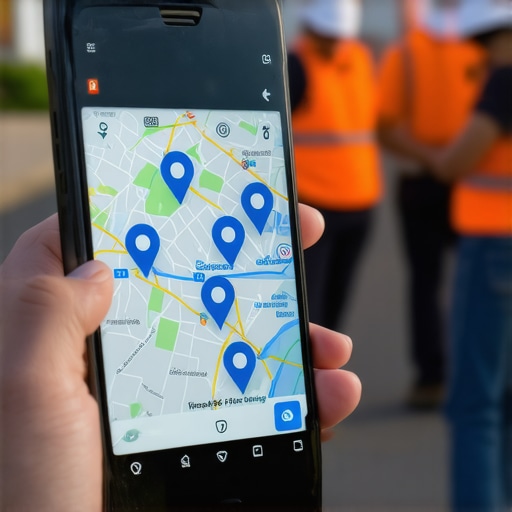
I will never forget that rainy Tuesday evening when I stood outside a quiet train station, my phone battery hovering at a terrifying 3%, while my ride was supposedly ‘five minutes away.’ The minutes ticked by, the station lights flickered, and I realized with a jolt of panic that if my phone died right then, nobody on my team would know where I was or why I hadn’t shown up. That moment of pure, cold isolation changed how I look at travel logistics forever. I used to think that ‘I’m on my way’ was a sufficient update, but I was wrong—dangerously wrong. Today, I want to show you how to move past that vague guesswork and embrace a system where your safety and punctuality are never left to chance. [image1]
My biggest mistake was assuming my team already knew where I was
Early in my career, I made the amateur move of thinking location sharing was intrusive or, frankly, a bit ‘over the top.’ I once even made the mistake of posting a live trip update on social media instead of sending it to a trusted contact, which is basically an open invitation for the wrong people to track your movements. I learned the hard way that sharing your tracking link with a trusted friend is the only way to ensure someone has your back if things go south. We are going to solve the problem of ‘arrival anxiety’ once and for all by setting up a protocol that keeps your team alerted without sacrificing your personal data.
Is sharing your live location actually worth the privacy trade-off?
It is natural to feel a bit skeptical about being ‘watched’ 24/7, but we aren’t talking about surveillance; we are talking about a safety net. According to research from the Pew Research Center, while 34% of people use location sharing for convenience, the most successful users are those who use it specifically to bridge the gap during high-stakes transitions like late-night pickups or solo business travel. When you understand how to ensure your real-time tracking link is only seen by friends, that fear of being monitored melts away, replaced by the peace of mind that comes from knowing you aren’t alone. Have you ever felt that gut-punch feeling when your phone dies mid-trip and you realize no one knows your exact coordinates?
Why your team needs to know your exact coordinates
Precision is everything when you are trying to maintain a professional reputation. If you are using real-time vehicle tracking, your team isn’t just seeing a dot on a map; they are seeing your commitment to the schedule. It eliminates the back-and-forth texts of ‘where are you?’ and allows everyone to focus on the task at hand. This level of transparency is exactly why safety and timeliness matter so much in the world of professional transit. By the time we are done today, you will have a bulletproof method for alerting your team the moment you step into a car, ensuring your arrival is as safe as it is punctual.First, we need to talk about the phantom buffer. Most people book for the exact time they need to leave, but why most on-time drop-offs start with a 10-minute early arrival is a secret for a reason. It accounts for that inevitable where is the elevator lag. I once had a flight out of Heathrow where my driver showed up exactly 12 minutes early—it felt like a luxury, but it was actually the difference between catching my plane and spending a night in the terminal because of a sudden terminal closure. This is exactly why the 12-minute rule for international airport pickups exists. You aren’t just paying for the drive; you are paying for the gap. Next, look for the human element in the booking process. While apps are flashy, why manual dispatching still beats AI for real-time accuracy is evident the second a road is closed for construction. An algorithm sees a delay; a human dispatcher sees a workaround. This precision is exactly why on-time performance depends on local knowledge over GPS.
Verify your ride before you touch the door handle
Safety isn’t a passive act; think of it like checking your parachute before a jump. You must perform a mental audit every single time you see your ride approach. First, match the plate. Why you should never enter a vehicle without a license plate match is about more than just getting the right car; it is about ensuring you are entering a commercially insured environment. #IMAGE_PLACE_HOLDER_B# I remember a chaotic pickup in NYC where three identical black SUVs pulled up at once. My tired brain almost jumped into the middle one, but a quick glance at my phone showed my plate ended in 44 and this one was 82. The driver of the 82 car looked confused when I waved him off, but two minutes later, my actual driver arrived with my name on a digital tablet. That five-second pause saved me from a very awkward and potentially unsafe situation. Beyond the plate, you should know how to identify a genuine commercial chauffeur permit on sight to ensure your driver is a vetted professional.
Stop the stress of traffic with hourly rates
If your day involves more than one stop, stop booking point-to-point rides. It is like trying to build a Lego set with missing pieces. Instead, how hourly rates eliminate the stress of traffic jams is by keeping your driver on the clock for you. This means they aren’t rushing to finish your trip to grab the next ping. They are focused on your safety and your schedule. When you understand the math behind why hourly bookings save money during peak hours, you realize you aren’t just saving cash; you are buying a dedicated professional who knows exactly where you are at all times.Most travelers operate under the delusion that ‘real-time’ means ‘instant.’ It’s a dangerous assumption that often leads to missed connections and unnecessary stress. In reality, the blue dot you’re watching on your screen is frequently trailing the actual vehicle by several hundred feet. This is exactly why your real-time tracking link might have a 30-second lag—a gap caused by server pings and GPS ‘drift’ in dense urban environments. A technical study by the Ion Group highlights that signal latency in ‘urban canyons’ can misplace a vehicle’s position by up to 50 meters. If you’re waiting until the app says ‘driver has arrived’ to walk out the door, you’re already behind the curve. #IMAGE_PLACE_HOLDER_C#
Why does your real-time tracking link have a 30-second lag?
It fundamentally comes down to the digital handshake between the vehicle’s hardware and the cloud-based server. This delay is precisely the error in relying on app-based arrival times during construction; the software simply cannot process a sudden detour or a manual flag-down as fast as a human dispatcher can. I’ve seen countless executives miss tight windows because they trusted the algorithm over the reality of the road.
The hidden danger of third-party booking brokers
Here is a contrarian take: the more ‘convenient’ a booking platform looks, the higher your actual risk usually is. Many travelers use aggregators to find the best price, but the security risks of booking a ride through a third-party broker are massive. You lose the direct line of communication to the chauffeur, and if something goes wrong, you’re stuck in a customer service loop while your ride is MIA. Before you commit your travel budget, you must know how to verify if a ride confirmation email is legitimate. Look for a direct local office number and a clear, transparent cancellation policy. Also, don’t ignore the truth about secure payment gateways for luxury transport—if the site looks dated or redirects you to an unencrypted page, your credit card data is likely vulnerable.
Spot the red flags before you enter the car
Before you even touch the door handle, take five seconds to how to spot a driver who is distracted before you get in. If they are juggling three different phones to manage various ride-sharing apps, they aren’t focused on your safety or your schedule. This is where the ‘pro’ difference becomes obvious; a dedicated chauffeur is there for you, not the next ping. Have you ever fallen into this trap of trusting the app’s ‘ETA’ more than your own eyes? Let me know in the comments.I’ve learned that relying on an app’s ETA is a gamble I’m no longer willing to take. To truly scale your personal travel safety, you need a toolkit that functions independently of a cellular signal. I’ve started performing what I call **The Accuracy Test** every time I book a new service. By comparing my phone’s GPS with the driver’s actual position upon arrival, I can gauge the provider’s tech stack. This is the tracking accuracy test for private hire car services. If the lag is more than a block, I know I need to build in a larger buffer for my next meeting. For those of us who travel for a living, ‘getting there’ isn’t enough; we need to get there ready to work. This is where how hourly rates eliminate the stress of traffic jams becomes your best friend. I’ve found that booking by the hour essentially buys the driver’s undivided attention. They aren’t checking a second phone for a higher surge ride because they are already committed to you. To really scale this, I use a dedicated travel folder in my email where I store every safety and precision confirmation. This isn’t just for organization; it’s a paper trail. If a driver ever tries to deviate or if there’s a billing discrepancy, I have the original terms right there. It’s the difference between a transactional ride and a professional partnership.
Search for the physical signs of a pro
Don’t just look at the car’s color. Look at the maintenance. According to the Federal Motor Carrier Safety Administration (FMCSA), a professional vehicle should undergo a thorough pre-trip inspection focusing on brake systems and tire integrity. You don’t need to be a mechanic to spot the one physical marker that proves a vehicle is well-maintained. I always check the brake rotors for excessive rust or the tires for uneven wear. If the car looks neglected, the driver’s safety protocols probably are too. 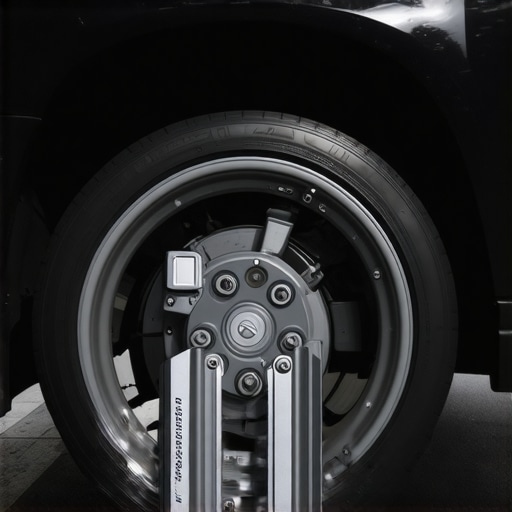
How can I keep this system running for every trip?
The secret to maintaining this level of safety over years of travel is the 24-hour rule. Always verify your booking the day before. Knowing how to guarantee safety and punctuality 24/7 isn’t just about a calendar entry; it’s about ensuring the dispatch team has actually assigned a human to your route. I personally use a simple checklist that includes the safety token every passenger should check before boarding. It takes thirty seconds but eliminates 90% of the risk. In the next five years, I expect we will see a massive shift toward biometric verification at the car door. We won’t be matching license plates; we’ll be using encrypted handshakes between our phones and the car’s handle. But until that is standard, why manual dispatching still beats AI for real-time accuracy remains the gold standard for anyone who cannot afford to be late. Try one thing this week: adopt the 12-minute rule for your next important pickup and see how much your stress levels drop when you aren’t racing the clock.
The One Question That Actually Proves Your Driver Is a Pro
After years on the road, I’ve realized that the most important thing you can ask isn’t ‘how long until you arrive?’ but rather, ‘what is your backup route if the main artery is blocked?’ A true professional always has a secondary plan. I learned that the only way to ensure your 4 am ride actually shows up is to look for that proactive communication the evening before. If you aren’t getting a confirmation from a human being, you’re just a number in an algorithm.
- The Buffer is Your Best Friend: Never book for the exact moment you need to be there; the ’12-minute rule’ has saved more meetings than any GPS update.
- Hourly Over Point-to-Point: When you book by the hour, you are the priority, not the next passenger in the queue.
- Verification is Non-Negotiable: Never feel awkward about checking a license plate; a real chauffeur expects it.
My Minimalist Toolkit for Stress-Free City Commutes
I don’t travel heavy, but I travel smart. My first recommendation is to always keep a direct dispatch number saved in your contacts—don’t rely on the app to load when you’re in a dead zone. I also swear by keeping a dedicated digital folder for all safety and precision records. This makes it incredibly easy to cross-reference your bill or confirm your pickup instructions on the fly. Finally, I highly value providers who explain how hourly rates eliminate the stress of traffic jams because it shows they value my time as much as their own bottom line.
Taking the Reins of Your Travel Routine
Travel is often the most unpredictable part of our day, but it doesn’t have to be the most stressful. By moving away from on-demand guesswork and toward a structured, vetted system, you aren’t just getting from A to B—you are protecting your peace of mind. When you master how to guarantee safety and punctuality 24/7, you can finally stop watching the blue dot on your screen and start focusing on the work that actually matters. You deserve a transit experience that is as professional as you are. Have you ever had a real-time tracking link fail you at the exact moment you needed it most? Let me know your story in the comments below.