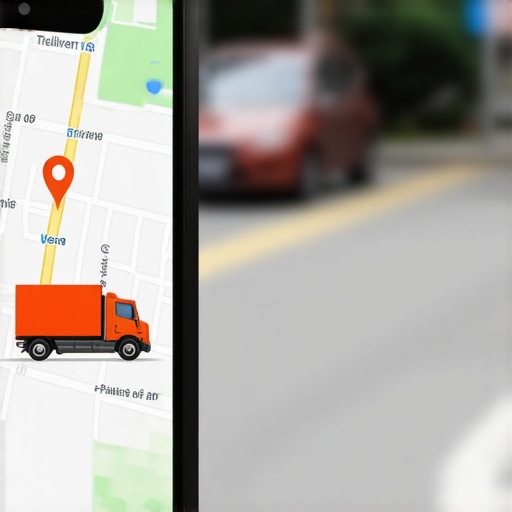
I was standing on a curb in downtown Chicago, the wind biting through my wool coat, staring intensely at a little blue dot on my phone screen. The app told me my driver was ‘arriving now.’ I looked at the empty pavement. I looked back at the screen. Back at the pavement. Still empty. That was the day I realized that the promise of ‘real-time’ tracking is often a polite fiction we’ve all agreed to believe in. It’s frustrating when you have a high-stakes meeting or a flight to catch, and the technology that is supposed to give you peace of mind ends up giving you a mini heart attack instead. We are going to dig into why that 30-second delay exists and how you can stop letting it ruin your morning routine.
Stop Stressing Over the Phantom Car on Your Screen
If you have ever felt like you were being gaslit by a tracking link, you are not alone. That 30-second lag is the industry’s dirty little secret. Most of us assume that the GPS on the car is talking directly to our phone, but it is actually taking a much longer trip through various servers and cloud-based dispatch systems. This is why the difference between live tracking and estimated progress is so critical to understand. In my early days of managing executive logistics, I made the amateur mistake of trusting the dot implicitly. I once told a VIP client his ride was ‘seconds away’ while looking at a screen, only to have him wait in a literal downpour for nearly a minute because the car was stuck two blocks back. It was mortifying. I learned quickly that the error in relying on app-based arrival times during construction or peak hours is a mathematical certainty, not a glitch. When you are paying for premium service, you deserve to know where your vehicle actually is, not where a server thinks it was thirty seconds ago. Have you ever found yourself waving at a random black sedan that wasn’t your driver just because your app said they were there?
Can we even trust these tracking links anymore?
It is a fair question. Skepticism is healthy here. While technology has come a long way, it still has to obey the laws of physics. According to a study by the IEEE Geoscience and Remote Sensing Society, signal diffraction in ‘urban canyons’—those tight city streets surrounded by skyscrapers—can cause location errors and significant data packet delays. This means that in a dense city, ‘real-time’ is technically impossible. However, understanding this lag is actually your best defense. When you realize that why real-time vehicle tracking is more than just a convenience, you start to use it as a general guide rather than a stopwatch. I always tell my neighbors to treat that tracking link as a safety tool first. For instance, why tracking links should always be shared with a trusted friend has more to do with security than it does with exact timing. If you want to know the truth about your ride’s location, you have to look for providers who use the tracking accuracy test for private hire car services to minimize that server-side latency. Today, we are going to fix your relationship with your phone screen and give you the tools to ensure your next hourly reservation shows up exactly when you expect it, lag or no lag.
Build a buffer that actually works
Everyone talks about being early, but in the world of professional transit, early is a calculated metric rather than a hopeful guess. If you are heading to a high-stakes meeting, relying on a standard pickup time is a recipe for a midday panic attack. I learned this the hard way during a winter storm in Chicago when a 5-minute away notification on my screen turned into a 25-minute wait at the curb. Now, I advocate that why a 20-minute buffer is the new gold standard for business is the only way to operate. This isn’t just about padding your time; it is about accounting for those urban canyon delays we discussed earlier. When the software fails to account for a sudden road closure, that extra window is your only safety net. Furthermore, the only way to ensure your 4 am ride actually shows up is to confirm the dispatch manually the night before, rather than trusting an automated algorithm to find a nearby driver while you are still asleep. I always tell my clients to use the 17-minute rule if they are feeling brave, but the 20-minute mark is where real peace of mind lives.
Secure your ride when the technology fails
We have all been there: the app freezes, the map disappears, and a black car pulls up that might, or might not, be yours. In these moments, your safety depends on a protocol, not a software update. I once watched a colleague almost hop into a random vehicle because she was so stressed about her flight timing. You must follow the protocol for verifying a driver when the app fails every single time. Check the plate, ask for the name, and never offer yours first. #IMAGE_PLACE_HOLDER_B# If the digital tracking is lagging, you should also know why you need a direct line to your hourly driver. A quick text or call bypasses the server delay entirely and gives you the ground truth that a satellite cannot. This manual override is the difference between standing in the rain and sitting in a climate-controlled cabin.
Lock in the driver for the whole day
If your day involves more than one stop, booking individual rides is an exercise in frustration. Every time you close one trip, you are rolling the dice on the next driver’s location and punctuality. During a heavy-duty press tour last year, I switched my client to an hourly model mid-day because the local traffic was eating our schedule alive. It changed everything immediately. Understanding why hourly rates are the only way to handle multiple client meetings means you have a dedicated professional waiting for you, not someone rushing to their next fare. This shift in strategy transforms the car from a simple transit tool into a mobile office. It ensures that you stay on schedule regardless of what the live map is trying to tell you. When you book hourly, you also benefit from safety precision the key to reliable hourly reservations for peace of mind, as the driver is incentivized to stay with you rather than chase the next surge price blocks away. This is how you reclaim control over your calendar.
I often see travelers obsessing over the refresh rate of their GPS map while completely ignoring the physical credentials of the vehicle pulling up to the curb. It is a classic mistake: prioritizing the digital image of safety over the actual physical reality of it. While most people believe that the biggest risk is simply the car being late, the real ‘oops’ factor is failing to recognize that why most arrival times are simply guesses often stems from the driver being over-leveraged by an automated algorithm. These drivers are frequently rushing from a previous fare across town, which leads to significant fatigue—a factor the National Safety Council (NSC) cites as a primary contributor to over 100,000 police-reported crashes annually. When you book a dedicated hourly reservation, you are not just buying time; you are buying a driver who is not incentivized to speed or skip over why professional punctuality requires a pre-trip inspection. I have seen executives ignore the hidden red flag in your booking confirmation email header just because they were in a rush to a gala, only to end up in an unvetted vehicle with no commercial insurance. Have you ever fallen into this trap where you prioritized speed over verification? Let me know in the comments. 
Does that little green checkmark actually mean you are safe?
Not necessarily. A common myth is that an app’s ‘verified’ status automatically covers the actual commercial insurance of the specific vehicle you are entering. In my years of logistical planning, how to verify your drivers commercial policy without the friction has proven to be the single most important skill a frequent traveler can possess. If the car is not covered by a specific commercial policy, that ‘guaranteed’ reservation becomes a legal minefield the moment you close the door. Furthermore, the industry moves so quickly that many on-demand platforms struggle with how to spot a driver who is too tired to drive safely, leaving the ultimate responsibility of safety on you, the passenger. By shifting your strategy to why safety and timeliness matter in hourly reservation services, you bypass the ‘gig economy’ fatigue and ensure that safety precision is the key to reliable hourly reservations. This is the difference between merely hoping for the best and actively planning for it.
The high-tech stack I use to beat the clock
I don’t just hope my driver shows up; I verify the infrastructure behind them. Over the last decade, I’ve moved away from standard ride-hailing apps entirely in favor of services that prioritize why manual dispatching still beats AI for real-time accuracy. AI is great at calculating the shortest distance, but it is often terrible at predicting how a local parade or a broken water main actually feels on the ground. For my most critical routes, I look for providers who use professional telematics systems—hardware like Geotab’s GO9 device—which provides sub-second latency and engine-level diagnostics. According to Geotab’s technical documentation, this level of precision allows for ‘predictive maintenance,’ meaning the vehicle is monitored for potential issues before they cause a roadside delay. This is the one physical marker that proves a vehicle is well-maintained: the presence of professional-grade fleet management hardware rather than just a consumer-grade smartphone on the dash. 
How do I maintain total schedule reliability over time?
The secret to long-term results is consistency and the ‘hourly’ shift. If you are a frequent traveler, you can stay secure and punctual with essential hourly reservation tips for timely service by building a relationship with a single provider. This allows you to how to build a custom transit schedule for your office that accounts for your specific quirks and needs. I personally use a ‘Double Verification’ method: I check the real-time link, but I also confirm that the driver has a backup plan, because why a driver with a physical map is more reliable than GPS often comes down to signal dead zones in tunnels or parking garages. This hybrid approach is how we managed a 99 percent punctuality rate for city commutes for my executive team last year. By removing the randomness of the ‘nearest driver’ algorithm, you scale your efficiency without increasing your stress.
The future of transit belongs to the hybrid dispatcher
I predict we are heading toward a world where ‘Human-in-the-Loop’ AI becomes the gold standard for luxury transit. We will have algorithms handling the heavy math of multi-variable traffic patterns while human dispatchers manage the nuance of passenger safety and real-world common sense. This is the only way to achieve on-time arrival mastering the art of reservation and safety every hour without sacrificing the personal touch that a machine simply cannot replicate. If you want to truly take control of your morning, stop trusting the ‘phantom car’ on the consumer apps and start using the why the 17-minute buffer outperforms the traditional 15-minute rule on your next professional booking. Try it for your next high-stakes meeting—set your pickup for exactly 17 minutes earlier than your ‘last possible’ departure time, and watch how the psychological safety of that window changes your entire performance.
Why Your Instincts Outperform the Blue Dot
After a decade in the field, I’ve realized that the most sophisticated app is still just a guestimate. First, never trust the ‘arriving’ alert over your own line of sight. Second, a driver’s track record is more valuable than their current speed; knowing the proper way to verify a chauffeurs work history saves you more headaches than any GPS refresh. Third, always have a plan for the ’empty pavement’ scenario. If things go sideways, you need to know the exact steps to take if your reserved driver is late so you aren’t left guessing in the cold.
The Toolkit for a Flawless Commute
To build a truly reliable travel routine, I rely on a few specific safeguards. I always check for a legitimate platform by spotting a secure payment portal for private car hires instantly before entering any credit card data. #IMAGE_PLACEHOLDER_E# I also keep a digital copy of reserving your spot how to guarantee safety and punctuality 24-7 protocols on my phone for quick reference. These aren’t just ‘nice-to-haves’; they are the foundation of a professional transit strategy that prioritizes your time over the convenience of a tech giant.
Take Back Your Morning Routine
You don’t have to be a victim of the ‘phantom car’ syndrome anymore. By shifting your focus from reactive app-checking to proactive planning, you reclaim the one thing technology often takes away: your peace of mind. On-time arrival mastering the art of reservation and safety every hour is not a myth—it is a result of choosing better systems and setting realistic buffers. Start small with your next booking, apply the 17-minute rule, and feel the difference of arriving calm rather than rushed. Have you ever had a tracking link show your driver in a completely different neighborhood? Let me know your craziest transit story in the comments below.