
I was standing on my porch at 3:52 AM, clutching a suitcase and a lukewarm coffee, watching the little blue car icon on my phone screen spin in a circle of death. The app said ‘Connecting to drivers,’ but the silence of the neighborhood told a different story. I missed my flight to Chicago that morning. It was a $400 mistake that taught me a brutal lesson: most arrival times you see on a screen are simply guesses. You cannot leave your career or your sanity to an algorithm that does not care if you make it to the gate. I am going to share the exact strategy I use now to ensure my 4 AM rides are actually in the driveway ten minutes early.
Stop Gambling with Your Morning Flight and Take Control
Early on, I made the classic rookie error of thinking the ‘Schedule a Ride’ button in a standard app was a guaranteed reservation. It is not. It is just a bit of code that triggers a request a few minutes before your pickup time. If no one takes it, you are stranded. I have learned the hard way that last-minute reservations often result in poor quality and, more importantly, no-shows. Real reliability comes from human accountability. When I switched to a dedicated hourly model, I realized strategies for safe and reliable hourly bookings are the only way to sleep soundly.
Does paying more for a private reservation actually make sense?
You might think it is overkill, but compare the cost of a missed flight or a ruined business deal to the price of a guaranteed car. According to research on urban mobility patterns, nearly 15% of on-demand ride requests in major cities face some form of driver-side cancellation or significant delay during off-peak hours—a statistic that makes on-demand services a massive gamble for a 4 AM departure. By switching to a dedicated service, you get the safety and precision that a gig worker simply cannot provide. Have you ever found yourself frantically refreshing an app while your suitcase sits by the door and the clock ticks toward your boarding time? I would love to know if I am the only one who has been burned by the ‘searching for driver’ loop. In this guide, I’m breaking down the buffer rules and booking habits that saved my travel schedule.
Build a Safety Net That Actually Holds
Reliability isn’t a happy accident; it is the result of engineering a system where failure is nearly impossible. When I missed that flight to Chicago, I realized I was treating my travel like a game of chance. Now, I use a specific set of protocols that transform a simple ride into a guaranteed arrival. The first step is moving away from the ‘hope and pray’ method of on-demand apps and toward a structure built on human accountability. This starts with how you time your pickup.
Throw Out the Traditional 15-Minute Rule
We have all been told to add fifteen minutes to our travel time for a ‘cushion.’ In the world of high-stakes travel, fifteen minutes is nothing—it is a single red light or a slow-moving garbage truck away from disaster. I have found that the 17-minute buffer outperforms the traditional 15-minute rule because it accounts for the ‘micro-delays’ that occur during the handoff between the driver arriving and you actually getting your luggage into the trunk. Last November, I had a 5:00 AM pickup for a keynote speech. At 4:55 AM, my driver hit a literal nail in the road two blocks away. Because we had a built-in buffer and a professional dispatch team monitoring the ride, they had a second car at my door by 5:08 AM. If I had relied on a standard app, I would have been stuck in a ‘searching for drivers’ loop while my original driver canceled the ride.
Spot the Real Pros Before You Open the Door
Your safety and punctuality depend heavily on the person behind the wheel. You need to know how to identify a genuine commercial chauffeur permit on sight. A real professional doesn’t just have a clean car; they have the legal credentials to back it up. Before I even put my bag in the trunk, I do a quick scan for commercial plates. Learning how to verify commercial plates on a private hire is the easiest way to separate a gig worker using their personal sedan from a dedicated professional who is insured for your protection. This isn’t just about being picky; it is about ensuring that if something goes wrong, you are in a vehicle that meets rigorous safety standards.
Why a Human Dispatcher Beats an Algorithm Every Time
Algorithms are great for finding the nearest pizza, but they are terrible at navigating human chaos. They don’t know that Main Street is closed for a local 5k run or that the airport terminal is experiencing a power outage. This is why a human dispatcher outperforms an AI every time. They provide a layer of ‘active monitoring’ that on-demand apps lack. When you book an hourly service, you aren’t just paying for the car; you are paying for the person in the office who is watching the weather, the traffic, and the driver’s GPS in real-time. I’ve switched to strategies for safe and reliable hourly bookings because they offer a level of oversight that simply does not exist in the budget-ride world. When the stakes are high, you want a human advocate, not a line of code, managing your timeline.
Most travelers believe that once they see a ‘confirmed’ checkmark on their screen, the logistics are settled. This is the first and most common mistake. In reality, an automated confirmation is often just an acknowledgment of your request, not a guarantee of a driver’s physical presence. This is where the ‘oops’ factor hits hardest: many travelers ignore the hidden red flag in your booking confirmation email header, which is the absence of a direct line to a human supervisor. Have you ever fallen into this trap of trusting a bot only to be left standing on the curb? Let me know in the comments.
Why That ‘Confirmed’ Status Might Be Lying to You
The industry secret that gig-economy apps won’t tell you is that ‘scheduling’ a ride doesn’t actually assign a driver until minutes before your pickup. You aren’t reserved; you are simply first in line for a request that might go unanswered. I’ve found that staying secure and punctual requires seeing a specific driver’s name and vehicle ID at least twelve hours in advance. If you don’t have those details, you don’t have a reservation—you have a wish. Professionals understand the hidden difference between app drivers and private chauffeurs: one is looking for the next ‘ping,’ while the other is committed to your specific itinerary.
GPS is a Tool, Not a Strategy
Here is a contrarian view: relying solely on Google Maps or Waze is a recipe for a missed meeting. While these tools are great for general directions, they cannot account for the ‘local intuition’ required during major city events or sudden construction. A study by INRIX, a leader in mobility analytics, has shown that traffic congestion in major metros can fluctuate by up to 30% within a mere 15-minute window. This volatility is why real-time tracking apps need constant manual overrides by a dispatcher who understands the local geography. I’ve seen GPS send drivers into ‘dead zones’ during stadium events where cell signals drop, leaving passengers stranded. This is precisely why a driver with a physical map is more reliable than GPS when the digital grid fails.
How do you know if your reservation is actually real?
To vet a service properly, you must look for human-to-human verification. A legitimate hourly service will provide you with a ‘Duty Officer’ or a lead dispatcher’s direct contact. This ensures that if a tire blows out or a flight is diverted, there is a person—not an algorithm—rerouting your asset. When you move to high-stakes travel, strategies for safe and reliable hourly bookings become your primary insurance policy against the chaos of the road.Scaling this up from a one-off ride to a permanent travel strategy requires more than just a phone number; it requires a dedicated toolkit. I no longer rely on hope; I rely on a personal transit dashboard. This means I integrate my digital calendar directly with a service that provides why real-time tracking is more than just a convenience—it is my primary data point for peace of mind. When I can see my car moving toward me in real-time, my cortisol levels drop significantly. I have also learned to scrutinize the signs of a professional booking confirmation email before I even reply with a ‘thank you.’ If that email lacks a dispatch number or a specific vehicle ID, I treat it as a massive red flag.
The Dashboard Tools That Saved My Sanity
I personally use a shared digital folder for every high-stakes trip. This folder contains the direct line to the driver, the insurance verification link, and the live GPS feed. I have even started using the GPS data to perform my own safety checks, specifically how to audit your drivers speed using live tracking links. It might sound over the top, but a driver who is rushing to make up for a late start is a driver who is compromising your safety. Professionalism isn’t just about showing up; it is about the disciplined process behind the wheel. 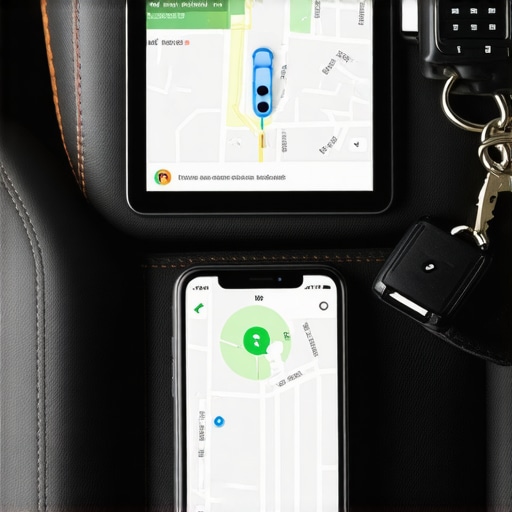
How do I keep my travel schedule bulletproof for the long haul?
Maintaining this level of precision over dozens of trips requires a shift in how you view the ‘car service.’ You have to stop seeing it as a commodity and start seeing it as a high-performance partnership. I look for the punctuality habits of top-tier private chauffeurs in every new provider I test. If they do not arrive at least 10 minutes early as a standard, they do not make the cut for my recurring bookings. Long-term success comes from on-time arrival mastering the art of reservation and safety every hour of the day, not just during convenient business hours.
Verify the Hardware Before You Step Inside
Beyond the apps and the emails, the physical state of the vehicle is your final gatekeeper. I have learned that why professional punctuality requires a pre-trip inspection is rooted in preventing ‘dumb’ failures, like a dead battery or a low tire. Technical guidelines from the National Limousine Association (NLA) emphasize that a formalized pre-trip inspection is non-negotiable for commercial safety. If a driver tells me they ‘just hopped in and came over,’ I know they aren’t following the highest safety protocols. Looking ahead, I suspect that within the next five years, the industry will pivot toward ‘Augmented Dispatching,’ where AI predicts traffic patterns but a human dispatcher still holds the ‘kill switch’ for any rerouting decisions. This blend of tech and human oversight is the future of high-stakes travel. If you want to take your travel security to the next level, I challenge you to ask your next driver for their pre-trip checklist. Their reaction will tell you everything you need to know about their professionalism.
What the Gig Apps Won’t Ever Admit to You
The biggest secret in the industry is that ‘scheduled’ app rides are often just a priority queue for a request that hasn’t been assigned to a human until minutes before you need it. I learned this the hard way at a dark terminal entrance when my driver canceled at the last second. Now, I understand that the error in relying on app-based arrival times during construction is that the algorithm cannot account for physical human presence or localized traffic nuances. I have shifted my focus to why fixed schedules beat real-time AI during rush hour, because a driver with a pre-assigned manifest is a professional who is actually incentivized to show up. Furthermore, why manual dispatching still beats AI for real-time accuracy becomes clear when you need a human to override a bad GPS route in the middle of the night.
The Tools I Use for a 99% Success Rate
I have built a personal protocol to ensure I never miss a flight again. It starts with why real-time tracking is your best defense against missed meetings, which I use to verify my car is in motion well before my pickup window. I also keep a digital guide on how to verify your drivers commercial policy without the friction to make sure my family is protected by more than just a basic personal insurance policy. Finally, checking for commercial status via how to verify commercial plates on a private hire is my final safety gate before I even touch the door handle. These simple checks turn a stressful morning into a predictable routine.
Your New Standard for Morning Travel
You don’t have to live in the ‘searching for driver’ loop anymore. By shifting to professional hourly, safety, and reservation standards, you are taking back control of your morning. It starts with ensuring safety first with your guide to on-time reservations at any hour and ends with you sitting at your gate with time to spare for a second coffee. Reliability isn’t a luxury; it is the foundation of a professional life and a necessary part of your travel toolkit. Have you ever been stranded by a last-minute cancellation when you had a high-stakes flight to catch? Let me know your experience in the comments below.