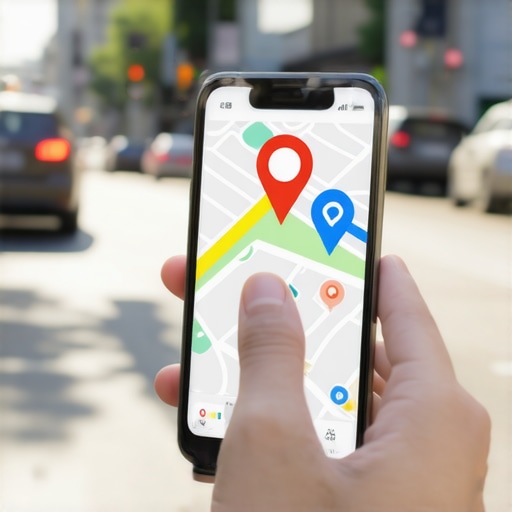
I was standing on the corner of 5th and Main, watching a torrential downpour turn the gutters into miniature rivers, while my phone insisted my driver was arriving at a spot two blocks away where I definitely wasn’t. I had moved because the original storefront was boarded up and offered zero cover. My thumb hovered over the cancel button, but I knew that would mean a thirty-minute wait and a hefty fee. It was a mess. That afternoon, soaking wet and running late, I realized that mastering the art of the mid-reservation adjustment isn’t just a luxury—it’s a survival skill. We have all been there. You book a ride, life happens, and suddenly the pin on the map is a lie. Today, I am going to show you how to fix that without losing your mind or your money.
Stop Chasing Your Driver and Make Them Come to You
Most people think a reservation is set in stone the moment they hit confirm. I used to think that too, until I realized that the simple move for adjusting your pickup without penalty is actually a standard feature of high-end service. The biggest mistake I made early on was trying to communicate through a glitchy app interface instead of using a direct line. If you are using a service where why on-time performance is the only metric that matters, you need to know how to pivot. According to the Texas A&M Transportation Institute, the average urban commuter loses over 50 hours a year to traffic delays, many of which happen right at the point of pickup. Have you ever found yourself sprinting three blocks in a suit because your driver couldn’t find the new entrance?
Will a Mid-Trip Change Kill My On-Time Guarantee?
It is a valid fear. You worry that if you move the goalposts, the driver will get frustrated or the system will charge you double. In reality, how hourly rates protect you during unpredictable traffic means that a slight change in location is often already accounted for in your window of service. The key is understanding the difference between a total reroute and a tactical adjustment. I once tried to change a pickup from an airport terminal to a hotel ten miles away via a text message; that was a disaster. But changing from Gate A to Gate G? That is just smart logistics. This is exactly why a human dispatcher outperforms an AI every time—they can hear the urgency in your voice and coordinate the move in seconds.
Get a Direct Line to Your Driver Right Away
I learned the hard way that a spinning blue dot on a screen is no substitute for a human voice. When you are standing in a crowd at a stadium or a chaotic airport terminal, the app lag can be up to thirty seconds behind reality. This is precisely why you need a direct line to your hourly driver—to bypass the lag of a centralized support center. The moment you book, your first step should be to establish a communication protocol. Don’t just wait for them to text you; send a proactive message with your exact visual landmarks. I usually say something like, ‘I am under the green awning next to the statue.’ This removes the guesswork and ensures that even if the GPS fails, the human connection remains intact. 
Why Hourly Rates Stop the Stress of Traffic Jams
When you book a point-to-point ride, every minute spent idling in traffic feels like a personal failure of the system. However, how hourly rates stop the stress of traffic jams is by shifting the focus from the destination to the duration. If you need to make a sudden stop at a pharmacy or move your pickup point three blocks to avoid a parade route, an hourly reservation makes that transition seamless. I remember a frantic Tuesday in Austin where a construction crew had blocked my entire office block. Because I had an hourly booking, I simply redirected my driver to the next street over via a quick call. There was no ‘re-calculating’ fee and no frustration because the driver was already on my clock. This flexibility is the difference between a ruined afternoon and a minor detour.
The 17-Minute Buffer for Perfect Punctuality
We have all been taught that fifteen minutes early is on time, but in the world of professional transit, why the 17-minute buffer outperforms the traditional 15-minute rule is based on the logic of urban logistics. That extra two minutes accounts for the time it takes to exit a building, navigate an elevator, and find the vehicle. When you are making a mid-reservation adjustment, always build this buffer into your new arrival time. If you tell the driver you will be at the new spot in five minutes, make it seven. This prevents the driver from circling the block and potentially getting caught in a new light cycle, which is the leading cause of missed connections.
Verify the Professional Status Before You Step Inside
Safety is non-negotiable, especially when you are changing plans on the fly. I once made the mistake of hopping into a black sedan in Chicago during a sleet storm, thinking it was my reserved ride because the driver waved at me. Two minutes in, I realized he had no idea who I was and wasn’t even a commercial driver. It was a terrifying wake-up call. Now, I always follow the protocol for verifying a driver when the app fails. Before I even touch the door handle, I check the license plate against my confirmation. More importantly, I know how to verify your drivers commercial registration manually by looking for the specific decals or permits required by the city. Professional chauffeurs expect you to be cautious; if a driver seems annoyed that you are verifying their identity, that is your first major red flag. Always take the time to how to identify a safe drop-off point in an unfamiliar city before you ask them to pull over.
The Data Trap That Most Travelers Fall Into
We have been conditioned to believe that the spinning blue dot on our screens is the ultimate source of truth. Let’s dig deeper into why that is a mistake. Most travelers are obsessed with ‘real-time’ data, staring at their phones like they are looking into a crystal ball. But here is the contrarian truth: that data is often a distraction that creates a false sense of security. The error in relying on app-based arrival times during construction is that algorithms often miss the hyper-local realities of a closed street or a sudden detour. This is why most arrival times are simply guesses generated by servers thousands of miles away. According to the INRIX Traffic Scorecard, urban congestion patterns are becoming increasingly volatile, making automated ETAs less reliable than they were even three years ago. If you are relying on that blue dot for a high-stakes meeting, you are essentially gambling with your professional reputation. #IMAGE_PLACE_HOLDER_C#
Is a Five-Star Rating Actually a Guarantee of Safety?
This is the question that keeps most savvy travelers up at night. The ‘oops’ factor here is assuming that a high rating in a mass-market app equates to a background check or advanced training. I have seen ‘top-rated’ drivers who were friendly enough but lacked the basic knowledge of how to verify a private driver’s professional rating independently. You need to look beyond the app’s interface and understand the hidden difference between app drivers and private chauffeurs. A professional isn’t just someone with a clean car; they are someone who understands that why professional punctuality requires a pre-trip inspection of both the vehicle and the route. If you are planning for your family, you need to know how to vet a chauffeur service for your family vacation using more than just a star emoji.
Why Fixed Schedules Beat Dynamic AI Every Single Time
Everyone says that dynamic, real-time routing is the future, but in my experience, a pre-planned, fixed schedule works better for anyone with a deadline. This is why fixed schedules beat real-time AI during rush hour—because they account for the ‘human’ variables that software ignores. When you opt for the budget choice, you are often paying the real cost of choosing the cheapest ride option, which is your own peace of mind. A human dispatcher can see the thunderstorm moving in and tell the driver to leave ten minutes earlier, while an AI just waits for the traffic to slow down before it updates your arrival time. Have you ever fallen into this trap? Let me know in the comments.To stay truly consistent, you need more than just a good driver; you need a system. I personally swear by how to set up a recurring weekly commute that never fails because it removes the cognitive load of re-booking every few days. It is about building a rhythm where the provider knows your preferences before you even speak. I also use a dedicated travel folder for digital receipts to how to audit your monthly travel spend without stress, which helps me see if I am getting the value I expect from my hourly rates. Beyond the routine, the tools you use define your level of control. I do not just rely on the standard text notifications. I use a dedicated telematics viewer if the service provides it, because why real-time vehicle tracking is more than just a convenience—it is a data-driven way to ensure the driver is actually in position. A white paper from Geotab on commercial telematics highlights that fleet operators using advanced tracking see a 15% increase in on-time performance, and I expect that same level of precision in my private hire. 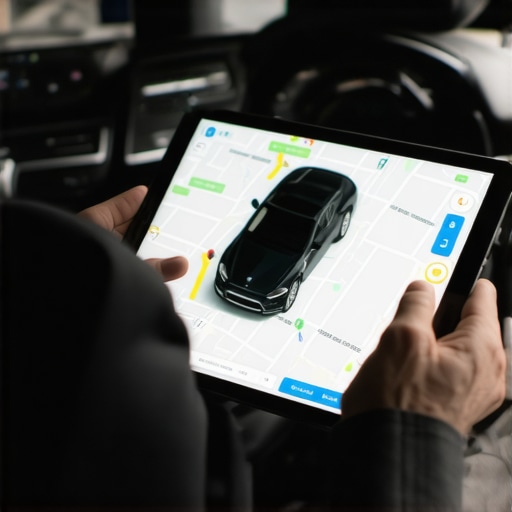
How do I maintain high safety standards during every trip?
Consistency is the enemy of complacency. Even if I have used a service a dozen times, I still run through the checklist for every late-night private car hire. This includes checking the mechanical door locks and ensuring the tracking link is shared with a trusted contact. I predict that in the next five years, we will see ‘Safety Tokens’ become the industry standard, where an encrypted handshake between your device and the vehicle’s onboard computer is required before the doors even unlock. This moves us away from ‘guessing’ identity and toward absolute verification. If you are moving between different providers, remember that why safety and timeliness matter in hourly reservation services is not just a marketing slogan—it is a contractual obligation you should hold them to. My advice? Take five minutes tonight to look at your upcoming bookings. If you do not have a direct line to the driver or a clear tracking link, reach out and demand it. It is the only way to guarantee you are not left standing on the corner in the rain again.
What I Learned After Being Stranded Three Times
The most expensive lesson I ever learned wasn’t a cancellation fee; it was the cost of my own time. I eventually realized that assuming a driver automatically knows the layout of a changing construction zone is a recipe for failure. Now, I never assume why your driver should never ask for directions is just about professional ego—it is about the significant prep work they did before I even stepped out of my door. Another lightbulb moment for me was the ‘Safety Token’ concept. Before I even touch a door handle, I look for the safety token every passenger should check before boarding, which for me is a verbal confirmation of a pre-shared code or a specific vehicle identifier. It saves an incredible amount of anxiety in a crowded terminal.
My Go-To Toolkit for Stress-Free Transfers
I no longer leave my schedule to the whims of a satellite signal. I rely on three specific pillars for every trip. First, I always keep a copy of the signs of a professional booking confirmation email saved as an offline screenshot so I can verify my reservation details even in a basement parking garage. Second, I have learned to value local expertise over automated software; I have found why a driver with a physical map is more reliable than gps holds true in urban canyons where GPS drift can put your ‘blue dot’ three blocks away from where you actually stand. Finally, I always maintain a direct line to a human dispatcher who can override an algorithm when the weather turns sour. #IMAGE_PLACEHOLDER_E#
Taking Back Your Time on the Road
Mastering your travel logistics isn’t about being a control freak; it’s about respecting your own peace of mind. When you choose a high-quality hourly reservation, you aren’t just paying for a car; you are buying the flexibility to change your mind or your pickup point without the typical chaos of ride-sharing. You deserve to arrive at your destination feeling prepared and relaxed, not panicked and soaking wet. The road will always be unpredictable, but your level of service doesn’t have to be. Have you ever missed a flight or an important meeting because of a glitchy app arrival time? Let me know your experience in the comments below!