I stood there in the drizzling rain at 4 AM, squinting at a faded decal on the side of a black Suburban that looked like it had survived the Reagan administration. The driver was polite, and his tie was straight, but my gut was doing backflips. I realized right then that I was a complete fraud—I was looking at a safety sticker without having the slightest clue what the numbers actually meant. Was it expired? Was it for the wrong weight class? I felt like I was betting my safety on a piece of adhesive. If you have ever felt that nagging doubt while climbing into a reserved car, wondering if the vehicle is actually as safe as the booking confirmation claims, you are definitely not alone.
That Awkward Moment I Realized I Was Clueless
Early in my career as a frequent traveler, I made the classic mistake of assuming a clean car and a professional suit equaled a safe vehicle. I once booked what I thought was a premium service, but I didn’t know how to verify your driver’s commercial registration manually. It turns out, that car hadn’t seen a real inspector in nearly two years. I was lucky that trip ended without a breakdown, but it taught me a vital lesson: professional looks can be a mask. Now, I never pull away from the curb without a sixty-second audit. It’s not just about the driver’s personality; it’s about safety and precision. You need to know how to verify commercial plates on a private hire before you even think about putting your luggage in the trunk. I want to hear from you—have you ever spotted a red flag in a car you already booked, or do you just cross your fingers and hope for the best?
Is checking the certification actually worth the hassle?
I get it. You don’t want to be ‘that person’ who holds up the trip to inspect documents. You might feel like you’re being rude or overly paranoid. But consider this: according to the Federal Motor Carrier Safety Administration (FMCSA), nearly 20% of commercial vehicles inspected during major roadside checks are placed out-of-service immediately for safety violations. That means one in five vehicles on the road shouldn’t even be there. When you realize the stakes, those few seconds of ‘awkwardness’ seem like a very small price to pay for your life. The peace of mind that comes with knowing how to spot a fake commercial insurance document is worth more than any discount or fast pickup.
Stop Guessing and Start Verifying Your Ride
Today, I am going to pull back the curtain on those confusing decals and registration cards so you can be the expert. We are going to solve the mystery of the DOT number, the inspection expiration date, and the specific symbols that prove a vehicle is legally allowed to carry passengers for hire. I’ve spent years perfecting the routine for inspecting your ride before boarding, and I’m going to give you the cheat sheet. No more guessing. No more crossing your fingers. We are moving from blind trust to verified safety, starting with the very first thing you see when that door opens.
Find the DOT Decal Before You Open the Door
The very first thing you should look for isn’t the driver’s smile, but the USDOT number. Think of this number as the car’s social security card; it’s a unique identifier that proves the vehicle is registered for commercial use. Legitimate private car services must display this, usually on the side of the car or inside the door frame. I remember a humid night in Atlanta when a driver pulled up in a pristine black sedan. Everything looked perfect until I glanced at the DOT decal on the passenger side door. The font looked slightly off—almost like it was printed on a home inkjet. I pulled up the FMCSA SAFER website on my phone and typed in the number. It was registered to a defunct delivery company in another state. That car wasn’t insured for passengers, and I cancelled the ride right there. It felt awkward, but I wasn’t about to risk a highway trip in an ‘un-papered’ vehicle. This is a critical part of the routine for inspecting your ride before boarding. If that number is missing or looks tampered with, you are essentially getting into a stranger’s personal car with zero legal protection. 
What the Driver’s Setup Tells You About Safety
Once you open the door, take a quick scan of the interior environment. A professional chauffeur’s cockpit should be clean and free of distractions. If you see multiple phones mounted on the dashboard all running different ride-hailing apps, it’s a sign the driver is ‘app-hopping,’ which often leads to distracted driving and fatigue. You need to know how to verify your driver is not exhausted by observing their reaction time and general awareness during the first thirty seconds of interaction. Look for the visual signs of a chauffeur who values professionalism, such as a tidy attire and a vehicle interior that doesn’t smell like fast food or heavy air fresheners used to mask odors. These small details are part of the 5-point safety check for every nighttime ride that I recommend to every traveler.
The Paperwork Must Match the Plate
Before the wheels turn, ask to see the commercial insurance card. In many jurisdictions, drivers are required to carry a physical or digital copy of their commercial policy. This is where most ‘gypsy’ or illegal operators fail. A standard personal insurance policy is void the second a driver accepts money for a ride. You must ensure the VIN on the insurance card matches the VIN on the vehicle’s dashboard. Learning how to verify your driver’s commercial registration manually is the only way to be 100% sure you are covered in the event of an accident. If they hesitate or claim the ‘office has the papers,’ that is a massive red flag. Don’t be afraid to cross-reference this with their profile if you have the ability to how to verify a private drivers professional rating independently.
Watch Out for These Driver Red Flags
Finally, observe the driver’s pre-trip behavior. A true professional understands that why professional punctuality requires a pre-trip inspection of their own vehicle. They should have already checked their tire pressure and fluid levels before arriving. If the driver seems flustered or is fiddling with a GPS that they clearly don’t know how to use, your safety is already compromised. We take these steps seriously because how we verify every drivers identity before they reach you is only the first half of the equation; the second half is you confirming the vehicle is up to standard. Never forget that you have the power to stay on the curb if the car doesn’t pass your how to spot a fake commercial insurance document test. It is much better to be late to a meeting than to never arrive at all.Most travelers think they are being savvy by booking separate point-to-point rides to save a few bucks. In my experience, this is the quickest way to compromise your safety. When you book a driver per trip, you are inadvertently putting them on a ‘sprint’ schedule where they are incentivized to finish your ride as fast as possible to catch the next surge or scheduled pickup. This is exactly why hourly booking is more reliable than ride-hailing apps. In an hourly arrangement, the driver’s only priority is you. They aren’t checking a secondary app for their next fare, which significantly reduces the risk of distracted driving. Have you ever fallen into this trap of trying to ‘time the market’ with individual rides? Let me know in the comments.
The GPS Trap and the Illusion of Certainty
The ‘Oops’ factor in modern travel often comes from blind reliance on technology. We have been conditioned to believe that the blue line on a smartphone screen is gospel. However, the reality of why GPS lag can ruin your meeting schedule is something seasoned chauffeurs understand intimately. A true professional doesn’t just look at the map; they look at local event schedules, sudden weather shifts, and even the subtle patterns of city life. If your driver isn’t proactively explaining why your real-time ETA should account for pedestrian traffic near major venues, you aren’t actually on a schedule—you’re on a hope. 
How can you tell if a driver is cutting corners on their mandatory rest periods?
This is the question that separates the amateurs from the pros. According to the National Safety Council (NSC), driving after being awake for 18 hours is comparable to driving with a blood alcohol concentration (BAC) of 0.05 percent. An advanced traveler knows how to verify your driver is not exhausted by observing their eye movement and their ability to maintain consistent lane positioning. If they have been ‘app-hopping’ for 12 hours straight before picking you up, your safety margin has effectively vanished. This is why I always advocate for fixed-schedule services where driver logs are strictly monitored.
The Buffer Strategy That Actually Works
I’ve learned the hard way that the traditional 15-minute window is often a recipe for a missed connection. That’s why the 17-minute buffer outperforms the traditional 15-minute rule in high-stakes environments. Those extra two minutes account for the ‘human friction’ of loading luggage, confirming the destination, and performing that final safety walk-around. When you realize that why safety and timeliness matter in hourly reservation services is about the quality of the time spent, not just the quantity, you start to see the vehicle as a mobile office rather than just a taxi. By shifting your mindset from the cheapest possible leg to a dedicated service window, you eliminate the pressure that leads to accidents.I’ve spent thousands of hours in the back of high-end vehicles, and I can tell you that the difference between a simple ride and a professional experience is the gear hidden behind the scenes. I’m not talking about the leather seats; I’m talking about the redundant navigation systems and the telemetry hardware that tracks real-time engine health. When I evaluate a service, I check if they have a hardware-integrated GPS that isn’t prone to the same glitches as a standard smartphone. This is precisely why our drivers never use unverified navigation apps. These consumer-grade tools often prioritize the shortest route over the safest one, and they frequently fail to distinguish between a reliable paved road and a problematic shortcut. I prefer tools like Garmin’s specialized fleet management systems because they provide a stable data link that doesn’t lag when the cellular signal drops in high-rise corridors or rural gaps. 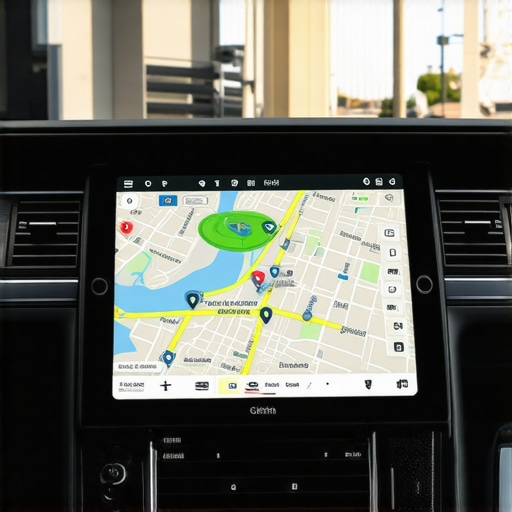
The Tech That Actually Keeps You Safe
Beyond basic navigation, I look for vehicles equipped with onboard diagnostic (OBD-II) scanners that feed live data directly to a central dispatch hub. If a sensor starts to fail or a tire pressure warning flickers, the dispatcher knows before the driver even feels a vibration. This proactive maintenance layer ensures safety and precision across the entire fleet. It’s not just about luxury; it’s about mechanical integrity. Most passengers ignore these details, but this is how to spot a professional vehicle fleet at a glance. If the tech in the car looks like it belongs in the previous decade, the safety standards likely do too.
How do I keep my reservation standards high over time?
Maintaining this level of excellence isn’t a one-and-done deal; it’s a rigorous daily cycle that relies on consistent accountability. It starts with a physical checklist that the driver must complete and upload to a centralized hub before the very first pickup of the day. This is the heart of why professional punctuality requires a pre-trip inspection. We aren’t just checking the fuel levels; we are verifying brake pad thickness and ensuring the cabin air filters are pristine. To scale this without losing quality, you need a human-centric dispatch logic. Despite the current AI boom, the reason why a human dispatcher outperforms an ai every time becomes clear when an unexpected road closure happens. A human can make a nuanced judgment call based on local knowledge; an algorithm just recalculates you into a different traffic jam. Looking ahead, I predict we will see more integration of biometric monitoring for driver fatigue. While it sounds futuristic, the SAE International J3016 standard already outlines how driver monitoring systems are crucial for safety even as we transition toward semi-autonomous vehicle levels. This ensures that even if the car is ‘smart,’ the driver remains the alert, primary safety officer. This is vital for on time every time strategies for safe and reliable hourly bookings. If you want to take your travel game to the next level, I challenge you to implement why the 17-minute buffer outperforms the traditional 15-minute rule on your very next booking. It’s a simple change that transforms the way you move through a city. This attention to detail is on-time arrival mastering the art of reservation and safety every hour in action. Don’t settle for a driver who just shows up; demand one who is equipped to handle the unexpected. This commitment to the small things is what creates a truly secret to stress-free corporate transportation planning environment for you and your team.
The Reality Check Most Premium Services Won’t Give You
After years on the road, I’ve realized that the biggest threat to your safety isn’t a bad driver—it’s the assumption that the system is checking for you. Here are the core truths I live by now:
- Ratings are often a distraction. A five-star rating doesn’t mean the car has insurance; it means the driver was friendly. Always learn how to verify a private drivers professional rating independently to see beyond the app interface.
- Distance is irrelevant; time is everything. A three-mile trip in Manhattan can take longer than a thirty-mile trip in rural Ohio. This is why I always use the reliable way to time your commute during peak hours.
- Human oversight is the ultimate backup. AI can’t feel the tension in a driver’s voice or spot a flat tire through a screen. That’s why a human dispatcher outperforms an ai every time when logistics get messy.
- Your intuition is a valid safety tool. If you feel uneasy, use the checklist for every late night private car hire before you ever commit to the seat.
A Traveler’s Survival Kit for Seamless Logistics
I don’t just ‘hope’ for a good ride anymore; I use a specific stack of resources to guarantee one. First, I always keep the FMCSA SAFER website bookmarked to check DOT numbers in real-time. Second, I insist on services that avoid consumer-grade map apps. Knowing why our drivers never use unverified navigation apps has saved me from countless ‘shortcuts’ that end in dead ends or construction zones. For my own planning, I’ve abandoned the standard quarter-hour window entirely because why the 17-minute buffer outperforms the traditional 15-minute rule is the secret to never running for a gate again. Finally, if you are handling business for a team, the secret to stress-free corporate transportation planning is having a direct line to a supervisor, not just a chatbot.
The Peace of Mind That Comes from Being the Expert
You deserve to travel without that nagging feeling of uncertainty in the back of your mind. By taking sixty seconds to verify the registration, match the insurance, and check the driver’s awareness, you aren’t being difficult—you are being professional. This level of on-time arrival mastering the art of reservation and safety every hour is what transforms a stressful commute into a productive extension of your day. Don’t be afraid to demand excellence and stay on the sidewalk if a vehicle doesn’t meet your standards. Have you ever had a moment where your gut told you to cancel a ride, but you got in anyway? Let me know what happened in the comments below.