It was a rainy Tuesday, about 11 PM, and I was sitting in the back of a car I had booked on a whim. The driver, a nice enough guy, started chatting as we turned onto my street. ‘Oh, you live in that blue house right next to the park, right? I saw the pin right on your driveway,’ he said. My blood ran cold. He was just being friendly, but in that moment, I realized I had handed over my most private location data without a second thought. I had fallen into the trap of prioritizing convenience over my own personal safety. That realization changed how I handle every hourly reservation I make now.
Your Front Door is Not a Public Billboard
We have all done it. We get a new app, we are in a rush to get home, and we just type in our exact house number under the ‘Home’ label. It feels efficient. It feels like the only way to ensure the driver is on time for your morning commute. But here is the reality: every time you do that, you are creating a permanent, static record that lives in a database you do not control. I am here to tell you that you can still get door-to-door service without being so literal with your data. Today, I am going to walk you through the ‘Safe Proximity’ method. We are going to explore why how to store your trip data securely is actually the secret to peace of mind, and I will show you how to mask your digital footprint while still making sure your ride shows up exactly where you need it.
Is keeping my address private really worth the extra hassle?
I hear this all the time from my neighbors. They worry that if they do not provide an exact pin, the driver will get lost and they will end up waiting on a dark corner. I actually made that exact mistake early on. I tried to be ‘too secure’ by picking a pickup point three blocks away in a neighborhood I didn’t know well, and I ended up standing in a puddle for twenty minutes because the driver couldn’t find the landmark. It was frustrating and felt less safe than just giving my address. But there is a middle ground between ‘Public Record’ and ‘Lost in the Woods.’ According to a report by the Privacy Rights Clearinghouse, location data is one of the most exploited pieces of information in data breaches because it links your digital identity to your physical vulnerabilities. Have you ever scrolled through your ride history and felt a little uneasy seeing your exact front porch pinned dozens of times? If so, you are already halfway to a more secure way of traveling. Let’s look at how to fix it without losing that ‘on-time’ guarantee. [image_placeholder]
Pick a Landmark Instead of a Mailbox
To execute the Safe Proximity method, you need to look at your street through the eyes of a stranger. Find a static landmark—a large oak tree, a brightly lit streetlamp, or even a neighbor’s guest parking area—that is roughly 50 to 100 feet from your actual front door. By setting your reservation pin here, you create a crucial ‘buffer zone.’ This prevents a driver from knowing exactly which key opens which door while still keeping the vehicle close enough that you aren’t hiking with heavy luggage. I started doing this religiously after that creepy ride-share experience. Last November, I had a 4 AM flight and needed to be on time without feeling exposed. Instead of my house, I pinned the community pool gate three houses down. I watched the car arrive from my window, and by the time I walked out, the driver was already there. It felt like a professional ‘hand-off’ rather than a privacy exposure. This slight shift is a foundational pillar of modern travel safety.
Make the Three Minute Buffer Work for You
One of the biggest fears for travelers is missing the ride. If you aren’t standing exactly at the pin, will they leave? This is where the 3-minute buffer that saves you from missing the train comes into play. When you book, tell the driver in the notes: ‘I will meet you at the corner streetlamp.’ This gives you a specific, shared rendezvous point that removes the guesswork of ‘which driveway is it?’ while protecting your exact location. #IMAGE_PLACE_HOLDER_B#
Keep Your Real Name Off the Dashboard
Most people use their full legal name on their profile because it feels ‘official.’ Stop that immediately. Use an initial or a middle name. When you enter the vehicle, pay close attention to why your driver should never lead the conversation with your last name. A professional should confirm your destination or a booking ID, not shout your surname across a quiet residential sidewalk. This is part of the broader reservation security measures that keep your physical identity detached from your digital footprint.
Can You Actually Trust the App Memory
Every app you use for an hourly booking keeps a history of where you have been. If someone gets hold of your phone or the company suffers a breach, they have a map of your life. I make it a habit every Sunday to clear my recent history or use tools that explain how to store your trip data securely away from third-party apps. It’s like clearing your browser cache, but for your physical movements. Finally, before you even step into the car, run through the 5-point safety check for every nighttime ride. Check the plate, the driver’s face, and ensure the child locks aren’t engaged from the outside. These steps take mere seconds but build a wall of security around your personal life.
Let’s dig deeper into the psychology of a typical booking. Most people assume that if an app says the car is two minutes away, they have exactly 120 seconds of peace. This is what I call the ‘Digital Certainty Trap.’ Research from the Texas A&M Transportation Institute shows that urban traffic variables can change by up to 40% in just a five-minute window, meaning that little car icon on your screen is often more of a wish than a reality. This is precisely why refreshing your tracking app might give you false arrival times. Real pros know that on-time every time strategies for safe and reliable hourly bookings rely on human dispatch and pre-planned buffers, not just a flickering algorithm.
The GPS Myth That Leaves You Stranded
I used to think that booking individual rides for a night out was the height of flexibility. I was wrong. I once spent forty minutes standing outside a venue because every ‘nearby’ driver was actually ten miles away. That’s why one-way bookings often lead to unnecessary stress for travelers. When you shift to an hourly model, the driver isn’t looking for the next fare; they are looking out for you. You aren’t just buying a ride; you’re buying a dedicated security detail. However, don’t fall for the ‘handshake’ trap. The danger of relying on verbal confirmations for important travel is that words don’t leave a paper trail if something goes sideways. Always demand a digital or physical record of your reservation details before you step off the curb.
Why One-Way Bookings Are a Security Trap
The biggest mistake I see beginners make is assuming that three separate one-way bookings are the same as one hourly reservation. They aren’t. From a security standpoint, three separate bookings mean three different strangers have access to your pickup and drop-off patterns. By consolidating your travel with a single vetted professional, you limit your exposure. Most people get the ‘on-time’ part wrong because they think it’s about speed. It’s not. It’s about predictability and knowing exactly who is behind the wheel for the duration of your trip.
How can you tell if a driver is genuinely alert before the door even opens?
This is a question I get from high-frequency travelers who worry about late-night safety. Look at the car’s positioning. Is it parked where it can easily exit? Is the driver’s attention on the environment or buried in a phone? Learning how to verify your driver is not exhausted involves observing these small professional cues. A driver who is truly ready for a high-stakes on time arrival will have the vehicle staged for a quick, safe departure. Have you ever fallen into this trap of over-relying on a GPS estimate only to be let down? Let me know in the comments.
Consistency is where most travelers fail. You do the safety check three times, nothing happens, and by the fourth time, you are scrolling through emails while stepping into a stranger’s backseat. To combat this, I have developed a Mechanical Habit. Every time a car pulls up for an hourly reservation, I perform the windshield wiper test. It sounds minor, but if the blades are frayed or the fluid is dry, it tells me the company cuts corners on maintenance. If they cut corners on wipers, they are cutting corners on your life. According to the SAE International J1939 standards for vehicle bus simulation, the integration of real-time diagnostics is what allows high-end fleets to predict mechanical failures before they happen, and a well-maintained exterior is the first sign that those digital systems are actually being monitored.
How do I stay consistent with these safety checks?
The secret is not willpower; it is a checklist. I keep a digital note on my phone that I open the moment my on-time arrival notification pings. This list forces me to verify my driver is not exhausted by checking for pupil dilation or delayed responses during the initial greeting. I also ensure that I have reserved my spot with a company that values manual reservation checks over automated algorithms. There is a specific kind of accountability that comes when a human dispatcher has personally reviewed your route. This level of scrutiny is even more vital when hourly booking for multiple site visits is on the agenda. One missed turn or a lazy GPS update can derail a whole day of executive meetings. This is why we prioritize human dispatchers over pure AI scheduling. A human can see that a local parade is starting or that a tunnel is closed before the algorithm even registers a slowdown.
Ditch the App and Trust the Hardware
We have become obsessed with the little blue dot on our screens, but that dot is often a lie. Most consumer apps rely on cellular triangulation which can lag by thirty seconds or more in city canyons. This is why real-time vehicle data is more accurate than estimated times provided by a standard smartphone. I always ask if the service uses dedicated GPS hardware. Hardwired systems update at a much higher frequency—often via the Global Navigation Satellite System (GNSS) standards—providing sub-meter accuracy that your phone simply cannot touch. 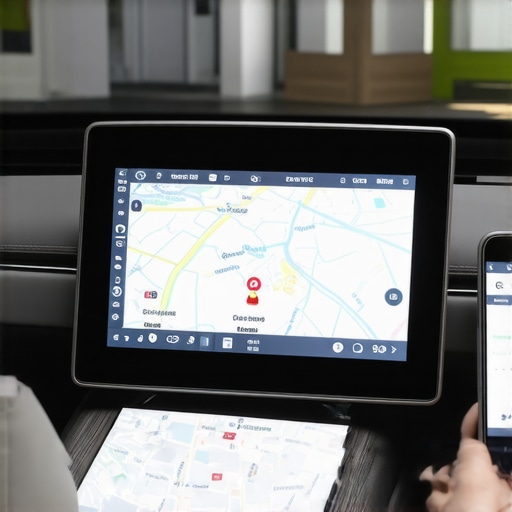 When you start organizing multi-stop trips, this technical precision becomes the difference between making your keynote and standing on the sidewalk. Looking ahead, I suspect we will see a shift toward Biometric Dispatching, where driver fatigue is monitored via real-time sensors in the steering wheel. Until then, precise reservation timing remains your best defense. I want you to try one thing on your next booking: ask the company for a physical copy of your trip reservation or a PDF confirmation that includes the driver’s commercial permit number. If they hesitate, they are not prioritizing your safety. Professionals who value on-time every time strategies will always have that data ready for you.
The 4 AM Revelation That Changed My Travel Routine
After years of traveling for business, the biggest epiphany I had wasn’t about the flights or the hotels—it was about the ‘phantom’ security we feel when using mass-market apps. I realized that on-time arrivals are rarely about the fastest route and almost always about the quality of the preparation. Reliability isn’t an algorithm; it’s a human commitment. I also learned that why hourly chauffeurs are safer for late-night solo travelers often comes down to the simple fact that a dedicated driver is waiting for you, not just a notification. Privacy isn’t a setting you toggle in an app; it is a series of active choices you make, like choosing a landmark over your front door. The peace of mind I have now didn’t come from a new software update—it came from shifting my mindset toward professional, vetted services.
My Go-To Checklist for Stress-Free Movement
To keep my travels consistent, I rely on a few specific habits and resources that have never steered me wrong. First, I always verify the company’s legitimacy by taking a few minutes to learn how to background check your private transport company in minutes. It is a small time investment for a huge safety return. I also prioritize anonymity by using tools that allow for the security benefit of masking your phone number with your driver. Finally, I never leave for a high-stakes meeting without following the protocol for verifying your chauffeurs permit. These aren’t just extra steps; they are the foundation of a professional travel strategy that ensures you remain in control of your data and your time.
[image_placeholder]
Take Back Control of Your Commute
Travel should be about the excitement of the destination or the focus of the meeting, not the anxiety of the journey itself. When you choose a professional hourly reservation, you are doing more than just booking a car; you are investing in your own mental clarity and physical safety. You deserve a service that values your privacy as much as your schedule. Don’t be afraid to demand higher standards from your transportation providers. By applying these strategies, you can transform your commute from a point of stress into a seamless, secure part of your day. Have you ever had a driver mention a personal detail from your profile that made you feel a bit exposed? Let me know in the comments below.