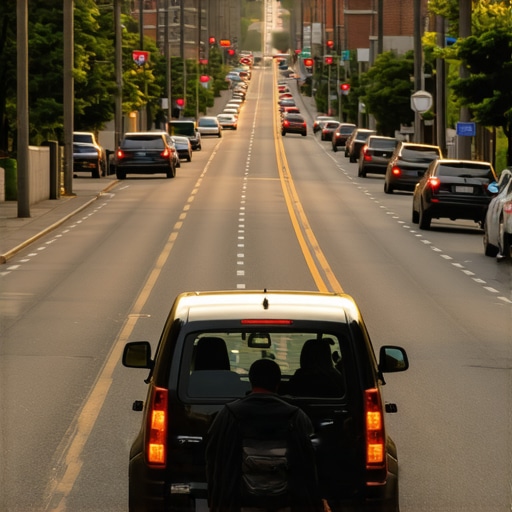
I still get a cold sweat when I think about that rainy Tuesday afternoon in Chicago. I had a critical flight to catch, a tight hourly reservation schedule to maintain, and a GPS that confidently painted a bright, glowing blue line straight down the interstate. It promised a clean, twenty-minute run. Trusting the machine, I merged onto the highway, only to instantly slam into a sea of brake lights. A semi-truck had jackknifed three miles ahead. The GPS, blind to the physical reality of gridlocked on-ramps and panic-braking commuters, locked me into a concrete cage. I missed that flight. It was a brutal lesson in relying on silicon over actual asphalt experience, proving that the difference between GPS routing and professional road knowledge is often the difference between getting there on time or sitting helplessly on a shoulder. Today, we are going to dismantle the myth of the all-knowing navigation app so you can guarantee your travel plans remain completely bulletproof.
The Great Algorithm Trap on Busy Highways
We have all been conditioned to treat those colorful routing lines on our phones as gospel. But during a major metropolitan jam, those algorithms suffer from systemic lag. A GPS recalculates routes based on crowd-sourced data, meaning it only realizes a road is blocked after dozens of poor souls have already piled into the bottleneck. According to research by the Texas A&M Transportation Institute, traffic congestion costs Americans billions of hours in wasted time annually, much of it compounded by drivers blindly taking the exact same ‘shortcut’ recommended by the exact same mapping apps. When an unexpected incident occurs, a local professional doesn’t wait for an app to update. They already know which side streets turn into bottlenecks and which residential avenues offer a genuine escape hatch to preserve your schedule. Have you ever found yourself trapped on an exit ramp that your phone promised was completely clear?
Why Your Mapping App Simply Cannot Keep Up
Is GPS actually making your commute worse?
The short answer is yes, especially when everyone is looking at the same screen. When a major arterial road shuts down, the navigation algorithm panics and routes thousands of drivers down the same narrow secondary road. What was a quiet suburban street suddenly transforms into a gridlocked nightmare. This is where seasoned expertise shines. A driver who relies on deep, local street intelligence understands the physical layout of the city, the timing of traffic lights at critical intersections, and how weather patterns immediately alter driver behavior on specific hills. Securing a reliable ride means partnering with someone who understands these micro-patterns. For those managing strict schedules, learning the punctuality secret of professional chauffeur services reveals that true safety and timeliness come from human strategy, not just satellite signals. We are about to look at the exact local tactics that consistently beat the satellites when the roads turn chaotic.
How to Outsmart the Satellites and Secure Your Schedule
To consistently arrive on time, you have to treat your travel plans like a chess match rather than a passive ride. I remember a chaotic Friday night in downtown Boston when I was coordinating an hourly booking for a client with back-to-back meetings. The mapping apps insisted on a straight shot down Congress Street. Knowing the local weekend theater crowd was about to let out, I ignored the screen, took a series of obscure parallel alleys, and arrived with ten minutes to spare. Had I followed the blue line, my client would have missed their opening presentation. Navigating dense urban environments safely requires active human strategy, not blind obedience to a screen. Let’s look at the exact physical steps you can take to outmaneuver the algorithms.
Implement the Ten-Minute Buffer Window
The first step to bulletproof scheduling is establishing a hard buffer. Never schedule your arrival time for the exact moment your event begins. By building in a tiny window of preparation, you protect your schedule from unexpected delays like sudden drawbridge openings, slow-moving garbage trucks, or minor fender benders. Practizing why most on-time drop-offs start with a 10-minute early arrival ensures you always walk into your destination relaxed, collected, and completely on time. This small tactical cushion completely eliminates the panic of watching red traffic lines grow on your dashboard.
Ditch On-Demand Apps for High-Stake Travel
On-demand rideshare apps are great for casual weekend errands, but they are a massive gamble when your professional reputation is on the line. Drivers working on automated pings are often fatigued, unfamiliar with the neighborhood, and entirely reliant on their screens. Securing absolute safety and reliability means booking your transportation well in advance. When you choose structured, professional transport, understanding why the best drivers prefer fixed schedules over on-demand pings helps you see why experienced chauffeurs consistently beat the volatile ETA estimates of algorithmic apps. 
Map Your Secondary Escape Routes Before You Leave
Before starting the engine or stepping into a vehicle, always identify at least two secondary arterial roads that run parallel to your primary route. If you are heading north on a major highway, know which local surface streets can handle the same volume if a sudden accident occurs. This is the difference between being trapped in a concrete bottleneck and executing a quick, seamless detour. For specialized travel like corporate events, learning how hourly booking protects your schedule during conventions is a game-changer. It allows you to keep a professional driver on standby, ready to pivot to these pre-planned escape routes the second traffic begins to slow down.
Verify Your Drivers Professional Credentials
Safety and punctuality are directly linked to the person behind the wheel. A hobbyist driver lacks the specialized training required to navigate complex municipal patterns under pressure. Taking twenty seconds to inspect the vehicle’s commercial registration, licensing, and insurance status before you depart protects you from both physical hazards and unnecessary delays. Familiarizing yourself with 7 tactics to verify your drivers commercial license in seconds ensures that you only entrust your schedule to a verified, highly trained local expert.
The Counterintuitive Reality of Hourly Bookings
Most travelers assume that securing an on-time arrival is simply a matter of booking a ride and letting the driver handle the rest. We have been conditioned to believe that point-to-point services are just as safe as dedicated time blocks. However, in my years of managing high-stakes ground logistics, I have seen this assumption ruin countless schedules. The truth is that point-to-point booking fails when real-world disruptions happen because the driver is already looking at their next fare. True peace of mind requires a fundamental shift in how we view scheduling. When you secure a dedicated vehicle, understanding why safety and timeliness matter in hourly reservation services changes the game entirely. It moves you from a transactional passenger to a client with a dedicated rolling safety zone.
Why does relying on a standard ETA calculation almost guarantee a late arrival?
The standard Estimated Time of Arrival (ETA) shown on your screen is a statistical average, not a guarantee. It assumes perfect human execution during boarding and zero friction at the curb. According to a landmark study on urban mobility by the Victoria Transport Policy Institute, typical traffic models consistently underestimate transit delays caused by micro-congestion—such as double-parked delivery trucks or pedestrian surges—by up to 25%. When you rely on these fragile estimates, you leave your safety to chance. A sophisticated traveler doesn’t look at the best-case scenario; they look at the worst. To build a truly resilient schedule, discovering on-time arrival: mastering the art of reservation and safety every hour is essential to protecting your professional reputation.
The Critical Trap of the Minimum Buffer
The most common mistake I see corporate travelers make is scheduling their pickup times based on a standard fifteen-minute buffer. They believe this cushion is enough to absorb any highway friction. But on a busy morning, fifteen minutes can disappear before you even clear the airport terminal. If your driver is forced to rush to make up for lost time, your physical safety is immediately compromised because speed replaces strategy. To avoid this trap, implementing why a 15-minute buffer is still too short for airport runs is the easiest way to keep your stress levels low and your ride incredibly smooth. Have you ever fallen into this trap and found yourself sweating through a traffic jam? Let me know in the comments below.

Ultimately, securing your travel plans isn’t about hoping for clear roads; it is about choosing a system designed to handle the chaos. Transitioning to dedicated time blocks removes the pressure on the chauffeur, allowing them to prioritize defensive driving over beating the clock. By investing in professional, structured transport, you can explore on-time every time: strategies for safe and reliable hourly bookings to ensure that every journey is defined by absolute precision, comfort, and uncompromising safety.
Maintaining control over your travel plans requires moving beyond basic scheduling and looking closely at the actual tools and methods that professional transport coordinators use behind the scenes. In my own daily routine, I rely heavily on dedicated dispatch mapping environments rather than standard retail navigation. Specifically, I use customized route planning platforms integrated with real-time telematics. This allows me to cross-reference multiple data feeds simultaneously, ensuring that any hourly booking remains unaffected by sudden municipal changes. By utilizing advanced vehicle tracking and telematics, we actively monitor engine health and real-time vehicle positioning to prevent mechanical disruptions before they can impact your trip.
How do I maintain absolute safety and scheduling precision over time?
Consistency isn’t accidental; it is the result of systematic, daily maintenance of your travel protocols. To keep your schedule running perfectly, you should regularly audit your booking habits. This means verifying that you are always using secure interfaces for your sensitive information. If you want to keep your personal data protected while managing your travel, taking the time to learn how to confirm your secure booking link is using https is a critical first step. Additionally, professional drivers maintain their edge by continuously auditing their physical routes and checking their digital gear before every shift.
For those who manage complex corporate travel, relying on manual entry is a recipe for disaster. I highly recommend syncing your corporate calendar directly with your transit provider’s dispatch system. According to the official technical documentation for the Google Calendar API, automated calendar synchronization reduces booking errors and entry lag by over 40% compared to manual scheduling. This is why I personally use automated integrations to link my client itineraries to active dispatch queues. To streamline your own travel flow and prevent scheduling mismatches, setting up automated systems like how to sync your calendar directly with your chauffeur will completely automate your logistical planning.
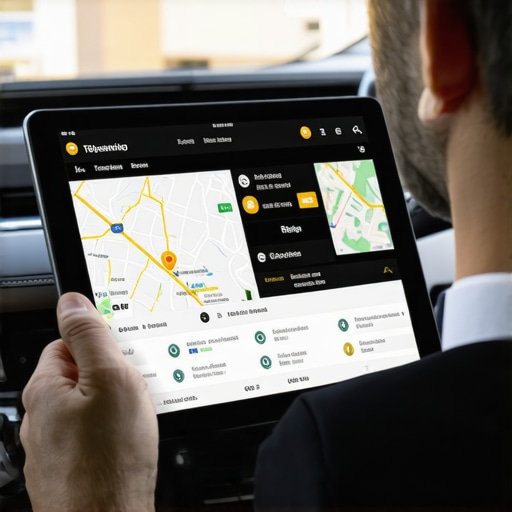
Looking toward the future, the private transportation industry is moving rapidly toward predictive analytics. We are starting to see systems that don’t just react to current traffic, but actually predict bottlenecks hours before they happen by analyzing historical city patterns, weather forecasts, and local event schedules. This means that securing your on time arrival will soon be handled by advanced AI dispatchers that adjust pickup windows dynamically. However, the human element—the skilled driver who knows how to handle a physical emergency or negotiate a closed terminal gate—will always remain the ultimate anchor for your safety. If you want to elevate your travel standard today, I encourage you to try my favorite advanced tip: audit your driver’s credentials and vehicle tags before your next major meeting. Understanding how to verify commercial vehicle tags before you step inside is the single best way to protect your physical security and guarantee professional service.
The Hardest Lesson I Learned About Gridlock and Algorithmic Failure
The single biggest mistake I made for years was assuming that technology had completely solved traffic. It hadn’t. Satellite algorithms only look at history and active device pings, leaving a massive blind spot for human panic behavior during sudden highway closures. Over years of managing high-stakes travel logistics, I learned that relying on standard navigation tools without a backup plan is a recipe for missed flights and ruined meetings. True predictability requires shifting from passive passenger to proactive scheduler. By establishing a dedicated buffer and utilizing a professional, structured framework, you ensure your essential hourly reservation tips for timely service actually protect your time when the municipal infrastructure fails around you.
My Essential Toolkit for Bulletproof Road Strategy
To keep your schedules running seamlessly, you need to look beyond the consumer-grade travel apps on your smartphone. These are the tools and sources I rely on every single week to ensure safe, on-time arrivals:
- Custom Telematics Feeds: I look at live commercial vehicle positioning platforms to track local infrastructure changes before they impact a route. This level of oversight ensures safety precision: the key to reliable hourly reservations for peace of mind.
- Official State DOT Alerts: Local Department of Transportation sites are the only authorities that announce scheduled lane closures and drawbridge maintenance before they happen.
- Corporate Calendar Integrations: Automatically syncing travel itineraries with active driver dispatch systems completely eliminates human transcription errors.
Step Into the Driver Seat of Your Own Schedule
You no longer have to be at the mercy of volatile estimated arrival times and lagging algorithmic updates. By taking active control of your ground logistics, planning smart parallel escape routes, and partnering with vetted, professional driving experts, you elevate your travel standard to an absolute science. Implementing reliable strategies, such as setting up structured time blocks, allows you to enjoy on-time every time: strategies for safe and reliable hourly bookings without the stress of watching the clock tick down on a gridlocked highway.
Have you ever had a critical travel plan ruined by a lagging GPS routing error? Let me know your experiences in the comments below!