
I still get a cold sweat when I think about that rainy Tuesday morning last October. I had booked a flight to a massive industry conference, and, being a self-proclaimed logistics master, I calculated my departure time down to the minute. I built in a neat, tidy 15-minute buffer. It felt incredibly efficient. Then, reality happened. A minor fender bender on the interstate choked three lanes into one. My 15 minutes of breathing room dissolved before I even cleared my neighborhood. By the time I arrived at the terminal, my gate had been closed for exactly four minutes. Watching my plane back away from the jet bridge through the terminal window was a brutal lesson: when it comes to catching a flight, a tight schedule is just an expensive illusion. My obsession with micro-managing every single minute turned what should have been a smooth transition into a stressful, costly disaster. Today, we are going to unpack exactly why that standard quarter-hour cushion is a recipe for travel anxiety, and how you can restructure your transit strategy to ensure you actually enjoy your next trip. We will dive into the real-world mechanics of travel delays, look at how professional transit systems operate, and establish a foolproof formula for stress-free departures.
Have you ever found yourself sprinting through a crowded terminal, carrying a heavy bag, cursing a minor traffic delay that ruined your perfectly planned timeline?
The Math of the Modern Airport Run Just Doesn’t Add Up
Let’s be honest with ourselves. We like to think of travel as a linear sequence: leave house, sit in car, walk through terminal, board plane. But in reality, modern transportation is a fragile chain of events where one tiny hiccup causes a massive domino effect. According to the Bureau of Transportation Statistics, major airport delays are rarely caused by a single catastrophic event, but rather a combination of small, cascading disruptions. When you only budget 15 minutes of extra time, you are gambling that absolutely nothing will go wrong. You are betting that your driver will arrive precisely at the second of your hourly reservation, that every traffic light will be green, that TSA pre-check will have zero queue, and that your airline won’t suddenly change your departure gate to the opposite side of the concourse. Relying on such a razor-thin margin is why so many travelers arrive at their destination completely exhausted before their trip even begins. A truly reliable travel plan requires embracing the buffer time secret for stress-free airport arrivals to absorb these inevitable, unpredictable daily variables.
Is a longer buffer just a waste of valuable time?
I hear this objection constantly from busy professionals who live by their calendar. They worry that adding an extra 30 or 45 minutes to their airport run means wasting precious hours sitting in an uncomfortable terminal seat when they could be working or spending time with family. I used to think the exact same way. But here is the mistake I made early on: I treated travel time as dead time. When you are rushing on a tight schedule, you cannot focus, you cannot work, and your adrenaline is spiking. By intentionally choosing to book your ride with a generous window, you transform that travel time into a controlled, productive environment. You can comfortably reply to emails in the back of a professional vehicle, knowing that even a major highway closure won’t jeopardize your flight. It turns out that securing your peace of mind through a reliable, on-time reservation is actually the ultimate productivity hack.
How to Build Your Bulletproof Transit Schedule
To break free from the trap of the ticking clock, you must treat your travel timeline like a professional logistics operation. Instead of guessing your departure time, you need to work backward from your flight’s boarding time—not the departure time. This simple shift in perspective instantly eliminates the anxiety of last-minute scrambles. True reliability is built on precise, structured intervals that allow you to absorb unexpected delays without breaking a sweat.
Calculate Your Personal Buffer Time with Precision
To find your perfect departure window, you must look beyond the generic advice of arriving two hours early. Start by evaluating the specific variables of your trip: the day of the week, the current weather, and the complexity of your terminal. In my early traveling days, I used to ignore these variables entirely. Once, during a sudden autumn downpour in Chicago, I assumed my standard transit window would suffice. Because I hadn’t factored in how precipitation slows down entire city networks, I watched my transit schedule collapse in real time. That stressful experience taught me that the real reason transit schedules fail during rain is a lack of adaptive planning. Now, I always add a dedicated 20-minute weather cushion to my base travel time. To protect your own schedule, calculate your route using the historic peak transit data for that specific hour rather than relying on an optimistic real-time map calculation. You can protect your peace of mind by understanding that why consistent arrival times matter more than the shortest route is because consistency allows you to plan your day with absolute certainty.

Secure a Fixed Reservation Instead of Relying on On-Demand Apps
The biggest point of failure in modern travel plans is the volatile wait time of on-demand rideshare apps. When you are ready to walk out the door, you are completely at the mercy of driver availability, surge pricing, and algorithmic delays. This is where a pre-arranged hourly service transforms your entire experience. By choosing to book your ride in advance, you secure a dedicated vehicle that is integrated into a professional dispatch system. I realized the immense value of this during a major tech convention in Las Vegas. While thousands of attendees stood in chaotic rideshare lines that stretched around the block, my pre-booked vehicle was waiting at the designated area. This seamless experience proved to me how how hourly booking protects your schedule during conventions and high-traffic events. Making an on-time reservation ensures that your driver is locked into your schedule, eliminating the stressful gamble of whether a car will show up at all.
Ensure Safety and Vehicle Verification Before Boarding
A reliable schedule is useless if you compromise your personal security in the rush to leave. When your vehicle arrives, take a professional approach to verifying your ride. This means performing a quick, systematic check before you load your luggage or step inside the cabin. A reputable service will always provide you with digital credentials or a secure link to track your driver. Take ten seconds to verify that the vehicle license plate matches your booking confirmation exactly. This practice is not about being paranoid; it is about establishing a professional standard of transit. By understanding how to approach this step, you can confidently verify your ride. Knowing how to verify chauffeur credentials without asking for id keeps the interaction polite and seamless while guaranteeing your absolute peace of mind.
Why the Cheapest Reservation Often Costs the Most
Everyone tells you to search for the lowest hourly rate when booking a private ride, but in my experience, choosing the lowest price point is the fastest way to compromise both punctuality and safety. The travel industry is flooded with platforms operating on razor-thin margins, and they cut corners where you can least afford it: vehicle maintenance and driver screening. A study by the National Safety Council highlights that commercial fleet safety is directly correlated with consistent, rigorous preventative maintenance schedules—something budget operators routinely skip to keep their rates low. When you book based on price alone, you are likely stepping into a vehicle with worn brakes, outdated tires, or a driver who has been behind the wheel for twelve straight hours. Understanding the real cost of choosing the cheapest reservation available helps you see that true value lies in the safety standards of a premium service.
Are you overlooking the dangers of the multi-app dispatch gamble?
The most common trap sophisticated travelers fall into is assuming that all reservation systems are backed by a dedicated fleet. Many modern services operate as third-party brokers, accepting your booking and then outsourcing it to independent contractors who use multiple on-demand apps simultaneously. This creates a massive security loophole. If your driver is distracted by checking three different screens to secure their next fare, your safety is instantly compromised. This is why seasoned corporate travelers insist on true hourly bookings. By understanding why point-to-point booking fails for executive roadshows, you realize that having a dedicated chauffeur who is solely focused on your itinerary—without the distraction of outside pings—is the only way to guarantee a secure, professional environment.

Another overlooked nuance is how companies handle scheduling behind the scenes. A truly reliable agency does not schedule rides back-to-back with zero breathing room. Instead, they build in early arrivals. Learning why most on-time drop-offs start with a 10-minute early arrival reveals the operational discipline required to keep your day on track. Have you ever fallen into the trap of booking the cheapest ride only to find yourself stranded or riding in a vehicle that felt unsafe? Let me know in the comments below. To guarantee your peace of mind on your next journey, take control of your schedule and secure a verified, professional ride today by visiting our contact us page.
My Personal Toolkit for Bulletproof Scheduling
Managing a complex travel schedule requires more than just good intentions; it demands the right digital tools to sync your life with your transport provider. I rely heavily on direct calendar integration to bridge the gap between my professional commitments and my transit bookings. Instead of manually copying flight details, I use calendar automation tools like Zapier to feed my flight data straight into my booking portal. This setup is incredibly effective when you learn how to sync your calendar directly with your chauffeur, eliminating transcription errors entirely. When every minute of your workday counts, relying on manual entry is a vulnerability you cannot afford.
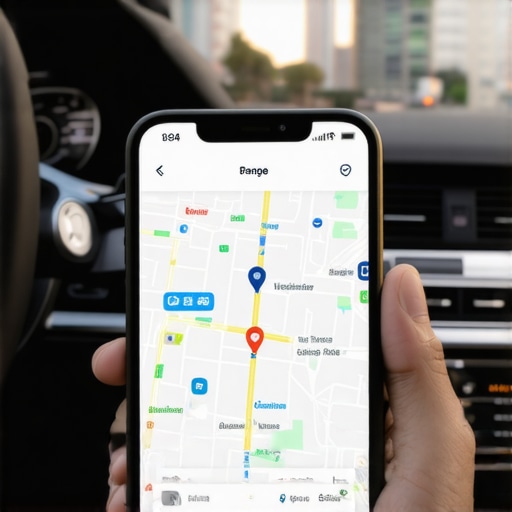
For real-time tracking, I refuse to rely on standard consumer maps. I use FlightAware API integrations and professional GPS tracking links to monitor my vehicle’s location. If you want to verify that your service is operating on a professional level, you should perform a quick connection test. Knowing how to test the accuracy of your real-time tracking link ensures that you are seeing live updates rather than cached, lagging data. In my experience, high-end dispatch networks utilize dedicated vehicle telematics rather than cellular triangulation, which guarantees uninterrupted location updates even in tunnels or dense urban canyons.
How do I maintain absolute transit reliability over time?
Consistency in travel logistics is not a one-time setup; it is a system that must be actively maintained. To keep your schedule running perfectly, you should regularly audit your booking profiles and clear out obsolete auto-fill data that could cause booking errors. A minor typo in your pickup address can derail an entire business trip. Furthermore, I recommend establishing a recurring evaluation process for your transport providers. The transit industry is rapidly evolving, and keeping your logistics seamless requires using providers who prioritize modern reservation security over outdated booking methods. By understanding the core principles of safety precision the key to reliable hourly reservations for peace of mind, you can establish a travel standard that consistently works in your favor.
Looking ahead, the future of executive transit lies in predictive machine learning models. According to the intelligent transportation systems research published by the IEEE, predictive traffic modeling will soon allow dispatch systems to dynamically adjust your departure window based on real-time municipal construction databases and regional weather patterns. This means your buffer times will become self-optimizing. Until those systems are fully integrated, the best way to safeguard your schedule is to take action today. I highly recommend auditing your upcoming travel calendar and replacing your next on-demand airport ride with a dedicated, professional vehicle. You can secure a pristine, reliable vehicle for your next journey right now by visiting our contact us page and locking in your schedule with absolute precision.
When we look back at our most stressful travel days, they almost always stem from the same core mistake: treating time as a fixed, predictable resource rather than a highly volatile one.
The Hardest Lessons I Learned About Hourly Reservations and True Safety
Over years of managing tight corporate itineraries and personal flights, I had to unlearn several deeply ingrained habits. Here are the realities of modern transit logistics that completely changed my approach to scheduling:
- The illusion of the ‘on-time’ average: Traffic apps calculate estimated times of arrival based on current flow, completely ignoring the fact that a single stall can instantly double your transit time. A professional, scheduled buffer is the only genuine safeguard.
- Rideshare is a gamble, not a strategy: Relying on on-demand availability during peak hours is a recipe for high-adrenaline sprints through the terminal. True peace of mind comes from securing an on-time every time strategy with a dedicated vehicle.
- Safety is deeply connected to scheduling: When drivers are rushed by tight back-to-back booking algorithms, safety protocols are the first things to go. Booking a dedicated hourly service ensures your chauffeur has the luxury of time to prioritize your security.
My Essential Toolkit for Bulletproof Logistics
I do not rely on luck to keep my schedule intact. These are the specific resources and habits I use to guarantee consistent results on every single trip:
- FlightAware API Integration: By tracking incoming aircraft rather than just flight status updates, you can anticipate departure delays hours before the airline officially announces them.
- Dedicated Private Transport Portals: I avoid third-party brokers completely. I only book through direct, verified channels that offer clear reservation security measures and professional dispatchers.
- Digital Verification Protocols: Before stepping into any luxury vehicle, I run through a quick mental checklist to confirm chauffeur credentials and vehicle plates to maintain absolute personal security.
The Future of Your Stress-Free Travel Starts Now
Deciding to prioritize your peace of mind over a cheap, unpredictable ride option is the ultimate upgrade for your travel routine. By taking control of your scheduling and utilizing a trusted, dedicated hourly service, you can finally reclaim the joy of travel. You can safeguard your very next business trip or family vacation today by securing your vehicle on our dedicated contact us page.
Have you ever missed a major connection or executive meeting because of a razor-thin scheduling buffer? Let me know your experiences in the comments below!