
It was 7:15 AM on a rainy Tuesday, and I was standing on a wet curb watching my flight departure window shrink by the second. I had booked what I thought was a reliable ride through a standard app, only to watch the little digital car on my screen spin in aimless circles three miles away. By the time I arrived at the gate, the door was closed. I missed a crucial client presentation, lost a potential contract, and learned a painful, expensive lesson about leaving my schedule to chance. Early in my career, I made the amateur mistake of assuming any driver with a GPS could guarantee an on-time arrival. But true punctuality isn’t a matter of luck or driving faster; it is a calculated discipline.
Today, we are going to pull back the curtain on the punctuality secret of professional chauffeur services. You will learn the exact booking structures and routing philosophies that elite drivers use to guarantee seamless, stress-free arrivals every single time, so you never have to watch your departure window slip away again.
The Real Reason Your Standard Ride App Keeps Letting You Down
Standard rideshare networks rely on on-demand pings, which means your driver is often starting from scratch, fighting traffic just to reach your pickup point. Professional chauffeurs operate on an entirely different operational blueprint. They realize that why most on time drop offs start with a 10 minute early arrival is not just a polite habit, but a structural buffer built directly into their dispatch workflow. When you rely on an on-demand algorithm, you are essentially gambling that a driver is nearby, motivated, and navigating effectively. Professional services eliminate these variables entirely by treating transit as a scheduled, managed system rather than a series of random matches. This structured approach is why high-net-worth individuals and corporate executives refuse to rely on basic hailing apps for their critical timelines. Have you ever missed an important meeting or flight because a driver was hopelessly lost or delayed by unexpected morning traffic? It is a frustrating feeling that can disrupt your entire week. Let me know in the comments below!
Are professional chauffeur services actually worth the extra cost?
It is easy to look at the price tag of a dedicated chauffeur and wonder if you are just paying for a fancy car and a suit. But the real value lies in the rigorous planning behind the scenes. According to a study on urban mobility patterns by the Texas A&M Transportation Institute, peak-hour traffic delays can fluctuate by up to 40% from day to day on the same route. While casual drivers rely entirely on real-time navigation updates—which often react too late to sudden gridlock—professional dispatchers study historic patterns, monitor flight telemetry, and utilize safety precision the key to reliable hourly reservations to secure your timeline. When you book a dedicated ride, you are not just purchasing transit; you are buying an insurance policy against unpredictable delays and securing peace of mind.
How Professionals Master the Art of the Timeline
To understand how a professional chauffeur operates is to understand the difference between reacting to traffic and actively managing it. Standard drivers treat a journey like a straight line, but professionals view it as a dynamic chess match. The secret lies in decoupling your schedule from live GPS updates, which are notorious for telling you about a traffic jam only after you are already stuck in the middle of it. By focusing on structured, pre-planned parameters, you can insulate your day from the chaos of unexpected delays.
Apply the Fifteen Minute Buffer Rule
I learned the hard way that arriving exactly on time is actually arriving late. Last winter, I scheduled a critical meeting with a new investor and calculated my travel time down to the precise minute using a standard mapping application. A minor fender bender three miles ahead of me turned a twenty-minute drive into a fifty-minute crawl. I sat in my car, helpless and sweating, watching the clock tick past our meeting time. That was the day I adopted the chauffeur’s primary strategy. Professional drivers utilize the buffer rule that actually prevents tardy starts to absorb unexpected delays. Instead of scheduling your departure based on the average travel time, you must build a non-negotiable fifteen-minute safety margin directly into your planning. This is not passive waiting; it is an active insurance policy for your reputation.
Shift from On-Demand Apps to Hourly Bookings
Many commuters assume that hailing a car five minutes before they need to leave is the most efficient way to travel. In reality, on-demand dispatching is highly unpredictable. When you book an hourly ride, you secure a dedicated driver whose sole focus is your specific itinerary. This is especially true for corporate schedules or multi-stop days. Using safety precision the key to reliable hourly reservations ensures that your vehicle is already stationed nearby, waiting for you to exit your meeting, rather than forcing you to wait on a driver who is still finishing a trip across town. 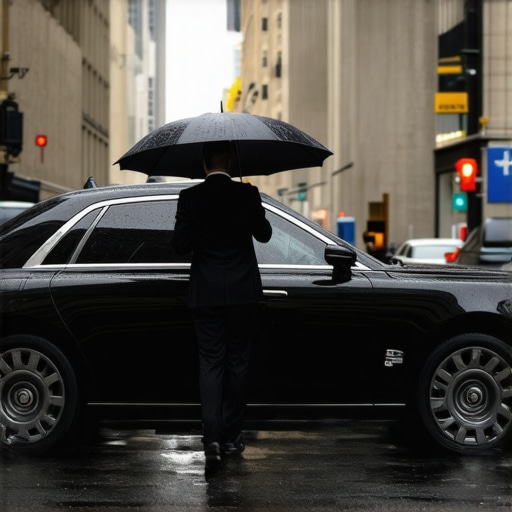
Monitor Real Variables Instead of Arbitrary Times
Casual travelers look at the clock, while professional dispatchers look at live data streams. If you are traveling to or from an airport, tracking the physical clock is a recipe for disaster. Flight schedules change rapidly, and gate delays can throw off your entire day. This is why professional transportation managers insist on tracking physical flight numbers rather than relying on estimated passenger landing times. By integrating real-time telemetry into your scheduling, you ensure that your vehicle is synchronized with your actual physical arrival, eliminating the stressful rush through the terminal. For those managing highly complex days, utilizing ensuring safety first your guide to on time reservations at any hour can help coordinate even the most volatile schedules, keeping you safe and punctual regardless of the external conditions.
When most people want to guarantee an on-time arrival for a critical event, their instinct is to book a ride and hope the driver’s GPS handles the rest. In my years of analyzing transport logistics, I have found that this passive trust is where most executive schedules fall apart. Everyone says that technology has solved routing, but in my experience, relying solely on automated GPS calculations is actually a recipe for chronic lateness. The hidden nuance of professional transit is that algorithms optimize for the average driver, whereas a professional chauffeur operates on precision metrics that actively override standard digital routing.
The Critical Security Flaw of Auto-Fill and Over-Optimistic Software
One of the most dangerous traps you can fall into is trusting the estimated time of arrival (ETA) generated by standard consumer apps. These systems rely on historical averages and perfect-world scenarios. However, according to a transit reliability study by the Federal Highway Administration, non-recurring congestion events like minor accidents, sudden weather shifts, or construction account for over 50% of all traffic delays. Standard software simply cannot predict these variables before they happen.
Furthermore, many travelers compound this issue by relying on automated features. When you rush through a booking, the security flaw in auto-fill booking forms can silently alter your pickup address or drop-off location to a nearby default, causing your driver to wait at the wrong intersection while your departure window slips away entirely. If you want to take control of your travel, you must actively verify every detail rather than letting your phone do the thinking for you.
Why do standard hourly bookings still result in late arrivals?
The truth is that many service providers treat hourly bookings as consecutive point-to-point trips. When a driver is rushing from one client to the next, any delay in their previous ride cascades directly into your schedule. To prevent this, elite services utilize stay secure and punctual the essential hourly reservation tips for timely service to ensure that a dedicated buffer is carved out before your window even begins. This is why you should always ask your provider if your chauffeur is locked into a fixed, dedicated schedule for your block of time, rather than being dispatched dynamically from a pool of active vehicles.

Another major blind spot is how casual travelers handle physical meeting extensions. If you book a strict point-to-point ride and your meeting runs twenty minutes late, that driver will often abandon the pickup to catch their next pre-scheduled fare, leaving you stranded. By shifting your strategy to dedicated hourly bookings, you protect your timeline. Utilizing how hourly rates eliminate the stress of traffic jams ensures the vehicle remains anchored to your position, regardless of how many times your schedule shifts during the day. Have you ever fallen into this trap of booking a tight point-to-point ride only to have your meeting run over? Let me know in the comments below!
When you shift your perspective from passive passenger to active planner, the tools you use to manage your time must change as well. To maintain this level of precision over the long term, I personally rely on deep calendar integrations. Instead of manually typing addresses and times into a booking portal every week, I use direct API sync tools. This ensures that whenever an assistant updates a calendar entry, the flight telemetry and pickup instructions update in real-time on the dispatcher’s end. If you want to streamline this workflow, you should learn how to sync your calendar directly with your chauffeur to completely eliminate human copy-paste errors.
How do I maintain absolute travel punctuality over time?
Consistency is not a one-off achievement; it requires a systematic review of your transit habits. I recommend auditing your travel logs once a month. Look at the delta between your scheduled pickup time and your actual arrival time. If you notice a recurring delay during certain times of the week, it means your baseline buffer is too thin. For example, Friday afternoons require an entirely different planning model than Tuesday mornings. To safeguard your weekend travel, make sure to implement the buffer you need for friday afternoon transit schedules. Additionally, I highly recommend using the real-time tracking link provided by your service provider to audit driver progress before they even arrive. Knowing how to use these digital tools keeps the service provider accountable and keeps you in control of your day.

Looking ahead, the future of executive transit logistics lies in predictive AI dispatching. According to the latest technical documentation from urban logistics platform OptimoRoute, route optimization algorithms are beginning to incorporate micro-weather patterns and local municipality construction databases to predict delays up to six hours before they happen. However, until these systems are fully automated and flawless, the human-managed dispatch desk remains your ultimate safety net. If you want to experience this level of zero-stress travel right now, I challenge you to try one advanced strategy today: set up a dedicated, multi-hour booking for your next major day of meetings using stay secure and punctual the essential hourly reservation tips for timely service, and watch how the anxiety of watching a spinning digital car on a standard rideshare app completely evaporates.
When you transition from reacting to the chaos of daily traffic to actively engineering your day with professional systems, your entire relationship with time changes. You stop staring at arrival screens with anxiety, and you start focusing entirely on the work, family, or travel that lies ahead.
The Hardest Lesson I Learned About relying on Automated Transit Software
For years, I believed that mapping applications were neutral tools designed to give me the fastest route. The hard truth is that consumer-facing transit software is optimized for average commuter data, not for high-stakes executive timelines. I learned that relying entirely on on-demand, algorithmic scheduling is a quiet threat to your professional reputation. True transit security comes from establishing hard physical boundaries—such as realizing why most on time drop offs start with a 10 minute early arrival—rather than hoping an algorithm gets it right during rush hour.
My Essential Toolkit for Precision Scheduling
To consistently protect your calendar from unexpected delays, you need to rely on specialized scheduling mechanisms rather than simple alarm clocks. Here is the custom setup I use to manage my transit pipelines:
- Flight Telemetry Tracking: Never schedule an airport pickup based on estimated flight landing times. Always utilize why our dispatchers monitor flight numbers instead of just times to synchronize vehicles directly with physical airspace data.
- Dedicated Booking Portals: Skip the common consumer apps and secure your rides via a how to confirm your secure booking link is using https protocol to safeguard your personal data while locking in drivers.
- Pre-Planned Buffers: Implement the buffer time secret for stress-free airport arrivals to absorb sudden highway accidents or airport security bottlenecks automatically.
Step Into a World of Absolute Schedule Control
You do not have to accept the stress of unpredictable morning commutes or late arrivals as an inevitable part of modern travel. By shifting your strategy to dedicated hourly reservations and proactive telemetry tracking, you take complete control of your day. Punctuality is not a matter of luck; it is a designed choice that allows you to focus on what truly matters. If you are ready to experience the difference that professional, precision routing can make for your schedule, contact us today to secure your timeline.
Have you ever missed a critical meeting because of an unpredictable rideshare delay? Let me know in the comments below!