I stood on a rain-slicked corner in the heart of the city, my eyes glued to a glowing blue dot on my smartphone screen. The app insisted my driver was ‘turning the corner,’ yet the street remained stubbornly empty. I had an hourly reservation for a high-stakes board meeting, and that digital icon was doing a frantic, glitchy dance three blocks away. That was the moment I realized a ‘live’ link is often anything but live. We put an immense amount of faith in these tracking URLs, especially when our safety and punctuality are on the line, but I learned the hard way that blind trust leads to missed flights and soaked suits.
Stop Trusting the Little Blue Dot Blindly
The biggest mistake I made early on was assuming that modern technology is infallible. I once sat in a hotel lobby for twenty minutes, watching a frozen tracking link, only to find out the driver had been waiting at the wrong entrance the entire time. I didn’t know how to test the accuracy of your real-time tracking link back then, and I paid for it with a very awkward apology to my client. Today, I want to show you how to peel back the curtain on these links so you never get stranded again. We are going to look at the lag, the logic, and the literal distance between what you see and where the car actually is.
Is live tracking actually worth the hype?
You might be wondering if these digital tools are even helpful if they aren’t 100% precise. The short answer is yes, but only if you know their limitations. According to data from the official U.S. government GPS portal, civilian GPS receivers are typically accurate to within 16 feet, but when you factor in ‘urban canyons’—those tall buildings that bounce signals—and cellular network latency, your ‘real-time’ view can easily be 30 seconds behind. This is precisely why your real-time tracking link might have a 30-second lag or more depending on your location. Have you ever noticed your driver suddenly ‘jump’ across the map? That’s the system finally catching up to reality.
The goal isn’t to ditch the tech, but to use it as a secondary check rather than the absolute truth. If you are managing a tight schedule, understanding the real reason your app’s ETA is often over-optimistic can save you from a lot of stress. I’ve found that the best way to stay on time is to combine the tracking link with a quick confirmation. Have you ever experienced that sinking feeling when the map says the driver is ‘here’ but the curb is empty? It’s a common hurdle, but one we can jump over with a few simple verification steps. Let’s dig into how you can audit that link in seconds before you even step out the door.
Audit the link before you grab your bags
The first step in taking control of your arrival is a technical one. Before you even walk out the door, you need to ensure the data you are looking at is secure and legitimate. I always make it a habit to learn how to confirm your secure booking link is using https. If that little padlock icon isn’t there, the data could be intercepted or, worse, you could be looking at a cached version of a map that hasn’t updated in five minutes. I once stood in a lobby in downtown Chicago during a sudden snowstorm, staring at a static image on my phone while my driver was actually two blocks away, struggling with an unmapped detour. Now, I refresh the page twice to ensure the movement is fluid and not just a ‘snap-to-road’ animation generated by the app to keep me calm.
Why manual overrides beat AI every single time
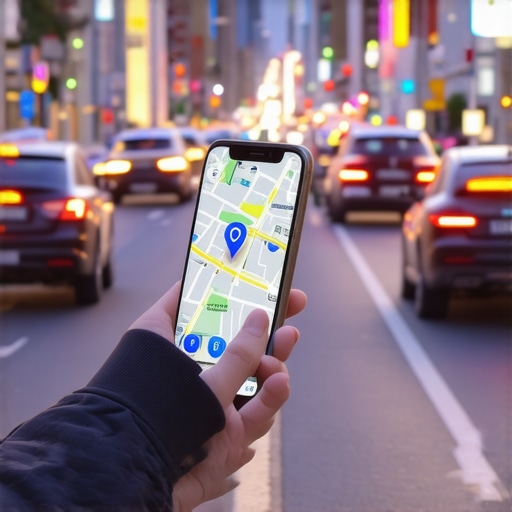
We’ve grown accustomed to letting algorithms decide our routes, but understanding why manual dispatching still beats AI for real-time accuracy comes down to local nuance. If you see your driver stuck at an intersection for more than three minutes, don’t wait for the app to send a generic ‘delayed’ notification. The AI is often trying to ‘recalculate’ rather than admitting there is a physical blockage or a parade it doesn’t know about. I’ve found that knowing the protocol for verifying a driver when the app fails is your best insurance policy. Send a quick text or use the in-app chat. A simple ‘Are you caught at the construction on 5th?’ often prompts the driver to find a workaround that the GPS hasn’t logged yet, turning a potential 15-minute delay into a 2-minute correction.
The three-minute refresh rule
If the car hasn’t moved on your screen in 180 seconds, your tracking link has likely timed out or hit a ‘dead zone.’ This is a core part of why real-time tracking is your best defense against missed meetings, but it only works if the data is fresh. I remember a high-stakes trip where I trusted a frozen screen for ten minutes. By the time I realized the link had crashed, I was already behind schedule. Now, I use the buffer time secret for stress-free airport arrivals by checking the link every few minutes while I finish my coffee. This constant manual auditing ensures that if the driver hits a snag, I know about it before it becomes a full-blown crisis.
Watch the orientation of the icon
It sounds small, but the direction the car icon is facing tells you more than the ETA. If the icon is spinning or facing away from your location while the ETA is dropping, the system is guessing based on historical data. This is a red flag that the real reason your tracking link might be lagging is a poor GPS handshake between the driver’s phone and the server. In these moments, I ignore the timer and look at the nearest cross-street. Knowing how to audit your driver’s route history for accuracy and safety allows you to see if they’ve been looping or if they are genuinely making progress through the urban canyon. It’s about being an active participant in your journey rather than a passive observer of a digital screen.
Most travelers believe that ‘efficiency’ means finding the absolute fastest car at the lowest possible price point. In my experience, that mindset is the quickest way to end up stranded. The biggest myth in the industry is that on-demand apps are more flexible than professional reservations. The truth is, the best drivers prefer fixed schedules precisely because they can guarantee safety and timing. When you rely on a ping, you are at the mercy of whoever happens to be closest, not whoever is most qualified. I’ve found that how hourly rates eliminate the stress of traffic jams is the real secret; it shifts the driver’s incentive from ‘finishing the trip quickly’ to ‘serving the client perfectly.’
The efficiency lie of on-demand booking
The ‘Oops’ factor often hits when a traveler tries to piece together a multi-stop day with individual bookings. I call this the point-to-point fallacy. It seems cheaper on paper, but why point-to-point booking fails for executive roadshows is simple: the moment you step out, your driver is gone. If your meeting runs five minutes long, you’re back in the digital lottery. By switching to an hourly model, you secure the asset. When you look at the math behind why hourly bookings save money during peak hours, you realize you aren’t just paying for a seat; you’re paying for the elimination of wait-time anxiety.

Why your driver avoids the shortest route
Everyone says the GPS knows best, but in the high-stakes world of executive transit, the ‘shortest’ route is often a security trap. I once had a driver attempt a shortcut through an unlit industrial zone to save three minutes. It was a lesson learned: the simple reason your driver should never take side streets at night isn’t just about traffic—it’s about predictable safety. Furthermore, why your estimated arrival time is not a guarantee of service becomes clear when an algorithm ignores a local parade or a high-security detail closure. According to the INRIX Global Traffic Scorecard, urban congestion varies by up to 25% based on local incidents that GPS apps often lag in reporting. This is exactly why on-time performance depends on local knowledge over GPS.
Why does your driver arrive 10 minutes early but stay around the block?
Sophisticated travelers often ask why their professional chauffeur isn’t visible exactly at the curb 15 minutes prior. This is a deliberate tactic. A pro will use the 12-minute rule for international airport pickups or the buffer rule that actually prevents tardy starts by staging nearby without blocking traffic. They want to be ‘on-call’ without being an obstruction. If you see your driver parked three blocks away, they aren’t lost; they are managing the ‘curb-side dance’ so that the moment you walk out, they can roll up seamlessly. Have you ever fallen into the trap of thinking a driver was late just because they weren’t idling in front of the door? Let me know in the comments!
I personally don’t just rely on a simple text message to manage my logistics. I use a tool stack that bridges the gap between my busy day and the driver’s windshield. First, I always look for how to sync your calendar directly with your chauffeur. This isn’t just about convenience; it’s about ensuring that when my flight is delayed by thirty minutes or a board meeting runs over, the reservation system sees it before I even have time to reach for my phone. This automated handshake is the foundation of the punctuality habits of the worlds best professional drivers. Secondly, I vet the financial side of the house immediately. I make sure I know how to spot a secure payment portal before you book to avoid the ghost booking scams that plague the industry during peak seasons or high-profile city events.
How do I maintain my travel safety over time?
Consistency is the ultimate enemy of complacency. To keep this system working long-term, you need a repeatable audit that you perform every single time. I treat every pickup with the same level of scrutiny as the first, starting with how to read a drivers commercial badge for authentic credentials. Even if it’s the same company I’ve used for a year, I verify. This follows the technical logic of NIST SP 800-52 Rev. 2, which emphasizes that secure communication—like your tracking link—must be continually re-validated to ensure the integrity of the endpoint. If you aren’t refreshing your knowledge on why real-time tracking apps need constant manual overrides, you are eventually going to be the traveler standing on the curb while your car is stuck a mile away. I make it a habit to check the driver’s current position against my own physical surroundings; if the map says they are on 4th and I can see 4th is blocked by a delivery truck, I know the app is failing.
The future of predictive transit sensing
We are rapidly moving away from simple blue dots on a map and toward hyper-local predictive sensing. In the next few years, I expect high-end hourly services to integrate with city-wide infrastructure sensors that detect roadwork or heavy pedestrian flow before the driver even reaches the block. This will make the secret to getting a smooth ride through construction zones an automated feature rather than just a driver’s intuition. For now, sticking with an hourly model remains the superior choice because how hourly rates stop the stress of traffic jams 2 is still the only way to ensure the driver is focused on your safety and arrival time rather than the ticking clock of a point-to-point fare. My final tip for you today? Go into your next booking and try to sync your calendar. It’s a small technical step that removes the human error of forgetting to tell the driver the meeting moved.
Why Distance on a Map is Often a Lie
After a decade of managing high-pressure schedules, I’ve learned that a blue dot is just a suggestion. The hardest lesson I learned is that ‘distance’ on a screen never accounts for the human factor. I’ve seen drivers trapped in alleyways that the GPS claimed were clear thoroughfares. This is exactly why most on-time drop-offs start with a 10-minute early arrival, because that buffer accounts for the map’s lies. Don’t look at the miles; look at the driver’s ability to anticipate the ‘last mile’ chaos.
- GPS Drift is Real: Your phone might show the car at the corner when it’s still two blocks back.
- Trust Your Eyes Over the App: If you see a delivery truck blocking the road, the app doesn’t know yet.
- Reservations Beat Pings: Having a car already assigned to you removes the ‘search’ latency entirely.
My Personal Kit for Stress-Free Travel
I don’t leave my safety to chance, and neither should you. My ‘toolkit’ isn’t a bag of gadgets, but a set of digital habits. First, I always ensure I know how to sync your calendar directly with your chauffeur so my changes are reflected in their dispatch system instantly. For security, I never board without spotting a secure payment portal for private car hires instantly to ensure my data remains encrypted. Finally, I make it a non-negotiable habit to check how to read a drivers commercial badge for authentic credentials before the car even pulls away from the curb. These three steps turn a chaotic trip into a managed experience.
#IMAGE_PLACEHOLDER_E#
Take Back Control of Your Schedule
The transition from being a passive passenger to an active traveler happens the moment you decide your time is worth more than a discount. By choosing professional models, you’re not just paying for a ride; you’re investing in peace of mind. I’ve found that how hourly rates eliminate the stress of traffic jams is the single most important mindset shift you can make. It removes the friction of ‘getting there’ and allows you to focus on ‘being there.’ Go into your next booking with these tools in hand, and you’ll never look at a tracking link the same way again.
Have you ever been stranded because a tracking link froze at the worst possible moment? Let me know your story in the comments below!