
I remember standing on a rain-slicked curb in Midtown Manhattan, clutching a damp briefcase and watching a career-defining meeting start without me on my phone screen. I had tried to be ‘frugal’ by using a standard ride-hailing app, only to watch my driver cancel twice while the ‘estimated arrival’ jumped from four minutes to twenty. It was a visceral, sinking feeling. I felt like a total amateur because I had prioritized a twenty-dollar saving over my professional reputation. That was my ‘lightbulb moment’ where I realized that for a business traveler, time isn’t just money—it is your brand.
Stop Counting Pennies and Start Valuing Your Sanity
For the longest time, I fell into the trap of thinking that paying for a car to sit and wait for me was an indulgence I didn’t need. I was wrong. Early in my career, I made the classic mistake of relying on app-based arrival times during rush hour, assuming technology could beat local gridlock. It can’t. When you book a driver by the hour, you aren’t just paying for a seat; you are buying a guarantee. Today, I want to walk you through how hourly bookings actually save you money by eliminating the hidden costs of delays, missed opportunities, and the mental exhaustion of constant logistics.
Is booking by the hour actually worth the extra cost?
I know what you’re thinking because I thought it too: ‘My CFO will have a heart attack if I book a private driver for four hours.’ But have you ever calculated the cost of a missed flight or a lost contract? According to the Global Business Travel Association (GBTA), companies lose billions annually in ‘indirect costs’—things like lost productivity and employee burnout caused by inefficient travel. When you choose a dedicated driver for multi-stop days, you transform the backseat of a car into a mobile office. You aren’t frantically checking your phone for a license plate match; you’re finishing a presentation or taking a high-stakes call in a secure, quiet environment. Have you ever been stranded at a curb while your meeting was already in progress? I’d love to hear your horror stories in the comments so we can all learn what to avoid. By the end of this, you’ll see why the ‘expensive’ option is often the one that keeps the most money in your pocket.To get this right, you have to treat your travel schedule like a construction blueprint rather than a loose suggestion. I once tried to ‘wing it’ in Chicago during a major tech conference season. I figured a 15-minute gap between meetings was plenty. It wasn’t. A local street fair and two construction zones turned a 1-mile trip into a 40-minute ordeal. I spent that time frantically apologizing to a potential investor while sweating in a car that smelled like old fries. That mess taught me that the buffer rule that actually prevents tardy starts isn’t just a suggestion—it is your professional life support. When you book by the hour, you are creating a structural wall against the chaos of the city.
Build a Reservation Strategy That Actually Works
The first step in reclaiming your schedule is understanding that the error in relying on app-based arrival times during construction or peak hours is a rookie mistake. Real-time algorithms look at speed, but they don’t look at local context. A professional driver knows that a ‘red line’ on a map in the afternoon might mean a twenty-minute delay because of a shift change at a local precinct or a school bus route. By reserving a driver for a four-hour block, you allow them to pre-scout the route and adjust on the fly without the pressure of a ‘meter’ ticking or another passenger waiting for them.
Why the 10-Minute Early Rule is Non-Negotiable
You should never see your driver for the first time exactly when you need to leave. In the high-stakes world of executive transit, why most on-time drop-offs start with a 10-minute early arrival is simple: it eliminates the ‘departure friction.’ This ten-minute window is where the magic happens. You can load your luggage without rushing, confirm your driver’s identity, and settle into the backseat to check your emails before the wheels even turn. It’s the difference between starting a meeting with a racing pulse and starting it with complete composure.
Stop Guessing and Start Vetting Your Ride
Just because a car is black and the driver is wearing a suit doesn’t mean you are safe. I always tell my colleagues that a reservation is only as good as the verification behind it. Before you even set foot in the vehicle, you need to use 7 tactics to verify your drivers commercial license in seconds right from your phone. Look for the commercial plates and the specific city-issued decals. 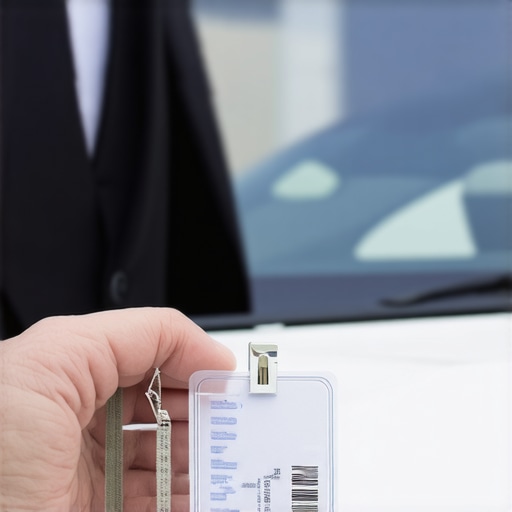
The Safety Checklist Before You Close the Door
Once the car is at the curb, your job isn’t done. Think of this like a pilot’s pre-flight check. I personally never skip the 3-point door handle check every passenger must perform to ensure child locks aren’t engaged and the doors function correctly from the inside. Furthermore, you should know how to verify a private vehicles commercial insurance in seconds by looking for the carrier’s name on the registration sticker. If a driver hesitates to show you their credentials or if the car lacks the one physical marker that proves a vehicle is well-maintained—like clean, high-tread tires and a clear windshield—cancel the ride. It is much cheaper to pay a cancellation fee than to pay the price of an accident in an unvetted vehicle. By mastering these specific steps, you move from being a passenger to being a manager of your own movement.
Common wisdom suggests that the most advanced AI will always find the quickest path. In my experience, that’s a lie that leads to missed flights and late boardroom entries. Most people think that as long as they have a booking, the technology will handle the rest. But there is a massive gap between a ‘confirmed’ ride and a guaranteed arrival. You see, why on-time performance depends on local knowledge over GPS is something no algorithm has truly solved yet. A computer sees a line; a professional driver sees a funeral procession, a shift change at the hospital, or a sports game letting out early. I once watched a driver blindly follow a ‘faster’ route into a dead-end street blocked by a block party because the map hadn’t updated. Have you ever fallen into this trap? Let me know in the comments.
GPS Isn’t as Smart as You Think
The biggest mistake travelers make is assuming that the arrival time on their screen is a binding contract. In reality, why your estimated arrival time is not a guarantee of service comes down to the ‘latency’ of real-time data. Researchers at the MIT Intelligent Transportation Systems Lab have noted that predictive traffic models often struggle with ‘stochastic’ events—those random, unpredictable human elements that happen at the curb. This is why why manual dispatching still beats AI for real-time accuracy. A human dispatcher can call a driver and say, ‘Don’t take the bridge; there’s a protest starting,’ while the AI is still happily routing thousands of cars into the bottleneck.
Can You Really Trust a 4 AM Pickup Confirmation?
We’ve all been there: staring at a silent phone in the dark, wondering if the car is actually coming. The ‘oops’ factor usually happens because passengers rely on automated systems that don’t verify if the driver is actually awake. I’ve learned the hard way that the only way to ensure your 4 am ride actually shows up is to use a service that employs a physical ‘wake-up’ protocol for their staff. If you aren’t getting a pre-arrival text or seeing a vehicle move on a map 15 minutes prior, you’re flying blind. This is why I always check the signs of a professional booking confirmation email immediately after reserving. If it looks like a generic receipt without a direct dispatch number, you’re at risk.
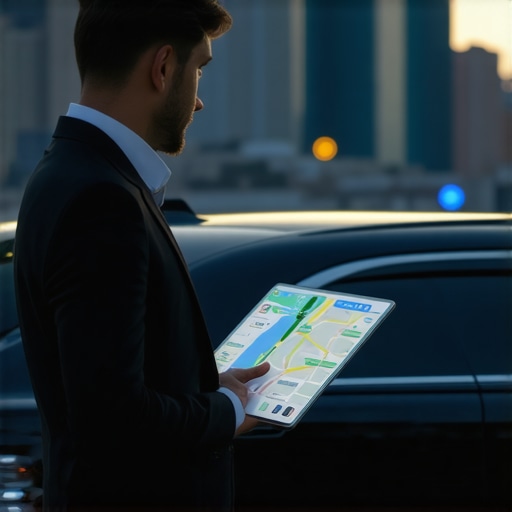
Don’t Let Your Driver Go Off-Script
Another nuance that novices miss is the ‘Route Hijack.’ Occasionally, a driver—feeling the pressure of a deadline—will try to take a shortcut through an unvetted neighborhood or a complex set of side streets. You must know how to handle a driver who attempts to take a faster unvetted route. Safety protocols for executive travel generally dictate sticking to main arteries where help is available and visibility is high. I always keep my eye on the commercial credentials as well; how to read a drivers commercial badge for authentic credentials is a skill that takes thirty seconds to learn but provides a lifetime of security. If the driver deviates from the agreed-upon hourly route without a valid traffic-based explanation, speak up. You are the manager of that journey, not just a passenger.
To stay ahead of the curve, I have moved away from basic apps and toward a refined toolkit that acts as my personal mission control. I personally rely on FlightAware’s ‘Where is my plane?’ feature because it often detects incoming delays before the gate agent even picks up the microphone. I then immediately cross-reference this with my driver’s internal tracking link. If you aren’t doing this, you are effectively flying blind. By understanding why real-time tracking is your best defense against missed meetings, you can proactively text your driver to adjust their position while you are still taxiing on the runway. I also never finalize a payment without first ensuring how to confirm your secure booking link is using https to protect my financial data from man-in-the-middle attacks at airport Wi-Fi hotspots.
Keep the Receipts to Keep Your Schedule Tight
The secret to scaling this level of precision is auditing. Every month, I sit down for twenty minutes and look at my travel logs. I’ve learned how to audit your drivers route history for accuracy and safety to see if they were taking unnecessary risks or if my ‘hourly’ booking was being padded with idle time. This isn’t about being a micromanager; it’s about maintaining a standard of excellence. The National Safety Council (NSC) notes that driver cognitive distraction remains a leading cause of accidents, and by auditing routes, I can spot patterns where a driver might be pushing too hard or taking shortcuts that compromise my security.
How do I maintain this level of travel precision over time?
Consistency comes from a dedicated reservation strategy rather than one-off bookings. I’ve found that how to save money on full-day multi-stop transportation needs involves building a relationship with a single dispatch office. They get to know your preferences—like which side of the car you prefer to sit on or your need for absolute silence during conference calls. 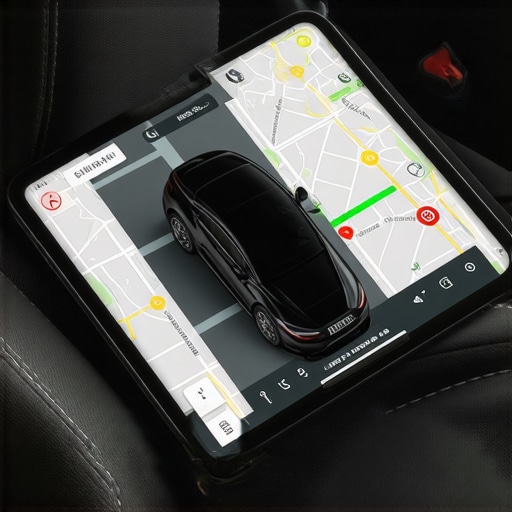
What the Next Five Years of Private Transit Look Like
I predict we are moving toward a hybrid model where AI handles the logistics of traffic prediction, but a human concierge handles the ‘last-mile’ communication. This is exactly why manual dispatching still beats AI for real-time accuracy in high-stakes scenarios. An algorithm might save you two minutes by cutting through an alley, but a human knows that alley is blocked by a delivery truck. The future of travel isn’t about the fastest car; it’s about the most reliable system. I challenge you to try this: the next time you have a multi-stop day, book one driver for the entire duration and audit their route history afterward. You’ll be shocked at how much mental energy you save when you stop being a passenger and start being a strategist.
Moving from a casual commuter to a high-stakes traveler requires a shift in how you perceive every minute of your journey. I used to think that a ride was just a ride, but after years on the road, I have learned that the quality of your logistics determines the quality of your output. Let’s wrap this up with the hard-won lessons that separated my amateur days from my current professional standard.
The Bitter Pills I Swallowed on the Way to Professional Punctuality
- Cheap is expensive: Every time I chose the budget-friendly app over a dedicated service, I ended up paying double in stress and lost time. I now understand the real cost of choosing the cheapest reservation available—it’s a gamble that usually fails when you need it most.
- Trust but verify: I never get into a car without performing the specific driver verification move that prevents identity theft. Looking at a driver’s license through the glass before the doors unlock is a simple habit that has saved me from countless potential security breaches.
- Insurance matters more than amenities: Leather seats are nice, but a verified commercial policy is vital. I’ve learned how to vet your drivers commercial insurance without the friction, ensuring that my company is protected in any scenario.
- The schedule is a living document: A fixed booking isn’t a static one. You must stay flexible, which is why I prioritize on-time arrival mastering the art of reservation and safety every hour to keep my day moving smoothly despite urban chaos.
The Tools That Keep My Calendar From Collapsing
I don’t just hope things go well; I use a specific stack of resources to guarantee they do. First, I always ensure my booking platform is bulletproof. Knowing how to secure your data when using public wifi to book a ride is essential because hackers frequent airport terminals looking for easy targets. Second, I keep a direct line to a human dispatcher. If you ever have a question about a complex itinerary, you should reach out for a consultation rather than guessing. Finally, I rely on automated tracking links, but I test them regularly to ensure I’m seeing the most accurate data possible.
Reclaim Your Peace of Mind and Start Arriving Like a Pro
The transition to professional travel isn’t about the car; it’s about the system you build around it. By committing to a dedicated strategy, you are choosing to prioritize your energy for the meetings and the moments that matter. Following ensuring safety first your guide to on-time reservations at any hour will keep you ahead of the crowd. Stop letting an algorithm decide if you’re going to be on time and start taking control of your movement. Have you ever had a travel nightmare that finally convinced you to switch from on-demand apps to a professional hourly driver? I’d love to hear your story in the comments below.