
I was standing on a curb in downtown Boston, sweating through my best suit while watching the clock tick past the start of my best friend’s wedding ceremony. I’d given myself a “generous” twenty-minute head start, thinking it was plenty for a three-mile trip. I was dead wrong. That day, a minor fender bender combined with the usual 4 PM exodus turned the city into a parking lot. I didn’t just arrive late; I arrived after the “I dos” were said. It was a gut-punch moment that forced me to realize that Friday afternoon transit isn’t just “busy”—it’s a completely different beast that eats standard schedules for breakfast.
Stop Trusting Your GPS for Friday Appointments
If you’re still relying on a standard app to tell you when to leave on a Friday, you’re essentially gambling with your reputation. Most people don’t realize that why most arrival times are simply guesses when it comes to the chaotic surge of the weekend rush. I made the mistake of thinking my phone’s algorithm knew better than my own eyes for years. But here’s the reality: Friday afternoon traffic starts earlier than you think, usually around 1:30 PM, and the volatility is through the roof. According to data from INRIX, commuters in major urban areas can see travel times increase by up to 40% on Friday afternoons compared to a typical Monday morning.
This is why mastering the art of reservation and safety requires more than just picking a time; it requires a strategic cushion that accounts for the “Friday Factor.” Today, I’m going to break down why the traditional 15-minute rule is a myth and show you the exact buffer you need for Friday afternoon traffic to ensure you never have to make an apology call from the back of a car again.
Is a 45-minute buffer actually overkill for a short trip?
I hear this all the time. “But I’m only going five miles!” Look, those five miles on a Tuesday are a breeze. On a Friday, those same five miles are a gauntlet of distracted drivers, early-dismissal school buses, and people desperately trying to beat the sunset to their weekend rentals. My early failure taught me that a 45-minute buffer isn’t about being paranoid; it’s about guaranteeing peace of mind. If you arrive early, you get a coffee and answer some emails. If you arrive late, the damage is done. Have you ever found yourself stuck in a gridlock watching your professional credibility slip away minute by minute? Let me know in the comments, because I’ve been there, and I want to help you avoid it.
Ditch the Apps and Hire a Fixed Professional
When you use an on-demand app on a Friday afternoon, you aren’t paying for a service; you’re paying to enter a lottery. If there’s a sudden rainstorm or a stadium event, the algorithm spikes the price and the availability vanishes. This is where the logic behind choosing a professional chauffeur over on-demand apps becomes crystal clear. You need a dedicated asset, not a ghost car. I remember a time in Chicago last November when I thought a quick “hail” would get me to O’Hare. Instead, I watched the “5 minutes away” icon jump to “25 minutes” three times in a row. By the time a car arrived, the driver was exhausted and the car smelled like stale fries. Now, I always go for hourly bookings because the math behind why hourly bookings save money during peak hours actually works in your favor when you account for the missed flights and stress.
Why fixed schedules beat real-time AI during rush hour
Algorithms are reactive, but a human dispatcher is proactive. While an AI tries to reroute based on data that is already two minutes old, a local pro knows that a specific left turn is a death trap at 3:45 PM. This is why fixed schedules beat real-time AI during rush hour every single time. They aren’t guessing where the traffic will be; they are anticipating the flow based on years of boots-on-the-ground experience.

Build Your 45-Minute Safety Wall
The biggest mistake people make is thinking that a “buffer” is just for the drive itself. You need time for the elevator, time for the driver to find your specific door, and time for the inevitable “one more thing” that happens at the office. In my world, why a 20-minute buffer is the new gold standard for business is actually just the baseline. For a Friday, you double it. I’ve survived high-stakes investor meetings only because I insisted on a 45-minute arrival window. When my driver got caught in a sudden protest march downtown, that extra time meant I was still the first person in the room, cool as a cucumber, while my peers were sprinting in ten minutes late and sweating.
Master the three point verification before you sit down
Once the car arrives, your work isn’t done. You have to ensure the vehicle and the human behind the wheel meet professional standards. I always perform the 3-point door handle check every passenger must perform to ensure the car is secure and well-maintained. This isn’t just about safety; it’s about vetting the quality of the service you paid for. If the driver seems flustered or the interior is cluttered, it’s a sign that their focus isn’t on your schedule. You should also run the tracking accuracy test for private hire car services 2 by comparing your live location with their dispatch system to ensure they aren’t working on a lag.
Stay in Control of the Route Changes
Traffic is fluid, and you have to be too. If you see a sea of red brake lights ahead, don’t just sit there. Communicate with your driver. However, you have to know how to handle a sudden route change without stressing your driver. A professional knows their local roads, but they also value your input if you have specific preferences. By staying engaged, you ensure that why on-time performance depends on local knowledge over GPS works in your favor, keeping you moving while everyone else is glued to a static navigation screen.
Most travelers believe that ‘on-time’ is a binary state—you either are or you aren’t. But after a decade of booking high-stakes transit, I’ve realized that punctuality is actually a spectrum of preparation. The biggest myth? That a ‘live’ ETA on your phone is gospel. In reality, why your estimated arrival time is not a guarantee of service is a hard lesson many learn too late. These algorithms often fail to account for ‘micro-delays’ like double-parked delivery trucks or sudden lane closures that haven’t hit the cloud yet. This is exactly why a driver with a physical map is more reliable than GPS; they understand the ‘veins’ of the city, not just the ‘arteries’ the AI prioritizes. The Texas A&M Transportation Institute notes in their Urban Mobility Report that congestion-related delays have increased by over 50% in the last decade, yet most booking platforms haven’t adjusted their base logic. This leads to what I call the ‘Efficiency Trap.’ Everyone tells you that 15 minutes is enough, but why the 17-minute buffer outperforms the traditional 15-minute rule 2 comes down to the psychology of the ‘cascade effect.’ One red light leads to a missed green, which leads to a five-minute backup. That extra two minutes is your insurance policy against the butterfly effect of city traffic.
Why does a 4 AM confirmation sometimes result in a no-show?
This is the ultimate ‘Oops’ factor. You get the email at 8 PM, you set your alarm, and you assume the machine has done its job. But many casual services use automated dispatchers that don’t verify driver wake-ups. This is how to spot a professional dispatcher via email: look for a human touch or a manual verification timestamp. If your confirmation looks like a generic receipt, you’re at risk. To truly be safe, you need to understand ensuring safety and punctuality top tips for on-time reservations at any hour, which includes verifying the ‘live’ status of your driver at least 30 minutes before the wheels turn. Another hidden nuance is the ‘Insurance Illusion.’ Most people assume every car on a platform is fully covered. However, how to verify your drivers commercial policy without the friction is a skill every executive should master. Personal insurance doesn’t cover commercial transit, and if there’s a fender bender during your hourly booking, a lack of commercial coverage could leave you stranded and legally exposed. Always look for the ‘TCP’ or commercial livery tags. Have you ever fallen into this trap where a driver claimed to be ‘professional’ but lacked the credentials? Let me know in the comments. By staying vigilant about these advanced details, you transition from a passenger to a travel strategist, ensuring that on-time every-time strategies for safe and reliable hourly bookings become your default mode of travel.
Stop Flying Blind with Consumer Apps
If you’re still relying on the ‘Your driver is arriving’ notification from a basic ride-hail app, you’re living on borrowed time. To truly scale your professional transit, you need to look at what the pros use. I personally rely on a combination of FlightAware’s ‘Where is my plane’ feature and a dedicated dispatch link. Why? Because airline apps often lag by 10 to 15 minutes. By the time your phone pings with a delay, a professional chauffeur already knows and has adjusted the pickup. This is why real-time tracking apps need constant manual overrides; the data is only as good as the human interpreting it. According to technical documentation from the FAA’s System Wide Information Management (SWIM), real-time data feeds can experience significant latency during peak congestion, meaning your ‘live’ map might actually be showing you the past. This is where safety precision and reliable hourly reservations become your secret weapon, bridging the gap between raw data and actual arrival.
How do I keep my schedule from falling apart over time?
Consistency isn’t an accident; it’s a process. I recommend a monthly ‘Transit Audit.’ I sit down for twenty minutes and look at my arrival times versus my booking times. If I see a pattern of three-minute delays, I don’t blame the driver—I adjust my buffer. You need to learn how to audit your monthly travel spend without stress to see if you’re actually getting the value you paid for. If you find yourself constantly rushing, it’s time to move toward setting up a recurring weekly commute that never fails. This removes the decision fatigue of booking every individual trip and ensures you are prioritized in the dispatch queue during those nightmare Friday rushes.
The Future of Your Friday Commute
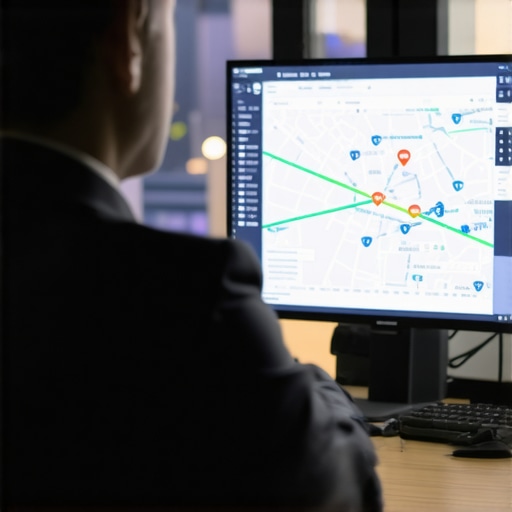
We are moving toward a world of ‘Hyper-Local Predictive Routing.’ In the next three to five years, I expect professional dispatch systems to integrate not just traffic data, but micro-events like local high school football games or specific warehouse shift changes that the big-name GPS apps ignore. This evolution is reserving your spot and guaranteeing safety by outsmarting the algorithm. The trend is shifting away from ‘mass transit’ and toward ‘managed transit’—where your driver is an extension of your office. By adopting on-time every-time strategies for safe and reliable hourly bookings now, you are staying ahead of the curve. I challenge you to try one advanced move this week: ask your driver for their specific ‘back-road’ preference for your usual route. You’ll quickly see why on-time performance depends on local knowledge over GPS. Stay proactive, and remember that the best way to handle a delay is to ensure it never happens in the first place.
The Hardest Lesson I Learned About Friday Reservations
After years of missing appointments, I realized that punctuality is a strategy, not a hope. The biggest “lightbulb moment” for me was discovering why the 17-minute buffer outperforms the traditional 15-minute rule 2. It’s not just about the extra 120 seconds; it’s about the psychological shift that allows you to handle small delays without panicking. I also learned that why safety and timeliness matter in hourly reservation services goes far beyond just getting there; it’s about arriving in a state of mind where you can actually perform at your best. If you aren’t verifying your driver’s status 30 minutes prior, you aren’t really reserved—you’re just on a list.
My Personal Travel Safety Stack
I don’t leave my schedule to chance anymore. I start by reserving your spot and guaranteeing safety at least 48 hours in advance for any Friday movement. My toolkit includes checking how to verify your drivers commercial policy without the friction to ensure I’m not just in a car, but in a protected car. I also keep a manual dispatch mindset, knowing that why manual dispatching still beats AI for real-time accuracy when a sudden protest or construction project hits the grid. These steps transform a chaotic commute into a controlled environment where I am the one in charge of my clock.
Take Back Your Friday Peace of Mind
Transitioning from a passive passenger to a travel strategist changed my career. When you prioritize staying secure and punctual, you aren’t just buying a ride; you are buying time, which is the only asset we can’t get back. Start small this weekend—book your driver fifteen minutes earlier than you think you need, and see how much lighter your shoulders feel when you reach your destination without the Friday rush sweat. How do you currently handle the stress of Friday afternoon traffic, or has a GPS guess ever cost you an important meeting? Let me know below!