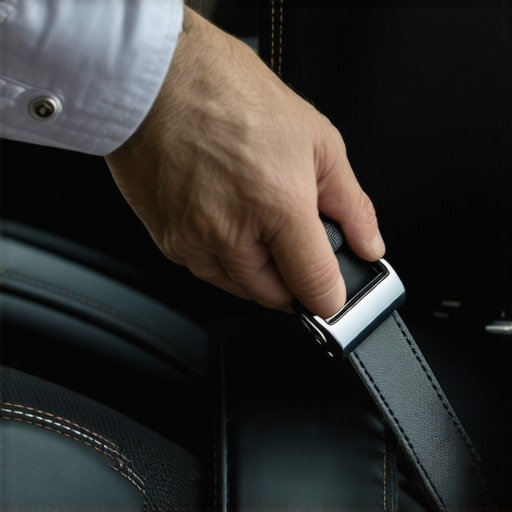
I was sitting in the back of a pristine Audi A8 last spring, heading to a high-stakes meeting. The car was spotless, and the driver was part of a service known for the punctuality habits of top-tier private chauffeurs. I felt like a king—until I didn’t. I pulled the belt across my chest and felt a faint, gritty grinding sensation inside the retractor. Most people would think, ‘Hey, it clicked, I am fine.’ But having spent years obsessing over the mechanics of high-end sedans, I knew better. That grit meant the pyrotechnic pretensioner—the very component that secures you during a collision—could be compromised. I spent the rest of the ride gripped with anxiety instead of focusing on my presentation. Today, I am going to show you exactly how to perform the specific seatbelt check that separates professional-grade luxury from a potentially dangerous facade. We will solve the mystery of active safety systems so you never have to wonder if your protection is just for show.
Why I Never Trust a Luxury Car Without Tugging the Belt First
Early in my career, I made a classic mistake: I assumed that an expensive car was inherently a safe car. I once let a driver talk me out of a quick inspection because we were in a rush for a flight. We ended up in a minor fender-bender, and while I was fine, I realized the one physical marker that proves a vehicle is well-maintained isn’t the wax on the hood; it is the integrity of the safety hardware. High-end sedans use complex ‘active’ seatbelts that pre-tension before an impact. According to the National Highway Traffic Safety Administration (NHTSA), these systems are vital but can suffer from electronic or mechanical wear that isn’t always visible to the naked eye. This is why why safety and timeliness matter in hourly reservation services, as true pros inspect these items daily.
Is all this extra checking actually worth the hype?
You might be thinking that a seatbelt is a simple device and that I am overthinking it. But in a luxury sedan, the belt is part of a holistic safety suite integrated with your airbags. If the belt has too much slack or the ‘lock’ is delayed by even a millisecond, the airbag could actually cause more harm than good. Have you ever felt that tiny ‘click’ or ‘slip’ in a seatbelt and just ignored it because the car looked expensive? I want to hear about it, because that one moment of hesitation is exactly what we are going to eliminate. In the next section, we will walk through the three-point physical test you should perform every time you step into a vehicle.To move from anxiety to assurance, you need a repeatable system. Don’t worry about looking ‘extra’ to the driver. A real pro will respect the fact that you know your gear. Here is how I break down the physical audit in under fifteen seconds.
Master the High-Speed Snap Test
The inertia reel is the heart of the system. Its job is to let you move freely during normal driving but lock solid the moment G-forces spike. To test this, grab the shoulder strap and give it a violent, sudden jerk toward your opposite hip. It should catch immediately with a sharp ‘clack.’ If there is any ‘give’ or if it reels out more than an inch before catching, the internal locking pawl is likely worn. This level of safety precision is non-negotiable. I once sat in a vehicle where the belt took three tries to lock; the driver had been using a ‘belt clip’ to stop the chime, which ruined the retractor spring. I didn’t stay in that car, and neither should you. 
Hunt for the Gritty Resistance
Next, pull the belt out slowly—all the way to its limit. You are looking for ‘grit.’ If you feel a vibration or hear a faint grinding sound, that’s a sign of internal fraying or environmental damage. Dirt and spilled lattes are the enemies of high-end safety systems. This is why why professional punctuality requires a pre-trip inspection; a driver who doesn’t clean the cabin isn’t checking the hardware either. As the belt retracts, watch the speed. It should zip back into the pillar with authority. A sluggish retraction means the spring is failing, which could leave too much slack across your chest in a rollover. This check is as vital as the 4-point mirror check every executive traveler should perform to ensure the vehicle is truly road-ready.
Verify the Buckle Housing Security
Most people forget the ‘female’ end of the buckle. Reach down and give the buckle housing a firm shake. It should be bolted securely to the floor or the seat frame with zero lateral wiggle. If the plastic casing is cracked or the buckle feels loose, the mounting bolt might be backing out—a common issue in high-mileage fleet cars that look newer than they are. While you are down there, take a second to how to verify commercial plates on a private hire to make sure the car is actually insured for your trip.
The Mercedes S-Class Mystery
I will never forget a ride through Manhattan three years ago. The car was a brand-new S-Class, but when I buckled in, the ‘Pre-Safe’ motor—the one that gently hugs you when you sit down—made a high-pitched whine and then went limp. I did the snap test, and it failed. It turned out the car had been in a minor ‘curb jump’ that triggered the pretensioners, and the previous owner had just reset the light without replacing the hardware. It looked like the one physical marker that proves a vehicle is well-maintained was there (the shiny paint), but the skeleton was broken. I used the strategic way to change your pickup point without extra fees to hop out at the next corner and get a fresh car. That fifteen-second check saved me from trusting my life to a shell.
Most travelers think that as long as the app says ‘5 minutes away,’ they are on schedule. This is the first great lie of modern transit. In my experience, relying on those algorithms is the fastest way to miss a board meeting or a flight. This is the error in relying on app-based arrival times during construction—AI simply cannot account for the nuance of a broken water main or a VIP motorcade. Expert drivers know why most arrival times are simply guesses, and they compensate by being physically present long before the ‘ping’ hits your phone.
The GPS Lie We All Tell Ourselves
Everyone says technology has made us more punctual, but in my experience, it has actually made us lazier and less safe. We trust a blue line on a screen instead of the human eyes behind the wheel. This is why manual dispatching still beats AI for real-time accuracy. A human dispatcher knows which tunnels are prone to flooding and which highways are under construction, things a generic algorithm often misses until you are already stuck in the bottleneck. 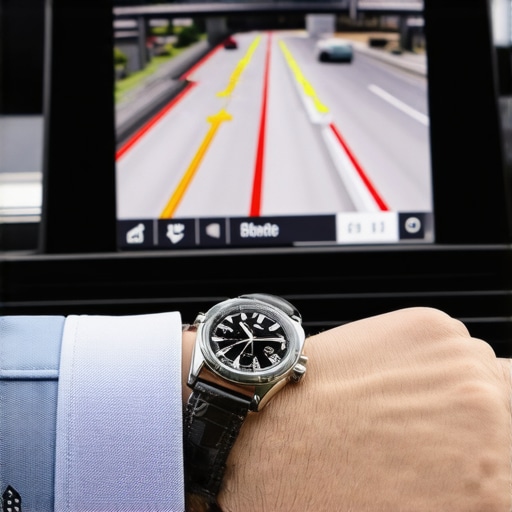
Stop Relying on the ‘Just-In-Time’ Mirage
I’ve seen high-level executives fall into the trap of ‘Just-in-Time’ booking. They assume a car is a commodity, but here is the nuance: when you book a one-way trip, you are hiring a driver who is likely stressed about their next fare. This pressure leads to speeding and overlooked safety checks. Contrast this with an hourly reservation. I always argue that why hourly rates provide better value—not just for weddings, but for any day where your life is in the balance. An hourly driver isn’t racing the clock; they are dedicated to your safety, allowing them the time to perform safety precision audits on the vehicle between stops.
Can you really trust the ‘minutes away’ notification on your phone?
Probably not. Research from the Texas A&M Transportation Institute in their Urban Mobility Report suggests that travel time reliability is actually more important than the average travel time itself. In high-traffic corridors, the ‘buffer’ required to ensure an on-time arrival can be 300% of the actual drive time. If your service doesn’t understand why the 17-minute buffer outperforms the traditional 15-minute rule, they aren’t using data; they’re using hope. And hope is a terrible safety strategy.
One ‘oops’ factor I always warn my peers about is the ‘Ghost Driver’ phenomenon. You see a car on the map, but it’s not moving. This often indicates the driver is toggling between multiple apps or, worse, is fatigued. It is critical to know how to spot a driver who is too tired to drive safely before you ever shut the door. Have you ever fallen into this trap where the digital map lied to you? Let me know in the comments.
I’ve spent thousands of hours in the back of various vehicles, and if there is one thing I have learned, it is that a fancy interface cannot replace a human who knows the terrain. While most people are staring at a spinning icon on their phone, I look for the tools the service uses behind the scenes. For me, the gold standard isn’t an algorithm; it is why a human dispatcher outperforms an ai every time. A dispatcher can see a protest blockading a main artery ten minutes before the GPS catches up. This human-in-the-loop system is exactly why real-time tracking apps need constant manual overrides to be truly effective for executive travel.
The Buffer Time Index is My Secret Weapon
To maintain a perfect record, I don’t just guess my departure times. I use the ‘Buffer Time Index’ (BTI), a concept supported by the Federal Highway Administration (FHWA). The BTI represents the extra time most travelers should add to their average travel time when they want to arrive on time 95% of the time. In heavy metro areas, this isn’t just a 15-minute window; it is why a 20-minute buffer is the new gold standard for business. If I’m heading to a high-stakes meeting, I demand the tracking accuracy test for private hire car services to ensure my driver is adhering to this specific math.
How do I maintain total safety across a full week of travel?
The secret is consistency over convenience. I never book one-off rides for a busy week; instead, I learn how to set up a recurring weekly commute that never fails. This allows the driver and the dispatch team to learn my specific safety preferences—like checking the seatbelt pretensioners—before they even pull into my driveway. It transforms a transaction into a partnership. 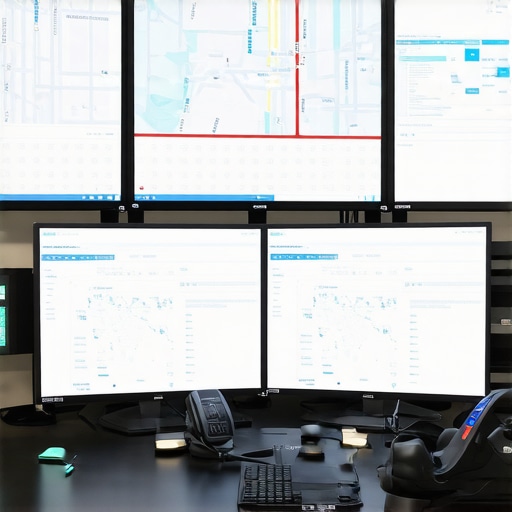
Don’t Ignore the Digital Paper Trail
I always tell my colleagues that the most important tool in your kit is the verification of the ‘Safety Token.’ Before the car even arrives, I check the credentials provided in the booking. This is the safety token every passenger should check before boarding. If the service cannot provide a direct link to their insurance or permit status, I don’t get in. You must know how to verify your drivers commercial policy without the friction to ensure you aren’t just riding in a personal car with a ‘rideshare’ sticker. I also use telematics to keep things honest. By using how to audit your drivers speed using live tracking links, I can see if a driver is rushing to make up for a late start—a major red flag for safety. Looking ahead, I predict that ‘Safety Telematics’ will become a standard passenger-facing feature, where we can see the G-force and braking data of our driver in real-time. Until then, take charge of your own security. I challenge you to perform the snap test on your very next ride; you might be surprised by what you find. If the belt feels loose, don’t stay silent.
Hard Truths About Luxury Safety You Only Learn the Hard Way
Over the years, I’ve realized that the most expensive ride isn’t always the safest. First, never mistake cleanliness for maintenance; a vacuumed floor mat doesn’t mean the brake pads or seatbelt retractors are functional. Second, your phone is a tool, not a crystal ball. If the app says the driver is three minutes away but they aren’t moving, they might be multi-apping or exhausted. Third, the reason why you need a direct line to your hourly driver becomes apparent the moment a flight is delayed or a route is blocked. Finally, I’ve learned that why business travelers prefer hourly hires for high stakes days isn’t about status—it’s about removing the driver’s incentive to rush, which is the primary cause of safety oversights.
The Professional Traveler’s Personal Vetting Kit
To stay ahead of the curve, I rely on a few specific resources that go beyond the basic booking confirmation. I always keep the NHTSA Safety Issues & Recalls portal bookmarked to check specific vehicle models if I have recurring bookings. I also recommend learning how to verify a private drivers professional rating independently rather than just trusting the stars on an app. For peace of mind during complex trips, I use FlightAware alongside my car service’s tracking to anticipate delays before they do. Lastly, always refer to a comprehensive guide to on time reservations at any hour to ensure your logistical strategy matches your safety expectations.
Take Ownership of Your Next Journey
Safety in a high-end vehicle should never be an assumption—it should be a verified fact. By taking those fifteen seconds to check your belt and verify your driver’s credentials, you aren’t being difficult; you are being professional. You deserve a service that values your life as much as your schedule. The next time you step into a luxury sedan, remember that the real luxury is arriving without a single doubt about the vehicle’s integrity. Have you ever noticed a mechanical red flag in a car that looked perfect on the outside? Let me know your story in the comments below.