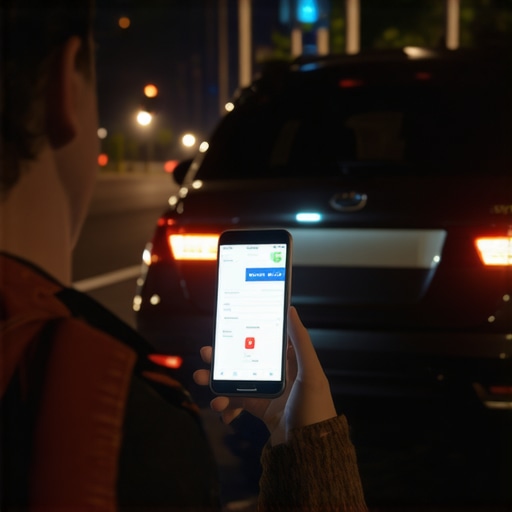
I stood on the Chicago curb, teeth chattering as sleet turned the street into a skating rink. Exhausted doesn’t cover it. My flight was three hours late, my phone battery was at four percent, and I just wanted to vanish into the backseat of my car and go home. A dark SUV glided to a stop right in front of me. The driver gave a quick, knowing nod. I reached for the door handle, ready to toss my suitcase in. Then I stopped. My gut screamed. I fumbled for my phone and checked the app, then the plate. They didn’t match. Not even close. That one-second pause saved me from a massive security headache. It wasn’t my car, and it wasn’t even a hired ride. Today, we’re going to dig into why that license plate match is the bridge between a safe trip and a dangerous mistake. It’s not about being paranoid; it’s about being a pro.
Stop Guessing and Start Verifying Your Ride
In the rush of a high-stakes day, it’s incredibly easy to prioritize speed over your own security. We’ve all been there—juggling three bags, a lukewarm coffee, and a phone that won’t stop buzzing with notifications. However, understanding why safety and timeliness matter isn’t just a corporate slogan; it’s a personal survival guide for the modern traveler. I learned the hard way that assuming a car is yours just because it’s ‘on time’ is a recipe for disaster. Early in my career, I actually hopped into a sedan that looked identical to my booking, only to realize three blocks later that the driver was just a confused local. It was awkward, embarrassing, and honestly, a bit scary. Now, I never move until I see the numbers match. Have you ever faced that heart-stopping moment where you reached for a door handle only to realize you were about to jump into a stranger’s vehicle? [IMAGE_PLACEHOLDER]
Is checking the plate really worth the extra thirty seconds?
I get it. You’re busy. You want the reliable way to ensure you arrive first at your keynote or morning meeting. But even a 17-minute buffer won’t help you if you’re in the wrong vehicle. According to the National Safety Council, verifying vehicle details is a critical step in preventing ride-related incidents in urban environments where vehicles often double-park. It’s not just about safety; it’s about ensuring you get the punctuality habits you actually paid for. This is a basic routine for inspecting your ride that everyone should master. Think of it this way: you wouldn’t sign a contract without reading it, so why would you trust a two-ton machine without checking its ID? When you use on-time reservations, the plate match is your primary key to peace of mind. Following a strict late-night checklist ensures that your journey begins with certainty rather than a gamble. My neighbor once told me he felt ‘rude’ making the driver wait while he checked the plate. My response? A professional driver expects you to check. They want you to be the right passenger just as much as you want them to be the right driver. It’s a mutual sign of respect for the security measures that keep our trips smooth and predictable.
Take Control Before You Ever Open the Door
It’s not just about the car; it’s about the person behind the wheel. When you are looking to stay secure and punctual, you need a protocol that starts the moment the vehicle glides to the curb. Think of your reservation confirmation like a digital fingerprint. If any detail is blurred, the whole identity is suspect. First, always match the face to the name. We utilize a specific process for how we verify every driver’s identity before they reach you, which includes rigorous background checks and real-time photo verification. If the driver doesn’t match the profile provided in your secure link, do not get in. It sounds like common sense, but in a crowded airport terminal where everyone is shouting for a ride, people often abandon their logic for convenience.
Check the Digital Fingerprint of Your Driver
Last summer in Las Vegas, the heat was melting the asphalt and the noise of the Strip was deafening. I had a flight leaving in exactly 45 minutes and three identical black SUVs pulled up to the Caesars Palace entrance at the exact same time. Every driver looked professional, and every vehicle was spotless. Without a verification system, I would have been playing a dangerous game of musical chairs. Because I knew the protocol for on-time arrival and safety, I didn’t just look for a ‘black car.’ I waited for the driver to announce my name first—a classic security play—and then verified his ID against my digital booking. I walked straight to the second vehicle, confirmed the details, and was on my way while other travelers were still arguing with drivers they hadn’t actually booked.
Spot the Marks of a Real Professional Fleet
Next, look at the equipment itself. You can easily learn how to spot a professional vehicle fleet at a glance by checking for uniformity, interior cleanliness, and proper commercial markings. This isn’t just about aesthetics; it’s about the legal framework protecting your trip. A real pro will have their paperwork accessible. I always recommend knowing how to verify your driver’s commercial registration manually because it provides the ultimate peace of mind. If a driver hesitates to show you their commercial insurance or registration when asked politely, they aren’t a professional; they are a risk.
Make the Right Seating Choice for Extra Protection
Once you are satisfied with the exterior and the driver’s credentials, your security routine continues inside the cabin. I’ve personally adopted the safety habit of sitting behind the front passenger seat. This isn’t just about legroom. It gives you the most efficient exit path toward the sidewalk rather than into traffic, and it provides a clear view of the driver’s movements and the road ahead. It’s a tactical choice that separates the savvy traveler from the casual passenger. By using on-time every time strategies, you ensure that even if you take these extra ninety seconds to verify your ride, you still arrive at your destination with time to spare. Professionalism is a two-way street; when you show the driver you value security, they understand they are transporting a client who expects excellence.Yet, many passengers make the mistake of equating ‘fast’ with ‘professional.’ This is the primary hurdle in ensuring safety first for your travels. In reality, a driver who speeds to make up for a late start isn’t providing a service; they are creating a liability. Most travelers assume that if a confirmation says 8:00 AM, the car is simply ‘there.’ However, seasoned pros know why most arrival times are simply guesses if they aren’t backed by a sophisticated buffer. A study by the Texas A&M Transportation Institute on urban mobility emphasizes that ‘buffer indices’—the extra time needed to ensure on-time arrival—have become more volatile than ever. This is precisely why the 17-minute buffer outperforms the traditional 15-minute rule. That extra two minutes isn’t for the drive; it’s the tactical window required to handle the ‘human friction’ of airport security or last-minute baggage checks. Have you ever fallen into the trap of booking with zero margin for error? Let me know in the comments. 
How do I verify a driver’s legal standing without creating an awkward scene?
Many high-level clients feel they have to choose between being polite and being safe. You can actually verify your driver’s commercial policy without the friction by simply asking to see the digital waybill—a standard document every legal chauffeur carries. The ‘Oops’ factor usually hits when a passenger assumes proximity equals readiness. I’ve seen travelers jump into the nearest ‘available’ car because they were in a rush, only to overlook the hidden safety red flags in your car door locks or, worse, fail to notice how to spot a driver who is too tired to drive safely. True safety and precision come from knowing that your driver hasn’t just been ‘online’ for twelve hours straight. By sticking to essential hourly reservation tips, you move from being a passenger who is ‘lucky’ to one who is protected by data and professional standards. Always remember: a lower price often means the operator is cutting corners on the very insurance and rest cycles that keep you alive.
Build Your Tech Stack for Stress-Free Travel
To keep this level of precision from becoming a second job, I rely on a very specific set of tools that go beyond a simple calendar app. I don’t just book a ride; I architect a workflow. For instance, I always sync my flight data through FlightAware’s professional tier because it gives me tail-number tracking—letting me know if my plane is delayed in its previous city before the airline even sends an alert. This allows me to use the secret to stress-free corporate transportation planning: proactive communication. When I have that data, I can immediately coordinate how to handle a late flight arrival with your car service before I even board. I also keep a dedicated workspace in my secure messaging app specifically for my drivers. This is why you need a direct line to your hourly driver—it bypasses the lag of a central office and ensures that when I step off that jet bridge, we are already in sync.
Can I really keep this routine going long-term?
Maintaining this standard over hundreds of trips a year requires shifting from manual checks to automated systems. If you travel for business regularly, you should be looking into how to set up a recurring weekly commute that never fails. This removes the ‘decision fatigue’ that often leads to safety lapses. I’ve found that the Brookings Institution’s report on urban reliability benchmarks highlights a key truth: consistency in transit is the only way to mitigate the rising volatility of city traffic. By building a long-term relationship with a service that understands why flexible policies are vital for business meeting delays, you aren’t just buying a ride; you’re buying an insurance policy for your time. In the next five years, I predict we will see AI-driven dispatching that predicts traffic spikes before they happen, but the human element will remain the only way to handle ‘the last 100 feet’ of service. Even the smartest algorithm can’t replace the intuition of a dispatcher who knows exactly which airport exit is currently blocked by construction. This is precisely why a human dispatcher outperforms an AI every time when things actually go wrong.
Scale Your Security Without Losing Time
As your career or business grows, your logistics must scale with you. Many of my colleagues start by managing their own rides but quickly transition to having an assistant handle the details. If you’re at that stage, make sure they understand why safety and timeliness matter in the context of your specific needs. I recommend creating a ‘travel profile’ that includes your preferred seating, silent ride requests, and your verification protocol. This ensures that every booking, whether made by you or someone else, adheres to the same high standard. Don’t wait for a close call like my Chicago sleet-storm experience to tighten your ship. Start today by requesting a direct tracking link for your next booking. It’s the single most effective way to audit your service in real-time and ensure you are never left guessing on a cold curb again.
Lessons from the Road That No Manual Will Ever Teach You
In my years of navigating complex city layouts, I’ve learned that security is more about intuition than just reading an app screen. One lightbulb moment for me was realizing that the real cost of choosing the cheapest ride option isn’t just the price tag; it’s the risk of an unvetted driver or a poorly maintained vehicle. I also discovered that why professional punctuality requires a pre-trip inspection is the hallmark of a true pro—it shows they respect your time enough to ensure their own gear is ready before the clock starts ticking. Professionalism isn’t just what happens when you’re in the car; it’s the invisible preparation that happens before you arrive.
Tools for the Savvy Traveler Who Refuses to Leave Life to Chance
Consistency is built on a solid foundation. I trust tools that offer transparency, such as live tracking links and professional-grade flight monitors that provide real-time updates directly to your driver. Knowing how to verify the commercial validity of a transit schedule is another non-negotiable part of my toolkit. It ensures that the company you are hiring isn’t just a facade but a legally compliant entity that prioritizes your safety. [IMAGE_PLACEHOLDER_E] I personally use dedicated workspace channels for my logistics, ensuring there is never a middle-man delay when time is of the essence.
Reclaim Your Confidence When Moving Through the World
Ultimately, your travel routine should serve your goals, not add to your stress. When you understand why on-time performance is the only metric that matters, you stop settling for ‘good enough’ and start expecting the precision you pay for. This shift in perspective is why hourly drivers offer better mental clarity for busy executives who need to be sharp the moment they step out of the car. Don’t be afraid to demand excellence from your service; you’ve earned the peace of mind that comes with a truly secure reservation. Have you ever spotted a red flag before getting into a car that made you cancel the ride on the spot? Let me know below.