
I’ve spent far too many nights pacing outside airports, squinting at my phone and wondering if the ‘reservation confirmed’ text I received was actually worth the pixels it was printed on. Early in my career, I made the amateur move of thinking a receipt was the same thing as a professional confirmation. It wasn’t. I ended up stranded because I hadn’t verified the details properly, a mistake that taught me that a truly professional dispatcher via email provides way more than just a price tag. If your inbox is filled with vague ‘thank you’ notes instead of actionable data, you aren’t just risking a late arrival—you’re gambling with your safety. Today, I want to show you how to read between the lines of your booking alerts so you never have to play the guessing game again.
Your email should be a roadmap not just a receipt
When you book an on-time reservation, the confirmation email is your first real test of the company’s competence. If it looks like it was whipped up by a distracted intern, your ride will probably feel the same way. I once ignored a confirmation that lacked a vehicle description, and sure enough, I spent twenty minutes trying to find my driver in a sea of black SUVs. A professional email serves as a legal and logistical anchor. According to the Customer Service Institute of America, transparent initial communication can reduce consumer anxiety by nearly 65% during high-stakes travel. You need to see specific details like the driver’s name, vehicle type, and transparent pricing without hidden fees. If these aren’t present, you’re looking at a massive red flag. [image_placeholder] Have you ever felt that sinking realization that your booking was too vague to be trusted?
Is a detailed email really worth the extra effort?
Some folks tell me, ‘Hey, as long as the car shows up, who cares about the email formatting?’ I used to be one of them until I realized that the real cost of the cheapest ride is often found in the chaos of poor communication. A detailed confirmation isn’t just ‘busy work’ for the company; it’s proof they have a system in place to handle your safety and timing. If they can’t get the email right, they won’t get the 4:00 AM pickup right either.
Scrutinize the data points that actually protect you
A professional confirmation is like a blueprint for a skyscraper; if the measurements are off by an inch at the base, the whole structure will eventually lean. When you receive that email, the first thing you should hunt for isn’t just your name, but the driver’s specific credentials. I learned this the hard way during a rainy night in Seattle. I had a generic confirmation for a “luxury car,” but when a nondescript vehicle pulled up, I realized I had no way to verify if it was actually my ride. I spent fifteen minutes in the downpour while my actual driver was parked fifty feet away in a properly registered vehicle I didn’t recognize. To avoid this, you must verify commercial plates on a private hire before you even step toward the curb. A real professional includes the plate number and the vehicle make and model as a standard security protocol.
Look for the license plate and driver ID first
Security isn’t a feeling; it is a set of verifiable facts. A top-tier dispatch team knows that you need to know who is behind the wheel before they arrive. This is why we verify every driver’s identity before they reach you and include that information in your digital receipt. If your email is missing a driver photo or a direct contact number, you are being left vulnerable to “imposter drivers” who prey on vague booking details in busy transit hubs. This information is your digital handshake, establishing trust before the physical meeting occurs.
Verify that the timing logic makes sense
Professionalism lives in the buffers. If your confirmation says the driver will arrive exactly at 5:00 PM for a 5:00 PM departure, they are technically already late because they haven’t accounted for the loading process. I always look for a service that understands why the 17-minute buffer outperforms the traditional 15-minute rule. This small window is the difference between a panicked sprint to the gate and a calm boarding process. The confirmation should explicitly state the “on-site” time versus the “departure” time to ensure everyone is on the same page. [image_placeholder]
Stop guessing and start auditing your reservation
The final piece of the puzzle is the financial breakdown. If you see a single lump sum without a line-item explanation, you are likely looking at a future headache. You should audit your final ride bill for hidden fees by comparing it against the initial confirmation. A transparent company will list base rates, gratuity, and potential surcharges for things like wait time or tolls upfront. I once ignored a vague ‘all-inclusive’ quote in London, only to find a 30% ‘admin fee’ tacked on after the trip. It was a costly lesson in the importance of detail. Furthermore, always ensure you have a direct line to your hourly driver mentioned in the text. Relying on a central switchboard during a 4:00 AM pickup is a recipe for disaster. Real reliability comes from knowing exactly who to call if the world doesn’t go according to plan. Use these steps to turn your next confirmation from a simple receipt into a foolproof safety manual.Most travelers assume that booking a series of point-to-point rides is the smartest way to manage a busy day. I used to think the same until I realized why hourly logistics save more time than point-to-point. When you book a driver by the hour, you aren’t just buying a ride; you’re buying their undivided attention. The biggest mistake is thinking that ‘available’ in an app means ‘available for you.’ In reality, the hidden difference between app drivers and private chauffeurs is the level of accountability. One is hunting for their next fare; the other is focused solely on your safety and schedule.
Stop treating your high-stakes travel like a pizza delivery
Many people treat car reservations as a commodity, looking for the lowest price without checking the operational backbone. This is where the ‘oops’ factor hits hardest. You might save twenty dollars, but you lose the guarantee of a pre-vetted driver. The trap of the ‘all-inclusive’ price is a classic; if your reservation doesn’t specify how many minutes of wait time are included at the airport, you’re walking into a financial ambush. I’ve seen travelers stranded because they trusted a platform that doesn’t verify its contractors in real-time. To ensure you aren’t left behind, you must stay secure and punctual with essential hourly reservation tips that prioritize human oversight.
What happens when the ‘guaranteed’ arrival time meets real-world traffic?
It’s a common frustration: the screen says five minutes, but ten minutes later, the car hasn’t moved. This happens because why most arrival times are simply guesses generated by algorithms that don’t account for construction or driver fatigue. According to the Texas A&M Transportation Institute, traffic congestion delay has surged in nearly every major city, making static ‘estimations’ practically useless. If your service isn’t manually checking routes, they aren’t providing a schedule; they’re providing a wish list. You need to how to verify the commercial validity of a transit schedule by asking about their specific human-led dispatch protocols. 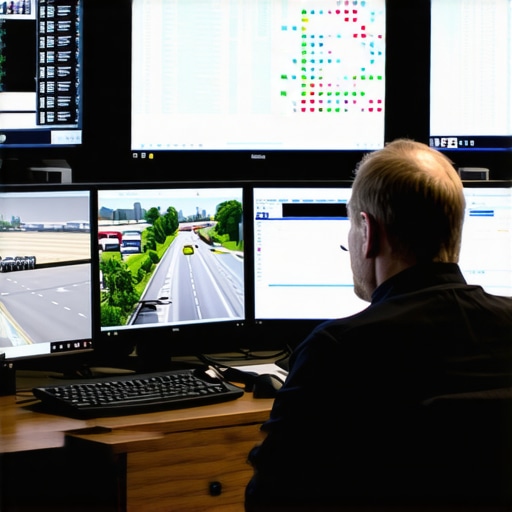
Look beyond the algorithm to find real safety
We’ve been conditioned to think that an app’s GPS tracking is infallible, but why real-time vehicle data is more accurate than estimated times becomes clear when you realize that most apps use historical averages rather than live road conditions. I once missed a flight because an app didn’t account for a sudden local protest—something a human dispatcher would have flagged immediately. This is the danger of removing the human element from the safety equation. Professional services maintain a why a human dispatcher outperforms an AI every time, ensuring that your 5:00 AM pickup isn’t just a line in a database. Don’t assume the vehicle’s age is the only safety metric; you should also how to verify your driver’s commercial registration manually if the confirmation looks suspicious. This transparency is what ensures you can maximize your safety and satisfaction with our precise reservation timing. Have you ever fallen into this trap of trusting an automated ETA only to be left stranded? Let me know in the comments.
The tools that bridge the gap between luck and logic
Staying ahead of the clock isn’t just about waking up early; it is about the specific telemetry you use to monitor your assets. I’ve transitioned from using basic consumer maps to demanding high-frequency GPS data because I realized why GPS lag can ruin your meeting schedule without you even knowing it. When I’m on the road, I rely on systems that provide a refresh rate of five seconds or less. Most standard apps refresh every thirty to sixty seconds, which might not sound like much, but in a dense urban grid, that’s the difference between being on the correct block and being three turns behind. According to the OAG Punctuality League 2023 report, ground transportation delays are the leading cause of missed short-haul connections, often due to this very lack of granular data. If your driver is relying on a standard smartphone GPS, they are effectively driving with a blindfold that is only removed once a minute. This is why I advocate for commercial-grade hardware that stays locked onto the satellite path without interruption, providing the dispatcher with the exact location of the vehicle at any given micro-moment.
How do I maintain a flawless travel record over time?
Maintenance is a habit, not a one-time setup. To keep my arrivals consistent, I’ve moved toward a model where I set up a recurring weekly commute that never fails. This removes the ‘human error’ of forgetting to book and allows the dispatch team to assign the same high-performing driver to my route. Consistency breeds safety. When a driver knows your route and your preferences, they spend less time looking at a screen and more time focused on the road. I also make it a point to audit my tools monthly, checking if my preferred service has updated their driver vetting protocols or upgraded their fleet. Reliability isn’t static; it requires constant oversight and a willingness to switch providers if their tech stack falls behind the industry standard. 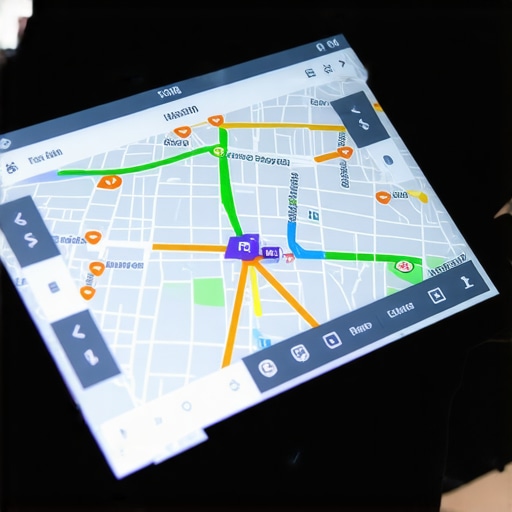
Invest in telemetry instead of just estimations
The most powerful tool in my arsenal is the ability to distinguish between the difference between live tracking and estimated progress. An estimation is just a mathematical guess based on historical data; live tracking is a raw feed of reality. I personally use a dedicated dashboard that syncs with the driver’s onboard computer, ensuring that the ‘on-time’ status is backed by actual movement. This is one of the core on-time every-time strategies for safe and reliable hourly bookings that I recommend to anyone with a tight itinerary. Furthermore, you should always verify that the service performs a why professional punctuality requires a pre-trip inspection to avoid mechanical failures that no app can predict. Looking toward the future, I expect to see more integration between ground travel and personal scheduling AI, where your car won’t just wait for you, but will proactively suggest a 10-minute earlier departure based on live local construction permits. If you want to scale your personal or business travel without the stress, try this: demand a direct telemetry link for your next ride. If the company can’t provide a real-time, high-refresh-rate map, they aren’t ready for your high-stakes days.
What thousands of miles taught me about ground logistics
I used to think a booking was just a transaction, but now I know it’s a partnership between your schedule and their systems. First, always assume the algorithm is optimistic; if you haven’t guaranteed your spot with safety-first logic, you’re leaving too much to chance. Second, the person on the other end of the email matters more than the logo on the car. A company that understands why safety and timeliness matter in hourly reservation services will proactively communicate with you before a problem arises. Third, never apologize for verifying credentials; a true pro expects you to verify your chauffeur’s permit before the trip starts. Finally, remember that your time is your most non-renewable resource—protect it by demanding better buffers and human-led dispatching.
The gear and guides that keep me ahead of the clock
I rely on a few specific resources to stay sharp and ensure my arrivals remain consistent. I check the OAG Punctuality League reports annually to see which hubs are prone to delays. For real-world flight tracking, FlightAware is non-negotiable for coordinating with my driver. I also keep digital copies of safety and precision guides for hourly reservations to share with my logistics team. Most importantly, I prioritize services that offer fixed-rate transit for corporate budgets, as it removes the financial stress and distraction of a ticking meter during unexpected city traffic. [image_placeholder]
Build your own legacy of reliability
You don’t have to be a travel expert to enjoy a seamless experience every time you step out the door. By shifting your focus from simply ‘getting a ride’ to actively ‘managing your mobility,’ you eliminate 90% of travel anxiety. When you stay secure and punctual with essential hourly reservation tips, you aren’t just arriving on time—you’re arriving ready to perform at your best. Your next high-stakes trip is an opportunity to maximize your safety and satisfaction by demanding the level of transparency you deserve. Have you ever caught a safety red flag in your reservation email before the car arrived? Let me know in the comments below.