
I was standing on a curb in downtown Chicago, rain soaking through my suit jacket, watching my ride pull up. I’d booked an hourly reservation because I had four meetings across the city and couldn’t risk the ‘driver is 5 minutes away’ lottery. But as I opened the door, a thought hit me like a ton of bricks: if we get into a wreck while I’m working from the backseat, does this guy actually have commercial insurance, or am I just a ‘friend’ in the eyes of his personal policy? I’ve made the mistake of assuming before. Once, a driver told me ‘don’t worry, I’m covered,’ only for me to realize later that the real cost of choosing the cheapest ride option is often your own legal protection. It was a nightmare of paperwork and denied claims. Today, I am going to show you exactly how to verify those policies without the friction, ensuring you are protected every time you step into a vehicle. I’ve been there, and I know how to make this check quick, professional, and painless. [image]
Stop Guessing and Start Knowing Before You Buckle Up
When I first started hiring private drivers, I was too shy to ask for proof. I didn’t want to be that guy. But after a close call with an unlicensed operator, I realized that spotting an unlicensed operator before getting in is a skill every frequent traveler needs. A commercial policy isn’t just a piece of paper; it’s the difference between a professional service and a hobbyist with a car. According to the Insurance Information Institute, standard personal auto policies specifically exclude coverage for ‘livery’ or carrying passengers for hire. This means if your driver is using their personal policy, you are effectively uninsured the moment you pay for the seat. I’ve learned the hard way that spotting a fake commercial insurance document is actually quite simple once you know which watermarks and dates to verify. We are going to fix your reservation routine so you never have to wonder again.
Is asking for insurance papers actually worth the awkwardness?
I get it. You don’t want to ruin the vibe of a high-end ride by asking for receipts. But think of it this way: a true pro expects you to ask. In fact, the visual signs of a chauffeur who values professionalism often include having these documents organized and ready in a clean folder. If they fumble or get defensive, that’s your signal to walk away. Have you ever felt that awkward tension when trying to verify a driver’s credentials? Let me know, because I’ve definitely been there. We’re moving toward a world where hourly booking is more reliable than ride-hailing apps, but only if you know how to audit the safety side of things. It’s not about being a difficult customer; it’s about ensuring that your safety and liability are never left to chance.
Demand a Certificate of Insurance During the Booking Process
If you wait until you are standing on the curb with your luggage, you have already lost your leverage. The professional way to handle this is during the initial inquiry. I make it a habit to ask for a Certificate of Insurance (COI) the moment I receive my reservation confirmation. This isn’t just about being thorough; it is about establishing a standard. You can quickly learn how to spot a professional dispatcher via email because they won’t blink an eye at this request. They usually have a PDF ready to send within minutes. I remember one time in Denver when a dispatcher sent me a blurry photo of a personal insurance card instead. I pushed back, and they admitted they were using a ‘sub-contractor’ who wasn’t fully vetted. That 30-second email saved me from a massive liability risk. If you are serious about your protection, you need to know how to verify your drivers commercial registration manually to ensure the paperwork matches the actual vehicle. 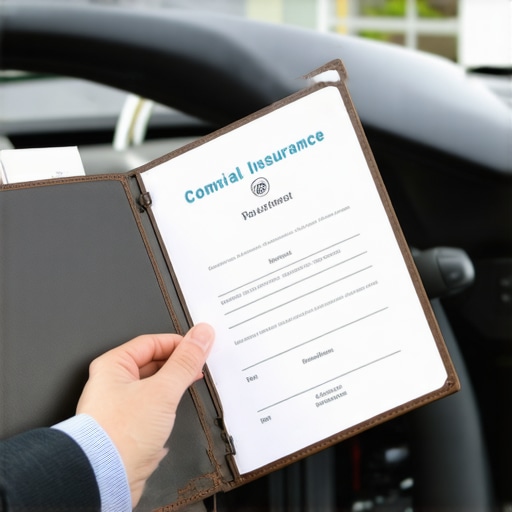
Verify the Livery Endorsement to Protect Your Wallet
When you get that document, don’t just glance at the company name. You are looking for a specific phrase: ‘Livery’ or ‘For-Hire’ endorsement. Think of a personal insurance policy like a basic umbrella; it works fine for a drizzle, but it will collapse in a hurricane. A commercial policy is a reinforced storm shelter. If the policy doesn’t explicitly state it covers the transport of passengers for hire, it is effectively useless to you. I once sat in a vehicle while I did a quick search on the carrier’s name, only to find it was a defunct provider. That is why the protocol for verifying your chauffeurs permit is so vital. It’s a 1-2 punch: check the permit, then check the insurance. Without both, you are just a passenger in a stranger’s car. Professionalism is about transparency, and a driver who hides their credentials is a driver who isn’t prepared for the road.
Check the Physical License Plate for Commercial Markers
The easiest physical check requires no paperwork at all—just your eyes. Most major cities require commercial vehicles to display specific license plates. Whether it is a ‘Livery’ tag, a ‘TC’ (Transportation Company) prefix, or a specialized sticker, these are visual cues that the vehicle is registered for work. Knowing how to verify commercial plates on a private hire allows you to perform a safety audit in seconds. While you are walking toward the door, integrate the routine for inspecting your ride before boarding into your walk-around. Look at the tires, check the plate, and confirm the driver’s ID. I once spotted a car with ‘Private’ plates that was sent for an executive hourly booking. I refused the ride, and it turned out the driver was using his wife’s car because his commercial vehicle was in the shop. He was a nice guy, but in the eyes of the law, we would have been totally uncovered if an accident occurred. Your safety is worth more than a polite gesture. You must also understand how to verify the commercial validity of a transit schedule to ensure that your hourly booking isn’t being double-booked with unvetted third parties, which often happens in the chaotic world of discount transport services.Most travelers think that a ‘9:00 AM reservation’ means the wheels should be rolling at 9:01. In reality, why most arrival times are simply guesses is a hard truth of urban logistics that many beginners ignore. If a chauffeur is pulling up to the curb at the exact minute of your booking, they haven’t performed a site survey or accounted for the pedestrian traffic that might block your exit. In my experience, if they aren’t there early, they are already behind. 
Why Being Exactly On Time Means Your Chauffeur Is Late
I’ve seen it a hundred times: a client walks out at 8:59 for a 9:00 pickup, only to find the driver still circling the block. This happens because the driver relied on an app’s ‘arrival time’ rather than professional intuition. I’ve found that why the 17-minute buffer outperforms the traditional 15-minute rule is the true mark of an expert. Those extra few minutes allow the driver to check the hidden safety red flags in your car door locks and ensure the climate is perfect before you even see the car. It is about readiness, not just presence.
The Dangerous Trap of the Multi-Leg Booking
A common mistake I see high-level executives make is trying to ‘optimize’ their budget by booking separate point-to-point rides for a busy day of meetings. This is a massive ‘oops’ factor. When you do this, you lose the chain of custody for your safety. Why hourly booking is the best move for multiple site visits isn’t just about luxury; it’s a fatigue-management strategy. If you book four different drivers, you are rolling the dice on four different people’s sleep schedules. You need to know how to spot a driver who is too tired to drive safely, but having one dedicated professional for the day eliminates that repetitive risk and ensures your driver isn’t working their 14th hour of the day.
Does Your Real-Time ETA Account for Local Chaos?
You might think that ‘live tracking’ is your safety net, but there is a significant difference between live tracking and estimated progress. According to the Texas A&M Transportation Institute’s Urban Mobility Report, traffic delay costs in the US have risen to over $1,000 per commuter annually, largely due to ‘non-recurring’ events like minor fender-benders or sudden weather changes that standard GPS algorithms struggle to predict in real-time. This is why a driver with a physical map is more reliable than GPS in dense urban centers—they know the ‘shadow routes’ that satellites don’t prioritize. If your service doesn’t understand why on-time performance is the only metric that matters, you aren’t paying for transportation; you’re paying for a stressful gamble. Have you ever fallen into this trap where a ‘guaranteed’ arrival time left you stranded because of a GPS glitch? Let me know in the comments.
The secret to a seamless executive experience isn’t just one app; it’s the ecosystem of data you demand before you even leave your house. I personally rely on deep-layer flight tracking like the FAA’s System Wide Information Management (SWIM) data feeds because standard airline apps are often delayed by up to 15 minutes—a lifetime when you are trying to beat a crowd. When you understand why professional punctuality requires a pre-trip inspection, you are adding a human layer to that raw data. I’ve found that how to track your drivers real-time progress without an app is a game changer for my mental health because it relies on direct communication with a dispatcher rather than a laggy, bouncing GPS pin on a map. This level of oversight ensures why on-time performance is the only metric that matters for my high-stakes meetings.

How do I keep my travel logistics from falling apart over time?
Consistency is the hardest part of the travel game. You might get a lucky ride once or twice, but how we managed a 99 percent punctuality rate for city commutes involves a rigorous, manual vetting process that most people skip. I highly recommend learning how to set up a recurring weekly commute that never fails if you have a regular office route. It builds a professional relationship where the punctuality habits of top-tier private chauffeurs become second nature to your specific needs. This long-term strategy is exactly the secret to stress-free corporate transportation planning because it eliminates the ‘re-learning’ curve for every new driver. By scaling your safety through a single trusted service, you also gain the the security benefit of booking under a corporate alias, keeping your personal details off the public grid.
Looking toward the future, the industry is rapidly shifting toward ‘predictive dispatching’ and AI-driven routing, but I still argue why a human dispatcher outperforms an AI every time. An algorithm can see a traffic jam, but a human dispatcher knows that a local street fair just started or that a specific tunnel is prone to cellular dead zones. This human intuition is why business travelers prefer hourly hires for high-stakes days. If you want to take your travel safety to the next level today, here is my advanced tip: the next time you book, ask the company for the dispatcher’s direct desk line—not just an automated 800 number. Having a direct line to the person actually monitoring your driver’s location is the ultimate move for stay secure and punctual the essential hourly reservation tips for timely service. It transforms a transaction into a partnership.
The Hard Lessons I Learned Standing on Rainy Curbs
#IMAGE_PLACE_HOLDER_E#
After years of navigating city streets from the backseat, I’ve realized that the biggest risk isn’t the traffic—it’s the assumptions we make before we even open the car door. Here are the lightbulb moments that changed my approach to travel forever:
- Luxury is a facade without verification. A clean car and a suit don’t equal safety. I’ve learned that why safety and timeliness matter in hourly reservation services goes far beyond aesthetics; it’s about the back-end vetting that happens before the engine starts.
- The “Cheap” trap is real. If the price seems too good to be true, the driver is likely cutting corners on insurance or maintenance. I now know that the 5-point safety check for every nighttime ride is non-negotiable, regardless of the brand on the hood.
- Dispatcher data beats app estimates. I stopped trusting the little bouncing car on my screen and started asking for hard data. I’ve found that why real-time vehicle data is more accurate than estimated times is because it accounts for actual telematics, not just GPS pings.
My Personal Safety Kit for High-Stakes Travel
To keep my logistics airtight, I rely on a few specific resources that go beyond the basic ride-hailing apps. First, I always cross-reference my route with the Insurance Information Institute guidelines to stay updated on livery requirements. For real-time oversight, I use FlightAware’s professional tier for tracking, which provides the same data dispatchers use. I also recommend taking a moment for how to audit your final ride bill for hidden fees using a simple spreadsheet to track your corporate spend versus the quoted hourly rate. Finally, when I’m traveling with my kids, I use how to vet a chauffeur service for your family vacation as my checklist for ensuring car seats and driver background checks are up to my standards.
Take Back Control of Your Transit Time
You deserve to arrive at your destination with your mind clear and your safety guaranteed. By implementing these rigorous checks and choosing professionals who value transparency, you are investing in your own productivity and peace of mind. Remember, a successful safety, reservation, hourly, on time experience isn’t a matter of luck—it’s the result of the high standards you set for your providers. Don’t be afraid to demand the excellence you’re paying for. Have you ever been in a situation where you felt your driver wasn’t as professional as the booking promised? Let me know in the comments below!