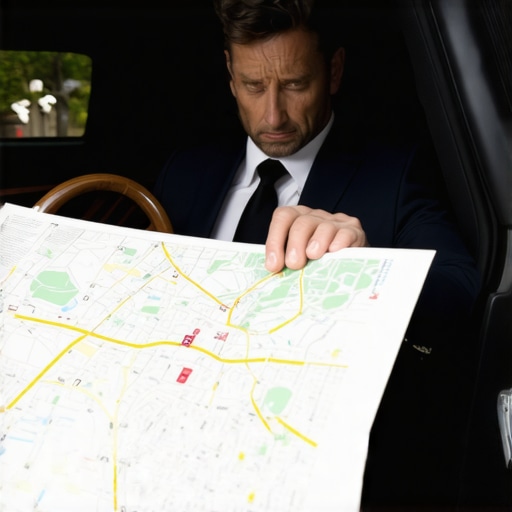
I remember sitting in the back of a black sedan at 4:45 AM, my heart hammering against my ribs while I stared at my watch. We were only three miles from the airport, but my driver was slowing down to a crawl, squinting at a cracked phone screen. Then came the words no passenger ever wants to hear: “Wait, is this the exit for Terminal B?” In that moment, my expensive reservation felt like a total gamble. I wasn’t just paying for a seat; I was paying for the peace of mind that comes with professional expertise. I realized then that a driver asking for directions isn’t just a minor annoyance—it is a fundamental breakdown of the service you are paying for. Today, I want to share why route mastery is the hallmark of a true professional and how you can spot a pro before you ever get in the car.
A Chauffeur Who Guesses Is a Safety Risk You Can’t Afford
I made a massive mistake early in my career by assuming that as long as a driver had a smartphone, we were in good hands. I was wrong. A driver who is constantly glancing at a map is a distracted driver. When a professional takes the time to verify they are well-rested and alert, they can focus entirely on the road instead of a flickering blue line on a screen. Truly guaranteeing an on-time arrival for a early morning flight requires pre-trip planning, not real-time guessing. It’s why on-time performance is the only metric that matters when your schedule is tight and your reputation is on the line. According to research by the AAA Foundation for Traffic Safety, interacting with navigation systems can create a cognitive distraction that lasts long after the driver looks back at the road, significantly increasing the risk of an incident. This is exactly why safety and timeliness matter in high-end transport. If your driver hasn’t studied the route, they aren’t providing a professional service; they are simply an amateur with an app.
Does every driver really need to memorize the entire city?
You might be thinking that expecting a driver to know every alleyway is a bit much in the age of GPS. But there is a huge difference between using a tool for live traffic updates and being completely dependent on it for basic navigation. A professional chauffeur will ensure they know the best back roads and potential construction delays before they even pull into your driveway. They understand that professional punctuality requires a pre-trip inspection of both the vehicle and the intended path. Have you ever found yourself shouting directions from the backseat while watching your departure time tick closer? I’d love to hear your most stressful ‘lost driver’ story. [IMAGE_PLACEHOLDER] When you opt for hourly logistics that save time, you are investing in a seamless experience where the driver acts as a silent, expert navigator, allowing you to focus on your work or your family. Anything less is just a ride-share with a higher price tag.
Mastering the Digital Reconnaissance Before You Start the Engine
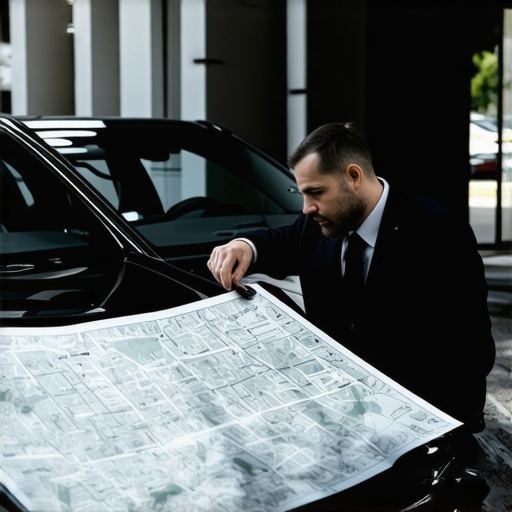
To a pro, a GPS is a backup, not a brain. True route mastery starts hours before the pickup. It’s about auditing the route for “ghost delays”—construction that isn’t on the map yet or local events like marathons that choke city intersections. I remember a rainy Tuesday when a client needed to get to a high-stakes meeting across town. Most drivers would just wake up and hit ‘start’ on an app. I spent ten minutes the night before checking local transit alerts and realized a major thoroughfare was restricted for a parade. By knowing how to ensure your driver knows the best back roads, we sailed through while the highway was a parking lot. This is why a 4 am reservation needs extra planning; the margin for error is effectively zero when the city is waking up.
Cut the Middleman for Bulletproof Logistics
The biggest failure point in many car services isn’t the vehicle—it’s the communication loop. When you’re in a high-stakes situation, why you need a direct line to your hourly driver becomes incredibly obvious. I once saw a corporate traveler lose their mind because the app they used didn’t allow them to text the driver about a sudden gate change. In a professional setting, why a human dispatcher outperforms an ai every time is because they can relay nuanced instructions that a bot misses. This infrastructure ensures that on-time every time strategies actually work in the real world, not just on a software dashboard.
Why Your ETA Needs a Human Buffer to Survive
Automated ETAs are optimistic liars. They assume every traffic light is green and every passenger is standing on the curb at the exact second of arrival. In my experience, why the 17-minute buffer outperforms the traditional 15-minute rule is that it accounts for the “human factor”—the lost keys, the last-minute business call, or the slow hotel elevator. This extra time is what transforms a frantic dash into a calm arrival. When you utilize how hourly rates protect you during unpredictable traffic, you aren’t just buying a ride; you’re buying a shield against the chaos of the commute.
Ditch the Guesswork with Real-Time Validation
Don’t settle for “I’m around the corner” as a status update. A professional service provides total transparency. You should be able to how to track your drivers real-time progress without an app cluttering your phone. We’ve found that why real-time vehicle data is more accurate than estimated times provided by generic platforms because it uses hard hardware telemetry. It is the only way to achieve on-time arrival mastering the art of reservation and safety every hour. I once managed a three-car motorcade for a client where the only reason we arrived simultaneously was because we ignored the app’s ETA and relied on direct coordination between drivers who knew the local terrain better than any satellite ever could.
Most travelers believe that ‘safety’ is a passive attribute—the idea that if a driver hasn’t had an accident in five years, they are inherently safe. In my experience, that is a dangerous oversimplification. True safety is an active, aggressive pursuit that happens long before the engine starts. While the general public often trusts a brand name app’s ‘background check,’ a professional knows that these automated scans often miss recent infractions or secondary risks. To truly protect yourself, you need to know how to verify your drivers commercial registration manually rather than trusting a digital badge. The reality is that the real cost of choosing the cheapest ride option often manifests as a lack of proper commercial insurance, which leaves you vulnerable if things go sideways.
Is your ‘On-Time’ arrival actually just a lucky guess?
Many passengers assume that a GPS-calculated ETA is a guarantee. It isn’t. It’s a mathematical average that ignores the nuance of local reality. This is where why safety and timeliness matter in a professional context. According to a study by the National Safety Council, professional-grade defensive driving training significantly reduces the likelihood of incidents compared to standard license holders, yet most gig-economy platforms do not require it. I always tell my clients that on-time performance is the only metric that matters, but it must be built on a foundation of ensuring safety first. If a driver has to break the law or speed to meet an ETA, they have already failed the mission.
The ‘Oops’ factor usually hits when you’re in a rush. People often fall into the trap of booking a car for a specific time but failing to account for the vehicle’s physical state. I’ve seen high-level executives miss flights because they didn’t know why professional punctuality requires a pre-trip inspection. A flat tire or a dead battery at 4:30 AM is a failure of preparation, not just bad luck. You should also be looking for the hidden safety red flags in your car door locks or window operations before you depart. If the child locks are permanently engaged or the handles feel flimsy, you’re in a vehicle that hasn’t been properly maintained for commercial use. When you choose why hourly booking is more reliable than ride-hailing apps, you are paying for that rigorous maintenance schedule.
Advanced travelers know that reserving your spot with a dedicated driver creates a layer of accountability that doesn’t exist in the anonymous world of on-demand apps. By utilizing on-time arrival mastering the art of reservation and safety, you eliminate the ‘lottery’ aspect of your commute. Have you ever fallen into the trap of assuming a ride-share was ‘safe enough’ only to realize the driver was nodding off? Let me know in the comments. Your experiences help others avoid the same mistakes and emphasize why safety precision is the only way to travel.
The Hardware That Keeps You Moving When Others Stall
I don’t trust a simple oil change sticker to tell me when a vehicle is ready for a 400-mile round trip. To keep things running perfectly, I personally use professional-grade OBD-II scanners—specifically tools like the Autel MaxiCheck—that allow me to read deep system codes that a standard dashboard light would never show. This level of technical scrutiny is how you maximize your safety and satisfaction. I also swear by BlackVue cloud-sync dash cams. It’s not about watching the driver; it’s about having an objective witness that uploads footage in real-time if an impact is detected. This tech is a cornerstone of reservation security measures because it protects both the passenger and the chauffeur from fraudulent claims. When I scale this operation, I’m not just looking for more cars; I’m looking for vehicles with documented telemetry. Keeping a digital log of these scans ensures that staying secure and punctual isn’t a hope, but a data-driven certainty. It’s also the only way to effectively audit your monthly travel spend without stress, because you aren’t paying for emergency repairs that could have been avoided.
How can I maintain peak safety standards over the long haul?
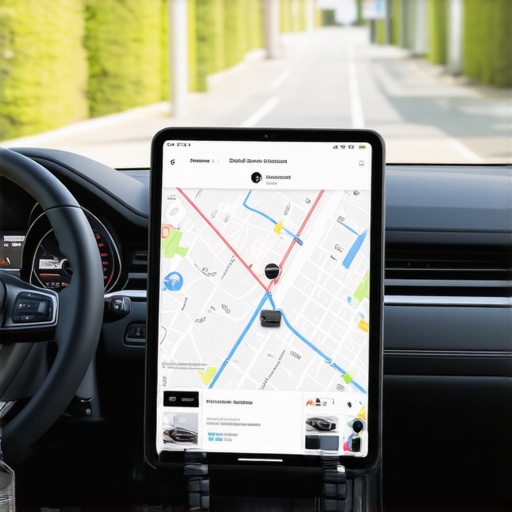
Consistency is the hardest part of the transport business. I’ve found that the secret is shifting from reactive to proactive maintenance. The American Transportation Research Institute (ATRI) highlights in their operational costs analysis that rigorous preventive maintenance is the primary differentiator between profitable fleets and those plagued by downtime. For me, this means implementing strict protocols that include a mandatory 20-point digital inspection before every single shift. We also focus heavily on digital hygiene; knowing how to secure your personal data when booking airport transfers is just as important as checking the tire pressure. If a driver’s tablet isn’t running an encrypted VPN on a dedicated LTE line, they aren’t part of my fleet. This is exactly why our drivers never use unverified navigation apps; we need a closed ecosystem to prevent data leaks and ensure the routing is as secure as the physical ride itself.
The Future of Professional Transit is Hybrid
Looking ahead, I see a major shift toward ‘Hybrid Navigation.’ This isn’t about the engine; it’s about the blend of AI-driven traffic prediction and human ‘street-smarts.’ While AI can predict a jam, it can’t predict that a local school’s let-out time has changed for a half-day. You need to verify the commercial validity of a transit schedule by cross-referencing it with real-world human intel. I predict that the most successful services will move away from mass-market apps and toward bespoke, private networks. This ensures that safety precision remains the priority over mere volume. Scaling safety means moving from individual memory to a shared system. I use custom CRM software that flags a driver for mandatory rest if their hours exceed a safe threshold, preventing the exhaustion that ruins reliability. I challenge you to try this for your next trip: instead of just booking, ask your provider for a copy of their most recent pre-trip inspection log. A true professional will have it ready in seconds, proving they value your safety over their convenience.
The Hard Truth About My Early Navigation Failures
In the beginning, I thought tech could solve everything. I quickly learned that an app can’t account for the local knowledge that saves a morning. The real cost of choosing the cheapest ride option isn’t the fare; it’s the anxiety of watching the clock while your driver searches for a street sign. True peace of mind comes from safety precision—knowing that your driver has scouted the terrain before you ever close the car door. It’s the difference between being a passenger and being a priority. I’ve found that the most reliable drivers are those who treat every route like a mission rather than just another entry in a logbook.
The Gear That Builds a Pro-Grade Safety Shield
I don’t leave my reputation to chance, and neither should you. I rely on a specific toolkit to ensure every trip meets the highest standards. First, I use professional-grade OBD-II scanners for deep system diagnostics; if a car isn’t mechanically perfect, it doesn’t move. Second, high-definition cloud-sync dash cams provide an objective record that ensures reservation security measures are actually enforced for your protection. Finally, I always advocate for having a high-quality physical road atlas in the vehicle because why a driver with a physical map is more reliable than gps becomes clear the moment a satellite signal drops in a concrete canyon or a remote suburb. These tools transform a simple car into a secure mobile environment.
Your Roadmap to a Stress-Free Arrival
Traveling should be about the destination, not the stress of the journey. When you prioritize professional standards, you aren’t just booking a car; you are securing your time and your safety. By focusing on on-time arrival mastering the art of reservation and safety every hour, you can finally stop staring at your watch and start focusing on what matters most to you. Whether it’s a 4 AM flight or a back-to-back boardroom schedule, you deserve a partner who takes your punctuality as seriously as you do. Have you ever missed a high-stakes meeting because a driver got lost or relied too much on a glitchy app? Let me know your story in the comments below.