
I stood there on the curb, freezing, while a crowd of strangers watched a driver wave a placard with my full legal name and private phone number in bold Sharpie. It felt like an invitation for a stalker. That was the moment I realized that being on time and safe meant more than just the car’s mechanics—it meant protecting my identity from the second I hit the book button. I used to think I was being too paranoid, but after years of coordinating high-stakes travel, I’ve learned that your digital footprint starts the moment you make a reservation. Today, I want to show you how a simple corporate alias can be your best defense when navigating professional transit.
Keep Your Personal Life Off the Pavement
When I first started hiring professional drivers, I made the classic rookie mistake: I used my personal credit card and my real name for every single 4 am reservation. I thought it made things official. In reality, I was just handing out my life story to every dispatcher and driver in the system. I’ve since learned that why hourly booking is more reliable than ride-hailing apps depends heavily on how you manage that initial data handoff. By using a corporate alias—something like Operations Manager or a generic company division—you create a buffer. It’s not about being a secret agent; it’s about common-sense reservation security measures that keep your home address and private contact info out of the wrong hands. According to a study by the Identity Theft Resource Center, data breaches involving PII (Personally Identifiable Information) reached record highs last year, and travel services are a prime target because they often link names to physical locations. If a driver knows exactly who you are and where you’re going, they might also know exactly when your house is empty. That’s why I always advocate for the security benefit of masking your phone number and using a business-only identity. Have you ever felt that slight chill when a stranger knows a little too much about your itinerary?
Does Using an Alias Actually Cause More Confusion?
You might be worried that if you don’t use your real name, the driver will never find you. I had that same fear. I once tried to use a completely random pseudonym and ended up wandering around Terminal 4 for twenty minutes because I forgot which name I’d picked! The trick isn’t to lie to the company—it’s to use a consistent corporate identifier that your team recognizes. Professional services actually prefer this because it helps their billing departments sort expenses easily. When you focus on ensuring safety first, you realize that a Company X Guest tag is much safer than John Doe, 123 Maple Street. It ensures you get the reliable way to ensure you arrive first for the keynote without sacrificing your peace of mind or your personal data.To move from a vulnerable passenger to a secure traveler, you need to treat your booking data like a firewall. Your first step is to sanitize your digital profile.
Secure Your Identity Before the Car Arrives
Think of your booking account as a public billboard. If you wouldn’t put your home address on a sign in the park, don’t put it in your profile’s ‘Home’ slot. Instead, use a nearby landmark or a secure hub for your default settings. When you learn the secure way to store your home address in a booking app, you realize that precision doesn’t have to mean vulnerability. I once had a driver get a bit too chatty about the high-end security system at my house after seeing my exact house number on his tablet. Now, I always set my pin at the corner shop. It’s a sixty-second walk for me, but it’s an impenetrable wall for my privacy.
Swap Your Real Name for a Corporate Handle
When you log into a portal, replace your personal first name with your department name or a ‘Guest of [Company]’ label. I remember a particularly messy arrival at O’Hare where I had used ‘Traveler 404’ as a joke. The driver was so confused he almost left, and I had to frantically wave him down while explaining my ‘clever’ alias. The lesson? Keep it professional, not cryptic. Using a corporate identifier helps with how to secure your personal data when booking airport transfers because it shifts the focus from you as an individual to you as a business unit.
Mask Your Digits to Block Post-Ride Contact
Never give your direct mobile number to a driver. Most premium services offer a relay system, but if they don’t, use a VOIP number. This ensures the security benefit of masking your phone number with your driver stays intact long after the ride ends. If a driver tries to text you off-platform to ‘coordinate’ a future ride, it’s a red flag that your data has been compromised. 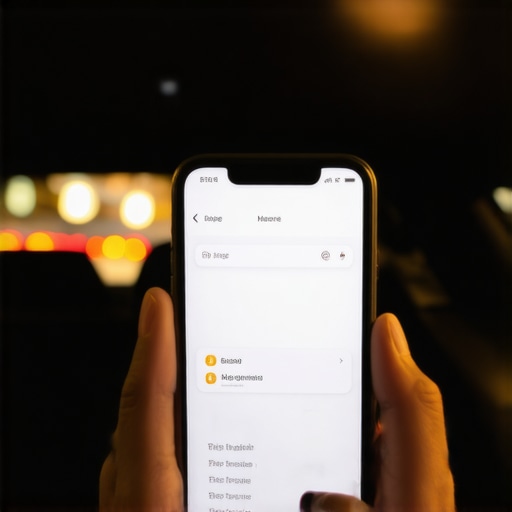
Watch the Road Without Giving Up Your Data
Real-time tracking is a double-edged sword. You want your team to know you’re safe, but you don’t want that link floating around the internet forever.
The Right Way to Share Your Progress
Instead of using the app’s native ‘share my ride’ feature, which often stores data on third-party social servers, use a temporary tracking link that expires. Understanding how to track your drivers real-time progress without an app allows you to maintain oversight without installing invasive software on your phone. This is why why real-time links save families peace of mind—they provide the ‘where’ without exposing the ‘who’ or the ‘why’. When you are reviewing your service agreement, look for the one security clause to look for in your corporate transport contract: data purging. You want a guarantee that your GPS history is wiped every 30 days. This level of reservation security measures is what separates a professional operation from a casual ride-share. By controlling the flow of information, you ensure that why hourly booking is more reliable than ride-hailing apps isn’t just about the car showing up on time—it’s about you disappearing safely into your next meeting.Let’s dig deeper into the actual mechanics of a reservation because most travelers are operating under a massive delusion. Everyone tells you that ‘on-time’ is the gold standard, but in my experience, if your driver pulls up at the exact minute you requested, your stress levels are already spiking. Truly professional services operate on a completely different clock. While casual users think they’re being efficient by booking tight windows, they are walking into a trap. I’ve seen seasoned executives miss million-dollar opportunities because they didn’t realize that why on-time performance is the only metric that matters isn’t about the clock—it’s about the preparation.
Why On-Time is Actually 15 Minutes Late
The common belief is that a 10-minute window is sufficient for any city pickup. It’s not. In reality, why a 20-minute buffer is the new gold standard for business travel is because it accounts for the ‘last mile’ chaos that GPS systems never see. Most people get this wrong: they book for the time they want to leave, not the time they need to be settled in the vehicle. If you aren’t ensuring safety and punctuality by demanding an early arrival status, you’re essentially at the mercy of every red light in the city.
How Can You Tell if Your Chauffeur is Dangerously Fatigued?
This is the advanced nuance most people ignore in favor of looking at the car’s leather seats. We focus on the vehicle, but we forget the human behind the wheel. A study by the National Safety Council highlights that driving on less than five hours of sleep is just as dangerous as driving over the legal alcohol limit. When you’re booking, especially for those brutal early-morning hauls, you need to know how to ensure your driver is not fatigued during a late night trip. Don’t be afraid to ask about the dispatch agency’s shift-limit policies; a truly elite service will have strict downtime requirements for their staff.
The Hidden Trap of Real-Time Tracking
Here is the ‘oops’ factor that bites even the tech-savviest travelers: the belief that the little car icon on your screen is 100% accurate. It’s a common fallacy. Why GPS lag can ruin your meeting schedule is a technical reality—cellular dead zones and server pings mean that car might be two blocks further away than it looks on your high-res display. 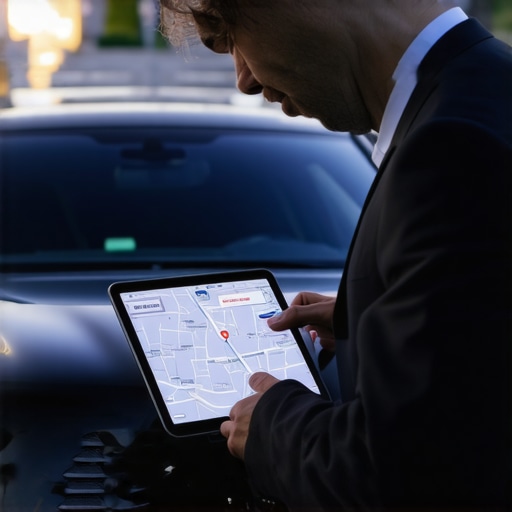 I once sat in a lobby watching an icon ‘arrive’ while the actual vehicle was still stuck three intersections away due to a sudden water main break. Always cross-reference the app with a quick direct message or call. This is why the checklist for every late night private car hire must include a verbal or text confirmation of their actual cross-street location. Have you ever fallen into this trap of trusting the app icon more than your own eyes? Let me know in the comments.
The Digital Toolbox That Keeps Me Sane
To stay ahead of the game, I’ve stopped relying on the basic notifications provided by standard apps. I use a dedicated VOIP line (specifically Google Voice) for every single booking profile. It’s my primary tool because it allows me to record calls for clarity and keeps my personal line completely isolated from temporary service staff. This is exactly why the security benefit of masking your phone number with your driver is the hill I will die on. I also maintain a ‘Transit Master’ spreadsheet that I use to how to audit your monthly travel spend without stress. By tracking the requested pickup time versus the actual wheels-up time, I can identify which dispatchers are cutting corners. I’ve found that why a human dispatcher outperforms an ai every time becomes obvious when you look at the raw data: humans can account for the local parade or the unannounced roadwork that an algorithm misses until it’s too late.
How do I keep this travel system running for the long haul?
Maintenance isn’t about the car—it’s about your digital hygiene. Every quarter, I go through my booking accounts and wipe my saved locations. It sounds like a chore, but it’s the only way to ensure the secure way to store your home address in a booking app stays effective. If you leave old addresses in there, you’re just creating a map for anyone who might gain unauthorized access to your account. I also perform the routine for inspecting your ride before boarding every single time, without exception. This includes a quick glance at the tires and a check of the child safety locks to ensure they aren’t engaged against my will. It’s a 30-second habit that has saved me from awkward and potentially dangerous situations more than once. 
Stop Trusting the Defaults
Most people just hit ‘confirm’ and hope for the best. I advocate for a more aggressive approach to financial security. I never use debit cards for transit; I only use high-limit credit cards with robust fraud protection and virtual card numbers. Learning how to verify your payment is processed via a secure gateway is your last line of defense against skimming or double-billing. In the future, I predict we will see biometric ‘handshakes’ between passengers and drivers—where your phone and the car’s dashboard must cryptographically agree on your identity before the doors even unlock. Until that tech is standard, we have to be our own gatekeepers. According to the Federal Motor Carrier Safety Administration (FMCSA) technical manual on 49 CFR Part 395, driver ‘on-duty’ time is strictly regulated to prevent fatigue-related accidents, yet many gig-economy drivers bypass these by switching between multiple apps. This is why I always ask my driver how long they’ve been on the road today. If the answer is ‘twelve hours,’ I’m getting out. I strongly encourage you to try one advanced tip this week: set up a secondary VOIP number today and use it for your next reservation. You’ll be amazed at how much quieter your personal phone becomes once the trip is over.
Hard Lessons from a Decade on the Road
After thousands of miles in the back of hired cars, I’ve realized that reservation security measures are not just about checking boxes; they are about maintaining a psychological edge. One major lightbulb moment for me was discovering that why last minute reservations often result in poor quality isn’t just about the car being dirty—it’s about the dispatcher rushing safety checks to fill a gap. I also learned the hard way that why a human dispatcher outperforms an ai every time when things go sideways; a bot won’t call you to explain that a sudden protest has blocked the main artery to the airport.
- Punctuality is a buffer, not a goal: Aiming for an exact arrival is an invitation for disaster. True pros arrive early and wait silently.
- Anonymity is your greatest friend: Using a corporate alias or department name protects your private life from being archived in a driver’s personal phone.
- Safety is human-centric: You can sit in the most expensive vehicle on earth, but if the driver hasn’t slept, you are in a high-speed hazard.
Tools that Keep My Data Under Lock and Key
I don’t just hope for the best; I use a specific stack of tools to ensure I stay invisible while moving. First, I use VOIP services like Google Voice to ensure the security benefit of masking your phone number with your driver remains permanent after the ride ends. For payments, I rely on virtual credit card generators. This is the only way I know how to verify your payment is processed via a secure gateway without ever exposing my actual bank balance to a third-party portal. Finally, I perform a quarterly audit of my booking profiles to ensure the secure way to store your home address in a booking app—which usually means using a nearby landmark instead of my front door—is still active in my settings. #IMAGE_PLACE_HOLDER_E#
Build Your Own Safety Net
Taking these steps might feel like extra work initially, but the peace of mind you gain is worth every second of setup. You deserve to focus on your keynote, your family, or your next meeting, not on whether your driver has your personal info. By mastering on-time arrival mastering the art of reservation and safety every hour, you shift from being a vulnerable passenger to a secure traveler in control of the journey. Which one of these privacy tactics are you going to implement for your next business trip? Let me know in the comments below!