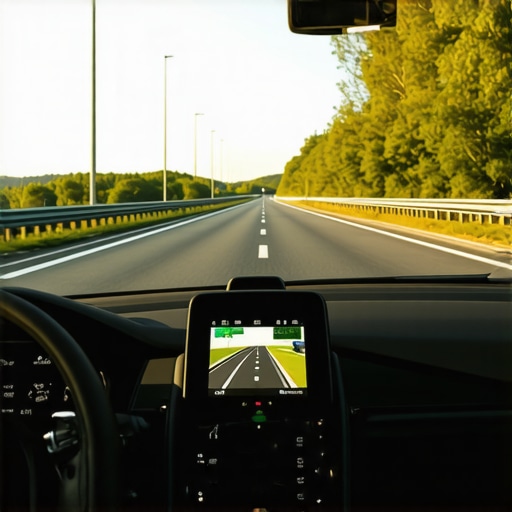
I was sitting in the back of a black sedan, knuckles white, staring at a dashboard GPS that insisted we turn down a narrow, unlit side street just to save 120 seconds. It was nearly midnight, the rain was coming down in sheets, and my driver—a nice enough guy—was about to follow that glowing blue line right into a neighborhood known for poor drainage and even worse lighting. I didn’t speak up. I figured he was the pro and he knew better. I was wrong. We ended up stalled in a foot of water, waiting for a tow, and I missed my morning connection entirely. That night taught me a hard lesson: being the quiet, passive passenger is often a recipe for a white-knuckle disaster.
Stop Letting the Algorithm Dictate Your Personal Safety
Most of us treat a navigation app like a holy relic. If the screen says turn, we expect the driver to whip the wheel. But here is the kicker: those apps prioritize efficiency over everything else, often ignoring road conditions, shoulder width, or even current weather hazards. My biggest mistake early on was assuming that every on-time arrival required taking the absolute shortest path. It really doesn’t. Sometimes the safest highway route adds five miles to the trip but removes a hundred unnecessary risks. You have to be the advocate for your own peace of mind, especially when strategies for safe and reliable hourly bookings are on the line.
Is sticking to the main interstate actually worth the extra time?
You might worry that you are being difficult by asking for a specific highway instead of a series of shortcuts. You are not. According to the Insurance Institute for Highway Safety (IIHS), interstates are significantly safer than local two-lane roads, boasting much lower fatality rates per mile traveled because they eliminate cross-traffic and pedestrians. When you make a reservation, you are paying for a secure arrival, not a gamble on a back-alley shortcut. I used to feel awkward about requesting a route change, but I learned that most professional drivers actually appreciate the clarity. Have you ever felt that pit in your stomach when your driver takes a turn that just feels wrong? Today, I am going to show you exactly how to steer the conversation toward safety so you never have to feel that way again. We will look at why our drivers never use unverified navigation apps and how you can spot a risky route before the tires even hit the pavement.
Inspect Your Route Before the Door Closes
The moment you settle into the seat, you have a three-minute window that dictates the rest of your journey. Think of your ride like a flight plan; a pilot doesn’t just wing it after takeoff, and neither should you. I used to wait until we were already stuck in a residential maze before speaking up, but that is a rookie mistake. Now, as soon as the doors click shut, I ask the driver which path they intend to take. If they mention a series of side streets to avoid a five-minute highway delay, I politely intervene. Using the correct way to request a route change is about being assertive without being aggressive. I might say, ‘I know the GPS suggests the backroads, but I feel much more comfortable staying on the main interstate today.’ This small interaction sets the tone that you are an active participant in your safety, not just luggage in the backseat.
Prioritize Main Arteries Over Algorithmic Shortcuts
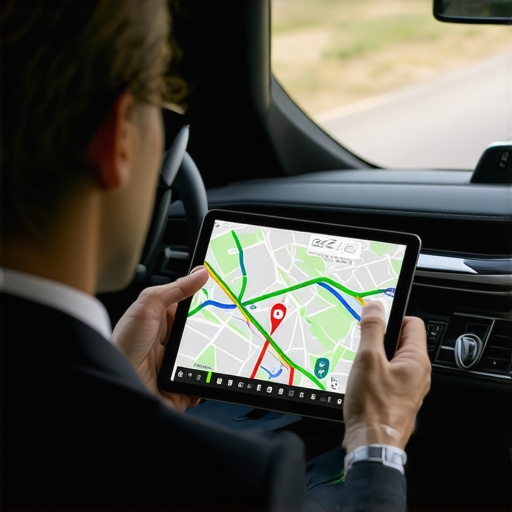
Navigation apps are designed to shave seconds off a trip by any means necessary, often leading drivers through high-crime areas, unlit alleys, or roads with poor pavement quality. When you are focused on an on-time arrival, those seconds saved aren’t worth the risk of a flat tire or a stalled engine in a bad neighborhood. I learned this the hard way in Chicago last year. My driver tried to dodge a jam on the I-90 by cutting through a desolate industrial district. We ended up blocked by a freight train for twenty minutes. If I had insisted on the highway—where the red light strategy is easier to manage—I would have been at my hotel before the train even arrived. Major highways offer better lighting, more emergency pull-off space, and higher police visibility, all of which contribute to a safe and secure reservation experience.
Why Hourly Bookings Kill the Rush Mentality
One of the biggest threats to your safety is a driver who feels rushed. In a standard point-to-point ride, the driver is incentivized to finish your trip as fast as possible to pick up the next fare. This leads to speeding and risky maneuvers. This is exactly why hourly booking is more reliable than ride-hailing apps. When you book by the hour, you remove the ‘ticking clock’ from the driver’s mind. They are yours for the duration, which naturally encourages a smoother, more defensive driving style. You aren’t just paying for the car; you are paying for the driver’s patience. Analogously, it’s the difference between a fast-food worker rushing your burger and a private chef taking the time to ensure every ingredient is perfect. For those with complex schedules, why hourly booking is the best move for multiple site visits becomes clear: it allows for handling a route change mid-trip without the driver panicking about their next gig.
Verify Your Driver Before You Lean Back
Safety starts before the wheels turn. You should always perform a quick mental audit of the vehicle and the professional behind the wheel. I always look for a few key indicators: is the cabin clean, and does the driver have a physical or digital trip sheet? Professionals who manage strategies for safe and reliable hourly bookings will always have a clear itinerary. I also check for commercial plates on a private hire to ensure the vehicle is properly insured for passenger transport. Taking these steps doesn’t make you paranoid; it makes you prepared. Knowing how to spot a professional vehicle fleet at a glance can save you from stepping into a car that hasn’t seen a maintenance bay in months. Your life is worth the extra thirty seconds of scrutiny.
The Fatigue Trap Nobody Talks About
Most travelers assume that a higher price tag or a shiny new SUV automatically equates to better safety. It does not. In my years on the road, I have realized that the real cost of choosing the cheapest ride option is not measured in dollars, but in driver alertness. While the masses are obsessed with vehicle make and model, the pros are looking at the driver’s shift log. A study by the National Sleep Foundation highlights that driving after 20 hours without sleep is equivalent to having a blood alcohol concentration of 0.08%, the legal limit in all states. This is exactly why knowing how to ensure your driver is not fatigued during a late night trip is a far more critical skill than knowing how to use a coupon code. Everyone tells you to check the car’s tires, but I am telling you to check the driver’s eyes. If they have been toggling between three different apps all day just to make ends meet, your safety is already compromised.

Can a driver be too early for your pickup?
You might think a driver arriving twenty minutes early is the pinnacle of service. In reality, it is often a red flag of poor scheduling. When a driver is pressured to sit idle for long periods or rush between disparate bookings, their focus shifts from safety to logistics. This is where why hourly booking is more reliable than ride-hailing apps becomes evident; it creates a dedicated window where the driver is not looking past you to their next payout. I once fell into the trap of praising an early arrival, only to realize the driver was speeding through school zones just to clear his queue. Now, I look for why on-time performance is the only metric that matters—not early performance. Precision is the mark of a professional, not haste.
Why “Real-Time” Tracking Is Often a Digital Illusion
We have been conditioned to stare at a little car icon crawling across a map, believing it is the ultimate truth. But why refreshing your tracking app might give you false arrival times is a nuance most people miss. Signal lag, GPS drift, and “ghost” vehicles are rampant in automated systems. This is why a human dispatcher outperforms an AI every time; a person can see that a specific bridge is closed for an unannounced protest while the algorithm is still trying to send your driver right through it. Furthermore, why a 4 am reservation needs extra planning often comes down to the same fatigue issues; you need to know if your service has a fresh morning shift or just a tired night shift. If you are relying solely on an app, you are flying blind with a blindfold made of pixels. Have you ever fallen into this trap where the app promised five minutes but took twenty? Let me know in the comments. Moving forward, always prioritize strategies for safe and reliable hourly bookings that involve human oversight over a cold, lagging algorithm.
Professional Telematics Beats Consumer GPS Every Time
I used to think that as long as my driver had a phone and a signal, we were good. I was wrong. Professional travel isn’t about hope; it’s about verified data. Today, I look for services that utilize dedicated telematics—systems like Geotab or Samsara—that feed directly from the vehicle’s engine. Why real-time vehicle data is more accurate than estimated times comes down to the source. Consumer apps guess based on phone movement; professional systems know the exact throttle position and brake pressure. According to a technical study by Geotab, fleets using active telematics saw a 45% reduction in safety incidents because the data allows for immediate correction of risky driving habits. When you learn how to audit your drivers speed using live tracking links, you aren’t being a micromanager; you are using the same tools that high-end fleet managers use to keep their VIPs alive.
How do I maintain this level of safety on every single trip?
Consistency is the hardest part of travel safety. It is easy to be vigilant during a storm, but what about a sunny Tuesday morning? I’ve developed a ‘safety-first’ habit that I never deviate from, regardless of how tired I am. It starts with safety precision as the key to reliable hourly reservations. I keep a digital log of every driver’s performance. If a driver takes an unverified shortcut or displays signs of fatigue, they are blacklisted from my future bookings immediately. Maintaining this standard over time requires you to treat your personal travel like a corporate logistics operation. By sticking to essential hourly reservation tips for timely service, you create a feedback loop that rewards the best pros and filters out the amateurs who are just looking for a quick fare.
The Physical Paper Trail That Algorithms Can’t Delete
In a world obsessed with ‘paperless’ everything, I have gone back to basics for my most critical trips. I always ask for a hard copy or a downloadable PDF of the dispatch sheet. Why you must demand a physical copy of your trip reservation is simple: it is your insurance against ‘glitches.’ If the driver’s app crashes or their phone dies in a dead zone, that paper contains the emergency contact for the dispatcher, the specific route requirements we agreed upon, and the insurance details for that specific vehicle. It removes the ‘he-said, she-said’ when things go sideways. I predict that as AI becomes more integrated into transit, the value of these ‘analog backups’ will only increase as a hedge against system-wide digital failures. My challenge to you for your next trip: don’t just close the door and look at your phone. Ask your driver for the physical trip sheet and verify the vehicle ID yourself. It’s a small move that signals you are a high-value passenger who knows the rules of the game.
Lessons I Learned While Stalled on a Dark Road
After years of crisscrossing cities in the back of hired cars, I’ve realized that safety isn’t a feature—it’s a choice you make before you even buckle up. One of my biggest lightbulb moments was realizing that safety precision is the key to reliable hourly reservations. If you don’t set the standard, the algorithm will set it for you, and it usually chooses the cheapest, fastest, and riskiest path available. I’ve also learned that how to verify your driver is not exhausted is a skill that saves lives; a yawning driver is just as dangerous as a speeding one.
- The Map is a Suggestion, Not a Law: Never be afraid to override a GPS that wants to take you through an unlit industrial park. Professionals appreciate passengers who value their own security.
- Punctuality vs. Haste: A professional driver focuses on on-time arrival through meticulous planning and buffers, never by breaking traffic laws or weaving through lanes.
- The Analog Backup: Digital systems fail when you need them most, usually in the middle of a storm or a dead zone. I now always keep a physical copy of my itinerary and dispatch contact.
#IMAGE_PLACEHOLDER_E#
The Hardware and Habits I Never Travel Without
I don’t just hope for a good ride anymore; I engineer one using a specific set of tools and habits. My essential toolkit starts with the protocol for verifying your chauffeurs permit and how to verify your drivers commercial registration manually. I also swear by using live tracking links that I share with a trusted contact—it provides a layer of oversight that standard consumer apps often lack. Furthermore, I always perform the routine for inspecting your ride before boarding, checking tire tread and interior door locks. These aren’t just extra steps; they are the professional standards that ensure ensuring safety first is your guide to on-time reservations at any hour.
It is Time to Reclaim Your Peace of Mind
The transition from a passive passenger to an empowered traveler doesn’t happen overnight, but it starts with your very next booking. By shifting your mindset toward proactive reservation security measures, you aren’t just getting from point A to point B; you are protecting your time and your life. Don’t wait for a breakdown in the rain to start asking the right questions. Have you ever felt like your driver was prioritizing the ticking clock over your actual safety? Let me know your experiences in the comments below.