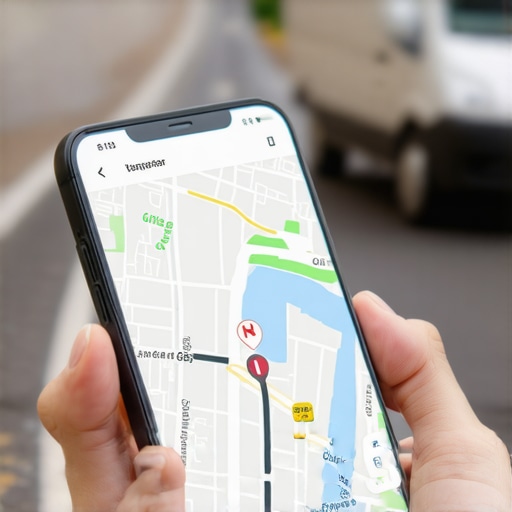
I remember standing on a terminal curb in a sudden downpour, my phone battery hovering at a terrifying 2%, watching a little digital car icon on a glitchy app spin in literal circles while my actual ride was nowhere to be found. It is that sinking feeling in your gut—the realization that you are at the mercy of a piece of software that has probably not updated its cache since the morning. I spent years thinking that real-time tracking meant I had to be glued to a specific interface, but I was wrong. In fact, I was making my travel less secure and more stressful by obsessing over a map that frequently lied to me. I once missed a crucial board meeting because I trusted a ‘5-minute away’ notification that was actually a frozen GPS signal. That was the day I realized that knowing why refreshing your tracking app might give you false arrival times is the first step to taking back control of your schedule. Today, I am going to show you how to maintain total visibility over your ride using simpler, more reliable methods that do not require you to clutter your phone with more privacy-invading software.
The Day I Stopped Trusting the Little Blue Dot
I used to be a serial app-refresher. I thought that by staring at the screen, I was somehow manifesting the car to move faster. The truth is, most consumer-grade apps are optimized for the company’s server load, not your peace of mind. I learned the hard way that why real-time vehicle data is more accurate than estimated times provided by a standard algorithm. When you are on a tight schedule, especially when an hourly chauffeur can save your business trip productivity, you need facts, not ‘best guesses.’ My biggest mistake early on was not asking for a direct communication line or a simple web-based tracking link that uses dedicated GPS hardware. According to a report by the National Highway Traffic Safety Administration (NHTSA), driver distraction from mobile devices remains a leading cause of transit delays and safety incidents, which is exactly why I moved toward systems that prioritize hands-free, automated updates over manual app pings. Have you ever stood on a curb wondering if your driver even exists despite the app saying they are ‘arriving now’? It is a common frustration, but it does not have to be your reality.
Is it even possible to stay safe without a map?
Many of my neighbors ask me if skipping the app means sacrificing safety. It is actually the opposite. By using direct SMS geofencing or web-view links, you are often getting a cleaner data stream that is harder to spoof. Plus, it allows you to ensure your driver is not using a personal phone while driving just to update their status. Relying on on-time every time strategies for safe and reliable hourly bookings means looking at the hardware in the car, not just the software on your phone. We are going to dive into the practical steps of setting up these ‘passive’ tracking methods so you can keep your phone in your pocket and your eyes on the road.
Ditch the Map and Build a Communication Bridge
I like to think of vehicle tracking not as a video game where you watch a character move, but as a flight plan that needs a clear communication bridge. The first step to ensuring you are never left guessing is to demand a direct connection to a human dispatcher. Last year, I found myself outside a packed stadium after a championship game; the cellular network was so throttled that ride-hailing apps were essentially bricks in everyone’s hands. While hundreds of people stood under the glow of their frozen loading screens, I reached into my pocket for a physical backup. Because I knew why you must demand a physical copy of your trip reservation, I had a printed dispatcher number and a vehicle ID. I bypassed the app entirely, called the dispatch center via a standard voice line, and was directed to a specific pillar in the pickup zone where my driver was already waiting. This manual backup is your ‘fail-safe’ when technology inevitably stutters in high-traffic areas.
The Power of the Physical Paper Trail
Before you even leave your house, you should treat your reservation like a legal contract rather than a digital suggestion. This means ensuring that why we require a verified profile for every reservation is part of the company’s protocol. A verified profile ensures that the data being sent to your phone is linked to a specific, vetted individual, not a generic account that could be handed off to a sub-contractor. Once you have that confirmation, print it or save it as an offline PDF. This document should include the vehicle’s license plate and the driver’s name, allowing you to how to verify a drivers safety certification without being rude by simply cross-referencing their credentials with your paperwork upon arrival. It turns a potentially awkward interrogation into a professional check-in.
Locking in Your Geofence Strategy
Passive tracking is infinitely more reliable than active app-watching. Instead of refreshing a map, I set up geofencing alerts. This is a system where the car’s dedicated hardware triggers a text message to you once the vehicle enters a certain radius—say, three blocks away. I prefer this because it utilizes why we use dedicated GPS hardware instead of smartphone apps, which is far less likely to lose signal in ‘urban canyons’ where tall buildings bounce cellular waves. This setup is also one of the reasons why geofencing is the best way to keep your family safe during transit; you get an automated, impartial notification the moment the car arrives, allowing you to stay inside where it is warm and safe until the very last second. 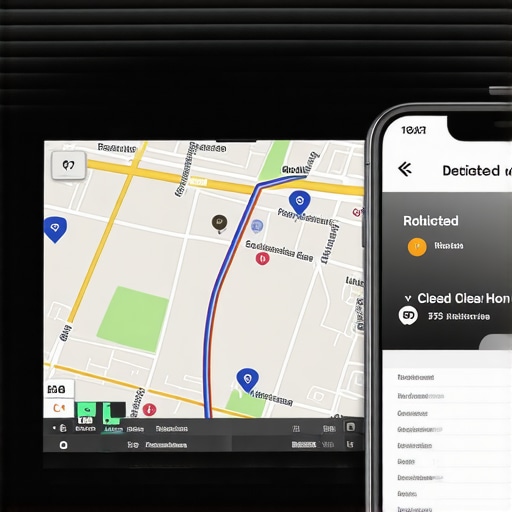
Verification Steps Before You Step Inside
When the car pulls up, the ‘dots on a map’ phase is over, and the physical safety phase begins. Never assume the car is yours just because it matches the color on your screen. I always perform a quick visual sweep. I look for professional markings and use my pre-trip research to ensure your driver is not using a personal phone while driving or for navigation, as they should be using an integrated system. If you see a phone mounted on the dash with a different app open, it is a red flag that they might be ‘multi-apping,’ which compromises your safety and the precision of your timing. This is where on-time every time strategies for safe and reliable hourly bookings really pay off—you are paying for dedicated attention, not a driver distracted by their next gig’s notification.
Why Your “Money-Saving” One-Way Strategy Is Killing Your Punctuality
Many travelers believe they are outsmarting the system by booking individual legs of a journey to save a few dollars. In my experience, this is the quickest way to end up stranded. I’ve seen it time and again: a traveler thinks they’ll just “grab another car” after their meeting, only to realize that why one-way bookings often lead to unnecessary stress for travelers because you lose the continuity of service. When you opt for an hourly arrangement, you aren’t just paying for the car; you’re paying for the driver’s commitment to your specific timeline. This is why fixed hourly rates are smarter than metered fares for executives—you eliminate the “on-demand” gamble.
Stop Double-Booking Your Backup Rides
There is a common “safety hack” that is actually a disaster in disguise: double-booking. People think having a backup ride-hail app running while waiting for their private car is a safety net. It’s not. It’s a distraction for you and a logistical nightmare for dispatch. I firmly believe why double-booking a backup ride is a sign of a planning failure. It splits your attention and often leads to missed connections because you’re managing two data streams instead of one reliable one. 
Can a quick visual check really tell you if a vehicle is safe?
Advanced travelers don’t just look at the paint job; they look at the maintenance indicators. The Federal Motor Carrier Safety Administration (FMCSA) reports that mechanical defects, particularly in brakes and tires, are leading contributors to commercial vehicle accidents. This is why I always perform the windshield wiper test—a quick way to check fleet maintenance before I get in. If the small things like wiper blades are cracked or the the brake pad squeal you should never ignore before a long trip is audible, it is a massive red flag. You should also know the proper way to audit your drivers commercial insurance without feeling like an investigator. Professionalism is found in the details, and why hourly chauffeurs are safer for late-night solo travelers often comes down to the rigorous maintenance schedules they follow compared to gig-economy drivers. Have you ever fallen into the trap of thinking a cheaper one-way trip would be “just as good,” only to have it backfire? Let me know in the comments.
Build a Tech Stack That Does Not Rely on Cellular Luck
I have transitioned to a travel setup that ensures my schedule stays intact even when my smartphone decides to update its operating system in the middle of a commute. My personal strategy starts with implementing the 3-minute buffer that saves you from missing the train, which I apply to every pickup window regardless of the distance. I also prioritize providers that explain why we use dedicated GPS hardware instead of smartphone apps. This is because consumer-grade phones are highly susceptible to ‘multipath interference.’ According to technical documentation from Trimble Geospatial, urban environments create signal reflections off glass and steel that can throw off a smartphone’s location by up to 50 meters, whereas high-gain dedicated antennas filter these errors out for a true, precise reading. 
How do I keep this system running for every trip?
Consistency is the primary enemy of travel chaos. I maintain my personal travel logs by learning how to store your trip data securely away from third-party apps, which often sell your location history to brokers. This habit is not just about privacy; it is about having a local, searchable database of your vetted drivers and their direct dispatch lines for emergencies. I also strictly avoid shortcuts, such as the risk of booking transportation through unverified social media ads, which often promise lower rates but offer zero insurance recourse or physical safety guarantees. By sticking to a rigid verification routine, I ensure that my on-time arrival is a result of planning, not luck.
Predictive safety is the next frontier
I predict that within the next few years, the industry will shift from ‘real-time’ monitoring to ‘predictive’ tracking. We already know why instant vehicle tracking is a requirement for modern business, but the next evolution involves AI that cross-references engine telematics and local traffic patterns before the car even leaves the garage. Following a philosophy of ensuring safety first your guide to on-time reservations at any hour means staying ahead of these technological shifts. For now, the most reliable results come from combining human dispatch with stay secure and punctual the essential hourly reservation tips for timely service. Try this today: When you book your next ride, ask the dispatcher if their vehicles use ‘hard-wired telematics’ or just a driver’s personal phone. That one specific question will immediately tell you if you are dealing with a professional fleet or a gig-economy gamble.
The Hardest Lesson I Learned About Reclaiming My Schedule
Over a decade of high-stakes travel, I realized that the ‘refresh’ button is actually an anxiety trigger, not a solution. The moment I stopped looking for the lowest price and started looking for the highest accountability, my stress vanished. I learned that an hourly reservation provides a safety precision that on-demand apps simply cannot match. It’s the difference between being a ‘fare’ and being a ‘client.’ Another lightbulb moment was realizing that my safety is my responsibility until the door closes; checking the fleet myself is not rude, it is professional. Finally, I discovered that on-time arrival requires mastering the art of the reservation, which means giving the system enough data to succeed, not just a set of coordinates. #IMAGE_PLACEHOLDER_E#
A Veteran Traveler’s Toolkit for Stress-Free Transit
To stay ahead of the curve, I rely on a few specific resources that go beyond the basic apps. First, I always keep the FMCSA SAFER website bookmarked; it’s the best way to check a vehicle’s safety rating before you book your ride. Second, I recommend the FlightAware app—not for the map, but for the tail-number tracking that tells you if your plane (and thus your driver’s timing) is truly on schedule. Lastly, I use a simple offline PDF of my reservation security measures so I have every emergency number and license plate saved even if the local cell tower goes down. These tools ensure I am never the person standing on the curb with a dead phone and no plan.
Take the Wheel of Your Travel Destiny
Reliable transit is not a roll of the dice; it is a calculated result of the choices you make before you even pack your bags. By moving away from glitchy interfaces and toward professional, hardware-backed systems, you are buying back your peace of mind. Every trip is an opportunity to practice these safety habits, ensuring that your on-time arrival is guaranteed by strategy rather than luck. Don’t be afraid to demand more from your transportation providers—your time and safety are worth the extra effort. Have you ever had a tracking app fail you at the worst possible moment? Let me know your story in the comments below.