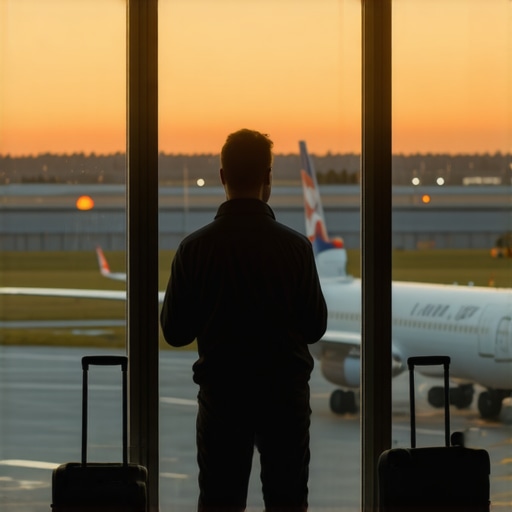
The silence at an airport gate after the last passenger has boarded is a very specific kind of lonely. I stood there, clutching a lukewarm latte, watching the jet bridge slowly retract like a drawbridge being pulled up on a castle. My connection was gone, and with it, my chance at making the opening dinner for a major conference. I had made the classic rookie mistake: I scheduled my life down to the second, leaving zero room for a runway queue or a slow deplaning process. It was a miserable night spent on a lumpy terminal bench that taught me the hard way that being truly on time requires a much bigger safety net than I had ever imagined.
Turning a Terminal Nightmare into a Smooth Transition
When you see that Departed status on the monitor, your heart drops into your stomach. You want to run, you want to argue, or maybe you just want to sit on your suitcase and give up. Don’t do that. I spent years thinking the airline was the only player in this game, but I’ve learned that a safe ground strategy is what actually keeps you from losing your mind. After that disaster, I started digging into the re-booking rules for weather-related flight cancellations and realized that while the airline handles the sky, you have to handle the ground. Data from the Bureau of Transportation Statistics shows that nearly one out of every five flights in the U.S. arrives late, which means a missed connection isn’t a rare fluke—it is a statistical probability. My biggest error early on was not having a reliable backup. I would eventually land hours late, exhausted, and then have to fight for a spot in a chaotic rideshare line. Now, I always look for a service that understands essential hourly reservation tips so that my ride is ready when I finally touch down. It is about taking control of the variables you can actually influence, like using a grace period secret to ensure your driver doesn’t leave you stranded if your new flight is also delayed.
Is a private reservation really worth the extra cost when plans are in flux?
You might be thinking that booking a car for a specific time is a gamble when your schedule is falling apart. I used to be a skeptic too. But when you are dealing with the stress of a missed connection, the last thing you need is the added stress of finding parking or trying to find a driver at 2 AM in a city you do not know. Have you ever felt that sinking feeling of being totally stuck at a terminal with no way out? I would love to hear how you handled it! We are going to explore how an hourly chauffeur can save your business trip productivity and turn a travel disaster into a minor hiccup.
Build a Reliable Safety Net with Real Reservations
When you rely on a standard ride-hailing app, you are essentially casting a fishing line into a pond and hoping a driver bites. For a casual trip to the grocery store, that is fine. When you have a flight to catch, it is a recipe for disaster. The first step in taking control of your travel is acknowledging the difference between a reservation and a confirmed booking. A reservation is often just a scheduled request that the system tries to fulfill minutes before your pickup; a confirmed booking means a specific driver has been assigned and the vehicle is blocked off for your exclusive use. This distinction is the bedrock of reservation security measures that ensure you actually arrive on time. Think of it like a seat at a restaurant: a ‘reservation’ might mean you still wait at the bar, while a ‘confirmed table’ means the silverware is already laid out for you.
Verify Your Driver Before Opening the Door
Safety is not just about driving fast or slow; it is about knowing exactly who is behind the wheel. One of my favorite quick checks is the ‘professionalism sweep.’ Before I even put my bags in the trunk, I look for the floor mat check. It sounds trivial, but a driver who maintains a spotless interior and clean mats is a driver who likely maintains their engine and follows safety protocols. You should also take ten seconds to verify a driver’s safety certification. In a professional setting, this information is usually visible or readily available upon request. If the driver seems annoyed by the question, that is your first red flag. 
The 3 AM Blueprint for High-Stakes Departures
Early morning flights are the ultimate test of any transport service. I remember a particularly stressful trip out of O’Hare where I had to be at the gate by 5:00 AM. In the past, I would have spent the night tossing and turning, wondering if my driver would actually show up. Now, I use the 3 AM pickup blueprint, which involves selecting a service that utilizes human dispatchers. These dispatchers call the driver an hour before the pickup to ensure they are awake and on route. This human element is how we guaranteed an on-time arrival even during a surprise snowstorm. It is about layering redundancies.
Master the Timing of Your Exit
Most travelers make the mistake of timing their exit exactly when the app says the car will arrive. This creates a frantic scramble at the curb. Instead, you need to calculate the precise pickup window. This means being ready five minutes early and having your luggage staged at the door. If you are in a high-rise, you have to account for elevator wait times and lobby security. When you use strategies for safe and reliable hourly bookings, you aren’t just paying for the ride; you are paying for the peace of mind that the car will be there, waiting for you to step into it, rather than the other way around.
I used to think that as long as I could see a tiny car icon moving on my phone screen, I was in control. I was wrong. The biggest myth in modern travel is that an app’s real-time ETA is gospel. In reality, those maps often struggle with high-density urban canyons. I’ve learned that the reason your real-time map sometimes lags in the city is usually due to signal bouncing, which can make a driver look like they are around the corner when they are actually three blocks away in a one-way grid. If you are banking your flight on that little blue dot, you are playing a dangerous game. This is why I now prioritize services that explain why we use dedicated GPS hardware instead of smartphone apps. Hardware-based tracking is shielded from the common glitches that plague consumer phones, offering a level of precision that a standard rideshare simply cannot match.
The Double Booking Trap That Actually Ruins Your Schedule
When the stakes are high, some travelers try to outsmart the system by booking two different rides from two different apps. They think it is a clever safety net, but it is actually a nightmare for logistics. I’ve seen this lead to massive confusion at the curb, canceled fees, and a reputation that gets you blacklisted from premium services. In my experience, why double booking a backup ride is a sign of a planning failure comes down to the fact that you aren’t committing to a professional workflow. Instead of two mediocre options, invest in one high-tier reservation that utilizes why automatic re-routing is essential for city travel. According to the INRIX Global Traffic Scorecard, congestion in major hubs is increasingly unpredictable, making professional human oversight far more valuable than a backup app that is likely stuck in the same traffic jam.
Is it really safer to book a driver by the hour than by the trip?
Many travelers believe that point-to-point bookings are the most efficient way to travel, but this overlooks the ‘transition gap.’ When you book by the hour, the driver’s sole priority is your timeline, not rushing to the next fare. This is one of the why safety and timeliness matter in hourly reservation services. It eliminates the incentive for the driver to speed or take risks. Beyond just safety, there is a financial nuance most people miss: the hidden math behind why hourly chauffeurs save executives money often proves that for multi-stop days, the hourly rate is significantly lower than the cumulative cost of surge pricing and wait times. Have you ever fallen into the trap of thinking a quick ‘on-demand’ ride would be faster, only to be left waiting on the curb? Let me know in the comments!

Spot the Professional Before You Get In
A sophisticated traveler knows that a clean car isn’t enough. You have to be able to how to spot a fake ride-sharing sticker from the sidewalk to ensure you aren’t stepping into an unverified vehicle. This is part of the broader essential hourly reservation tips for timely service. Real professionals don’t just rely on a sticker; they have commercial plates and a demeanor that commands respect. Also, never ignore the danger of relying on verbal confirmations for important travel. If you don’t have a digital or physical confirmation that details the specific terms of your strategies for safe and reliable hourly bookings, you don’t have a ride—you have a hope. Professionalism is about removing the ‘hope’ and replacing it with a verified process.
Audit the Fleet Without Opening the Hood
Maintenance isn’t just a chore for the mechanics; it is a critical data point for the sophisticated traveler. I’ve learned that consistency is never an accident—it’s a byproduct of a strict maintenance schedule. I’ve started doing a 30-second audit every time I step into a hired vehicle, and it starts with the windshield wiper test. If the rubber is frayed or the blades leave streaks across the glass, it’s a direct window into the owner’s mindset. If a company ignores a small part that directly affects visibility, they are almost certainly ignoring the brake pad squeal or more expensive engine diagnostics. This kind of attention to detail is what separates a safe journey from one that relies entirely on luck.
To get technical, I always look for companies that adhere strictly to the Federal Motor Carrier Safety Administration (FMCSA) Regulation 396.3 regarding inspection, repair, and maintenance. Even for smaller passenger vehicles, the best firms treat their fleet like heavy-duty commercial assets. They use advanced telematics to track vehicle health in real-time. I recently discovered that real-time fuel monitoring prevents unexpected roadside stops, which might sound like basic common sense, but you would be shocked at how many high-volume on-demand drivers are running on fumes just to squeeze in one more fare before hitting the gas station. When you book a pro, you are paying for a vehicle that has been vetted before it ever turns the key.
The Gear That Separates Pros from Amateurs
On the technology side, I’ve moved completely away from standard consumer-grade mapping apps. Professional services invest in dedicated GPS hardware that doesn’t rely on the same cellular antennas as your smartphone. This is the only way to avoid the lag that leads to missed turns in dense urban centers. Furthermore, I always check the booking portal itself. You should know how to audit your online booking for hidden security vulnerabilities before you ever hand over your corporate data. A real professional service will utilize a secure gateway and will never ask you for sensitive details over an unencrypted text message. Knowing how to detect a fraudulent website is just as important as knowing how to spot a safe driver.
Looking toward the future, I see the industry moving toward what I call Predictive Punctuality. We are already seeing the integration of V2X (Vehicle-to-Everything) communication that allows cars to talk to traffic lights and city infrastructure. However, even with all these gadgets, I’ll always stand by the belief that prioritizing human dispatchers over pure AI scheduling is the only way to effectively manage the chaos factor of travel. AI can calculate a route, but only a human dispatcher can understand the nuance of a local parade or a sudden security lockdown at the terminal.
How can I keep my travel logistics bulletproof for the long haul?
The secret to long-term success is in the follow-up. After every trip, I take a quick moment to background check your private transport company to see if their insurance or safety ratings have been updated. This isn’t paranoia; it is professional diligence. If you want to elevate your travel game today, I challenge you to perform the windshield wiper test on your very next ride. It is a simple, non-confrontational way to verify if you are actually receiving the on-time reservations at any hour that you were promised. Maintaining a high standard for your transportation is the only way to ensure your schedule stays as professional as your career.
The Hard Lessons That Forced Me to Rethink On-Time Arrivals
One of the biggest shifts in my travel mindset happened when I realized that a 15-minute buffer is actually a zero-minute buffer in the world of high-stakes logistics. If you aren’t early, you’re already playing catch-up. I’ve learned that the true secret to ensuring safety and punctuality isn’t about driving faster; it’s about eliminating the friction between the lobby and the curb. I also discovered that the difference between a reservation and a confirmed booking is essentially the difference between a ‘maybe’ and a ‘guarantee.’ Finally, I’ve seen firsthand why safety and timeliness matter in hourly reservation services—it changes the driver’s incentive from finishing a fare to maintaining your specific schedule.
The Toolkit I Use to Stay Bulletproof on the Road
I don’t just hope for the best; I use a specific set of checks to ensure my transport is up to par. First, I always background check your private transport company in minutes before committing to a long-term contract. Second, I look for companies that use dedicated hardware because why we use dedicated GPS hardware instead of smartphone apps is a critical factor in avoiding urban signal loss. Lastly, I always perform a quick digital safety audit using how to audit your online booking for hidden security vulnerabilities to make sure my personal data is as secure as my physical ride.
Your Future Without the Terminal Stress
Travel is demanding enough without the added weight of wondering if your ride will show up. By mastering the art of on-time arrival and reservation safety, you’re not just buying a car ride; you’re buying back your peace of mind. You deserve to walk out of that terminal and see a professional waiting, not a map with a lagging blue dot. Have you ever missed a critical meeting because of a simple logistics failure? I’d love to hear how you handled it in the comments below!