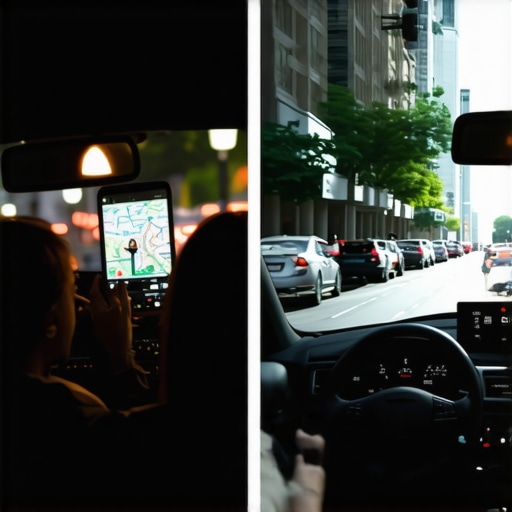
I still remember the sinking feeling in my chest on a rainy Tuesday morning last November. I had an executive client arriving at a downtown terminal, and I was relying entirely on a standard navigation app to guide my route. The screen glowed with a reassuring blue line, promising an on-time arrival. But as I rounded the final bend, I hit a wall of brake lights. A sudden construction detour—one that the digital map completely missed—turned a simple 10-minute drive into a 45-minute nightmare. My client was left standing on a wet curb, and I learned a painful, embarrassing lesson about relying blindly on technology.
The Digital Map Illusion vs. Real Road Intelligence
That morning was my wake-up call. I realized that there is a massive, often stressful gap between a driver who simply follows a screen and a local professional who actually knows the asphalt. We have been conditioned to believe that GPS is infallible, but anyone who travels frequently knows that a blue line cannot predict the real-world chaos of city streets. Real transit reliability is not about staring at a screen; it is about knowing the rhythm of the city. To understand how deep this difference goes, you can look at the difference between GPS routing and professional road knowledge, which exposes why automated systems constantly stumble.
When you book an hourly ride, you are not just paying for a vehicle; you are paying for predictability and safety. A local pro understands how a sudden downpour changes lane behavior, which side streets turn into bottlenecks at 8:00 AM, and why certain terminal doors are absolute traps for traffic. According to a study by the Texas A&M Transportation Institute, commuter delays in major urban areas have risen dramatically, costing travelers billions of hours of wasted time because generic algorithms fail to account for hyper-local traffic shifts. A professional chauffeur does not wait for an app to recalculate; they already know three alternative paths before they even turn the key.
Is relying on a standard GPS app actually putting your schedule at risk?
Many travelers ask me this very question, assuming that modern live-tracking is enough to guarantee a smooth ride. The truth is, relying on basic consumer apps for critical business schedules is a gamble. If you want to make sure your schedule remains completely bulletproof, you should look into why on-time performance depends on local knowledge over GPS. This is why seasoned corporate travelers actively avoid on-demand rides and choose structured, high-quality services instead. Have you ever missed a flight or arrived late to an important presentation because your driver took a wrong turn while staring at their dashboard mount? Share your experience with me—I want to hear your story.
To truly guarantee peace of mind, experienced travelers utilize strategic scheduling methods like hourly reservation tips for timely service to ensure their chauffeur is dedicated solely to their itinerary. When you secure a local pro, you are investing in a human shield against urban delays, ensuring you stay safe, relaxed, and perfectly on time.
Executing a flawless travel schedule is not a matter of luck; it is a matter of strict operational design. When you are managing high-profile meetings or tight flight connections, treating transit like an afterthought is a recipe for disaster. To secure absolute punctuality, you have to transition from a passive passenger to an active architect of your day. This requires implementing specific, non-negotiable rules that professional dispatchers use behind the scenes to keep schedules bulletproof.
The Core Strategies for Uncompromising On-Time Performance
To guarantee you never find yourself stranded or running late, you must establish hard boundaries with your transit planning. It starts with how you structure your booking. Standard on-demand apps operate on a hope-and-pray model, matching you with whoever happens to be nearby. Instead, professional execution relies on dedicated reservation structures that treat time as a fixed asset rather than a variable guess.
Why Most On-Time Drop-offs Start with a 10-Minute Early Arrival
In the professional transportation industry, arriving exactly on time is actually considered late. True reliability requires built-in breathing room. I learned this the hard way during a chaotic afternoon in downtown Chicago, trying to get a tech executive to a high-stakes board meeting. I had calculated the travel time perfectly down to the minute, but failed to account for the slow security gate at his office park. That three-minute delay cascaded into a missed introduction. Since that day, I have strictly enforced the rule that most on-time drop-offs start with a 10-minute early arrival. This buffer acts as a shock absorber for the unexpected—whether that is a slow luggage carousel, a last-minute phone call, or a gate agent bottleneck.

The Buffer Zone Rule for Picking Up Executive Clients
When dealing with VIPs or tight corporate schedules, you cannot afford to have your vehicle rolling up right as the client walks out the door. The driver must be staged, prepped, and visible beforehand. Utilizing the buffer zone rule for picking up executive clients ensures that the vehicle is positioned in an accessible, legal parking space near the exit well ahead of schedule. This eliminates the frantic phone calls of ‘where are you?’ and allows the passenger to transition seamlessly from the building lobby directly into a climate-controlled cabin without a second of wasted time.
How Hourly Rates Eliminate the Stress of Traffic Jams
One of the biggest mistakes business travelers make is booking point-to-point transfers for a multi-stop itinerary. When you do this, you subject yourself to the whims of surge pricing, varying driver quality, and the constant stress of re-booking if a meeting runs long. Opting for a dedicated hourly service changes the entire dynamic. Understanding how hourly rates eliminate the stress of traffic jams reveals the immense mental relief of knowing your driver is paid to wait. If you get stuck in a sudden gridlock, there is no meter anxiety, no fear of the driver canceling the trip mid-route, and no pressure to rush through your schedule.
Spotting the Red Flags Before You Step Inside
Your safety and schedule are intimately linked to the condition of the vehicle and the professionalism of the operator. Before you place your luggage in a trunk or close the passenger door, you should perform a rapid mental audit. Knowing the 3-red flags to watch for when your car arrives can save you from a breakdown or an unsafe ride. Look for signs of poor vehicle maintenance, driver fatigue, or a lack of proper livery permits. If a vehicle arrives dirty, damaged, or without commercial plates, it is a clear sign that the service provider cuts corners on safety and compliance, meaning they will likely cut corners on your schedule too.
When we look at the logistics of executive travel, most people suffer from a massive misconception. They assume that safety and punctuality are just standard, transactional commodities—something you can buy off a shelf or download from an app store. The prevailing belief is that if you pay more for a premium tier on an on-demand application, you are automatically buying an elevated safety standard. But in my years managing complex ground logistics, I have found that the exact opposite is true. True operational security cannot be summoned on demand; it has to be architected days in advance through structured scheduling.
The Multi-Million Dollar Myth of the Premium On-Demand Vehicle
Everyone tells you to just order a luxury black car from your phone when you land, claiming it offers the same security as a dedicated service. But this is the ultimate trap. What they are not telling you is that those drivers are still operating on the same exhausted, volume-based incentive structures as economy drivers. A study by the National Safety Council highlighted that driver fatigue is a leading factor in urban traffic accidents, particularly among gig-economy operators who work long, unregulated shifts. When you rely on last-minute pings, you are likely stepping into a vehicle driven by someone who has been behind the wheel for twelve straight hours. Our dispatchers completely bypass this risk because we enforce strict shift limits, proving that safety precision is the key to reliable hourly reservations.
Why does booking by the hour actually protect your physical safety more than a single-trip transfer?
I get asked this by corporate travel planners all the time. The answer lies in the psychological state of the driver. On a point-to-point transfer, the driver is in a frantic rush to drop you off so they can unlock their next ride booking. This pressure causes them to speed, take risky shortcuts, and ignore basic defensive driving rules. However, when you utilize a dedicated hourly structure, the chauffeur is insulated from that rush. Understanding why safety and timeliness matter in hourly reservation services reveals that a secure ride requires a driver who is paid for their patience, not their speed. When a professional is booked for a block of time, their only priority is maintaining a smooth, defensive driving pocket around your vehicle.

The dangerous mistake I see seasoned travelers make is waiting until the last minute to lock in their return trips or mid-day legs, thinking they can just find an open vehicle on the fly. This behavior exposes you to unverified drivers and unvetted vehicles during peak demand hours. To prevent this, you must realize that reserving your spot guarantees safety and punctuality 24-7, giving you a dedicated shield against the chaos of fluctuating local traffic. Have you ever fallen into this trap of booking a last-minute ride only to realize the driver was completely exhausted or the vehicle was unsafe? Let me know in the comments below—I want to hear how you handled it.
Ultimately, absolute reliability is a choice of structure over convenience. By shifting from reactive, on-demand hailing to proactive, dedicated hourly bookings, you take control of your environment, your schedule, and your personal safety. If you want to experience the difference that true operational design brings to your travel day, explore our tailored booking options on our contact page and let our team build your bulletproof itinerary today.
Maintaining this bulletproof travel standard over the long term isn’t a matter of willpower; it is a matter of integrating the right specialized tools and diagnostic rituals into your routine. Over the years, I have developed a highly specific toolkit that keeps my logistics moving like clockwork, regardless of external chaos. I don’t rely on standard consumer calendars or basic weather alerts. Instead, my dispatch team and I utilize a precise stack of software and hardware to ensure every single hourly reservation remains uncompromised.
The Logistics Toolkit That Keeps My Operation Moving
For scheduling and calendar synchronization, I completely bypass standard email invites. I personally use and recommend FlightAware Enterprise combined with Trippeo to automate real-time itinerary shifts. This combination allows us to sync directly with tail numbers, meaning if a private jet or commercial flight is delayed even slightly, the schedule auto-corrects before the pilot has even announced it to the passengers. To maintain absolute control over the physical environment, I also carry an RTK-enabled GNSS receiver on major multi-stop city tours, bypassing the common consumer cellular tracking lag. This extreme dedication to hardware verification is exactly why we always tell our clients that reserving your spot guarantees safety and punctuality 24-7, protecting your itinerary from the standard digital dropouts that plague casual travelers.
How do I maintain absolute schedule precision over time?
Many of my frequent corporate clients ask me this when they try to replicate my system for their internal staff. The secret to long-term operational success is running a weekly diagnostic on your travel assets. Every Sunday, I audit my primary transit routes using historical congestion telemetry from the INRIX Roadway Analytics platform. This database provides highly granular bottleneck data that standard consumer mapping software ignores. By analyzing these regional patterns, I can predict route decay weeks before local construction even begins. If you are serious about your personal schedule, you must build a ritual around pre-trip vetting. This is where mastering on-time reservations at any hour becomes your primary logistical shield.
Looking toward the future, the executive transit space is rapidly moving toward predictive, AI-driven dispatch routing. While these emerging automated systems promise efficiency, they still lack the critical human intuition needed to navigate unexpected local crises. This is why human-designed operational rules will always remain the gold standard of safety. If you want to experience what this level of meticulous planning feels like firsthand, I challenge you to try just one advanced tip from our guide during your next business trip: schedule a dedicated hourly vehicle instead of a point-to-point transfer, and watch how the friction of your travel day completely evaporates. Head over to our contact page to secure your structured itinerary with our professional team.
When you peel back the layers of premium ground transportation, you quickly realize that true operational excellence is a science, not a matter of luck. Transitioning from reactive, on-demand hailing to a proactive, dedicated structure is the only way to guarantee absolute control over your schedule and safety.
The Critical Vulnerabilities Most Travelers Ignore
In my years of managing complex logistics, I have seen even the most seasoned executives make critical mistakes that left their itineraries in ruins. Here are the core insights most travelers only learn after a major transit failure:
- The Illusion of Availability: Assuming a premium car is always five minutes away during a major convention or sudden downpour is a recipe for missed flights. Dedicated scheduling is the only true guarantee.
- The Driver Fatigue Factor: Standard on-demand platforms run on high-volume, exhausted labor. A dedicated hourly chauffeur operates under strict shift limits, ensuring you are riding with a sharp, fully rested professional.
- The Cost of Point-to-Point Errors: Constantly booking new rides for a multi-stop day creates multiple points of failure. A single hourly reservation keeps the vehicle locked to your timeline, eliminating transition delays.
The Tools I Rely on for Flawless Execution
To keep my own operations moving without a hitch, I avoid standard consumer-grade applications and rely on specialized, highly precise tools. These are the systems that make a real difference in keeping your schedule bulletproof:
- INRIX Roadway Analytics: This platform provides deep historical traffic telemetry that helps us identify route decay and construction bottlenecks weeks before they impact the road.
- FlightAware Enterprise: By syncing directly with real-time flight telemetry, we can adjust our pickup windows automatically without relying on manual flight tracking.
- Pre-Trip Audits: I always recommend performing a quick physical check before boarding. Taking ten seconds to master 3-red flags to watch for when your car arrives will protect you from unvetted vehicles and substandard operators.
Take Control of Your Next Travel Day
You do not have to accept the stress, delays, and safety gambles of typical point-to-point transit. By shifting to a dedicated, structured model, you elevate your travel experience to a standard of absolute reliability. If you want to experience what this level of meticulous planning feels like, head over to our contact page and let our dispatch team build a secure, seamless schedule for your next trip.
Have you ever had an important business meeting disrupted because of an unreliable ride-hailing app or an exhausted driver? Let me know in the comments below—I would love to hear your story.