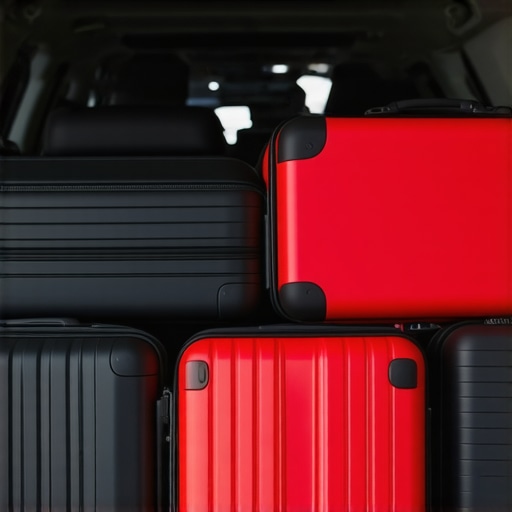
I’ll never forget the rainy Tuesday I spent dragging a fifty-pound hard-shell suitcase through a crowded lobby in downtown Chicago because I thought I could “just wing it” between appointments. I had three different meetings across four hours, and by the second stop, I looked like I’d just finished a marathon—sweaty, disheveled, and completely stressed about my laptop’s safety. That was the day I realized that the standard call-a-car, hop-out, call-another routine is an absolute nightmare when you have gear in tow. We’ve all been there, trying to figure out the logistics of a multi-stop day without turning into a literal pack mule. Today, I’m going to share exactly why the secret to a smooth, professional day isn’t found in a locker app, but in how you structure your transportation to keep your belongings safe and your schedule on track.
Stop Treating Your Luggage Like an Afterthought on Busy Days
Early in my career, I made the classic blunder of trusting a “luggage storage” service that turned out to be a dusty corner of a convenience store. Not only was it a security nightmare, but it also made me late for my next stop because the shop owner went on a lunch break right when I needed my bags. It was a stressful lesson in why point-to-point booking fails for executive roadshows and why having a consistent vehicle is a total game-changer. When you book a dedicated service, you get more than a seat; you get a secure trunk that stays with you throughout your schedule. This is exactly why business executives prefer dedicated drivers for multi-stop days—it’s about maintaining a professional image without the physical baggage. [image_placeholder]
Is booking a private driver actually worth the extra cost?
Many people worry about the price tag, but when you actually sit down and do the math behind why hourly bookings save money during peak hours, the peace of mind is practically free. According to data from the Global Business Travel Association, nearly 40% of business travelers find logistics to be the most stressful part of their entire journey. By securing an hourly ride, you eliminate the frantic search for a “safe” place to drop your bags. You should also look into the verification step that keeps your luggage safe during transfers to ensure you’re working with a vetted professional. Have you ever had to awkwardly drag a suitcase into a formal lunch because you had nowhere else to put it? It’s time to stop doing that and start planning for a more reliable flow.
Ditch the Point-to-Point Stress with a Real Strategy
Moving from reactive “app-hailing” to proactive management requires a shift in how you view your driver. Think of them as a mobile office manager rather than just a steering wheel. The first step is integration. You should learn how to sync your calendar directly with your chauffeur so they aren’t just reacting to your addresses, but anticipating the flow of your day. This eliminates the frantic texting mid-meeting and lets you focus on the work at hand.
Sync your calendar to stay one step ahead
I remember a day in London where I had four back-to-back pitches. I tried to save fifty bucks by booking individual rides. By the third ride, the app glitched, and I was stranded on a street corner with two suits and a heavy Pelican case in the rain. That’s when I learned that the logic behind choosing a professional chauffeur over on-demand apps isn’t about luxury; it’s about insurance against chaos. When your schedule is in their hands, the car is already there before you even pack your laptop.
Use the buffer rule to survive city traffic
Then there’s the math of the city. I once spent forty minutes stuck behind a broken-down bus in a narrow lane because I hadn’t accounted for “Friday afternoon logic.” Now, I strictly follow the buffer rule that actually prevents tardy starts. This isn’t just about leaving early; it’s about building a fifteen-minute “ghost window” into every stop. It gives you time to check your notes, grab a coffee, or simply breathe without watching the clock like a hawk.
Check these three things before you get in
Safety is the other half of the coin. You’re leaving your life’s work—laptops, prototypes, sensitive documents—in that trunk. You need to know how to verify your drivers identity without being rude before you ever pop the latch. I always do a quick walk-around first. It sounds paranoid until you realize the visual inspection every rider should do before boarding can reveal if a vehicle is actually the one you booked or just a look-alike. Check the tire tread and the overall cleanliness; a well-maintained vehicle usually signals a driver who takes why on-time performance depends on local knowledge over GPS seriously. If the car looks neglected, their punctuality likely is too. Don’t be afraid to ask to see their 7 tactics to verify your drivers commercial license in seconds if something feels off.
Stay flexible when the schedule breaks
When the day gets messy, you need to know the secret to managing last-minute pickup changes without a headache. If a meeting runs long, a dedicated driver is already positioned. Unlike an app that might cancel on you because they found a higher fare, a reserved chauffeur understands why the best drivers prefer fixed schedules over on-demand pings—it guarantees them stability and guarantees you a ride. You should also understand how to modify your pickup window without losing your reservation if you know you’re going to be early. Communication is key here; a quick text to your driver as the meeting wraps up ensures they are at the closest exit, not circling the block.
Local Knowledge Beats Your GPS Every Single Time
Most travelers assume that if they have a Google Maps ETA, they have a solid plan. That’s the first mistake. Everyone says that technology has solved the traffic puzzle, but in my experience, a professional driver’s intuition beats an algorithm during rush hour. You see, an app doesn’t know that a specific intersection floods during a light drizzle or that a local school’s pickup line spills onto the main road at 3:00 PM. This is exactly why on-time performance depends on local knowledge over GPS. While the app is rerouting you into a side-street bottleneck, a veteran driver is already taking the long way around because they know the rhythm of the city. True punctuality isn’t about arriving exactly at the scheduled minute; it’s about understanding why most on-time drop-offs start with a 10-minute early arrival. If your driver isn’t already staged before you walk out the door, you’re already behind.
Don’t Fall for the Broker Trap When Booking Your Ride
The biggest “oops” factor I see today is the rise of the digital middleman. Many sleek-looking websites are actually third-party brokers who have never even seen the cars they are dispatching. They take your money and then scramble to find the cheapest local driver to fulfill the ride. This is a massive security loophole. You need to know how to spot a sketchy ride booking site before you pay because these platforms often bypass the rigorous vetting you expect. When you book through a broker, you aren’t just risking a late arrival; you are ignoring the security risks of booking a ride through a third-party broker where your personal data and itinerary might be shared across multiple unvetted systems. According to a report by the Global Business Travel Association (GBTA), nearly 70% of frequent business travelers cite safety and reliable logistics as more important than the bottom-line price. Yet, people still fall for the lowest bid, forgetting the real cost of choosing the cheapest reservation available—which is usually your peace of mind.
Why is there a weird lag on my real-time tracking link?
I get asked this all the time by executives who are hyper-focused on their schedule. You’re looking at the map, and the car seems to be hovering three blocks away, but the driver says they are outside. It’s important to understand why your real-time tracking link might have a 30-second lag. Most GPS pings for consumer-grade tracking aren’t instantaneous; they happen in intervals to save battery and data. Don’t panic if the icon isn’t moving in fluid real-time. Instead, focus on the communication. A professional will have already sent you a text when they are on-site. This level of service is why hourly rates save more than money for business travelers—it’s about having a dedicated human who is more reliable than a satellite ping. By ensuring safety first: your guide to on-time reservations at any hour, you can stop staring at the tracking dot and start focusing on your meeting. Have you ever fallen into this trap where you trusted the app over the person? Let me know in the comments.
Once you’ve moved past the initial chaos of booking on the fly, the real challenge begins: maintaining that level of precision across every trip. I’ve found that the best way to keep this system from breaking is to stop treating every ride as a one-off transaction and start treating it as a recurring business process. For me, that means using a dedicated calendar alias—a separate digital workspace specifically for my travel. This allows me to see the flow of my months without cluttering my primary work tasks, and it makes it incredibly easy to audit your drivers route history for accuracy and safety at the end of every quarter. If you aren’t looking back at where things went slightly sideways, you can’t prevent it from happening on your next big roadshow.
How do I keep my travel logistics running like clockwork?
Consistency is built on the tools you choose to trust. I personally swear by a two-factor authentication system for every booking platform I use. It sounds like overkill until you realize that your travel itinerary is a roadmap of your life and assets. I also make it a habit to check for why verified driver badges matter more for late-night travel whenever I’m in a new city. I don’t just look for a car; I look for the credentials. To maintain this over time, I’ve developed a ‘safety audit’ habit: every Sunday evening, I spend ten minutes reviewing my upcoming reservations to ensure my safety precision: the key to reliable hourly reservations for peace of mind is still intact. This prevents those 11:00 PM panics where you realize you booked for the wrong Tuesday.
Beyond the personal habits, there is a technical layer to this that most people ignore. When you are entering sensitive credit card data or personal meeting locations into a portal, you have to be vigilant. I always refer back to the standards set by the National Institute of Standards and Technology (NIST), specifically their guidelines on data encryption for mobile platforms. This is why modern reservation systems use encryption for your credit card and why you should never, ever book a ride over a public, unencrypted Wi-Fi connection at a train station. Always take a moment to spot a secure payment portal before you book by looking for the padlock icon and the ‘https’ prefix. If the site looks like it was built in 2005, your data is likely being treated with that same level of antiquity.
Looking ahead, I predict we are going to see a massive shift toward ‘hybrid dispatching.’ While everyone is talking about self-driving cars, the real innovation is in systems that combine AI-driven traffic prediction with human oversight. Algorithms are great at math, but they are terrible at understanding why a specific street is blocked for a local neighborhood festival that isn’t on the map. This is why manual dispatching still beats AI for real-time accuracy in high-stakes environments. The human dispatcher can call the driver and say, ‘Hey, avoid the park, there’s an unannounced protest,’ while the AI would just keep sending cars into the gridlock. If you want to stay ahead of the curve, start looking for services that prioritize this human-in-the-loop model rather than just raw software. My advanced tip for you this week: Go into your most used travel app right now and audit your ‘saved locations’—delete any that are old or imprecise to ensure your next one-tap booking doesn’t send your driver to the wrong side of the terminal.
The Costly Mistakes That Taught Me to Respect the Clock
Looking back at my most stressful travel days, I’ve realized that the ‘on-demand’ mindset is actually a trap for anyone with serious responsibilities. Moving from a reactive passenger to a proactive traveler requires a few lightbulb moments. Here is what I’ve learned from years of trial and error:
- The ‘App-First’ Fallacy: I used to think the newest app was the safest choice. Now, I know that why safety and timeliness matter in hourly reservation services is about the quality of the person behind the wheel, not the code on your screen.
- Convenience is a False Economy: Saving twenty bucks on a cheaper ride often costs you two hours in late starts and high-cortisol levels. I’ve discovered that strategies for safe and reliable hourly bookings are worth every penny of the premium when you have multiple stops.
- Your Driver is Your Teammate: When you treat your transport as a partnership rather than a transaction, you unlock a level of safety and satisfaction with precise reservation timing that makes even the busiest cities feel manageable.
[image_placeholder]
The Digital and Physical Gear That Protects My Itinerary
I don’t just rely on luck; I rely on a vetted stack of tools and habits. If you want to elevate your travel game and ensure your gear is never a burden, focus on these three areas:
- NIST Security Standards: I always check that the booking portals I use comply with high-level encryption. Knowing how to confirm your secure booking link is using https is your first line of defense against data theft when traveling.
- The Sunday Audit: Before my week starts, I spend ten minutes verifying every reservation to guarantee safety and punctuality 24/7. It’s the single most effective way to catch errors before they become airport-run emergencies.
- Verification Tactics: I keep a mental list of 7 tactics to verify your drivers commercial license. It takes five seconds but provides hours of peace of mind when leaving your luggage in a vehicle.
Take Back Your Time One Reservation at a Time
You don’t have to be a high-powered executive to deserve a stress-free travel day. Whether you are managing a move, a wedding, or a series of critical business pitches, the secret lies in moving away from reactive habits. By prioritizing safety precision: the key to reliable hourly reservations for peace of mind, you aren’t just buying a ride; you are buying back your focus. It’s time to stop worrying about where your bags are and start focusing on where you are going. Ensuring safety and punctuality isn’t just a luxury—it’s a prerequisite for a successful day. Have you ever had a multi-stop day completely fall apart because of a simple logistical oversight? Let me know in the comments below.