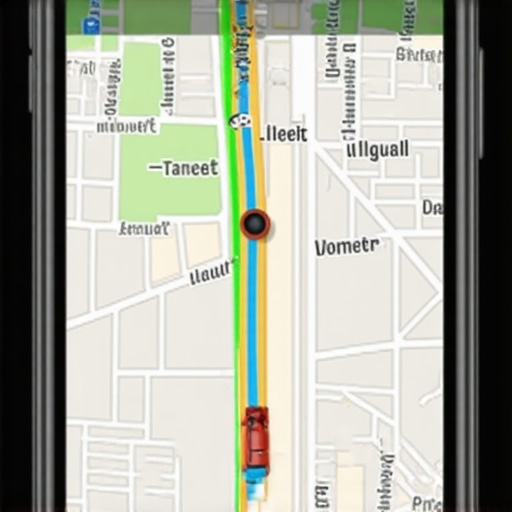
I’ve been there—clutching my phone, staring at a little blue dot that seems to be wandering aimlessly while the clock ticks closer to my meeting start time. [IMAGE_PLACEHOLDER] A few years back, I made the amateur mistake of assuming every ‘shortcut’ suggested by a driver was a stroke of genius. It wasn’t. In fact, that 45-minute trek turned into an hour-long odyssey through side streets that didn’t even have stoplights. Today, I want to help you avoid that frustration by showing you exactly how to tell when a route has been ‘creatively’ modified to your disadvantage. We’re going to peel back the curtain on why your app’s ETA is often over-optimistic and how you can take control of your arrival time.
I Stopped Trusting the Blue Line Without Verifying It First
For a long time, I thought GPS was infallible. I was wrong. My biggest early mistake was failing to realize that on-time performance depends on local knowledge over GPS every single time. A modified path happens when a driver decides to ignore the primary algorithm, often to avoid a perceived bottleneck that might not even exist, or worse, to pad the meter in an hourly booking. It’s a subtle shift. You might notice the car turning away from a main artery into a labyrinth of residential zones. While it feels like you’re moving, you’re actually losing the battle against the clock. Professionalism means knowing that consistent arrival times matter more than the shortest route. Have you ever felt that sinking feeling when your driver turns the opposite way of the highway entrance? Drop a comment below; I’d love to hear your ‘detour’ horror stories.
Is your driver actually following the best route?
It’s natural to feel a bit skeptical. After all, they’re the ones behind the wheel, right? But skepticism is your best friend when it comes to punctuality. Research from the AAA Foundation for Traffic Safety highlights that over-reliance on in-car technology can lead to ‘automation bias,’ where drivers follow digital suggestions even when they contradict common sense or real-world conditions. This is exactly how to spot a driver who is ignoring the tracking map and why you need to be the co-pilot of your own schedule. Spotting these deviations isn’t about being a ‘backseat driver’; it’s about ensuring your reservation and safety aren’t being compromised for a route that looks good on paper but fails in the real world.
Audit Your Journey Before the Wheels Stop Turning
To truly take control of your schedule, you need to treat your ride like a flight manifest. You wouldn’t board a plane if the pilot decided to ‘try a new way’ mid-flight, would you? The first thing I do now is audit my driver’s route history for accuracy and safety. Most modern platforms allow you to see the intended path vs. the actual path. If I see a zig-zag where there should be a straight line, I speak up immediately. This isn’t just about shaving minutes off the clock; it’s about the safety and punctuality you’ve already paid for. By monitoring the breadcrumb trail as it happens, you can catch ‘creative routing’ before it becomes a twenty-minute delay.
The Side Street Trap and How to Handle It
I learned this the hard way during a rainy Tuesday in Seattle. The driver, convinced he knew a ‘secret’ back-way to avoid I-5, dove into a maze of residential turns. We ended up blocked by a garbage truck on a narrow one-way street, followed by three school buses. We sat there, helpless. Now, I explicitly state that I prefer the main arteries unless there is a confirmed accident reported by the system. You have to know how to handle a driver who attempts to take a faster unvetted route before they make that first irreversible turn. 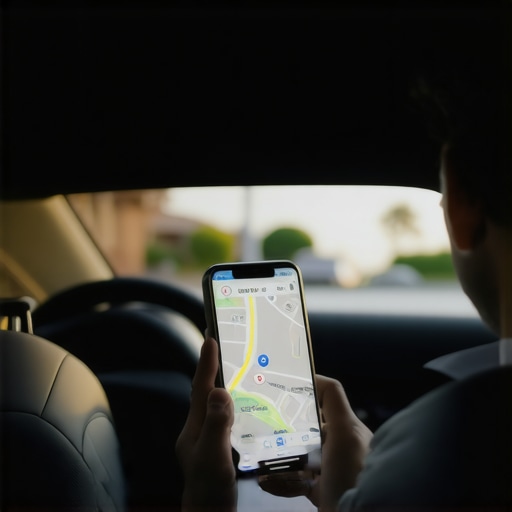 Pointing out the simple reason your driver should never take side streets—which is the lack of predictable traffic flow and increased safety risks—usually gets them back on the main road without any awkwardness.
Local Knowledge Still Trumps the Algorithm
While software is great, it often misses the human elements of a city. It doesn’t know that the local high school has a football game that lets out at 9:00 PM or that a specific intersection is notorious for construction plate delays. This is the difference between GPS routing and professional road knowledge. A true professional isn’t just a slave to a blue line; they are synthesizing real-world experience with digital data. When on-time every time strategies are in play, the driver should be able to explain *why* they are deviating. If the answer is ‘I just feel like it might be better,’ that’s a red flag.
Stick to Fixed Schedules for High-Stakes Meetings
If your schedule is non-negotiable, you must pivot away from the ‘on-demand’ lottery. I’ve found that fixed schedules beat on-demand apps for business travel because the driver is assigned specifically to your block of time, not chasing the next highest bidder in the area. This creates a chain of accountability that an algorithm simply cannot replicate. When you use on-time arrival mastery through an hourly booking, you aren’t just a dot on their screen; you are a professional commitment. Think of it as the difference between catching a city bus and having a personal pilot. One is a gamble; the other is a guarantee.We need to talk about the ‘Reservation Fallacy’—the belief that a booking is a fixed, static point in time. In my years of traveling, I’ve learned that the highest level of essential hourly reservation tips includes treating the start time as a deadline for the car to be staged, not just dispatched. If you aren’t seeing your driver in place early, you’re already losing your safety margin. This is exactly why most on-time drop-offs start with a 10-minute early arrival; it is a prerequisite for managing the unexpected first-mile friction.
Stop treating your reservation like a dinner booking
Unlike a restaurant where you might wait for a table to clear, in high-end transport, the ‘table’ waits for you. A common contrarian view I hold is that being ‘on-time’ is actually being late. If your driver is just pulling up at the exact minute of the reservation, you haven’t accounted for the logistics of gate codes, building security, or luggage handling. When you focus on how to guarantee safety and punctuality 24-7, you realize that the reservation is an active protocol, not a passive agreement. One ‘oops’ factor I see constantly is travelers failing to vet a chauffeur service before your first ride, assuming all platforms provide the same level of staging. They don’t. Professional services build in a layer of operational security that on-demand apps simply cannot match.
The sneaky cost of on-demand convenience
Everyone says that ride-hailing apps are the budget-friendly choice, but I’ve found that the hourly rate myth that costs small businesses thousands often stems from ignoring the hidden friction cost. When you have three meetings across town, the perceived ‘savings’ of individual bookings vanish the moment one driver cancels or takes a wrong turn. I’ve found that why hourly bookings save money during peak hours is because you are essentially buying out the driver’s opportunity cost—you own the schedule, and the driver isn’t rushing to finish your trip to grab the next surge-priced fare. This continuity is a massive part of why safety and timeliness matter in hourly reservation services.
Why does your ‘Guaranteed’ ride still feel like a gamble?
The hidden nuance here is the ‘Buffer Index.’ A study by the Texas A&M Transportation Institute on urban mobility emphasizes that ‘travel time reliability’ is more critical than the average speed. The trap is setting your pickup time for the exact moment you need to move. Instead, use the buffer time secret for stress-free airport arrivals to create a 15% safety cushion. This isn’t being paranoid; it’s being prepared for the statistical reality of urban congestion and construction. If you don’t build that buffer, your ‘guarantee’ is just a wish. Have you ever fallen into this trap of booking your ride with zero margin for error? Let me know in the comments.To turn these insights into a repeatable system, you have to look at your travel logistics through the lens of an architect rather than a passenger. The biggest breakthrough I ever had was when I stopped manually typing my itinerary into booking forms. Instead, I learned how to sync your calendar directly with your chauffeur. This removes the risk of human error—like flipping a ‘p.m.’ to an ‘a.m.’—and ensures that any last-minute meeting shifts are reflected in the driver’s dispatch system in real time. It’s about creating a seamless data flow that protects your schedule.
Connect Your World to Your Driver’s Dashboard
If you are traveling for business, you should treat your flight number like a piece of high-value intelligence. I never book a ride without it because why flight numbers are the best delay insurance for your ride is simple: it allows the driver’s tracking software to adjust the pickup time based on actual wheels-down data, not just the scheduled arrival. This kind of reservation security measures ensures that even if you’re stuck on the tarmac, your driver isn’t timing out or leaving the staging area. According to the INRIX 2023 Global Traffic Scorecard, the average American driver lost 42 hours to congestion last year; professional scheduling tools are no longer a luxury but a necessity to reclaim that time and maintain your productivity. 
How do I maintain this level of precision for every ride?
Maintenance of a high-performance travel schedule comes down to the ‘Audit and Adjust’ method. After every trip, I take thirty seconds to perform the accuracy test for modern live tracking links. Did the link lag? Was the vehicle where the map said it was? By consistently vetting the technology, you ensure that you aren’t relying on a failing system. You should also keep a short list of essential hourly reservation tips handy for your executive assistant or travel coordinator. Consistency isn’t an accident; it’s the result of using the right stack of tools—specifically GPS-integrated dispatch software and encrypted communication channels—to bridge the gap between your office and the car.
The Future of Movement is Predictive
Looking ahead, we are moving toward a world where AI doesn’t just track traffic; it predicts it before it happens. We are already seeing the early stages of ‘predictive staging,’ where a car is dispatched to a high-probability area before you even hit the ‘book’ button. For those of us who value safety and punctuality, this means even tighter windows and more reliable service. However, the human element—the professional driver who knows the quirks of a specific city—will remain the ultimate failsafe. Try this today: Sync your primary business calendar with your driver’s platform or request a direct integration link for your next multi-stop trip. It is the single biggest leap you can take toward total punctuality and peace of mind.
The Real-World Realizations That Changed How I Book
After a decade of navigating international hubs and local gridlock, I’ve realized that on-time arrival isn’t a matter of luck; it’s a matter of logic. First, I learned that the ‘lowest price’ often hides a massive reliability tax. If you aren’t paying for a professional’s dedicated time, you’re paying with your own stress levels. Second, verification is not rude—it’s professional. I now know that ensuring safety first means checking the basics before the car even moves. Finally, the best drivers don’t just follow a map; they anticipate the city’s heartbeat, which is why safety and precision are inseparable in the world of high-end transport.
The Punctuality Stack I Never Travel Without
If you want to move like a pro, you need to use the tools that pros use. I personally rely on FlightAware for real-time tracking that often beats the airline’s own notifications. For my logistics, I insist on platforms that offer an encrypted live-tracking link so my team knows exactly where I am without compromising my privacy. I also recommend studying the punctuality habits of the worlds best professional drivers to understand the ‘early is on-time’ mindset. These aren’t just gadgets; they are the foundation of a secure and punctual travel experience.
[IMAGE_PLACEHOLDER_E]
Your Transition from Passenger to Pro Starts Now
Moving through a city should feel like a seamless transition, not a series of stressful hurdles. By shifting your mindset from passive passenger to an active, informed client, you eliminate the variables that lead to late arrivals and safety risks. Whether you are heading to a high-stakes board meeting or a midnight flight, using a pre-trip verification process ensures that you stay in control. You deserve a journey that respects your time as much as you do. What is the most creative ‘shortcut’ a driver has ever tried to take with you, and did it actually work? Let me know in the comments below!