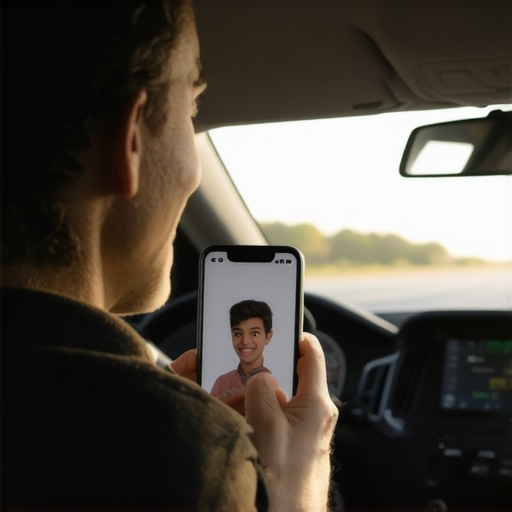
I’ll never forget that rainy Tuesday in Chicago when I almost became a cautionary tale. I’d booked a car for a tight hourly reservation, and when a sleek black sedan pulled to the curb, I just assumed it was mine. I reached for the door handle, gave a half-hearted wave, and was halfway into the leather seat before the driver turned around with a look of pure confusion. He wasn’t my driver. He was just a guy waiting for his wife. The embarrassment was stinging, but the realization was worse: I had zero plan for verifying my driver’s identity without looking like I was interrogating a suspect. We’ve all been there, hovering by the curb, squinting at license plates, and feeling that weird social pressure to be “polite” even when our gut says to double-check.
Stop Feeling Awkward About Your Personal Safety
We often prioritize social etiquette over our own security because we don’t want to seem “difficult.” But here is the truth: a professional chauffeur actually expects you to check. In fact, most pros prefer it. Today, I’m going to walk you through my personal system for confirming a ride that keeps you safe and keeps the vibe friendly. I’m talking about spotting a genuine commercial permit and confirming credentials in under thirty seconds. You shouldn’t have to choose between being a “nice person” and being a safe traveler. My biggest mistake early on was relying entirely on the “waves and nods” method. I thought that if a driver smiled and said “For you?” it was enough. It isn’t. According to a report by the National Safety Council, situational awareness is the first line of defense in transit safety, yet most of us abandon it the moment we feel a bit of social friction. I once spent twenty minutes in the back of a car heading the wrong way because I was too shy to audit the driver’s route history or even ask for his name properly.
Will the driver get offended if I ask for ID?
This is the number one thing people ask me. They’re terrified of ruining the “vibe” of a luxury ride before it even starts. Let’s be real: a driver who gets offended by a simple identity check is a red flag in themselves. A professional knows that ensuring safety first is part of the job description. Have you ever felt that “gut check” moment where you wanted to ask but stayed silent instead?
Match the Plate Before You Touch the Door
The first rule of transit safety is as simple as it is ignored: the license plate is the only fingerprint that matters. In that Chicago incident, I was so focused on the make and model that I didn’t even look at the digits. Now, I treat the license plate like a secret password. Before I even step off the curb, I have my phone out with the confirmation screen open. I visually lock onto the plate and recite it to myself. This isn’t just about avoiding a wrong car; it’s about ensuring your safety-precision is maintained from the second the tires hit the pavement. You should never enter a vehicle without a license plate match, regardless of how much the driver waves you over. I once had a driver in London get visibly annoyed when I stopped to check his rear plate in a heavy rainstorm. I ignored the eye-roll. It turned out he was actually a ‘poacher’ trying to snag a fare from the legitimate service I had booked. By sticking to my plate-first rule, I avoided a potentially dangerous unlicensed ride.
The 30-Second ID Check That Isn’t Awkward
Once the plate matches, the next step is the verbal confirmation. Instead of asking, ‘Are you for [My Name]?’, I always wait for the driver to say who they are looking for. It’s a small psychological shift that puts the burden of proof on the professional. While they are confirming the name, I look for their credentials. A legitimate driver in a high-end service will have their badge visible or ready to show. Learning how to read a drivers commercial badge for authentic credentials is a skill that takes five seconds but saves hours of anxiety.
Take Control of the Interior Space
Once you are inside, the verification process doesn’t stop; it just moves to the cabin. I’ve developed a habit of doing a quick ‘mirror check.’ If I can’t see the driver’s eyes in the rearview mirror, they probably can’t see me clearly either, which affects communication. I also perform a quick 3-point door handle check to ensure the child locks aren’t engaged and that I can exit the vehicle at any time. This isn’t paranoia; it’s professional protocol. For solo travel, I always aim for the best seat in the car, which is typically the one directly behind the passenger seat, giving you the best view of the driver and the road.
Watch the Route Like a Pro
Even with a verified driver, you need to ensure the trip stays on track. I’ve had instances where a driver took a ‘shortcut’ that turned into a twenty-minute detour through a construction zone. Now, I keep my own GPS running quietly. If the driver deviates from the expected path, I ask about it immediately. It’s your right to audit your drivers route history or current trajectory to ensure you are not being taken on a long-way-around scam. This is especially vital for an on-time reservation where every minute of the hourly rate counts toward your schedule. Use the checklist for verifying a luxury sedan every single time you board, and you will find that the ‘awkwardness’ disappears, replaced by a much more comfortable sense of security.But even with the right driver and a verified plate, there is a nuance most travelers miss: the difference between ‘on-demand’ speed and ‘hourly’ reliability.
Stop Trusting the Instant App Myth
Most people believe that the most “on-time” ride is the one that arrives five minutes after you press a button. In my experience, that is a dangerous gamble for high-stakes meetings. I’ve transitioned almost exclusively to choosing a professional chauffeur over on-demand apps because the logic of the algorithm is focused on proximity, not preparation. A professional driver isn’t just ‘nearby’; they are already positioned, vetted, and waiting in a legal staging area. For instance, when you are landing after a long flight, the 12-minute rule for international airport pickups ensures that your driver is at the curb exactly when you exit, rather than circling in traffic blocks away. The ‘instant’ car is often a mirage—it looks close on the map, but it hasn’t actually committed to your safety yet.
Why Your ETA is Probably a Lie
The “Oops” factor in modern travel is the over-reliance on the little ticking clock on your smartphone. We have to admit that the apps ETA is often over-optimistic because it ignores the human element of transit. Algorithms struggle with the ‘last mile’—the time it takes to navigate a complex hotel driveway or the delay caused by a sudden road closure that hasn’t hit the server yet. Research from the Texas A&M Transportation Institute’s Urban Mobility Report highlights that ‘buffer time’ is the only true way to guarantee arrival, yet mass-market apps rarely factor this index into their user-facing displays. This is why true on-time performance depends on local knowledge over GPS. A veteran chauffeur knows which lanes are blocked by morning deliveries and which side streets are safe, avoiding the automated traps that lead to missed flights.
Does Your Real-Time Tracking Link Have a 30-Second Lag?
This is a sophisticated question I get from my fellow road warriors who track their rides with hawk-like precision. You might notice why your real-time tracking link might have a 30-second lag and worry that the vehicle has stalled or taken a wrong turn. In reality, this is often a simple latency issue between the car’s GPS unit and the cellular tower. To maintain your peace of mind, you should test the accuracy of your real-time tracking link by observing how quickly the icon updates as the vehicle passes a known landmark. Understanding these technical nuances allows you to implement on-time every time strategies for safe and reliable hourly bookings without the anxiety of the unknown. When you stop obsessing over the app and start trusting the professional protocol, the entire travel experience shifts from stressful to seamless. Have you ever fallen into this trap? Let me know in the comments.If you’re anything like me, you don’t just want to be safe once—you want a system that works every time you step out the door. Maintaining this level of precision isn’t about being paranoid; it’s about being prepared. I personally rely on a simple digital ‘sanitation’ routine before I even open a booking app. First, I always verify that I’m on a secure connection. You’d be surprised how many travelers hand over credit card data on open airport Wi-Fi without a second thought. I always confirm my secure booking link is using https and run a hardened VPN to prevent data sniffing. According to the National Institute of Standards and Technology (NIST) Special Publication 800-52r2, using the latest TLS protocols is the only way to truly protect sensitive transit data from ‘man-in-the-middle’ attacks. This is why understanding the truth about secure payment gateways is so vital; if the site looks ‘off’ or the certificate is expired, I close the tab immediately.
Stop Playing Catch-Up with Your Schedule
To scale this for my weekly business trips, I’ve adopted what I call the ‘plus-ten’ strategy. I never book for the exact time I need to leave. I use the buffer rule that actually prevents tardy starts, which means my reserving your spot protocol happens ten minutes before my actual deadline. This gives the driver time to navigate those last-minute roadblocks without me sweating the clock. This extra ten minutes is the difference between walking calmly into a boardroom and sprinting through a hotel lobby while apologizing to your client. Beyond just timing, I always keep a dedicated power bank in my carry-on. A dead phone is a security risk; you can’t track your ride, audit a route, or communicate with dispatch if your battery hits zero. I’ve found that using dedicated flight-tracking tools alongside my driver’s link creates a ‘redundancy loop’ that catches errors before they happen.
How do I maintain my safety standards on every single trip?
The secret to long-term success is consistency. You have to treat the hundredth ride with the same scrutiny as the first. I still look for the one physical marker that proves a vehicle is well-maintained—usually the cleanliness of the door jambs or the tire tread depth—every single time. If the maintenance is slipping on the exterior, it’s likely slipping on the driver’s background checks too. I also make it a point to never share my live trip details on social media until after I’ve reached my destination to avoid telegraphing my movements to strangers.
Why Humans Still Outperform the Best Algorithms
Looking ahead, I suspect we’ll see even more AI integration in transit, but I still believe why manual dispatching still beats AI for real-time accuracy is a hill worth dying on. Algorithms can’t feel the tension of a protest downtown or a sudden water main break; a human dispatcher can anticipate these shifts and reroute your driver before you even realize there’s a problem. The future of luxury travel isn’t just ‘faster’ apps; it’s smarter, human-led systems that prioritize reliability over proximity. My challenge to you is this: on your next trip, don’t just ‘order a ride.’ Instead, apply the on-time every time strategies for safe and reliable hourly bookings we’ve discussed. Audit that route, check that plate, and demand a professional who values your time as much as you do. Start by applying ensuring safety first protocols to your next airport run and feel the difference of a truly managed ride.
The Hardest Lessons I Learned on the Road
Looking back on years of travel, the most profound realization I had was that silence is a security risk. If you feel like something is off, it usually is. I’ve learned that a true professional chauffeur is never offended by a question; in fact, they appreciate a client who takes safety-precision seriously. I also discovered that why point-to-point booking fails for executive roadshows is often due to a lack of driver consistency—having a dedicated hourly reservation eliminates the guesswork of who is behind the wheel. My biggest lightbulb moment? Realizing that I had the right to handle a driver who attempts to take a faster unvetted route. It isn’t being ‘difficult’ to insist on the path you feel safest taking.
My Secret Toolkit for Seamless Travel
To maintain my standards, I rely on a specific set of tools and habits. I never book a ride on an open network without a hardened VPN to secure your data when using public wifi to book a ride. I also keep a digital copy of the checklist for verifying a luxury sedan before boarding pinned to the top of my notes app. For tracking, I use independent GPS apps to cross-reference my driver’s route in real-time, ensuring that my on-time arrival isn’t left to chance. #IMAGE_PLACEHOLDER_E#
Your Safety Is Never Up for Negotiation
At the end of the day, you are the CEO of your own transit experience. Don’t let the pressure of social etiquette stop you from performing the checks that keep you secure. By mastering on-time arrival through preparation rather than luck, you transform travel from a source of anxiety into a period of productive peace. You deserve a service that respects your boundaries and your schedule equally. Take these protocols, apply them to your next booking, and notice how much more relaxed you feel when the car pulls up. Have you ever felt pressured to skip a safety check just to be ‘nice’ to a driver? Let me know in the comments below.