I was standing on a chilly curb at 4:00 AM, clutching a lukewarm coffee and squinting at my phone. My flight was in two hours, and I was desperate to see that my driver was on the way. When a notification popped up with the subject ‘Urgent: Update Your Payment for Your Ride,’ my thumb hovered over the link. I almost clicked. My gut screamed at me to stop. If I had followed through, I would have handed my credit card details to a scammer in Eastern Europe instead of securing my airport transfer. That moment was a wake-up call. I realized that even someone like me, who prides myself on being tech-savvy, can be vulnerable when I’m tired and stressed about being on time. We all want that peace of mind that comes with a safe and reliable reservation, but hackers are getting incredibly good at mimicking the apps we trust. Today, I’m going to share the hard-won lessons I’ve learned so you can protect your data while ensuring your travel remains seamless.
The Morning I Almost Handed Over My Digital Life
To be honest, I’ve made mistakes before. Early in my travel career, I once ignored the fact that a link didn’t look quite right because I was panicked about a Friday afternoon transit schedule. I thought, ‘It’s probably just a glitch.’ It wasn’t. It took me three months to clear up the fraudulent charges on my account. That experience taught me that reservation security measures are not just suggestions; they are your first line of defense. Phishing isn’t just about stealing a few bucks; it’s about identity theft and compromising your personal safety before you even get into a car. According to recent reports from the FBI’s Internet Crime Complaint Center, phishing remains the most prevalent threat in the digital space, costing victims billions annually.
Is this just digital paranoia?
You might be thinking, ‘I’d never fall for a fake email.’ But these scams don’t look like the clunky, misspelled messages of ten years ago. They use the same fonts, logos, and ‘Helpful Neighbor’ tone that your favorite car service uses. They prey on your need for safe and reliable hourly bookings. If you see a hidden red flag in your booking confirmation email header, like a sender address that ends in ‘.net’ instead of ‘.com’, you need to stop immediately. Have you ever received a ride confirmation that felt just a little bit ‘off’? I’d love to hear your stories in the comments so we can all stay one step ahead of these guys. Knowing how to spot a fake ride confirmation is the only way to ensure your 4 AM ride actually shows up and your bank account stays intact.
Stop and Look at the Address Bar
Think of a secure website like a sealed envelope. If the seal is broken—or in our case, if the ‘S’ is missing from ‘HTTPS’—anyone can peek inside your transaction. Before you type a single digit of your credit card, you must understand how to confirm your secure booking link is using https. This isn’t just about encryption; it’s about identity. A secure connection is your digital handshake with the company.
How to Spot a Fake Payment Screen Before You Pay
I remember a humid evening in Miami when I was trying to book an extra leg of a trip. The site looked perfect, but the checkout page felt ‘jittery.’ The logos were slightly pixelated, a classic sign of a mirrored site designed to harvest data. I closed the tab, went to the official app, and realized the price I’d seen on the sketchy site was actually 20% lower—a bait-and-switch common in the real cost of choosing the cheapest reservation available. By identifying that spotting a secure payment portal for private car hires instantly is a non-negotiable skill, I saved my bank account from a very expensive headache. 
Don’t Trust the Name, Trust the Header
When that confirmation hits your inbox, don’t just look at the ‘From’ name. Scammers can label their email ‘Official Car Service,’ but they can’t hide the actual server address easily. You need to know how to verify if a ride confirmation email is legitimate by clicking on the sender’s details. If you see a hidden red flag in your booking confirmation email header, like a string of random numbers or a domain that doesn’t match the company website, delete it. Your security is only as strong as your skepticism. Even the best tech fails if you give away the keys, which is why most secure booking systems fail if you share your password or click on ‘one-time’ login links that you didn’t request. These ‘urgent’ requests often lead to spoofed sites that look identical to your provider’s portal.
The 10-Second Physical Match
The security process doesn’t end once you close your laptop. In fact, the most dangerous part of the journey is the transition from the curb into the backseat. You should never enter a vehicle without a license plate match that aligns perfectly with your app or email confirmation. I once had a driver wave me over in a busy terminal, shouting my name. He looked professional, but when I checked my phone, the plate was off by one digit. It turns out he was a ‘gypsy cab’ driver who had overheard my name at the dispatch stand by listening to others. Performing the specific driver verification move that prevents identity theft—asking them who they are picking up before you give your name—is a simple layer of protection that ensures you are actually in the right hands. This attention to detail is what guarantees the essential hourly reservation tips for timely service actually result in a safe arrival. If you’re handling sensitive items or business documents, why hourly drivers provide the best security for high-value goods becomes even more apparent, as a verified chauffeur will always follow a strict protocol that ensures your items never leave their sight.
Check the Digital Credentials Again
For those late-night arrivals, a physical badge is your best friend. A legitimate chauffeur will know how to read a drivers commercial badge for authentic credentials and will usually have it displayed or available upon request. If they hesitate, don’t get in. It is always better to wait five more minutes than to risk your personal safety for the sake of speed.
Most travelers assume that if they can see a little car icon moving on their screen, they are safe. This is a dangerous misconception. The reality is that real-time tracking apps need constant manual overrides because algorithms often fail to understand the nuance of a sudden parade, a police standoff, or a double-parked delivery truck in a metropolitan hub. We’ve been conditioned to trust the ‘glowing blue dot,’ but that dot is often an approximation, not a guarantee.
The GPS Trap Most Travelers Fall For
In my experience, the biggest mistake people make is treating the app’s Estimated Arrival Time (ETA) as gospel. I’ve seen countless executives miss flights because they didn’t realize why your real-time tracking link might have a 30-second lag. That half-minute delay in a high-density urban environment means your driver might have already missed the turn into your terminal while your screen shows them a block away. This is why on-time performance depends on local knowledge over GPS. A professional chauffeur knows which side streets become bottlenecks during school drop-off hours, something a standard routing algorithm might overlook until it is too late.
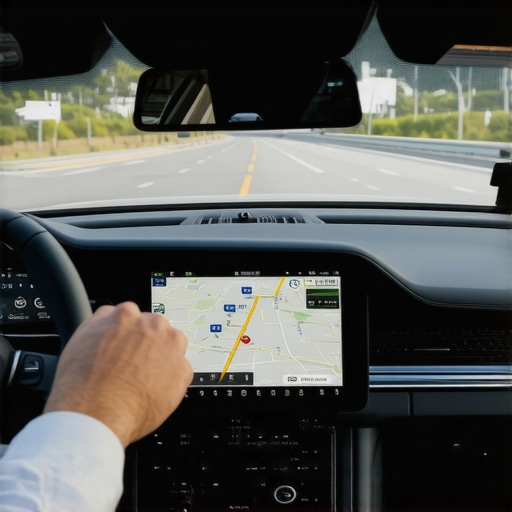
According to a report by the American Journal of Transportation, automated routing systems often fail to account for hyper-local disruptions that a seasoned human dispatcher identifies instantly. This is precisely why manual dispatching still beats AI for real-time accuracy. When you are booking on-time every-time strategies for safe and reliable hourly bookings, you aren’t just paying for a car; you are paying for the human oversight that corrects the machine’s mistakes.
Why the Best Chauffeurs Trust Their Gut Over the Map
The ‘Oops’ factor usually hits during infrastructure changes. I once worked with a client who insisted on following the app’s ‘fastest’ route through a known construction zone. We sat for forty minutes. If we had followed the essential hourly reservation tips for timely service, we would have taken the longer, but clearer, arterial road. Understanding the error in relying on app-based arrival times during construction is a hallmark of an advanced traveler. True safety and precision for reliable hourly reservations come from building a buffer that the app doesn’t think you need. Have you ever fallen into this trap of trusting the ‘blue dot’ only to have it disappear when you needed it most? Let me know in the comments.
Can a 30-Second Data Lag Cost You Your Flight?
In the world of high-stakes travel, the answer is a resounding yes. Advanced travelers know that why most on-time drop-offs start with a 10-minute early arrival isn’t just about being ‘early’; it’s about neutralizing the technical failures of the booking system. When the digital credentials fail or the signal drops in a tunnel, that physical presence at the curb is the only thing that matters. Don’t let a glitch in the matrix be the reason you miss your keynote speech.
Keep Your Booking System From Breaking
Once you’ve mastered the art of the 4 AM pickup, the challenge shifts from one-off survival to long-term consistency. I’ve found that the secret to never being stranded isn’t just about having the right app; it’s about maintaining a rigid protocol that scales with your travel needs. For me, this starts with a dedicated digital folder where I store every piece of evidence—from the driver’s initial confirmation to the final receipt. This isn’t just about taxes; it’s about how to audit your drivers route history for accuracy and safety. If a driver takes a detour that feels wrong, I have a record of it. This level of oversight ensures that ensuring safety first remains my priority even when I’m traveling three times a week.
The One Tool I Will Not Travel Without
People often ask me what software I use to stay organized. While calendar syncing is great, my most valuable tool is a simple, encrypted password manager with a shared ‘travel vault’ for my family or team. This solves the problem of why most secure booking systems fail if you share your password over text or email. By using a secure vault, I can give my spouse or assistant access to the reserving your spot details without exposing the account to hackers. It’s a small technical step that provides a massive safety buffer. I personally use Bitwarden because it allows for zero-knowledge encryption, which is the same standard recommended by the National Institute of Standards and Technology (NIST) for protecting sensitive consumer data.
How do I maintain consistent safety over years of travel?
Consistency comes from resisting the urge to ‘gamble’ on the cheapest option when you are in a rush. I’ve learned that the logic behind choosing a professional chauffeur over on-demand apps pays off in the long run through reliability. To keep this working, I perform a ‘quarterly audit’ of my preferred services. I check their updated privacy policy and ensure their secure payment gateways are still using the latest TLS 1.3 encryption. This keeps my financial data safe and ensures that my on-time arrival isn’t compromised by a service that has let its tech stack grow obsolete.
Where the Road is Taking Us
The future of travel security is moving toward ‘biometric handshakes.’ Soon, your phone won’t just tell you the license plate; it will use short-range encrypted signals to verify the driver’s identity before the door even unlocks. We are moving away from visual checks and toward automated reservation security measures that remove human error. However, until that tech is universal, you must rely on your own vetting. I recommend you try this advanced tip next time you book: send a ‘verification query’ through the service’s official chat before you leave your house. Ask a specific question about the vehicle’s interior or the driver’s name. If the response is vague or delayed, it’s a sign that the manual dispatching isn’t as tight as it should be. Always trust the data over the marketing.
What My Scariest Travel Moments Actually Taught Me
After years on the road, I’ve realized that safety isn’t a passive state; it’s an active habit. One of the biggest shifts in my mindset occurred when I stopped viewing arrival times as a digital guarantee and started seeing them as a logistical goal that requires human oversight. Here are the core truths I live by now: First, the software can tell you where a car is, but it can’t tell you if the driver is exhausted or if the vehicle is properly insured. That is why I always take the time to learn how to read the safety certification on a commercial vehicle. Second, never underestimate the power of a quick physical check. Before I even touch the door, I perform the 3 point door handle check every passenger must perform to ensure the child locks aren’t being misused and the door is functional. Finally, I’ve learned that why safety and timeliness matter in hourly reservation services goes far beyond just getting to a meeting; it’s about protecting your digital and physical footprint in an increasingly unpredictable world.
The Survival Kit I Never Leave Home Without
I don’t just rely on my phone; I rely on a vetted ecosystem of tools. For password management and securing my booking confirmations, I use Bitwarden to avoid the vulnerabilities of simple ‘one-click’ logins. I also keep a shortcut to the contact us page of my preferred car service saved as a home screen icon, ensuring I can reach a human dispatcher instantly if an app glitches. For ground transport, I prioritize providers who focus on ensuring safety and punctuality through manual dispatch rather than purely algorithmic routing. I also suggest keeping a physical backup of your reserving your spot confirmation—it sounds old school, but when your phone battery dies in a dead zone, that paper is your only ticket home.
Take the Wheel of Your Personal Security Today
Travel should be about the destination, not the stress of the journey. By implementing these small but significant hurdles for scammers and utilizing on-time every-time strategies for safe and reliable hourly bookings, you transform yourself from a potential target into a prepared traveler. You deserve the peace of mind that comes with knowing your ride is vetted, your data is encrypted, and your schedule is respected. Don’t wait for a 4 AM wake-up call to start taking these steps. Start today, and you’ll find that the world feels a lot smaller and safer when you’re the one in control of the protocol. Have you ever spotted a major red flag in a booking confirmation or with a driver that made you cancel the trip? Let me know your story in the comments below so we can all learn together.