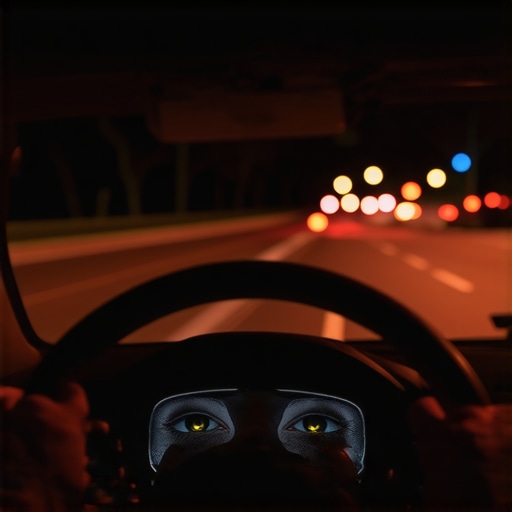
I remember sitting in the back of a sleek sedan at 3:00 AM, clutching my laptop bag like it was a life raft. We were on the interstate, and the slight, rhythmic rumble of the tires against the shoulder line sent a jolt of pure adrenaline through my chest. My driver wasn’t speeding; he was drifting. It’s that sinking feeling when you realize the person behind the wheel might be fighting a losing battle with sleep. I stayed silent, paralyzed by the fear of being “rude,” and that was my first big mistake. Safety shouldn’t be a gamble you take to avoid a social hiccup. Today, I’m going to share exactly how I shifted from a passive passenger to a proactive observer, using a few subtle tricks to ensure every ride is as safe as it is punctual.
Spotting the Red Flags Before They Become Emergencies
I’ve spent years hiring cars for late-night flights and early-morning meetings. If there is one thing I’ve learned, it’s that a professional appearance can be a mask for deep exhaustion. Early in my career, I made the mistake of assuming that if a chauffeur was on time for a reservation, they were automatically fit to drive. I didn’t realize that some drivers pull double shifts just to keep up with demand, especially during peak seasons. Now, I use a “stealth” checklist the moment I open the door. It’s about more than just looking at their eyes; it’s about observing their reaction time, their posture, and their ability to engage in a brief, coherent conversation without “zoning out.” It is a vital skill because the stakes are incredibly high. For instance, the AAA Foundation for Traffic Safety notes that drowsy driving is a factor in up to 21% of fatal motor vehicle crashes annually. [image-placeholder]
Can you really spot exhaustion in under five minutes?
It sounds like a tall order, doesn’t it? You might worry you’re being overly critical or even a bit paranoid. However, your gut is a powerful tool when it comes to personal safety. I always start by asking a specific, non-generic question about the route or the car. If they struggle to process a simple request for a specific back road or seem visibly startled by a routine question, that’s my first major clue. It is far better to cancel a reservation and deal with a small fee than to spend an hour white-knuckled in the backseat. I once ignored a driver who was rubbing his eyes constantly while loading my bags, thinking he just had allergies. Five minutes into the highway, he was swerving. Never again. Have you ever felt that wave of panic when you noticed your driver’s head nod for a split second? I want to help you avoid that. By looking for the visual signs of a driver who is too tired, you can take control of your transit before the wheels even start turning. We’re going to dive into the subtle physical cues and the “conversation test” that I never skip anymore. It’s all about ensuring your hourly reservation delivers the peace of mind you actually paid for.
How to Gauge Your Safety in the First Thirty Seconds
Once the car pulls up, the clock starts on your safety assessment. I treat those initial moments like a job interview where the stakes are life and death. The first thing I do isn’t checking my phone; it’s looking at the driver’s eyes as they approach. Tiredness isn’t always obvious until you force an interaction that requires cognitive load. I’ve learned that a driver might be on time for a reservation and still be completely unfit for the road.
Test Their Reaction with the Quick Conversation Trick
A tired brain is like a computer with a failing processor—it lags. To test this, I always offer a slightly complex piece of information right away. Instead of a simple ‘Hello,’ I might say, ‘I see there is a detour on the main bridge; do you think the back roads near the stadium are clear?’ A driver who is exhausted will often pause, stare blankly, or give a generic ‘Yes’ without processing the logic. In Chicago last year, I tried this on a 4 AM airport run. The driver nodded and said, ‘The stadium is closed’—a completely non-sequitur response to a navigation question. I knew then he was running on fumes. I politely explained I’d forgotten something, went back inside, and used essential hourly reservation tips to rebook. It cost me thirty minutes but likely saved me from an accident.
Look for the Visual Tells of a True Professional
Exhaustion leaves physical crumbs. Look at the grip on the steering wheel and the posture. Is the driver slouching or leaning heavily on the center console? The visual signs of a chauffeur who values professionalism are usually clear: they are upright, alert, and their eyes move between you and the mirrors frequently. If you notice a ‘fixed stare’—where they look straight ahead without blinking—that is a massive red flag for microsleep. Professionalism isn’t just about the car; it’s the physical readiness to react to a sudden swerve or a jaywalker. 
Perform a Fast Physical Security Sweep Before You Board
Before my bags even hit the trunk, I do a quick walk-around. This isn’t just about checking for dents; it’s about seeing if the driver cares about the machine they are operating. I look for the one physical marker that proves a vehicle is well-maintained, which is often the cleanliness of the sensors and windows. If the glass is caked in grime, the driver’s visibility is already compromised. I also perform the 4-point mirror check every traveler should perform and a quick 3-point door handle check. These small habits take ten seconds but signal to the driver that you are an observant passenger. This subtle psychological shift often makes a sleepy driver more ‘awake’ because they realize their passenger is paying attention. Finally, never skip the pre-trip inspection phase; if the tires look bald or a headlight is out, that driver has been cutting corners on safety long before they arrived at your door.
Verify Identity Without Creating Friction
I always use the specific driver verification move. This involves asking them to confirm the name of the booking agency rather than me telling them who I’m looking for. If they can’t provide the safety token every passenger should check, I don’t get in. This isn’t just about security; it’s about competence. A driver who is too tired to remember who they are picking up is too tired to navigate rush hour traffic safely. Focus on the details to ensure your hourly reservation provides the actual security you expect.
The Dangerous Myth of the Guaranteed Arrival
Beyond the physical signs of exhaustion, there is a more insidious layer of safety that most travelers completely ignore: the logistical ‘phantom’ delay. We’ve been conditioned by modern technology to believe that a blinking car icon on a map represents objective reality. It doesn’t. In my years of handling high-stakes travel, I’ve found that the biggest mistake travelers make is equating a confirmed booking with a guaranteed presence. If you are not careful, you are just a line item in an over-leveraged algorithm. I’ve realized that why most arrival times are simply guesses comes down to the way software handles human variables. While an app might show a driver five minutes away, it doesn’t account for the three minutes they need to find a legal turn-around or the fact that they might be finishing another drop-off. Real safety begins when you stop trusting the pixels and start trusting the buffer. I’ve found that why the 17-minute buffer outperforms the traditional 15-minute rule is due to the ‘cognitive restart’ a driver needs when switching between different tasks. 
Is Your GPS Lying to You About Your Driver’s Real Location?
It’s an advanced question that many regular commuters never think to ask. The truth is that many digital platforms use predictive positioning—essentially ‘guessing’ where the car is based on its last known speed—rather than real-time pings. A study by the MIT Intelligent Transportation Systems Lab has suggested that even sophisticated GPS algorithms can miss up to 25% of micro-congestion events that a seasoned, local professional would anticipate intuitively. This is exactly the error in relying on app-based arrival times during construction; the software simply cannot keep up with the physical reality of a jackhammer and a detour. This is why I always lean toward services where human oversight is the primary driver. I’ve learned that why manual dispatching still beats AI for real-time accuracy is because a human dispatcher can hear the stress in a driver’s voice or see a storm front moving in before the algorithm registers a slowdown.
Stop Falling for the Dispatch Trap
The biggest ‘oops’ factor I see with corporate travelers is what I call the ‘Efficiency Trap.’ Most people book for the exact time they need to leave, thinking they are being efficient. In reality, you are creating a high-stress environment for the driver. When a driver is rushed, safety is the first thing that gets sacrificed. If you want a driver who is calm and observant, you need to be the one who provides the breathing room. I now insist that why a 20-minute buffer is the new gold standard for business is because it transforms the driver from a person fighting the clock into a professional focusing on the road. This shift in psychology is subtle, but it is the difference between a driver who speeds through yellow lights and one who maintains a safe following distance. Have you ever fallen into this trap of booking too close to your departure time? Let me know in the comments. We should also discuss the importance of reserving your spot with enough lead time to ensure the dispatcher can assign their most rested and reliable staff to your route.
Stop Leaving Your Safety to Chance
I have seen it happen a hundred times: a traveler finds a great service, gets comfortable, and then stops paying attention. This is the ‘comfort trap’ where accidents happen. To maintain a high standard of security, you have to treat your travel as a recurring system rather than a series of one-off events. I personally keep a digital ledger of every driver I work with, specifically noting their vehicle’s condition and their adherence to my preferred routes. This isn’t about being difficult; it is about building a profile of excellence. By implementing on-time every-time strategies for safe and reliable hourly bookings, I ensure that my expectations are clear before the car even leaves the garage. Consistency is the only way to move from ‘getting lucky’ to ‘being safe.’
How do I keep my travel logistics running smoothly year after year?
Maintaining this level of precision requires the right tools. I don’t rely solely on the app provided by the service. Instead, I use a combination of a dedicated encrypted spreadsheet and a secondary GPS tracking tool that I share with my family or my office manager. I’ve found that why real-time vehicle tracking is more than just a convenience becomes obvious the moment you hit a dead zone or a unexpected traffic jam; it provides a ‘digital breadcrumb’ that ensures someone always knows where you are. Every quarter, I sit down and perform a personal review, looking at how to audit your drivers route history for accuracy and safety. If I see a pattern of sudden braking or erratic speed, that driver is removed from my preferred list. You have to be the primary advocate for your own security. 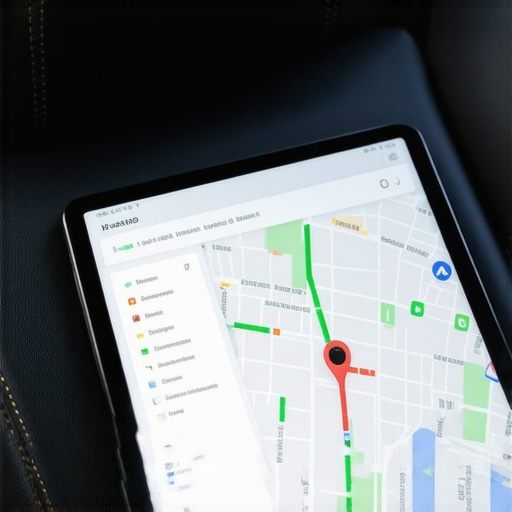
The Digital Toolkit That Keeps My Team Moving
When I started scaling my travel needs for my business partners, I realized that I couldn’t be in every car. I had to learn how to build a custom transit schedule for your office that prioritized safety certifications over the lowest price. One tool I swear by is a direct communication channel. I always insist on why you need a direct line to your hourly driver instead of going through a generic customer service bot. If I can’t text my driver 30 minutes before the ride to verify they are alert and ready, I don’t take the ride. For high-stakes periods, like the end of the year, I follow the protocol for booking a ride during major holiday events to ensure I’m not getting the ‘bottom of the barrel’ drivers who are working triple shifts.
Predictive Technology Will Soon Spot Tiredness Before You Do
Looking ahead, the industry is moving toward advanced telematics. We are seeing the rise of biometric steering wheels and AI cameras that detect blink-rate and head-tilt in real-time. According to the Federal Motor Carrier Safety Administration (FMCSA), their Safety Measurement System (SMS) already tracks data on commercial carriers to identify high-risk operators, but the future lies in these ‘preventative’ in-car technologies. I predict that within five years, your booking app will show you a ‘driver fatigue score’ based on live data. Until then, you need to use the manual verification steps we’ve discussed. My challenge to you is this: for your next three trips, perform a quick audit of the route taken and compare it to the planned path. You’ll be surprised how much you learn about your driver’s focus.
What Most Travelers Miss About Driver Mental Clarity
Over the years, I’ve realized that safety and timeliness are two sides of the same coin. Here are a few hard-won truths: First, a driver who is rushing is a driver who is compromising. This is exactly why a 20-minute buffer is the new gold standard for business; it protects the driver’s mental state as much as your schedule. Second, silence is not always golden. If you sense exhaustion, engaging in light, relevant conversation can be a life-saver. Finally, remember that why safety and timeliness matter in hourly reservation services goes beyond just catching a flight—it’s about arriving in a state of mind to actually perform when you get there.
My Personal Checklist for High-Stakes Travel
I don’t just “hope” for a good ride; I use a set of resources to ensure it. I highly recommend bookmarking the guide to on-time reservations at any hour to understand the mechanics of scheduling. For tracking, I rely on systems where real-time vehicle tracking is more than just a convenience—it’s a digital safety net. I also keep a simple log of driver names and vehicle conditions; if a car feels “off,” I note it immediately. These aren’t just tools; they are the framework for a stress-free life on the road.
Your Safety Is Never an Inconvenience
The next time you’re standing on a curb at 4 AM, remember that you are the captain of your transit. Don’t let the fear of being “difficult” stop you from questioning a driver’s readiness. By using on-time every-time strategies for safe and reliable hourly bookings, you take the guesswork out of the equation. Every safety, hourly reservation you make should feel like a sanctuary, not a source of anxiety. Take charge, stay alert, and prioritize your well-being above all else. Have you ever had a gut feeling about a driver’s tiredness that you chose to ignore or act upon? Let me know in the comments below!