I was standing on a damp curb at 2:15 AM, the streetlights flickering like something out of a bad horror movie. My phone buzzed—the car was here. But as the nondescript sedan pulled up, a cold knot formed in my stomach. No badge in the window. No official identification on the app profile. I got in anyway because I was tired and desperate to get home. That was the longest twenty minutes of my life, spent watching the driver take shortcuts that weren’t on any map and questioning every turn. That night changed how I view late-night travel forever. I realized that saving five bucks isn’t worth the mental tax of wondering if you’re actually safe. We often talk about the real cost of choosing the cheapest ride option, but the true currency we are trading is our peace of mind. Today, I want to show you why those little digital checkmarks and physical badges are the only things that should get you into a car after dark.
The Badge Is Your Only Real Shield in the Dark
When the sun goes down, the risks change. According to the National Safety Council, fatal crashes are three times more likely at night, often due to driver fatigue or compromised visibility. This is why a verified driver badge isn’t just a digital sticker; it’s a signal that someone has done the legwork to prove they belong behind that wheel. Early in my travels, I made the mistake of assuming all “professional” apps were the same. I didn’t bother to identify a genuine commercial chauffeur permit or check for background-checked status. I just hit “book” and hoped for the best. That lack of due diligence is exactly how you end up in a vehicle that hasn’t seen a safety inspection in years. [image_placeholder] By prioritizing verified professionals, you are reserving your spot for guaranteed safety rather than gambling with a stranger.
Does a Digital Icon Really Keep You Safe?
You might be thinking that a badge is just a graphic that can be faked, and honestly, that skepticism is healthy. However, in the world of private transport, that badge represents a chain of trust—from the background check to the commercial insurance verification. Have you ever felt that “gut feeling” telling you to cancel a ride, but you didn’t because you were worried about being late or looking rude? I’ve been there, and I can tell you: your safety is worth more than a cancellation fee. We’re going to break down how to spot the fakes and why these credentials are the secret to a stress-free trip home.Think of a verified driver badge as a pilot’s pre-flight checklist. You wouldn’t want to be at 30,000 feet wondering if the engine was serviced, and you certainly shouldn’t be on the highway at 3 AM wondering the same about your driver. Verification isn’t just a formality; it is a vital safety protocol that separates professional chauffeurs from casual gig workers.
Don’t Trust the Digital Icon Alone
A digital badge on an app is a great start, but it’s not the finish line. To truly protect yourself, you need to know how to verify your drivers commercial registration manually. I learned this the hard way during a rainy evening in London. A car pulled up that matched the description, and the driver had a digital badge, but something felt off. When I asked to see the physical commercial permit usually displayed on the windscreen, he started making excuses about it being in the glove box of a different car. I didn’t get in. It turned out he was using a friend’s account to bypass a recent suspension. By taking thirty seconds to identify a genuine commercial chauffeur permit, I avoided a situation that could have ended much worse than a simple late arrival.
Run a Manual Check on the Paperwork
Professionalism leaves a paper trail. Before you even open the door, look for the physical markers of a legitimate operation. A professional won’t be offended if you want to audit your drivers background status via digital credentials or ask for a quick look at their commercial ID. 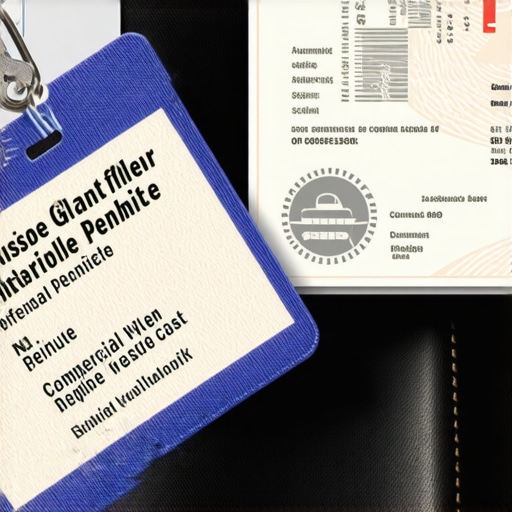
The Hard Truth About License Plate Matches
It sounds elementary, but in the rush of a late-night pickup, people often forget the most basic rule: why you should never enter a vehicle without a license plate match. If the plate is off by even one digit, that car is not for you. I once saw a traveler at an airport hop into a black sedan that looked exactly like his reserved ride, only to realize blocks away that he was in a random vehicle with a driver who had no idea who he was. This isn’t just about getting lost; it’s about the fact that if you aren’t in the registered vehicle, you aren’t covered by the company’s insurance.
Why the Booking Receipt Tells the Whole Story
Your safety begins the moment you receive your confirmation. If you are looking at a generic, text-only message, be wary. You should learn to recognize the signs of a professional booking confirmation email, which should include the driver’s name, a clear photo, vehicle details, and a direct link to a support line. For those managing complex schedules, this is why business travelers prefer hourly hires for high stakes days—it creates a consistent, verifiable chain of command that one-off app rides simply cannot match. When you book hourly, you aren’t just buying time; you are buying a dedicated professional whose credentials have been vetted multiple times over.Most travelers operate under a dangerous delusion: they believe the ‘Estimated Time of Arrival’ on their phone is a digital promise. In reality, why most arrival times are simply guesses comes down to how algorithms ignore real-world friction. I’ve seen countless executives miss high-stakes meetings because they trusted a 12-minute ETA that didn’t account for a local lane closure. This is the error in relying on app-based arrival times during construction; software sees a road, but it doesn’t see the jackhammer. Let’s talk about the ‘Oops’ factor that ruins travel: the 15-minute rule. Everyone says to give yourself fifteen minutes of padding. I argue that why the 17-minute buffer outperforms the traditional 15-minute rule is because those extra 120 seconds are where the most common points of failure—like gate code issues or luggage loading—actually get resolved.
Can a Human Brain Really Beat an App’s Algorithm?
The prevailing myth is that AI-driven dispatching is the peak of efficiency. However, in my experience, why a human dispatcher outperforms an AI every time is a matter of nuance. An algorithm treats every mile equally, but a seasoned dispatcher knows that certain intersections are death traps at 5 PM on a Friday. According to a study by the transportation analytics firm INRIX, non-recurrent congestion—events like accidents or weather—accounts for nearly half of all traffic delays. AI struggles to predict these in real-time, whereas a human can pivot a driver the moment a report hits the radio.  To truly master your schedule, you have to stop the cycle of why last-minute reservations often result in poor quality. When you book at the eleventh hour, you aren’t getting the ‘closest’ car; you’re getting the car that no one else wanted. For mission-critical trips, the only way to ensure your 4 am ride actually shows up is through a pre-allocated reservation. This is also why hourly booking is the secret to stress-free event planning—it creates a ‘reserved state’ where the driver is legally and contractually tethered to you, rather than hunting for the next fare. Have you ever fallen into this trap of trusting a digital ETA only to be left standing on the curb? Let me know in the comments.It’s one thing to get lucky with a great ride once; it’s another to build a system where you never have to worry again. For me, that meant moving past the ‘book and pray’ method and investing in a toolkit that puts the power back in my hands. I start by demanding transparency. If a service doesn’t offer a live tracking link that I can share with my partner, I don’t use them. But I don’t just watch the dot move; I learned how to audit your drivers speed using live tracking links to ensure they aren’t cutting corners—literally or figuratively. This isn’t about being a micromanager; it’s about verifying that the professional I hired is maintaining the standards they promised. I’ve found that why professional punctuality requires a pre-trip inspection is the most overlooked part of the maintenance process. I once asked a driver about his morning routine, and he showed me a physical checklist that included tire pressure and fluid levels. That’s the level of maintenance that prevents a breakdown on the way to the airport.
How do I maintain a stress-free travel routine over time?
Consistency is the enemy of chaos. Once you find a driver or a service that meets your safety standards, stop shopping around. I transitioned to a set schedule because I saw how to set up a recurring weekly commute that never fails by building a relationship with a single provider. This eliminates the ‘stranger danger’ variable entirely. You should also perform your own quick safety audit every time you step into a high-end vehicle. I always do the 4-point mirror check every executive traveler should perform just to ensure the driver has maximized their visibility and hasn’t grown complacent.  Even the best tech has limits; for instance, the Google Maps Roads API technical documentation notes that GPS ‘noise’ can cause a vehicle to appear on a parallel road, which is why real-time tracking apps need constant manual overrides by human dispatchers who actually know the city layout. Looking ahead, I predict we will see ‘Predictive Buffer’ AI that doesn’t just look at traffic, but analyzes your personal historical delay data to suggest exactly when to leave. Until then, you need strategies for safe and reliable hourly bookings that rely on human logic and experienced oversight. Try this: next time you have a flight, apply the 17-minute rule to your pickup time and see how much your heart rate drops. If you want to scale your safety even further, look into reserving your spot for guaranteed safety weeks in advance to ensure the best hardware and drivers are locked in.
What Most Travelers Forget When the Sun Goes Down
Reflecting on years of travel, I’ve realized that the most dangerous assumption is thinking the app has already done all the safety work for you. I used to be that person who would hop in any car that flashed its hazard lights, but now I know that why safety and timeliness matter in hourly reservation services goes far beyond the price tag. Here are my biggest lightbulb moments: First, a digital icon is just code. Real safety lives in the physical verification of a commercial permit. Second, the fallacy of the ETA is real; an app doesn’t know that a road is blocked by a local festival, but a human dispatcher does. Finally, I’ve learned that if you save ten dollars but spend the whole ride clutching your phone in fear, you didn’t actually save anything. Building a relationship with a trusted service turns a gamble into a routine.
My Personal Security Toolkit for the Road
I don’t leave my safety to chance anymore, and neither should you. My go-to stack includes WhatsApp for sharing live tracking links with my family, and I always ensure I have a portable power bank because a dead phone in an unknown car is a nightmare scenario. Most importantly, I keep the direct number of my transport company saved. If you ever feel uneasy, you should contact us or your provider immediately rather than waiting for the trip to end. I also highly recommend on-time arrival mastering the art of reservation and safety every hour as a foundational practice for any frequent traveler to avoid the last-minute scramble.
The Peace of Mind You Deserve Every Single Trip
At the end of the day, travel should be about the destination, not the stress of the journey. By choosing safety precision the key to reliable hourly reservations for peace of mind, you aren’t just booking a ride; you are securing your time and your well-being. Don’t be afraid to demand a higher standard—your safety is the only thing that isn’t negotiable. Have you ever had to trust your gut and cancel a ride that didn’t feel right? Let me know in the comments below!