
I’ll never forget the sinking feeling in my gut last July. I was standing on a humid curb, clutching my suitcase, watching my phone screen like it was a life raft. The app insisted my driver was “3 minutes away,” yet I could see the sea of orange cones and stationary brake lights stretching for blocks. That driver wasn’t moving. I wasn’t moving. And my plane? It was definitely moving toward the runway without me. This wasn’t a one-off fluke; it was a systemic failure of technology meeting the chaotic reality of urban roadwork. That day, I learned the hard way that most arrival times are simply guesses when heavy machinery is involved.
The Day I Realized My Phone Was Lying to Me
I used to be a true believer in the “just-in-time” lifestyle. I trusted the little car icon on my screen more than my own eyes. But here’s the thing about construction: it doesn’t just slow things down; it breaks the logic of the algorithms we rely on. Most apps calculate ETAs based on recent traffic flow, but they often fail to account for the sudden, erratic nature of lane closures or flaggers who decide to hold a line for twenty minutes. I made the classic mistake of thinking a “4.9-star rating” could overcome a closed bridge. It can’t. Today, I want to show you how to stop being a victim of optimistic software. We’re going to look at why these digital promises fall apart and how you can reclaim your schedule by shifting your strategy. We’re going to talk about why traditional transit schedules fail during road construction and what you can do to ensure you never have to sprint through a terminal again.
Is a “Smart” App Actually Worth the Risk?
You might be thinking, “But the app has live traffic data!” Sure, it does. But according to a study by the University of Michigan Transportation Research Institute, GPS-based ETA predictions can vary significantly because they often lag behind real-time incidents like sudden utility repairs or emergency roadwork. If you have a high-stakes meeting, relying on a system that updates every 60 seconds is like trying to win a race with a map that’s five minutes old. In those early days, I didn’t realize that GPS lag can ruin your meeting schedule faster than a flat tire. I thought I was being efficient. In reality, I was being reckless with my time. Have you ever found yourself shouting at a non-moving blue dot on your screen while the clock ticks toward disaster?
Why Algorithms Fail Where Humans Succeed
Computers love patterns. Construction is the ultimate pattern-breaker. When a city decides to tear up a main artery, the ripples extend far beyond the orange cones. This is why achieving a high punctuality rate requires more than just a smartphone; it requires local knowledge and a healthy dose of skepticism. Unlike a server in a cold data center, a human who knows the back roads can predict the ripple effect of a lane closure before the app even registers the slowdown. I want to walk you through the practical tactics for navigating these hurdles.
The 17-Minute Buffer Strategy That Actually Works
Forget the standard ‘leave 15 minutes early’ advice. It’s a relic of a pre-megacity era. When I’m planning a high-stakes arrival, I apply a specific cushion because the 17-minute buffer outperforms the traditional 15-minute rule by accounting for that final ‘last mile’ chaos—finding the right door or navigating a sudden lane closure. Think of this buffer like a crumple zone on a car; it’s designed to absorb the impact of the unexpected so the passenger remains untouched.
Calculate for the Worst-Case Scenario
If the app says 20 minutes, I plan for 37. It sounds excessive until you’re the only person in the boardroom who isn’t sweating. This isn’t just about being early; it’s about mental clarity. I’ve found that strategies for safe and reliable hourly bookings provide the structural support needed to keep a schedule from collapsing when a utility crew decides to dig up a main artery at 2:00 PM.
Switch to Time-Based Reservations Instead of Distance
The biggest shift I made was moving away from point-to-point ride-hailing and embracing hourly hires. In a point-to-point model, the driver is incentivized to finish your trip as fast as possible to get to the next one. In heavy construction, that leads to risky maneuvers and driver frustration. However, how hourly rates protect you during unpredictable traffic is simple: the driver is already ‘home.’ Their only job is to be where you are, for as long as you need.
Why Hourly Booking Wins the Reliability War
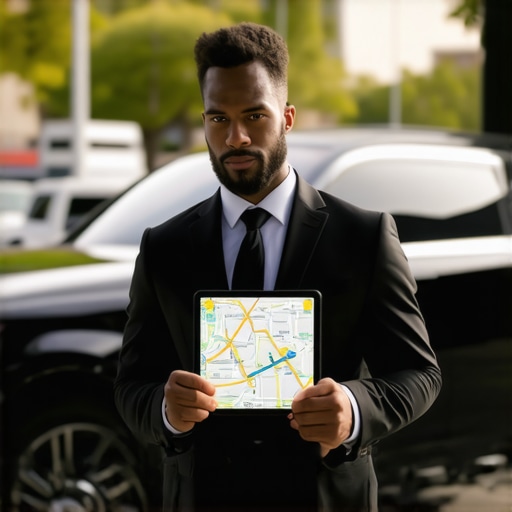
Last winter, I had a series of errands across a gridlocked downtown. Instead of playing the ‘will a car be nearby’ lottery, I booked one driver for four hours. When a water main broke on 5th Street, we didn’t panic. My driver simply put the car in park, and I finished my emails in the back seat. This is why hourly booking is more reliable than ride-hailing apps—it removes the ‘search’ time from the equation entirely.
Verify the Human Behind the Wheel
Technology is a tool, not a master. I always check the credentials myself. I’ve learned how to verify your driver’s commercial registration manually because an app’s green checkmark doesn’t tell you if the insurance is actually active for the specific vehicle you’re sitting in. Furthermore, I’ve found that a driver with a physical map is more reliable than GPS. They understand the ‘why’ behind the traffic, not just the ‘where.’ This human element turns a stressful commute into a managed logistical operation.
Stop Relying on Your Screen’s Blue Dot
Most people believe that seeing a driver’s icon move on a map provides a safety net. In reality, that glowing blue dot is often a digital placebo. It tells you where a car was thirty seconds ago, not where it will be in five minutes. This is a common trap: confusing visibility with reliability. According to a study by the Massachusetts Institute of Technology (MIT) on urban mobility, ‘predictive’ algorithms often fail to account for non-recurring congestion—the kind caused by specific, localized human decisions—leaving a 15% margin of error that apps rarely admit. This is exactly why the difference between live tracking and estimated progress matters so much. If you aren’t looking ahead of the dot, you’re already behind schedule.
Can You Spot Driver Fatigue Before the Trip Starts?
An advanced traveler knows that punctuality is inextricably linked to safety. A driver who is rushing to make up for a late start is a liability. I’ve learned to look for the subtle cues: Is the vehicle’s exterior maintained? Does the driver make immediate eye contact? These aren’t just etiquette; they are indicators of mental alertness. Learning how to verify your driver is not exhausted is a skill that saves lives. If the person behind the wheel looks like they’ve been chasing a surge-pricing algorithm for twelve hours, your on-time arrival is the least of your worries. The visual signs of a chauffeur who values professionalism are your first and best defense against a chaotic ride.

The Paperwork Most Travelers Are Too Polite to Ask For
Here is a contrarian take: A 5-star rating on a ride-hailing app is virtually meaningless for high-stakes travel. Those ratings are based on ‘vibes’ and car cleanliness, not commercial compliance. Most people assume the app handles the heavy lifting of safety vetting, but that’s a dangerous ‘oops’ factor. In my experience, reserving your spot with a service that allows you to how to verify the commercial validity of a transit schedule is the only way to ensure the vehicle is actually insured for hire. I’ve seen countless travelers get stranded because they didn’t know how to spot a fake commercial insurance document until a minor fender-bender turned into a legal and logistical nightmare. When you realize that why on-time performance is the only metric that matters, you stop being polite and start being precise. Have you ever fallen into this trap of trusting the app’s green checkmark without checking the physical paperwork? Let me know in the comments.
I’ve found that the real magic happens when you stop being a passenger and start being a manager of your own movement. My secret weapon isn’t a fancy app; it’s a rigorous system of tools I use to oversee every mile. For instance, when I’m managing several colleagues arriving from different coasts, I rely on how to use vehicle tracking to coordinate group pickups. I don’t just look at the map; I run what I call the tracking accuracy test for private hire car services. If a driver’s icon is jittery or lags behind the actual physical location, I know the hardware they’re using is subpar, which usually means their attention to detail is, too. 
How do I maintain this level of precision month after month?
It comes down to a ruthless audit. Every thirty days, I sit down with my travel logs. This isn’t just about the money; it’s about how to audit your monthly travel spend without stress while identifying which drivers consistently delivered safety and precision. I treat my ground transport like an airline treats its fleet. According to the Federal Aviation Administration (FAA) in their 14 CFR Part 117 regulations, pilots are subject to strict flight time and rest requirements to ensure peak cognitive performance. I apply that same standard to my private bookings because I’ve realized why hourly drivers offer better mental clarity for busy executives—they aren’t burnt out by the ‘gig’ hustle.
The Future of Your Commute Depends on Humans
We are entering an era where AI wants to handle everything, but I predict the most successful travelers will move in the opposite direction. There is a growing trend toward ‘high-touch’ logistics. I believe that why a human dispatcher outperforms an AI every time will become even more obvious as urban construction becomes more unpredictable. The software can tell you there is a delay, but only a human can understand the nuance of why it’s happening and reroute you accordingly. This is the secret to stress-free corporate transportation planning: using technology to provide the data, but letting a professional make the decisions.
Put One Advanced Tactic into Play Today
If you want to stop the cycle of late arrivals and stressful commutes, try this one thing: for your next high-stakes day, book a driver for a minimum of four hours instead of a single trip. You’ll see immediately how the shift from ‘getting a ride’ to ‘having a driver’ changes your entire mental state. It’s the single most effective way to scale your productivity without increasing your blood pressure.
What My Most Stressful Airport Runs Taught Me About Reliability
After years of navigating metropolitan gridlock, I’ve realized that real punctuality isn’t about luck; it’s about systems. First, never underestimate the power of the first impression. If a car arrives and the license plates don’t match the commercial requirements for your city, you are taking a massive legal risk. I always take a moment to learn how to verify commercial plates on a private hire before I even open the door. Second, the “just-in-time” philosophy is a recipe for burnout. For airport runs, understanding why we recommend a 45-minute buffer for terminal pickups has saved my sanity more times than I can count. Finally, remember that you are paying for the driver’s focus, not just their vehicle. When you book hourly, you buy their undivided attention and a commitment to your schedule.
The Professional Traveler’s Toolkit for Ground Logistics
To maintain a flawless record, I rely on a few specific resources beyond a standard smartphone. I don’t just trust the app; I cross-reference my route with local roadwork bulletins and essential hourly reservation tips for timely service to ensure no surprises await. I also keep a “safety first” mindset by following a precise reservation timing strategy that aligns with my flight’s real-time status. Another tool I swear by is a direct communication line to a human dispatcher—not a chatbot—because they can see the “big picture” of city traffic that an algorithm might miss. These human-led systems provide a level of security that automated platforms simply cannot match.
Take Back Control of Your Schedule Starting Today
Navigating the modern city doesn’t have to be a gamble. By shifting your mindset from “catching a ride” to “securing a professional service,” you eliminate the variables that cause stress. Achieving a consistent on-time arrival is possible when you prioritize mastering the art of reservation and safety every hour. You deserve a commute that feels like a sanctuary, not a race against the clock. Start small, plan ahead, and watch how your productivity transforms when you no longer have to worry about the logistics of the road. Let your transport be the most reliable part of your day, not the most volatile. What’s the closest you’ve ever come to missing a major event because of a “3-minute” wait that turned into 20? Let me know in the comments below!