I’ll never forget the feeling of my heart hammering against my ribs as I sprinted toward Terminal 3, dragging a suitcase with a broken wheel that sounded like a Gatling gun on the linoleum. I had landed twenty minutes prior and, in my youthful arrogance, assumed I’d be curbside in ten. I hadn’t accounted for the sea of humanity at baggage claim or the slow-motion shuffle of the jet bridge. By the time I hit the pavement, sweating and disheveled, my ride was gone. It was a cold, hard lesson in airport logistics. That day, I learned that reserving your spot isn’t just about picking a time; it’s about building a fortress around your peace of mind. Today, I want to show you why that 45-minute buffer I now swear by is the difference between a smooth transition and a travel nightmare.
Stop Gambling with Your Post-Flight Sanity
The biggest mistake I made early on—and one I see travelers make every single day—is treating a flight arrival time like a doctor’s appointment. It’s not. A flight arrival is merely a suggestion that you’ve entered the local airspace. Between taxiing, deplaning, and the inevitable wait for your bags, the clock disappears faster than free snacks in coach. I used to think I was being efficient by timing my commute during peak hours to the second, but I was actually just setting myself up for failure. When you handle a late flight arrival without a cushion, you aren’t just risking a missed ride; you’re inviting a level of cortisol into your system that ruins your entire day.
Is 45 Minutes Just Wasted Time on the Curb?
I hear the skepticism already. You’re thinking, ‘I don’t want to stand around for three-quarters of an hour staring at my phone.’ But here’s the reality: you won’t be. According to data from the Bureau of Transportation Statistics, nearly 20% of domestic flights in the U.S. arrive late, and that doesn’t even count the time it takes to actually exit the terminal. When you use the grace period secret for travelers with heavy luggage, you aren’t waiting; you’re breathing. You’re giving yourself permission to stop at the restroom, grab a coffee, or double-check that you haven’t left your iPad in the seat pocket. Have you ever felt that frantic ‘where is my driver’ panic while still standing at the carousel? It’s a specialized kind of torture we can easily avoid.To turn this around, you need to treat your reservation like a flight plan rather than a casual dinner invitation. First, stop booking your pickup for the exact minute the wheels touch the tarmac. I learned this the hard way in Denver during a surprise snowstorm. I had booked a car to meet me at arrival time, but we sat on the runway for forty minutes waiting for a gate to open. By the time I walked out to the curb, my driver had naturally moved on to another gig. Now, I use precise reservation timing to account for the inevitable terminal slog. This means looking at the size of the airport; a massive hub requires a much wider window than a regional strip in the Midwest. When you guarantee safety and punctuality by padding your schedule, you’re actually buying back the time it takes to navigate security and baggage claim without your heart rate hitting triple digits.
Verify Your Ride Before You Touch the Door Handle
Security isn’t just a corporate buzzword; it’s a physical protocol you must execute every time. Before you ever put your luggage in a trunk, you must confirm exactly who is behind the wheel. I make it a habit to check the vehicle’s credentials immediately upon arrival. You should follow the protocol for verifying your chauffeur’s permit to ensure you aren’t stepping into an unvetted or dangerous situation. Think of it like checking the seal on a new bottle of water; you wouldn’t drink it if it’s been tampered with, so don’t get into a car until you’ve seen the official ID. I once had a ‘driver’ wave me down at LAX, claiming he was my ride. Something felt off—no permit on the dash and no official uniform. I pulled out my phone, checked my secure booking details, and realized my real driver was still three minutes away. That quick gut check, backed by verifying every driver’s identity, is what keeps you safe in unfamiliar cities. 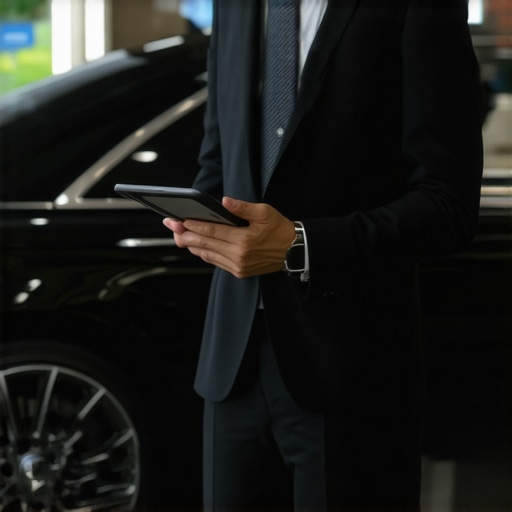
Why the Hourly Choice Saves More Than Just Money
If you have a complex schedule or you’re arriving during a peak travel window, standard point-to-point transfers can often become a trap. Ride-sharing apps thrive on high-volume churn, but hourly booking is more reliable because that driver is dedicated specifically to you, not the next notification on their screen. It’s the difference between having a dedicated bodyguard and standing on a crowded public bus. When you choose an hourly service, hourly rates protect you during unpredictable traffic. I remember a multi-city trip where a sudden protest blocked three main arteries downtown. Because I had a driver booked by the hour, we simply rerouted and waited out the gridlock without the meter—or my anxiety—spinning out of control. It’s about mastering the art of reservation so that the world adapts to your schedule, rather than you frantically chasing after a car that has already left the curb.It’s a common belief that as long as you can see a tiny car icon moving on your phone screen, you are in control of your schedule. I’m here to tell you that’s a dangerous illusion. Most travelers treat that glowing blue dot as the gospel truth, but in my years of navigating high-stakes travel, I’ve learned that why gps lag can ruin your meeting schedule is a lesson usually learned the hard way. While consumer apps give you an ‘estimated’ arrival, professional services rely on something far more robust. You see, real-time vehicle data is more accurate than estimated times because it isn’t just pulling from a single phone’s shaky signal; it’s integrated into a fleet management system that understands the nuance of the road.
Stop Relying on the Glowing Blue Dot
Many people think that ‘on time’ is a mathematical certainty provided by an algorithm. However, a study by the University of Minnesota’s Center for Transportation Studies highlights that ‘urban canyons’—those rows of skyscrapers in every major city—can cause GPS errors of 50 meters or more. This means your driver might appear to be at your door when they are actually stuck behind a delivery truck two blocks away. This is the hidden difference between app drivers and private chauffeurs. A professional doesn’t just follow a purple line on a screen; they know the side streets that the algorithm hasn’t mapped yet. Have you ever stood on a corner, watching your ride icon spin in circles while your flight’s boarding call rings in your ears? Have you ever fallen into this trap? Let me know in the comments.
Can a Human Dispatcher Save Your Meeting Better Than an App?
The short answer is yes. While an AI tries to calculate traffic, it often fails to account for things like a sudden local parade or a water main break that hasn’t hit the news yet. That is why a human dispatcher outperforms an AI every time. They are the eyes in the sky, coordinating with drivers to ensure that traditional transit schedules fail during road construction doesn’t apply to you. This level of oversight also allows for advanced safety checks, such as knowing how to ensure your driver is not fatigued before they ever get behind the wheel. 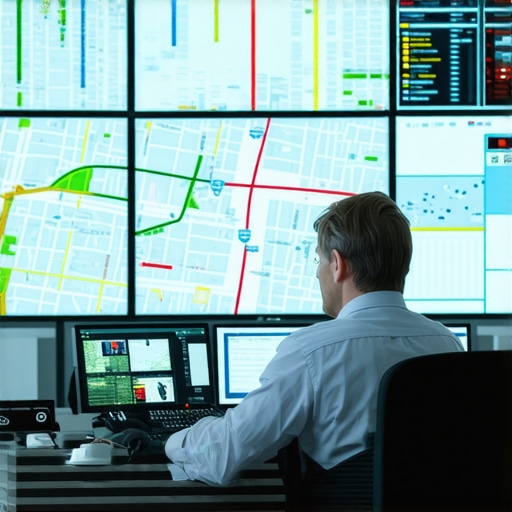
The Silent Trap of Verbal Confirmations
One of the biggest ‘oops’ factors I see with seasoned travelers is relying on a verbal ‘I’ll be there’ from a driver they found on a whim or a local lead. This is the danger of relying on verbal confirmations for important travel. Without a digital paper trail and a centralized dispatch, you have zero recourse when that driver oversleeps or gets a ‘better’ offer. Professionalism requires a system that locks in your spot and stays there. By following essential hourly reservation tips for timely service, you aren’t just booking a car; you are hiring a logistics team. You deserve the mental clarity that comes from knowing the ‘nuances’ are being handled by experts, not just an overworked server in a basement half a world away.Maintaining your travel safety isn’t a one-time event; it’s a lifestyle of constant micro-checks. I’ve realized that the tools I use are less about fancy apps and more about physical observation. Whenever I step toward a vehicle, I perform what I call the ‘quick-glance audit.’ I start with the windshield wiper test. It sounds small, but if a company hasn’t replaced a ten-dollar blade, they probably haven’t checked the brake pads either. This aligns with the Federal Motor Carrier Safety Administration (FMCSA) guidelines, which emphasize that pre-trip inspections are the single most effective way to prevent mechanical failure. I also look for the floor mat check. A driver who keeps their carpets vacuumed is a driver who respects the machine they are operating, and that level of detail usually carries over into their driving habits.
Protect Your Digital Footprint While You Travel
Beyond the car itself, you need tools to maintain your financial safety. I never trust a booking platform unless I can verify your payment is processed via a secure gateway. Hackers love the travel industry because we are often distracted and using public Wi-Fi. That’s why I always recommend stay-secure and punctual tips like using a dedicated credit card for travel expenses only. After every trip, I take three minutes to audit your final ride bill for hidden fees. It’s not just about the money; it’s about ensuring the company’s internal logic matches the quote they gave me. If they can’t get the math right, I can’t trust them with my schedule. 
How do I maintain professional standards over a long trip?
To keep the quality from dipping on a multi-day or multi-stop itinerary, I rely on why manual reservation checks outperform automated bots. Every night before a big travel day, I personally send a quick confirmation message. It’s my way of keeping the human element in the loop. Looking ahead, I predict we will soon see biometric driver verification as a standard, moving away from simple ID cards to facial recognition technology that ensures the person behind the wheel is exactly who the system says they are. This will eliminate the ‘imposter’ risk entirely. For now, the best tool you have is your own observation. My challenge to you: next time you book a ride, perform one physical check—like looking at the tire tread or the cleanliness of the dashboard—before you get in. It’s the easiest way to gauge the safety of your journey before it even starts.
Lessons I Learned When Efficiency Nearly Cost Me Everything
In my early years of business travel, I prioritized the lowest price and the tightest window, thinking I was a productivity wizard. I quickly realized that a cheap ride is no bargain if you spend the whole trip worried about the driver’s erratic lane changes. One major lightbulb moment was realizing that safety isn’t a given; you have to look for the hidden safety red flags in your car door locks before the child locks are engaged and you are at the driver’s mercy. I also started practicing the safety habit of sitting behind the front passenger seat, which provides a clear view of the driver and an easy exit if the situation feels off. Finally, I have learned to value companies that implement driver speed alerts because it shows they care more about my life than their turnaround time.
My Vetted Selection of Travel Essentials
To keep my sanity intact, I rely on a few non-negotiables. First, I always use FlightAware to get the real story on my incoming plane, often knowing about delays before the gate agent does. Second, for my workday arrivals, I have seen why personal drivers offer better productivity than rideshare apps firsthand—it is the only way to turn a 40-minute transfer into a focused strategy session. Lastly, I always verify the commercial validity of my transport provider’s insurance and licensing once a year to ensure my chosen partners have not let their standards slip.
#IMAGE_PLACEHOLDER_E#
Turn Your Next Arrival Into a Victory
The goal of every trip should not just be to get there; it should be to arrive ready for whatever comes next. By taking control of your reservation, you are not just booking a car; you are securing your focus and your peace of mind. Arriving on time is a byproduct of great planning, and staying safe is the result of constant vigilance. You have worked too hard to let a bad commute ruin a great opportunity. Have you ever had a ride experience that changed how you view travel safety? Let me know in the comments below.