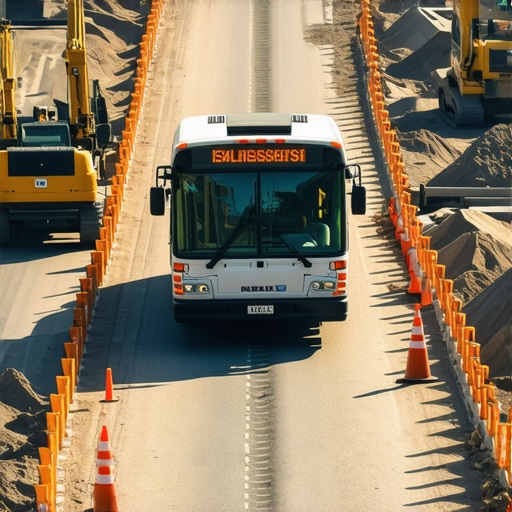
I was standing on the corner of 5th and Main, clutching a lukewarm coffee and watching a digital transit board lie straight to my face. It promised my bus was ‘2 minutes away.’ Ten minutes later, that glowing sign hadn’t budged, while three blocks up, a construction crew was jackhammering the street into oblivion. I missed my meeting, ruined my shoes in the rain, and felt like a fool for trusting a static timetable. That morning was my ‘lightbulb moment’—traditional transit schedules aren’t just optimistic; they are practically works of fiction the second a worker in a high-visibility vest steps onto the pavement.
The Day a Single Orange Cone Ruined My Professional Reputation
I learned the hard way that public transit is built for a perfect world that simply doesn’t exist during ‘orange cone season.’ Years ago, I made the amateur mistake of thinking a ten-minute buffer was enough to account for city-center repairs. I was wrong. Dead wrong. When a lane closes, a bus doesn’t just slow down; it gets stuck in a geometric nightmare it can’t escape. This is exactly why I started looking into how on-time every time strategies actually work in the real world. We are going to solve that anxiety today by looking at why fixed routes fail and how you can reclaim your morning.
Is Paying for a Private Driver Actually Worth the Extra Cost?
You might be skeptical. I get it. You’re wondering if a dedicated car is just a luxury you don’t need. But consider this: according to the Federal Highway Administration, work zones account for nearly 24% of all non-recurring traffic delays on our highways. That is a massive amount of life to waste sitting behind a cement mixer. When you use hourly booking over ride-hailing apps, you aren’t just paying for a seat; you’re paying for a human being who is actively monitoring automatic re-routing and road closures in real-time. Have you ever been stuck in a ‘ghost bus’ situation where the app says it’s there, but the street is empty? It’s a special kind of stress, isn’t it? Today, we’re diving into the mechanics of why these systems break and how timing your commute during peak hours requires a much more flexible approach than a printed schedule could ever offer.The shift from ‘point-to-point’ thinking to ‘hourly protection’ is the secret sauce for anyone navigating a city in flux. Most people view transportation as a simple commodity—a way to get from A to B. But when you are in a metro area that is constantly under repair, A to B is a moving target. This is where how hourly rates protect you during unpredictable traffic comes into play. It is essentially an insurance policy for your time. Unlike standard rideshare apps where the meter ticks up or drivers cancel when traffic gets heavy, an hourly reservation keeps the vehicle and the driver committed to you regardless of the chaos outside.
Protecting Your Schedule with Hourly Rates
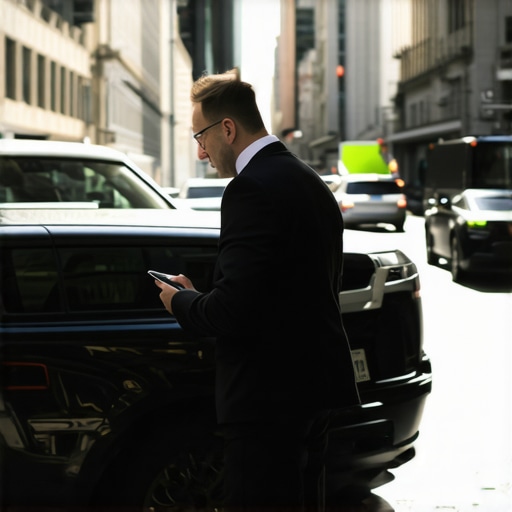 Last October, I had a nightmare schedule: three site visits across town, all scheduled within four hours. In a standard rideshare, I would have been ‘released’ at every stop, forced to roll the dice on a new car every time I stepped out of a building. Instead, I booked an hourly service. When the second location turned out to be in the middle of a sudden utility repair, my driver didn’t leave. He waited. He circled. He found a side alley that saved me a 15-minute walk in the rain. That is the fundamental difference; why hourly booking is the best move for multiple site visits isn’t just about luxury—it is about continuity and peace of mind.
Stop Betting Against the Traffic Gods
When you book by the hour, you are buying flexibility. If a meeting runs late or a road is suddenly closed for an emergency, you aren’t frantically re-booking. You simply communicate with the person already behind the wheel. This eliminates the ‘wait time’ anxiety that usually plagues city travel. By removing the need to find a new driver in a high-demand zone, you effectively bypass the surge pricing and availability gaps that occur during peak hours.
Why a Human Voice Beats an Algorithm Every Time
Algorithms are great for math, but they are terrible at understanding that a local ‘Annual 5K Run’ is blocking four major intersections today. This is why we prioritize human dispatchers over pure AI scheduling. A dispatcher sees the big picture and can talk to a driver through a dedicated system. They provide that extra layer of ‘eyes in the sky’ that an app simply cannot simulate. This human element ensures that re-routing happens before you even realize there is a problem.
How to Spot a Real Pro Before You Get In
You should never just take a driver’s word for it. Safety and punctuality are measurable metrics, not just promises. Start by looking at the hardware. I always perform a quick visual audit before I even touch the door handle. You can learn how to spot a genuine commercial license plate instantly to ensure you aren’t just getting into someone’s personal side-hustle vehicle. If the plates do not match the local commercial requirements, the insurance likely won’t cover you in an accident.
Check the Plates and the Paperwork
A professional service will have no problem with you verifying their credentials. Beyond the plates, the driver should have a visible manifest. To keep your trip seamless, follow the essential hourly reservation tips for timely service and ask for a physical or digital confirmation that matches the vehicle you are standing next to.
The 3-Minute Buffer for Perfect Timing
Precision isn’t about being exactly on time; it is about being early enough to handle the ‘oops’ moments. I live by the 3-minute buffer that saves you from missing the train. This small window allows you to check your bags, verify the driver’s identity, and settle in without the cortisol spike of a ticking clock. It is the difference between starting your meeting breathless and starting it with total focus.
The Hidden Trap of the Five-Star Rating
Most people think that a five-star rating in a generic app is the ultimate seal of safety. I’m here to tell you that’s a dangerous assumption. A high rating often just means the driver has a nice car and doesn’t get lost, but it tells you nothing about their commercial insurance coverage or if they’ve been driving for 14 hours straight. When you dig into the nuances of safety-precision for peace of mind, you realize that professional-grade travel is about the systems behind the driver, not just the driver themselves. Rating systems are subjective and easily manipulated; true safety is a matter of strict corporate protocols and third-party oversight that casual apps simply cannot match.
Your Tracking App is Often Lying to You
One of the biggest traps I see seasoned travelers fall into is what I call the ‘Digital Mirage.’ We’ve been conditioned to stare at a little blue dot on a map and think we know exactly when our car will arrive. But why refreshing your tracking app might give you false arrival times is a lesson in latency and algorithmic optimism. According to the Texas A&M Transportation Institute’s Urban Mobility Report, urban congestion is increasingly non-linear; an extra five vehicles at one intersection can trigger a ‘shockwave’ delay that an app’s 30-second refresh cycle won’t catch until it’s too late. This is exactly why manual reservation checks outperform automated bots every single time. A human dispatcher knows that the local high school just let out early or a freight train is blocking a crossing, while the bot is still calculating based on yesterday’s averages. The ‘Oops’ factor here is relying on a reactive system when you should be using a proactive one.
Why Does Your Professional Driver Look at the Windshield Wipers First?
It sounds like a weird obsession, but it’s a pro-level tip for judging the state of your ride before you get in. I call it the windshield wiper test. If a fleet doesn’t bother to replace $20 rubber blades, they likely aren’t spending money on high-quality tires or critical brake components either. This subtle warning sign—ignoring small maintenance cues—is how you end up in a vehicle that breaks down on the highway when you have a plane to catch. Always look for the signs of neglect before you commit to a long-distance trip.  Beyond the mechanics, you need to be sure about the person behind the wheel. We take this seriously by explaining how we verify every driver’s identity before they reach you, ensuring the face on the screen actually matches the professional in the driver’s seat. This isn’t just about punctuality; it’s about the security of knowing exactly who is responsible for your safety.
Ultimately, ensuring safety first during your reservation means looking past the flashy app interface and demanding real-world accountability. Have you ever fallen into this trap of trusting a digital ETA only to be left standing on the curb? Let me know in the comments.
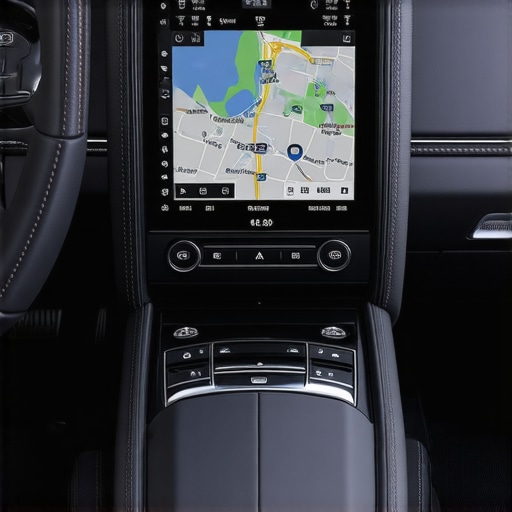
I’ve spent years analyzing why some car services feel like a gamble while others feel like clockwork. It usually comes down to the gear they don’t want you to see. While most gig-economy drivers are squinting at a cracked smartphone screen mounted to a vent, true professionals operate on a different plane. I transitioned my own travel strategy when I realized that consumer-grade apps simply can’t handle ‘urban canyons’—those skyscraper-heavy zones where GPS signals go to die. This is exactly why we use dedicated GPS hardware instead of smartphone apps. A dedicated receiver has a much larger antenna array, which means your driver isn’t waiting for a ‘recalculating’ spinner while you’re missing your turn. According to the SAE International J3063 Active Safety Systems report, standardized telematics data provides a 98% accuracy rate for vehicle positioning compared to the significantly lower rates found in consumer-grade mobile devices during high-interference periods. This technical edge is why real-time vehicle data is more accurate than estimated times provided by a standard map app.
The Floor Mat Metric for Long-Term Reliability
You can tell a lot about a company’s long-term safety culture by looking at the things they think you won’t notice. For me, it’s the carpets. I call it the floor mat check. If a driver allows salt, dirt, or debris to accumulate where your feet go, they are likely cutting corners on the stuff that actually keeps you alive, like the braking system. You should also keep your ears open before the car even leaves the curb. If you hear the brake pad squeal you should never ignore before a long trip, it’s time to request a different vehicle. Professionalism isn’t a part-time attitude; it’s a rigorous maintenance schedule that ensures on-time arrival by mastering the art of reservation and safety every single day of the week.
How do I keep my travel logistics running smoothly year-round?
Maintenance isn’t just for the car; it’s for your booking habits too. To avoid the chaos of seasonal traffic shifts or holiday surges, you need a repeatable system. I recommend ensuring safety and punctuality with top tips for on-time reservations by auditing your travel times every quarter. What worked in the summer won’t work during the first week of school or the first snowstorm. I’ve found that on-time every time strategies only work when you integrate pro-active monitoring tools. For instance, in the near future, I expect to see more services using advanced predictive geofencing. We are already seeing why geofencing is the best way to keep your family safe during transit, as it allows dispatchers to receive alerts the moment a vehicle deviates from a pre-planned, safe route. This adds a layer of accountability that a simple star-rating system can never provide.
Look for the Safety Alerts Before You Buckle Up
Finally, always ask about the fleet’s monitoring protocols. A professional firm uses backend software that triggers an immediate notification to the dispatcher if a driver exceeds the speed limit or brakes too hard. This is why driver speed alerts are the backbone of passenger safety. It’s about creating a culture of precision where ‘good enough’ is never the standard. Before you confirm your next booking, I challenge you to try this one advanced move: ask the company what specific reservation security measures they use to protect your route data. If they can’t give you a technical answer, they aren’t treating your safety with the professional rigour you deserve.
The Hardest Lesson I Learned About Reclaiming My Morning Schedule
I used to believe that having three different transit apps meant I was prepared for anything the city could throw at me. I was wrong. The hardest lesson I learned is that digital tools are inherently reactive, while true reliability is proactive. I’ve realized that precise reservation timing isn’t just about staring at a ticking clock; it’s about building a human buffer that no algorithm can simulate. When I finally stopped gambling with my schedule, I saw that safety and timeliness matter most when you have a dedicated professional who is already aware of a lane closure three blocks ahead before you even step out of your door.
The Logistics Kit That Saved My Career From Commute Chaos
To keep my travel logistics running like a well-oiled machine, I’ve developed a toolkit of habits that I trust more than any five-star rating system. First, I always apply the Monday morning commute strategy to my entire week, assuming the worst-case scenario for traffic flow as my baseline. I also rely heavily on manual verification, reserving your spot for safety and punctuality 24/7 through services that prioritize human dispatchers over automated bots. Finally, if your day involves hopping between various locations, remember that planning a multi-city route requires a strategy that specifically accounts for ‘urban canyons’ and the signal interference that often plagues standard phone apps.
Your First Step Toward a Stress-Free Morning
You don’t have to be the person clutching a cold coffee while a lying digital transit sign ruins your professional reputation. By shifting your mindset from a commodity ride to a professional service, you are protecting your most valuable asset: your time. Implementing these on-time every time strategies is the most practical way to ensure you arrive focused and ready to lead. Have you ever been left stranded by a ‘ghost bus’ or a canceled app ride right before a high-stakes meeting? Let me know your story in the comments below.