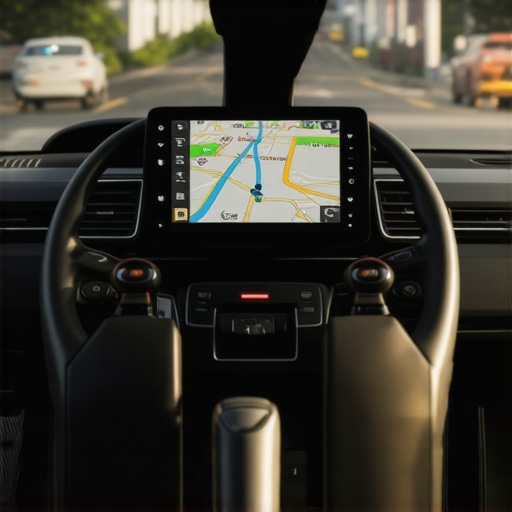
I still remember the sweat prickling on my neck at 4:45 AM. I was behind the wheel, staring at a frozen blue dot on my phone screen while my passenger—a high-stakes corporate attorney—checked his watch for the third time in two minutes. The “unverified” app I’d downloaded because it promised “real-time shortcuts” had just directed me into a construction zone that didn’t exist on any map. I wasn’t just late; I was lost in a maze of orange cones with no way out. That was the moment I realized that for anyone serious about safety and punctuality, relying on a free, crowdsourced app is like trying to perform surgery with a Swiss Army knife. It might work eventually, but the risk of a mess is just too high.
The Day I Stopped Trusting the Little Blue Dot
In the world of professional driving, being “on time” isn’t just a goal; it’s the entire product we sell. I learned the hard way that when you’re managing reliable hourly reservations, you cannot afford the lag or data-selling nonsense of unverified navigation tools. These apps often prioritize showing you ads for local businesses over providing the most efficient route. Today, I’m going to pull back the curtain on why we’ve banned those popular, free apps from our cockpits. We’re going to talk about the technical gaps that lead to missed flights and how we ensure your safety and punctuality 24/7 by sticking to enterprise-grade systems. I want to show you how a professional setup differs from what you use to find the nearest Starbucks.
Does fancy hardware actually get you there faster?
You might be thinking, “Hey, my phone gets me to the grocery store just fine.” And you’re right for daily errands. But for professional transit, the stakes are higher. According to a report by the National Safety Council, mobile device usage—even for navigation—is a significant contributor to cognitive distraction on the road. This is why we insist on dedicated GPS hardware mounted at eye level. This isn’t just about the route; it’s about keeping our eyes on the road, not on an incoming text message or a pop-up ad. When we guaranteed an on-time arrival for a 5 AM flight last week, it wasn’t because of luck; it was because our hardware provides vehicle-specific data that no free app can touch.
Why Crowdsourced Data is a Safety Nightmare
The problem with unverified apps is that they rely on “the crowd.” If three people accidentally leave their navigation running while walking their dogs, the app thinks there’s a traffic jam. Even worse, these apps often lack the security measures necessary to protect your privacy. Have you ever felt like a navigation app was “listening” to you? It’s a common frustration. By using closed-loop systems, we protect your personal phone number and trip history from being sold to third-party marketing firms. Have you ever had a driver take a “shortcut” that felt like a dangerous trip through a back alley? That’s exactly the kind of risk we eliminate by using verified, professional-grade routing that respects the safety of the neighborhood and the passenger. It’s about more than just a map; it’s about a commitment to a standard that free apps simply can’t meet.
Double-Checking the Map Like Your Life Depends on It
In the high-stakes world of professional driving, we treat a digital map as a suggestion, not a command. Before I even turn the key, I perform a manual audit of the route. Think of it like a pilot reviewing the flight plan before leaving the gate. While an algorithm looks at the shortest distance, a human dispatcher or driver looks for the context that machines miss. We find that manual reservation checks outperform automated bots because we can account for a local festival or a known problematic intersection that hasn’t registered as a ‘delay’ yet. I once had a 4:30 AM pickup where the app insisted the highway was clear. My gut—and a quick check of the city’s maintenance schedule—told me otherwise. I detoured two miles early, passing a line of stuck commuters who trusted the ‘blue dot’ blindly. That client made their 6 AM flight with time to spare, all because I didn’t let a computer make the final call.
Watching the Pulse of the Car in Real-Time
Professionalism isn’t just about the path you take; it’s about the machine you’re in. We rely on telemetry that goes beyond what any smartphone can offer. By integrating directly with the vehicle’s computer, we know exactly how much fuel is in the tank and the health of the engine long before we arrive at your door. This is why why real-time vehicle data is more accurate than estimated times provided by generic apps. If a car has a minor sensor issue, it’s flagged in our system and that vehicle is pulled from the rotation. You’ll never see a professional driver pulled over on the side of the road with the hood up because we use real-time fuel monitoring and preventative diagnostics to ensure the trip is seamless. 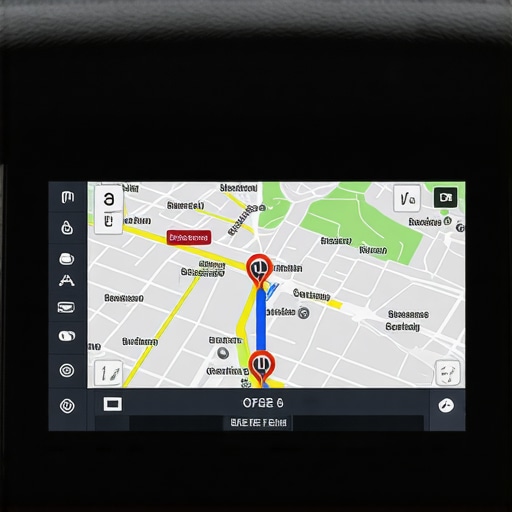
The Three-Minute Secret That Saves Your Flight
Most people think being on time means arriving at the exact minute requested. In our world, that’s actually considered late. We operate on a logic called the ‘buffer zone.’ It is a calculated window that accounts for the time it takes to load luggage, verify your identity, and ensure you are comfortably settled before the wheels move. We’ve found that the 3-minute buffer that saves you from missing the train is the difference between a panicked sprint and a calm departure. This isn’t just padding; it’s a strategic safety measure. During this window, we also ensure that your driver is not using a personal phone or any other distracting device. Everything is pre-set on the dedicated hardware so that once the door closes, the only focus is the road ahead.
Locking Down Your Data Like a Vault
One of the biggest ‘hidden’ costs of free navigation apps is your privacy. They don’t just track your location; they sell it. When you book a professional service, your movement is your business, not a data point for an advertiser. We teach our clients how to store trip data securely so that your home address and office habits stay private. By using closed-loop systems, we can utilize security protocols that encrypt your itinerary from start to finish. It’s a holistic approach: the hardware keeps you safe on the pavement, and the software keeps your identity safe in the cloud. We treat your personal information with the same precision we apply to a 90-degree turn in heavy traffic.Let’s peel back another layer. Most people think “on-time” is a fixed point on a clock, but in professional circles, it’s a living calculation. One of the biggest myths I see is the belief that a sleek app interface equates to operational reliability. Everyone says AI is the future of transit, but in my experience, algorithms lack the ‘local intuition’ required for true precision. This is exactly why we prioritize human dispatchers over pure AI scheduling. A computer sees a clear road; a human dispatcher knows that a clear road at 3 PM on a Friday usually means a major accident just happened upstream, and the bottleneck is about to explode. A 2023 study by the Texas A&M Transportation Institute highlights that urban traffic “volatility”—the sudden swings in travel time—is now a greater threat to punctuality than predictable rush hour traffic. This volatility is the “oops” factor that catches amateurs off guard. They see a 20-minute estimate and leave 25 minutes before their flight. A pro knows that on-time every time strategies require a buffer that accounts for this volatility.
Why does your real-time ETA jump by ten minutes without warning?
It’s a phenomenon we call “signal ghosting.” Most consumer-grade apps refresh their data every 30 to 60 seconds. In a dense city center, the reason your real-time map sometimes lags is often due to tall buildings obstructing GPS signals, creating a false sense of progress. By the time the app realizes you’ve been sitting at a red light for three cycles, it “corrects” itself, and suddenly you’re ten minutes late. We avoid this by using multi-constellation GPS hardware that pings several satellite networks simultaneously, providing a resolution that’s accurate to within centimeters, not city blocks. 
Stop Trusting the Digital Handshake
The most common trap I see executive assistants and travelers fall into is the “Reservation Mirage.” You get a confirmation email, and you think you’re set. But there is a massive difference between a reservation and a confirmed booking. A reservation is just an entry in a database; a confirmed booking means a specific vehicle and a vetted driver have been assigned to your tail number or doorstep. This is also why why hourly chauffeurs are safer for late-night solo travelers; the vehicle stays with you, eliminating the risk of being stranded by a cancelled app request. To protect yourself, why you must demand a physical copy of your trip reservation—or at least a digital PDF—cannot be overstated. It forces the provider to move your trip from a “maybe” to a “must.” When you are ensuring safety first, you need to know that your driver isn’t just a face on a screen. They should be utilizing techniques like the red light strategy how pro drivers avoid getting stuck, which involves lane positioning to maximize exit options. Have you ever been “ghosted” by a driver who was supposedly two minutes away? That’s the “Confirmation Trap” in action. Let me know in the comments: Have you ever fallen into this trap? I’d love to hear how you handled it—and if it changed how you book your travel today.I often get asked how we maintain this level of perfection without burning out the fleet or the crew. It’s not just about luck; it’s about the tools we choose to live by every day. For instance, I perform what I call the windshield wiper test every single morning before the first client even wakes up. It sounds like a small detail, but if a blade streaks, it tells me the rubber is degrading, which usually means the seals on other critical components might be next. If a driver ignores a small streak on the glass, they are likely to ignore the brake pad squeal that begins three days later. We use enterprise-level telemetry from Geotab—specifically their ‘Active Insights’ platform—which utilizes machine learning to predict battery and alternator failure before the vehicle even shows signs of struggle. According to Geotab’s technical documentation, implementing predictive diagnostics can reduce unexpected roadside breakdowns by up to 40% compared to traditional mileage-based servicing. This is how we keep reliable hourly reservations from becoming a logistical nightmare.
How do I keep my vehicle at peak performance for years?
Maintenance isn’t a weekend hobby for us; it is a daily ritual that scales our safety protocols. I personally rely on driver speed alerts that ping our dispatch team immediately if a vehicle exceeds the posted limit for more than five seconds. This ensures every driver stays focused on the mission: a safe, smooth, and predictable arrival. If you want to stay within safe speed limits and maintain client trust, you need hardware that doesn’t just watch the road, but warns the operator before a habit forms. 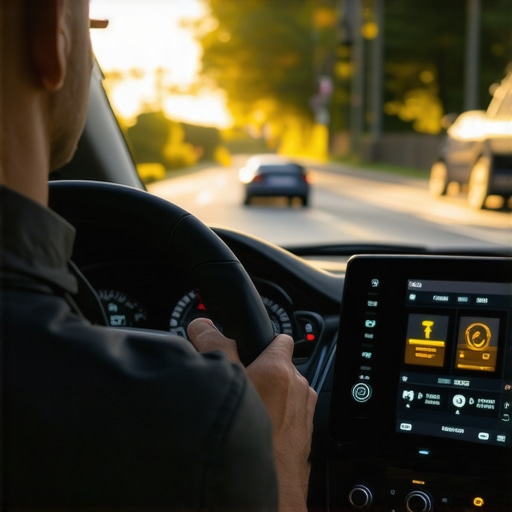 Looking toward the future, the trend is moving toward V2X (Vehicle-to-Everything) communication. Imagine a world where our cars talk to traffic lights and other vehicles to find the ‘green wave’—minimizing abrupt stops and maximizing passenger comfort. This technology will take mastering the art of reservation to a level where delays become nearly impossible. For now, my advice to you is this: next time you book a ride, I challenge you to ask about the fleet’s telemetry setup. A true professional will be excited to explain the ‘brain’ behind their wheel. If you have questions about how we handle specific routes or equipment, feel free to get in touch with us today.
Hard Truths from the Driver’s Seat About Getting There Early
After a decade on the road, I’ve realized that professional transit isn’t about speed; it’s about the elimination of surprises. One of the biggest lightbulb moments for my clients is realizing that real punctuality is invisible—if you never had to check your watch, we did our job. I always tell people to trust their gut; if a vehicle looks neglected, it probably is. You should know how to spot a genuine commercial license plate instantly to ensure you aren’t stepping into an unvetted personal car. Also, remember that your environment matters; sometimes the best way to prepare for a high-stakes meeting is to utilize the protocol for requesting a silent ride after a long flight. It’s about reclaiming your mental space while we handle the chaos of the road.
My Personal Tech Stack for Stress-Free Travel
I don’t just rely on instinct; I back it up with tools that provide absolute certainty. For vehicle health, I swear by enterprise telemetry that monitors everything from engine load to tire pressure in real-time. When it comes to documentation, I never rely solely on a phone screen; I’ve seen too many dead batteries at the worst possible moments. This is why you must demand a physical copy of your trip reservation or keep a cached PDF. For navigation, we moved away from consumer phones years ago in favor of multi-network systems. Sticking to dedicated GPS hardware ensures we never lose a signal in a concrete canyon downtown. These tools are the backbone of ensuring safety first for every passenger we serve.
Taking the Wheel of Your Own Schedule
Navigating the complexities of modern travel doesn’t have to be a gamble. By choosing professional standards over crowdsourced convenience, you’re investing in your own peace of mind. Mastering the art of reservation is the final step in turning a stressful commute into a seamless transition. You deserve a service that values your time as much as you do, providing safety and punctuality without compromise. Have you ever missed a flight or a critical meeting because of a navigation glitch or an unverified driver? I’d love to hear your story in the comments below.