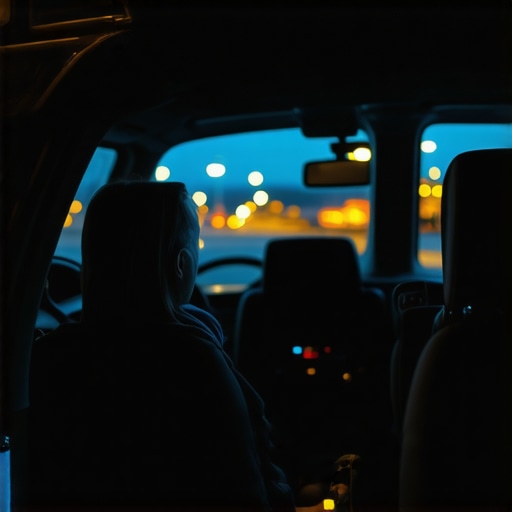
I stepped off the plane in Chicago, my eyes burning from eighteen hours of recycled air and the faint scent of airline pasta. All I wanted—no, all I needed—was a quiet pod to crawl into. But instead, I found myself in the back of a sedan, nodding along to a twenty-minute dissertation on the local sports team’s drafting strategy. I was too exhausted to speak, yet too polite to stop it. We’ve all been there, haven’t we? That moment when you realize you didn’t set the boundaries for your ride, and now you’re paying for a conversation you don’t have the bandwidth to maintain. Mastering the protocol for requesting a silent ride isn’t about being difficult; it’s about preserving your sanity so you can arrive at your destination ready to function. [image_placeholder]
Why You Need a Quiet Car After Your Flight
The transition from a chaotic terminal to your front door should be a decompression chamber. When you use an on-time reservation, the goal is often more than just getting home—it’s about reclaiming your mental space. According to research on travel fatigue, the cognitive load of navigating airports can lead to significant sensory overload. I learned this the hard way years ago when I failed to mention my preference for a quiet ride in my booking notes. I spent the whole trip trying to remember if my driver should lead with my last name or if I was even in the right car, all while struggling to stay awake. Today, I’m going to walk you through the exact steps to ensure your next ride is a sanctuary of silence, without any of the social friction.
Is asking for silence actually worth the hassle?
You might worry that you’re going to come off as elitist or unfriendly. I used to think the same thing! But here is a secret: many professional drivers actually prefer a quiet passenger. It allows them to focus entirely on safety and precision during the drive. Have you ever felt that pressure to talk just because you didn’t want to seem mean? Let me know if you’ve ever sat through a long ride wishing you had just spoken up. We are going to solve that today by looking at how to use the specific drop-off point strategies and booking notes to get exactly what you need.
Bake Silence Into Your Booking Request
Writing the word ‘Silent’ in a notes field is like putting a ‘Do Not Disturb’ sign on a hotel door; it sets the expectation before you even arrive. Most people treat the ‘special instructions’ box as an afterthought, but it is actually your primary tool for mental preservation. I once made the mistake of leaving it blank while traveling through London. My driver, while exceptionally kind, decided that a 4 a.m. ride was the perfect time to debate the merits of blue cheese versus brie. I was too tired to argue and too polite to shush him. If I had simply taken thirty seconds to modify my reservation notes to include ‘Quiet ride requested, please,’ that entire awkward hour would have been spent in blissful sleep.
Be Explicit in the Special Instructions
Don’t use vague language like ‘I’m tired.’ Instead, use professional, direct phrasing. Terms like ‘Silent ride requested’ or ‘Passenger will be working/resting, no conversation needed’ are industry-standard signals. Professional drivers appreciate this clarity because it removes the guesswork from their service. They want to ensure your satisfaction, and knowing you value silence helps them achieve that goal. 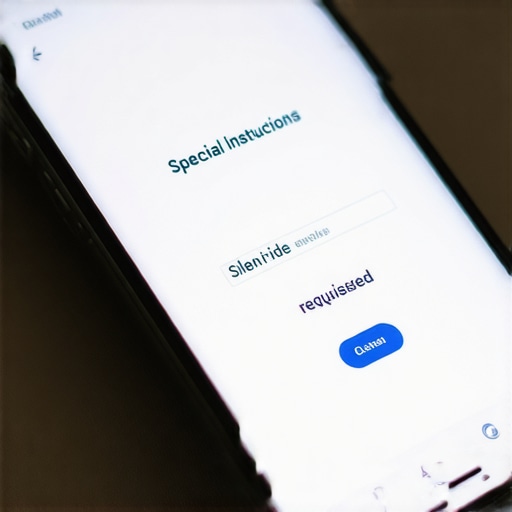
Give the Driver Your Exact Gate Number
To minimize the ‘where are you?’ phone call—which is the ultimate conversation starter you don’t want—you must ensure your driver knows your precise gate number. When a driver has to call you to find your location, the social seal is broken. By providing the exact door or gate, the driver can pull up, handle your luggage, and let you slide into the backseat without a single word of logistical back-and-forth. This is the foundation of ensuring safety first and a seamless transition from the terminal to the car.
Keep the Peace During the Hand-Off
The first thirty seconds of the encounter dictate the next forty-five minutes of the ride. You need to signal your intent through both digital and physical cues. When you are standing at the curb, your goal is to identify the vehicle and the driver immediately so you aren’t standing there looking lost, which often prompts the driver to step out and initiate a long greeting.
Identify Your Ride Without the Small Talk
Keep your eyes peeled for specific professional markers. You can usually spot a real professional driver at a crowded terminal by their attire and the placement of their vehicle. Once you’ve locked eyes and confirmed the plate, a simple nod and a ‘Hello, I’m [Name]’ is all you need. Remember, your driver should never lead the conversation with your last name for security reasons anyway. If they confirm your identity with a simple ‘Yes, sir/ma’am,’ and you immediately put in your earbuds or open a laptop once seated, the message is sent. It isn’t rude; it’s a standard business interaction that preserves the sanctuary you’ve paid for.It’s a common mistake to assume that simply seeing a car icon on a map guarantees your arrival. In reality, there is a massive difference between a reservation and a confirmed booking. Most travelers believe that once they hit ‘order,’ their job is done. I’ve learned the hard way that without a human-verified confirmation, you are essentially just crossing your fingers. This is exactly why one-way bookings often lead to unnecessary stress for travelers; they lack the continuity and accountability of a dedicated service. If you want a silent, focused ride, you need a driver who isn’t frantically looking for their next fare while you’re still in the backseat.
Stop Relying on the Map’s ETA
We’ve all been there: staring at the little car icon on our screen, watching it spin in circles. The industry’s biggest secret is that why real-time vehicle data is more accurate than estimated times provided by standard consumer apps. Those ETAs are often ‘best-case’ scenarios that ignore gate delays, luggage carousel backups, and local traffic nuances that only a resident pro would know. To get that sanctuary of silence, you need a driver who has already accounted for the grace period secret for travelers with heavy luggage, ensuring they are waiting for you, rather than you standing on a noisy curb waiting for them. [image_placeholder]
How can you actually trust the driver behind the wheel?
Most people think safety is just about the vehicle’s make and model, but the real nuance lies in the driver’s condition. According to a study by the National Highway Traffic Safety Administration, drowsy driving is a massive contributor to road accidents, yet it’s rarely checked by on-demand platforms. This is why I always look for services that explain how to ensure your driver is not fatigued during a late night trip. A professional chauffeur in an hourly arrangement is managed by a dispatch center that monitors hours of service, which is a world away from the ‘hustle’ culture of standard apps.
The Danger of Algorithmic Scheduling
The ‘oops’ factor usually happens when an algorithm decides your driver is 10 minutes away, but fails to see the road construction right in front of your terminal. This is why on-demand apps often struggle with prompt airport pickups compared to pre-arranged services. I’ve found that why we prioritize human dispatchers over pure AI scheduling is the ultimate safety net. A human dispatcher can see the thunderstorm or the protest blocking the highway and reroute your driver before you even land. Have you ever fallen into the trap of a ‘ghost reservation’ that looked good on your phone but never showed up at the terminal? Let me know in the comments.Speaking of comments, the most frequent question I get is how to tell the pros from the amateurs before you even get in the car. It really comes down to the gear. While most drivers rely on the same consumer-grade apps you use to find the nearest coffee shop, the elite services I trust invest in specialized equipment that actually works.
Ditch the Smartphone GPS for Reliable Routes
Have you ever noticed your location ‘jump’ on a map when you’re between tall buildings in a downtown core? That’s because smartphone antennas are notoriously weak in urban canyons. I always check if a service mentions why we use dedicated GPS hardware instead of smartphone apps. These units have much larger antennas and can lock onto multiple satellite constellations simultaneously. According to the European Space Agency, professional-grade GNSS receivers provide significantly higher precision and lower latency than standard mobile devices, which is critical for executing on-time every-time strategies. If your driver is constantly fiddling with a suction-cup phone mount, they are already a step behind.
The Two-Minute Inspection That Saves Your Life
Before you toss your bags in the trunk, do a quick lap around the vehicle. It’s not about being picky or ‘difficult’; it’s about basic safety. I personally use the windshield wiper test to judge the entire organization’s maintenance culture. If the wipers are cracked or the blades are frayed, it’s a loud signal that the brake pads or tires haven’t been audited recently either. This is the foundation of staying secure and punctual. A driver who respects the small mechanical details of their vehicle is far more likely to ensure your hourly driver stays within safe speed limits during your trip. 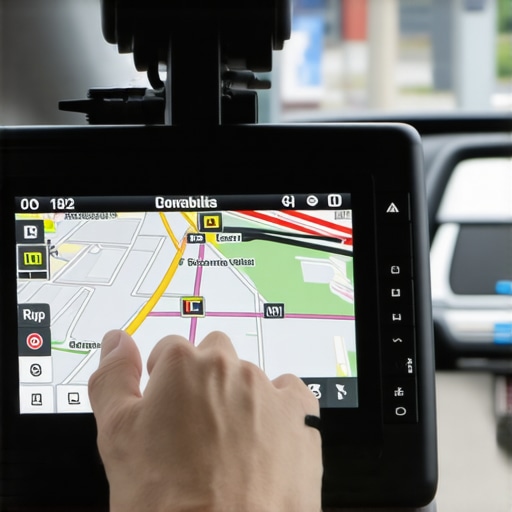
How do I keep my travel routine from falling apart?
Consistency is the ultimate enemy of chaos. To maintain a high level of safety and reliability, you have to stop treating every airport transfer as a disconnected event. I’ve started implementing the 3-minute buffer that saves you from missing the train or flight by standardizing my booking arrival windows. By understanding why hourly chauffeurs are safer for late-night solo travelers, you can build a long-term relationship with a dispatch center that knows your specific safety needs. Maintenance isn’t just about the car; it’s about the habits you build to ensure you’re never scrambling at the curb.
Why Human Eyes Will Always Beat the Algorithm
Looking at where things are headed, I predict we’re about to see a massive backlash against ‘pure’ AI scheduling. We’re already seeing high-profile executives moving back to human-verified bookings because AI can’t ‘see’ a protest or a broken water main until it’s too late. The future isn’t just a robot driving you; it’s a professional driver backed by a human dispatcher who can override a bad routing suggestion in real-time. If you want to take your travel safety to the next level, I challenge you to try the ‘Gate Number Strategy’ I mentioned earlier on your very next trip. You’ll be amazed at how much stress vanishes when the logistics are locked down. For more details on how we manage your information, feel free to check our privacy policy anytime.
Real Truths About Finding Peace During Your Hourly Ride
After years of navigating terminal curbsides, I have realized that silence is a professional service, not a social favor. When you focus on why safety and timeliness matter in hourly reservation services, you start to see that a quiet car is actually a productivity tool. Here are three insights I wish I had understood years ago:
- Silence sets the safety tone: A driver who respects your request for a quiet environment is typically more focused on the road than one trying to fill the air with small talk.
- The booking note is your shield: Setting expectations in a secure reservation is 90% of the battle; it eliminates the need for an awkward verbal request once you are already in the backseat.
- Consistency creates comfort: Building a habit around reserving your spot with the same specific notes ensures that your local dispatch team knows your preferences before you even land.
My Personal Kit for Stress-Free Travel
To ensure my transit remains a sanctuary, I never leave home without a few specific tools that complement a professional driving service. First, a high-quality pair of noise-canceling headphones is a universal signal that you are unavailable for chat. Second, I always keep a physical copy of your trip reservation in my carry-on; technology can fail, but paper ensures you and your driver are on the same page. Finally, I always perform the floor mat check as I enter; it’s a quick way to gauge if the driver is meticulous about every aspect of your safety and comfort.
Claim Your Right to a Quiet Ride
Your travel time belongs to you. Whether you need to catch up on emails or simply decompress after a long-haul flight, mastering the art of the on-time reservation and the silent ride is a game-changer for your mental health. By using the strategies we’ve discussed—from gate number precision to explicit booking notes—you can turn every trip into a seamless, high-value experience. Have you ever felt too awkward to ask for silence even when you were completely exhausted? Let me know in the comments below!