
I stood on the curb of a silent terminal at 2 AM, the coastal wind biting through my jacket, watching the “No Cars Available” spinner on my phone screen for the twentieth time. I’d done everything right for the arrival—booked a sleek sedan, arrived early, and felt like a VIP. But I’d left the return trip to chance, assuming a car would just be there when I needed it. That night, I waited ninety minutes for a ride that eventually cost three times the normal rate. It was a visceral lesson in the fragility of “on-demand” travel. Now, I never leave my driveway without a confirmed return reservation in my pocket.
Locking in Your Return Ride is the Peace of Mind You Deserve
Most of us obsess over the departure. We check the flight, we double-check the bags, and we make sure the car arrives on time to get us to the gate. But the return trip? That’s usually an afterthought. I learned the hard way that the real reason your app’s ETA is often over-optimistic is that it doesn’t account for the sudden surge of five hundred other people leaving the same venue or terminal at the exact same time. By booking your return trip simultaneously, you aren’t just buying a ride; you’re buying a guarantee. You’re ensuring that while everyone else is frantically refreshing their screens and praying for a driver to accept their request, you’re stepping into a pre-vetted, safe vehicle that is already waiting for you. It transforms the end of your journey from a stressful gamble into a seamless transition.
Does locking in a return ride really save you that much trouble?
You might be thinking that you prefer to stay flexible or that it might be cheaper to just wing it once you see how the night goes. Trust me, I’ve been there. In my early days of frequent travel, I thought I was being savvy by avoiding a fixed schedule. I ended up paying double for ‘surge’ pricing more times than I care to admit. According to research from the U.S. Travel Association, travel-related stress often peaks during transit transitions, largely due to a lack of predictable scheduling. When you utilize strategies for safe and reliable hourly bookings, you eliminate that anxiety variable entirely. You get a driver who knows exactly when and where you’ll be, creating a buffer time secret for stress-free arrivals that simply doesn’t exist when you’re fighting for the nearest available car on a crowded app. Have you ever been stuck at an airport or a wedding venue with no way home, watching your phone battery die while the prices climb? It’s a gut-wrenching feeling, isn’t it? Let’s talk about the logistics. When you book both legs of the journey at once, you’re often prioritized by dispatchers who value the consistency of a round-trip client. This is where why safety and timeliness matter becomes more than just a slogan—it’s the difference between getting home for a full night’s rest or sitting on a suitcase on a sidewalk.To move from a hopeful traveler to a prepared one, you need to treat your reservation like a precision instrument. It starts with data synchronization. When I’m setting up a return, I don’t just pick a random time; I sync my calendar directly with my chauffeur. This ensures that if a meeting runs over or a dinner goes long, the adjustment isn’t a frantic phone call; it’s a pre-calculated shift that happens in the background.
Let Your Flight Number Do the Heavy Lifting
If you are flying, the absolute best thing you can do is stop worrying about the clock. I once sat on a tarmac in Denver for four hours while a blizzard grounded every departing plane. In the past, I would have been sweating, wondering if my driver had given up and gone home. But because I knew why flight numbers are the best delay insurance for your ride, I had provided my tail number during booking. When I finally landed at midnight, my driver was waiting at the designated door. They weren’t checking their watch; they were monitoring the flight path in real-time. This is a level of service where understanding why gps signal loss doesn’t stop our professional dispatchers becomes your biggest asset.
The Verification Ritual You Should Not Skip
Once you spot your car, the ‘safety first’ mindset needs to kick in immediately. Don’t just jump in because the car looks fancy. I make it a habit to perform the 3-point door handle check and a quick visual inspection of the vehicle’s exterior. It sounds paranoid until you realize it takes four seconds and guarantees you aren’t getting into a vehicle that’s been poorly maintained or a random car that isn’t your ride. You can also use 7 tactics to verify your driver’s commercial license without even opening your mouth. Look for the livery tags or the dashboard credentials that professional services are required to display by law.
Keep a Firm Grip on Your Digital Security
The logistics of a safe ride aren’t just physical; they are digital. Before you even head out, you should confirm your secure booking link is using https. I’ve seen enough phishing attempts in ride confirmation emails to know that a professional service will never ask for your password via text or email. Utilizing modern reservation systems that use encryption is the only way to ensure your financial data doesn’t end up on a dark web forum while you’re trying to enjoy your trip.
Master the Grace Period Window
Finally, learn the ‘buffer rule’ that pros use. Most high-end services offer a specific window, like the 12-minute rule for international airport pickups, which gives you ample time to clear customs or grab a quick coffee without the driver leaving. Use this to your advantage. It’s always better to have a car waiting for you for ten minutes than to be the one waiting on the curb for sixty because you didn’t plan for the exit.Most travelers believe that booking a series of one-way trips offers the ultimate flexibility. It feels intuitive, doesn’t it? You only pay for the time you’re moving. However, after a decade of navigating complex city layouts and tight schedules, I’ve realized that why point-to-point booking fails for executive roadshows is the same reason it fails for savvy solo travelers: it leaves you vulnerable to the ‘reset’ window. Every time you book a new ride, you’re starting the safety and vetting process from zero. In contrast, the math behind why hourly bookings save money during peak hours is often overlooked. By keeping a driver on the clock, you aren’t just paying for a seat; you’re paying for the driver to actively scout the best routes and remain in a state of readiness that an on-demand app simply cannot replicate.
Is it actually safer to keep a driver on standby than to call a fresh ride?
Absolutely. When you stick with one vetted professional, you eliminate the repetitive risk of getting into an unverified vehicle. This is why business executives prefer dedicated drivers for multi-stop days—it creates a sterile, secure environment for your belongings and your data. I’ve seen people lose thousands because they left a laptop in a ‘one-way’ car, never to see it again. If you’re on an hourly schedule, your driver becomes a temporary guardian of your workspace. However, there is a massive ‘oops’ factor many fall into: the third-party broker trap. Many shiny websites look like local car services but are actually just middle-men. This increases the security risks of booking a ride through a third-party broker because your personal data is being bounced between platforms. Always look for direct contact information and a local physical address. 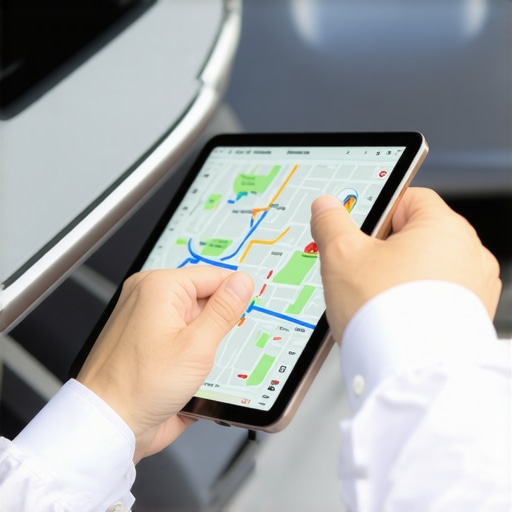 Another nuance is the ‘ghosting’ link. You might be watching a tracking map and see your car hasn’t moved in five minutes. Before you panic, understand the real reason your tracking link might be lagging is often due to encryption protocols designed to protect the driver’s exact GPS location from public scraping. Expert transit studies from organizations like the Global Business Travel Association suggest that ‘frictionless’ travel depends more on the continuity of the provider than the speed of the vehicle. If you want to stay secure and punctual with essential hourly reservation tips, you must learn to prioritize the relationship with the dispatch team over the lowest price on a screen. You also need to be wary of digital fraud; I always recommend detecting fraudulent ride booking sites instantly by checking for a valid SSL certificate and clear cancellation policies. Have you ever fallen into the trap of booking a ‘cheap’ ride only to realize you had no way to contact the actual driver when things went sideways? Let me know in the comments below!
Building a reliable travel routine isn’t a ‘set it and forget it’ situation. It requires a commitment to the same level of maintenance you’d give a high-performance engine. I’ve transitioned from a casual traveler to a logistical strategist by treating every reservation as a data point that needs verification. I no longer just ‘hope’ a driver shows up; I use a specific digital toolbelt to ensure they do.
Equip Your Digital Glovebox for Total Control
The biggest mistake I see travelers make is relying on a single, shaky app notification. I personally use a combination of encrypted calendar syncing and third-party GPS verification. Before I even step out the door, I always run the accuracy test for modern live tracking links to ensure the signal is refreshing at a professional interval. If a tracking link lags by more than thirty seconds, it’s a red flag that the dispatch system is overloaded or outdated. I also keep a digital checklist for my pre-ride ritual, which includes how to verify your drivers identity without being rude. This isn’t just about safety; it’s about maintaining a professional standard that tells the driver you are a client who values precision. By using these tools, you transform from a passive passenger into an active manager of your own time.
How do I maintain a reliable travel system over time?
Maintenance is about auditing your results. Every quarter, I sit down and review my ride history to see where the friction points occurred. I look for patterns: Was a specific terminal always a bottleneck? Did a certain route consistently fail during peak hours? This is where I’ve learned that why on-time performance depends on local knowledge over gps is the absolute truth of transit. High-end chauffeurs know the side streets that don’t show up on a standard algorithm’s ‘fastest route’ list. To maintain this over the long haul, I prioritize drivers who demonstrate this ‘road IQ’ and keep them in my preferred rotation. According to the SAP Concur Global Business Travel Survey, nearly 38% of travelers feel their safety is compromised by a lack of visibility into ground transport. You beat that statistic by maintaining your own vetting standards and never getting complacent with ‘good enough’ service.
The Next Frontier of Executive Transit
Looking ahead, the industry is moving toward even tighter integration between your biometric security and your ride. I predict that within the next few years, your phone’s face ID will likely be the only ‘key’ needed to unlock your vehicle door, eliminating the need for verbal PINs entirely. We are also seeing a shift toward AI-assisted dispatching that predicts traffic jams before they even happen on a map. To stay ahead of these trends, you need to stay secure and punctual with essential hourly reservation tips that focus on these emerging tech standards. The goal is to move toward a truly frictionless experience where the car is simply an extension of your office or home. I strongly encourage you to try one advanced tip today: manual GPS auditing. On your next trip, compare your driver’s tracking link against a secondary map app to test the accuracy of your real-time tracking link in real-time. It’s an eye-opening exercise in digital accountability.
Lessons I Paid for in Cold Terminal Air
I’ve realized over the years that the real value of a professional service isn’t just the leather seats or the climate control; it’s the accountability that comes with a human connection. When you prioritize safety and precision in your hourly reservations, you stop being just a data point in a tech giant’s algorithm and start being a valued client with a dedicated protector. One of my biggest lightbulb moments was realizing that punctuality at any hour isn’t a happy accident—it’s the direct result of advanced vetting and strategic scheduling. I used to think I was saving money by ‘winging it,’ but I was actually spending my mental energy and safety as currency. Keeping a driver on a fixed schedule means they are accountable for your wellbeing from the moment you leave until you are safely back at your door.
My Vetted Toolkit for Seamless Arrivals
To maintain a high standard of travel, I rely on a few specific resources and habits that have never steered me wrong. First, I always value professional road knowledge over simple GPS calculations, as a local expert knows the construction zones that an app might miss until you’re already stuck in them. Second, I never skip the verification ritual that protects my luggage and my identity before the wheels even turn. Finally, I make it a non-negotiable rule to only book through secure payment portals to ensure my financial details remain encrypted. These aren’t just ‘tips’; they are the foundation of a professional travel strategy that keeps you in control regardless of the city or the time of night.
Your Journey Deserves a Flawless Finish
You have the power to transform your transit from a stressful chore into a seamless luxury. By making a proactive return reservation, you are making a statement that your time, your safety, and your peace of mind are non-negotiable assets. Don’t wait for a ‘no cars available’ screen to remind you of the value of preparation. Take charge of your next trip today and experience the difference that a professional, pre-vetted chauffeur can make for your schedule and your spirit. Have you ever been stuck at a venue or airport waiting for a ride that never came? Share your experience in the comments below!