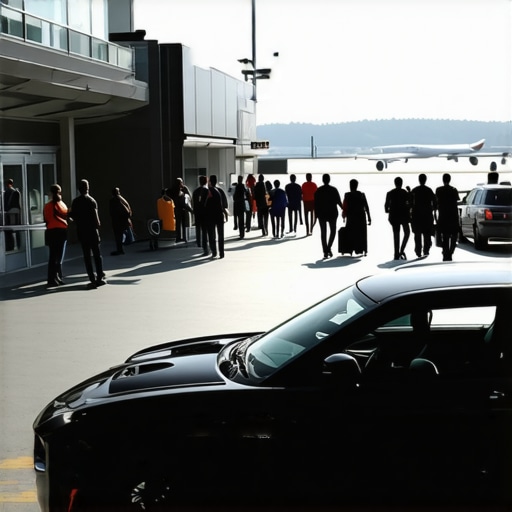
Ever found yourself sprinting through the airport, luggage in tow, eyes darting at the clock, wondering if your ride will actually show up on time? I used to think that leaving extra time was enough—that a simple 15-minute buffer was all I needed to beat the chaos. But more often than not, I ended up anxiously waiting, sweating it out, or worse, missing my flight entirely. That lightbulb moment hit me hard—what if I could decode the exact buffer I need, tailored specifically for Friday afternoon airport runs?
The Real Trick: Why Standard Buffer Times Just Don’t Cut It
After battling these unpredictable frustrations, I realized that the conventional 10 or 15-minute ‘safety net’ isn’t enough. Peak traffic, last-minute gate changes, or unexpected delays can turn those basic buffers into nightmare scenarios. The key is not just adding extra minutes blindly but understanding the precise time cushion that accounts for city traffic, driver availability, and airport procedures. Rest assured, there is a formula that can make your reservation absolutely reliable. Trust me, it’s a game-changer.
Are You Wasting Your Buffer Trying to Compensate for Neglecting Supply and Demand?
Early on, I made the mistake of assuming that requesting a ride 20 minutes before my scheduled departure was enough. I ignored the fact that on Friday afternoons, the city’s roads jam up and drivers get booked up quickly. This oversight caused me to scramble—my driver canceled, or I arrived at the terminal just as check-in closed. It’s a rookie mistake that countless travelers make. Short-notice reservations are particularly risky without proper planning.
Learning from my early errors, I now rely on a more meticulous approach, leveraging precise reservation timing that considers peak traffic patterns and driver availability. This not only eases the stress but also guarantees you arrive relaxed and on schedule. Ready to discover the step-by-step method to calculate your perfect buffer? Let’s dive in and take the mystery out of airport runs once and for all.
Calculate Your Exact Buffer Time
Start by analyzing your typical travel times during different traffic conditions. Recall a time I missed a flight because I underestimated Friday traffic; applying a systematic calculation saved me next time. Measure the average congestion delays on your usual route during peak hours and add a safety margin based on that data. Use the buffer time formula to fine-tune your reservation window.
Gather Traffic Data
Leverage real-time traffic apps during your planning phase, but don’t rely solely on ETA estimates. Review historical traffic patterns for specific days and times—these are often posted on transportation authority websites or can be deduced from your past routes. This helps establish a reliable baseline for your reservation window.
Align Reservation Timing with City Flow
Identify peak traffic windows—usually 4-7 pm on Fridays for many cities—and plan accordingly. For example, I used to book rides 15 minutes before my usual departure, but after analyzing city traffic flow, I shifted to reserving 30 minutes earlier, which proved to be a game-changer.
Adjust for Supply and Demand Fluctuations
Ride demand can spike unexpectedly. To counter this, monitor local events or weather that could impact driver availability. During a recent symposium, I booked my ride a full hour early—considering the added demand—and arrived stress-free. This proactive reservation aligns with safety principles outlined in safety and timeliness guidelines.
Implement Smart Reservation Practices
Use a dedicated platform that allows precise reservation timing, such as hourly booking systems. These systems let you set exact pickup windows, reducing the risk of delays. When I started to use such a platform, I noticed my arrivals became more punctual, and stress levels dropped significantly.
Test and Refine Your Buffer
Experiment with different reservation lead times—start with 30 minutes earlier than your usual departure—and observe outcomes. Keep a log to identify patterns, then adjust accordingly. This iterative process ensures your buffer time is neither excessive nor insufficient, following the optimization strategies discussed in buffer time optimization.
Stay Ahead with Communication
Notify your driver of your reservation window to prevent misunderstandings. I always send a quick message confirming my estimated pickup time, which aligns with safety and communication best practices. This reduces surprises and allows your driver to plan better, ensuring punctuality even during unpredictable city traffic.
By integrating accurate traffic analysis, proactive booking, and clear communication, you can master your reservation timing. This approach minimizes stress and guarantees you arrive relaxed, confident, and on schedule—the ultimate goal of meticulous planning and understanding city demand dynamics.
Everyone talks about reliable reservation systems and safety protocols as if they’re foolproof, but the truth is far more nuanced. Many travelers and professionals overlook critical details that can undermine even the most advanced booking practices. Let’s dissect some prevalent misconceptions and reveal the sophisticated pitfalls lurking beneath surface-level assumptions.
The Overconfidence in Real-Time Tracking Alone
Airline and transport giants often tout real-time GPS tracking as the ultimate safety and punctuality tool. But recent studies, such as those summarized in their own research, show that tracking data, while useful, doesn’t predict traffic variations or driver behavior unpredictability. Relying solely on GPS can create a false sense of security; actual punctuality depends equally on proactive planning, including buffer time calculations and driver familiarity with local conditions. Combining tracking with integrated strategies is a smarter approach.
Why Do Most People Fail to Prevent Last-Minute Cancellations?
The common belief is that flexible cancellation policies or last-minute rebookings safeguard your schedule. But in practice, they often open the door to last-minute surprises—driver cancellations, unexpected traffic, or vehicle issues. Proper reservation security measures that include verifying driver reliability and confirmation protocols are essential. Being proactive, such as confirming your booking hours in advance and double-checking driver credentials, minimizes these risks. The key is not just flexibility but disciplined preparation.
Are Safety Margins Overrated or Underestimated?
Many assume that a standard 10-15 minute buffer suffices, but recent analyses suggest this is a dangerous oversimplification. Safety margins should adapt dynamically based on conditions like city traffic, weather, or special events—factors that impact supply and demand unpredictably. An advanced approach involves using tools like the buffer time formula to customize your reservation window, based on historical congestion data. Overestimating buffers leads to unnecessary waiting, while underestimating invites lateness and missed opportunities.
How Can Advanced Planning Save You from the Worst-Case Scenario?
Beyond basic scheduling, integrating city-specific knowledge, driver preferences, and traffic analytics creates a layered safety net. For example, I learned that relying on short-notice bookings during peak hours can dramatically increase risk, despite contractual guarantees. Instead, reserving well in advance using sophisticated systems, and maintaining communication channels, ensures you stay ahead of unforeseen disruptions. This multi-tiered approach aligns with expert recommendations for comprehensive safety and timeliness.
In essence, the real mastery lies in understanding that safety and punctuality are not static variables but dynamic processes requiring nuanced, proactive strategies. By questioning common assumptions and embracing data-driven, layered planning, you can elevate your reservation game from good to exceptional. Have you ever fallen into this trap? Let me know in the comments and share your experiences!
Embrace Robust Tools for Continuous Performance
Maintaining a reliable reservation process isn’t a one-and-done task; it demands the right set of tools to adapt and evolve. I personally rely heavily on real-time traffic analytics platforms like Waze Drive, which I use not just to check current conditions but to analyze historical data trends. This helps me predict upcoming traffic patterns, especially during peak hours or special events, enabling me to adjust reservation windows proactively. Incorporating buffer time formula into your planning ensures your schedule is resilient even amidst unpredictability.
How do I maintain these tools over time?
Regular updates and calibration of your analytics tools are essential. Personally, I set monthly reviews to analyze past reservation accuracy versus actual outcomes, adjusting parameters as city traffic or demand shifts. It’s equally important to stay informed on software developments—upgrading to newer versions of apps or analytics platforms ensures you benefit from the latest features that improve reliability. Moreover, integrating a security protocol within your tool suite safeguards your data from breaches, maintaining trust and integrity in your scheduling system.
Leverage the Power of Automation
Automation scripts tailored to your reservation patterns can minimize manual oversight. For example, I automate alerts that notify me when traffic conditions surpass predetermined thresholds, prompting me to confirm or reschedule pickups. These scripts can utilize APIs from traffic services to generate prompts, helping to keep your planning responsive and dynamic. Given that city patterns change seasonally, refining your automation rules quarterly helps prevent deskilling in your operation and keeps your strategies current.
What’s the future of reservation safety and reliability tools?
Looking ahead, I predict AI-driven predictive analytics will become standard, automatically adjusting buffers based on real-time data and historical patterns. These advances will reduce manual intervention and increase on-time rates significantly. For now, integrating current AI-assisted tools—like traffic prediction algorithms from traffic forecasting services—can give you a substantial edge. I recommend trying out automated alerts today to see firsthand how they reinforce your safety net, especially during unpredictable city conditions. Remember, the key to long-term success is continuous fine-tuning and embracing new technology to stay ahead in city demand dynamics.
What I Wish I Knew About City Rhythms and Reservation Safety
One of the toughest lessons I learned was that city traffic patterns are unpredictable, and overlooking this can turn your well-planned reservation into a last-minute scramble. Recognizing the subtle shifts in traffic flow, especially during peak hours or special events, gave me an edge. I realized that real-time traffic doesn’t tell the whole story—historical data and local knowledge are equally crucial. Embracing this layered understanding allowed me to preempt delays, transforming anxiety into confidence.
Tools That Elevated My Reservation Game
My indispensable toolkit includes traffic analytics platforms like buffer time formulas and comprehensive hourly booking systems. These tools help me customize reservation windows, account for city-specific quirks, and communicate seamlessly with drivers. Regular calibration of these tools, coupled with ongoing education through trusted sources, ensures I stay ahead of urban chaos. They’re the backbone of my reliability, and I recommend them to anyone serious about punctuality.
Inspiring Confidence to Take Control of Your Reservations
Remember, mastering reservation timing isn’t just about avoiding delays—it’s about reclaiming your peace of mind. With proactive planning, the right tools, and an understanding of city demand, you can arrive relaxed and prepared. Don’t wait for chaos to get the best of you; take charge today. Your future self will thank you for the calm, punctual journeys ahead.
Ever struggled with fine-tuning your reservation buffer? Share your experiences below—I’d love to hear what’s worked for you!
,