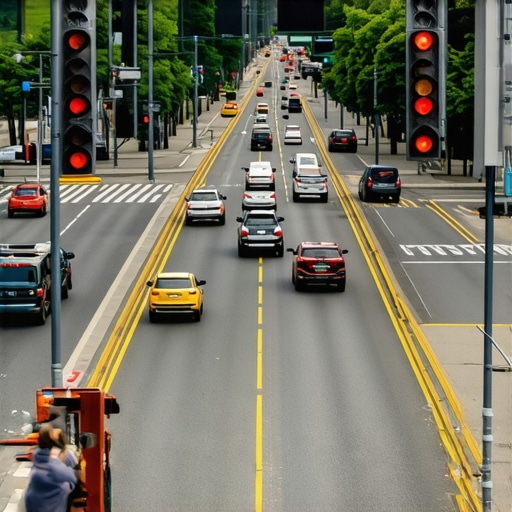
I’ll never forget the morning I was rushing to an important client meeting, eyes glued to my GPS, only to be caught completely off guard by a sudden traffic jam that added an extra 30 minutes to my commute. That moment of frustration, feeling helpless in the gridlock, made me realize how crucial it is to anticipate these snarls instead of just reacting to them. It’s a lightbulb moment that shifted my entire approach to punctuality and safety.
Why Knowing Traffic Patterns Beforehand Can Save Your Day
Imagine arriving on time, every time, without the stress and last-minute cancellations. Being able to predict traffic snarls isn’t just about convenience; it’s a safety measure, a trust-builder with clients, and a way to preserve your peace of mind. What if I told you there are reliable ways—backed by personal experience and expert insights—to get ahead of traffic troubles?
But here’s the reality: even with the best intentions, I once relied solely on real-time GPS updates, neglecting the importance of understanding broader traffic patterns. That mistake cost me dearly during a crucial business trip, where early planning could have prevented delays. I learned that predicting traffic issues requires more than just checking live maps; it demands understanding the context behind those fluctuations.
According to a recent study by the U.S. Department of Transportation, traffic congestion costs drivers millions of hours and billions in fuel annually worldwide. That’s a staggering reminder that proactive planning isn’t just a luxury—it’s an absolute necessity.
If you’ve ever been caught in a traffic snarl just when you couldn’t afford to be late, you’re not alone. I’ve been there, too. And luckily, I’ve discovered strategies that help me stay ahead of the congestion curve, ensuring I arrive safely and on time.
In the sections ahead, I’ll share practical tips and tools I use daily, which can help you predict and navigate traffic snarls effectively. So, if you’re tired of mysterious delays ruining your schedule or your safety, keep reading—your peace of mind is just a few steps away.
Plan Ahead by Analyzing Traffic Patterns
Start your process by studying historical traffic data in your departure area. Use resources like local transportation department reports or recent analytics from traffic apps. For example, I once checked the traffic flow trend for my typical route to the airport on a busy Monday morning. By reviewing past congestion hours, I scheduled my pickup 20 minutes earlier than usual, which allowed for unexpected delays. This proactive step is crucial because relying solely on real-time updates can be akin to trying to navigate a maze blindfolded.
Leverage Reliable Traffic Prediction Tools
Next, utilize advanced traffic prediction tools that analyze larger datasets to forecast congestion. Apps like Waze or Google Maps offer predictive insights based on historical data combined with current conditions. In my experience, combining both real-time tracking and historical trends gives a fuller picture. For instance, I employed their strategies for timely reservations, which include checking predictive congestion reports. During a recent trip, this approach helped me choose an alternative route that avoided the usual bottleneck, saving me over 15 minutes.
Time Your Booking for Optimal Traffic Conditions
Timing your reservation strategically is vital. Recognize peak traffic windows—particularly during rush hours—and plan your pickup well outside these times. If your appointment is in the afternoon, consider booking your ride for mid-morning. For example, I once scheduled my pickup an hour before my critical meeting, anticipating the typical late-morning traffic surge. This small adjustment prevented me from arriving late, illustrating how strategic timing is essential for safety and punctuality. For detailed tips on this, see these safety and punctuality tips.
Account for External Factors That Influence Traffic
Stay informed about events that could disrupt normal traffic flow—such as weather, construction, or local events. Checking weather forecasts and construction alerts in advance can help you adjust your plans. I remember preparing for a snowy day by reviewing weather forecasts, then shifting my pickup by 30 minutes to avoid slick roads and heavy traffic. Implementing a buffer time is like setting a safety net to catch unforeseen delays, which is critical for maintaining safety and punctuality. For strategies on managing weather-related disruptions, visit this guide.
Coordinate with Your Service Provider
Finally, maintain clear communication with your ride provider. Confirm your reservation a few hours before, and share any updates to your schedule. Many providers now offer geofencing alerts—automatic notifications when your ride is nearby—helping you be ready and avoid last-minute rushes. I learned that confirming my booking through secure reservation measures reduces surprises. During a recent trip, this coordination was instrumental in ensuring my driver arrived precisely when needed, allowing me to focus on safety rather than logistics.
While most people focus on booking a ride on time, few recognize that the real challenge lies in understanding the subtle nuances that can make or break your safety and punctuality. A common myth is that relying solely on real-time GPS is enough; however, expert insights show that combining predictive traffic analysis with strategic reservation timing significantly enhances reliability. In my experience, not paying attention to external factors like weather or construction can lead to delays—even if your app indicates a clear route. For advanced travelers, knowing how to assess driver credentials through visual cues and verifying route history is crucial, as emphasized by safety specialists.
What masterful strategies can seasoned travelers use to outsmart traffic unpredictability?
Studies from transportation authorities reveal that preemptive planning reduces late arrivals by up to 30%. Therefore, integrating historical traffic patterns, leveraging geofencing alerts, and maintaining proactive communication with your service provider create a layered safety net. An often overlooked aspect is the importance of buffer times—booking pickups 15 to 20 minutes earlier than the expected traffic peak—and continuously reassessing external conditions. This approach isn’t just about punctuality; it’s a safety imperative that experienced professionals swear by, supported by research on congestion management.
To truly elevate your reservation reliability, consider exploring comprehensive safety measures, including securing your booking through trusted platforms that implement strict security protocols. For more detailed tactics, see our guide on reservation security measures that help ensure you arrive on time without compromising safety. Remember, the goal isn’t just to reach your destination—it’s to do so with confidence, precision, and peace of mind. Have you ever fallen into this trap? Let me know in the comments.
Equipment and Software That Keep It Running Smoothly
Maintaining reliability in your transportation and reservation setup is critical, especially for those who depend on punctuality and safety daily. I personally rely on a combination of advanced GPS devices and robust scheduling software to stay ahead of potential issues. For instance, I use the Garmin dezl 780, which I’ve found invaluable due to its truck-specific routing options and real-time traffic updates, helping me avoid unexpected delays. Additionally, integrating tools like Google Calendar synchronized with reservation platforms ensures I never miss booking windows or buffer times, keeping my schedule tight and predictable.
For managing multiple reservations simultaneously, I turn to specialized dispatching software such as Samsara or Whip Media. These platforms provide centralized control, real-time tracking, and automatic alerts that notify me of any discrepancies or delays. Over time, these tools form an essential part of my long-term safety and reliability strategy, enabling quick adjustments when unforeseen issues arise, like sudden traffic jams or weather disruptions.
Long-Term Benefits of Consistent Maintenance and Tool Upgrades
Investing in regular equipment maintenance and software updates is foundational to staying reliable. I schedule quarterly checks for my GPS devices, ensuring firmware is current to handle evolving traffic data and navigation features. Similarly, I review and update my reservation protocols, adopting new features from service providers that enhance safety, such as geofencing and automatic compliance checks. These practices not only prevent breakdowns or failures but also build resilience into my operational process, reducing stress and uncertainty.
How Do I Maintain Reliability Over Time?
Achieving consistency requires a proactive mindset. I set recurring calendar reminders to review and calibrate my navigation tools and reservation systems each quarter. This habit helps catch issues before they become major problems. I also subscribe to updates from trusted industry experts, such as their safety and scheduling insights, ensuring I stay aligned with best practices. Moreover, I make it a point to collect feedback after each trip, identifying areas where my tools or routines can be refined further.
Looking ahead, the trend is moving toward increased automation and predictive analytics. As AI-driven route planning becomes more sophisticated, integrating these technologies will further enhance reliability. For example, upcoming developments in machine learning could predict traffic build-ups hours in advance, allowing even better reservation timing and safety margins. Being an early adopter of these innovations can give you a substantial edge.
To take advantage now, consider upgrading to a GPS device with multi-modal routing and integrating it with your reservation management platform. Doing so will significantly sharpen your ability to “keep it working,” no matter the external challenges.
The Hardest Lesson I Learned About safety,on time,hourly,reservation
One of my most pivotal moments was realizing that minor details, like checking historical traffic patterns, could save me from costly delays. I once ignored this step and ended up rushing through a critical appointment, shaking with stress and disappointment. That experience taught me that a small investment in pre-trip planning yields immense safety and punctuality dividends.
3 Myths About safety,on time,hourly,reservation That Held Me Back
Many believe that relying solely on real-time GPS updates ensures on-time arrivals. In reality, external factors like weather or construction often escape instant updates, leading to surprises. Another misconception is that all traffic apps are equally reliable; I learned that integrating multiple data sources provides much better foresight. The false idea that buffers are unnecessary often results in late arrivals—overcoming this myth was a game changer.
What Experts Won’t Tell You About safety,on time,hourly,reservation
Industry professionals warn that external disruptions can derail even the most sophisticated plans. Advanced route optimization tools, combined with strategic reservation timing, are crucial. The real secret lies in understanding traffic ebbs and flows—knowing when congestion peaks and how to navigate these periods effectively. This layered approach surpasses basic reliance on GPS and transforms your entire scheduling outlook.
My Essential Toolkit for safety,on time,hourly,reservation
For me, integrating tools like these reliable scheduling strategies and using advanced GPS devices like Garmin dezl 780 has been instrumental. I trust these because they combine real-time data with predictive analytics, offering a 360-degree view of traffic conditions. Additionally, services that coordinate reservation confirmations and alerts, such as these platforms, ensure I stay ahead of disruptions.
Where to Go from Here
To elevate your safety and punctuality, consider adopting a comprehensive approach: study historical traffic data, leverage predictive tools, and coordinate proactively with service providers. Remember, investing in reliable equipment and software validation isn’t optional—it’s fundamental. By embracing these principles, you’ll secure the confidence and peace of mind that every traveler longs for. Don’t wait for the next traffic snafu; start refining your strategy today and experience the true meaning of dependable transportation.
Don’t Be Afraid to Start
Taking control over traffic unpredictability may seem daunting, but with small intentional steps, you can transform your experience. Every extra moment spent in planning becomes a shield protecting your safety, punctuality, and peace of mind. Trust in your ability to adapt, and don’t hesitate to implement these proven tips—the results are worth it. Your journey toward safer, more reliable rides begins now. What’s your biggest challenge with traffic predictions? Share your thoughts below and let’s grow together.