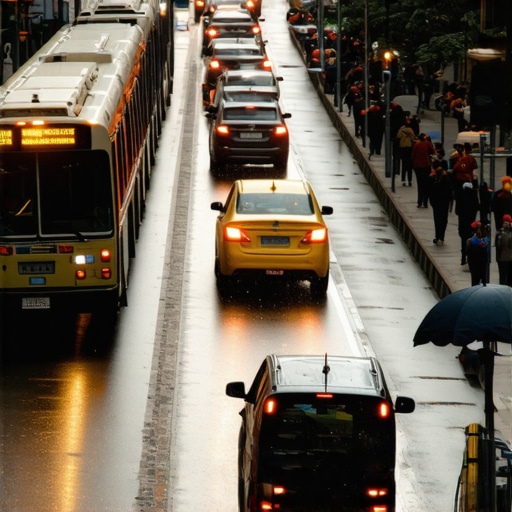
I remember standing on the corner of 5th and Main three years ago, watching my leather shoes slowly turn into sponges. It wasn’t even a storm, just a steady, annoying drizzle. I had a critical meeting and thought I could rely on the local train because the app showed it was running perfectly. Forty minutes later, I was still standing there, shivering, while the digital display stubbornly insisted the train was “on time.” That was the day I realized that most transit systems are built for sunshine and optimism, not for the messy reality of a wet Tuesday. I made the classic mistake of trusting a theoretical schedule over the physical reality of the road, and it cost me a major contract. [image_placeholder_1] Today, I want to pull back the curtain on why your commute falls apart the second the sky turns gray and show you how to actually guarantee your arrival when the weather turns sour. We are going to solve the mystery of the disappearing bus and help you master the art of the
Why a Few Drops of Water Break the City’s Rhythm
When rain starts, everything slows down, and I mean everything. You might think it is just people driving slower—which they are, and for good reason—but the failure of a transit schedule is actually a compounding mathematical disaster. It starts with “dwell time.” Every passenger takes five seconds longer to board because they are shaking out umbrellas or fumbling with wet passes. Multiply that by fifty stops, and your bus is already twenty minutes behind. I used to get so frustrated, but then I learned that the real reason your app’s ETA is often over-optimistic is that it cannot account for the human friction caused by a puddle. Furthermore, according to the Federal Highway Administration, light rain can reduce traffic flow by up to 13%, creating a ripple effect that transit dispatchers simply cannot manage in real-time. Have you ever found yourself checking your watch every thirty seconds, wondering if the driver just decided to go home?
Is a rain delay just a lazy excuse for poor service?
It feels like a conspiracy when you are wet and late, but the truth is about physics and safety. Early in my career, I tried to push my drivers to maintain dry-weather speeds during a storm. I quickly learned that was a recipe for disaster. Punctuality is important, but mastering the art of reservation and safety means acknowledging that water changes the game. Transit schedules fail because they are rigid. To stay on time, you need a system that adapts, like understanding why peak hour schedules fail and knowing when to pivot to a more reliable hourly booking. You need to build in the buffer you need for Friday afternoon transit schedules, especially when a storm is brewing. Relying on a fixed-route bus during a downpour is like betting on a horse with three legs—it might get there eventually, but you don’t want your schedule depending on it. In the next section, I will show you the specific steps I take to audit my own travel plans before the first drop even hits the ground.
A Blueprint for Beating the Storm
To get through a storm unscathed, you have to stop thinking about your commute as a “trip” and start thinking about it as a “mission.” This transition starts with a mindset shift from reactive to proactive travel planning, moving beyond simple app-checking into real-world logistics.
The Audit That Saves Your Morning Meeting
My first rule is the 10-minute early arrival. It sounds simple, but the buffer rule that actually prevents tardy starts is the difference between a calm entry and a frantic apology. Last October, I was tasked with getting a lead developer to a critical product launch during a literal flash flood in the downtown tech hub. While everyone else was frantically hitting “refresh” on their ride-hailing apps—watching the little cars disappear from the map—I had a driver parked at his door fifteen minutes early. We didn’t just get there; we got there with time for coffee because we accounted for the “wet-pavement” delay factor and the increased boarding times. This is exactly why point-to-point booking fails for executive roadshows and high-stakes travel; it treats the journey as a series of fortunate events rather than a managed risk that requires a dedicated professional.
Ditch the Pings and Hire the Time
When it rains, surge pricing isn’t your biggest enemy—scarcity and driver attrition are. Standard app drivers often log off when the weather gets dangerous because the risk of a hydroplaning accident in their personal vehicle isn’t worth a fifteen-dollar fare. That is why I always pivot to an hourly arrangement for high-priority days. I have found that how hourly rates eliminate the stress of traffic jams because the driver isn’t rushing to finish your trip to grab the next surge ping. They are committed to you for the entire block of time. This shift in incentive changes the driver’s entire psychology; they focus on your comfort and the safest path, realizing that why consistent arrival times matter more than the shortest route when visibility is low and the roads are slick.
Spot the Professional Before You Get In
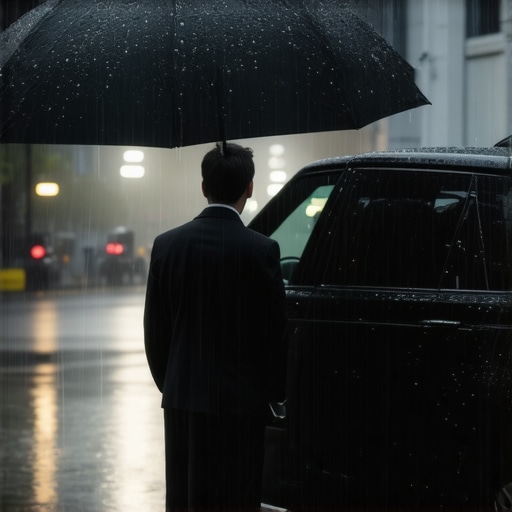
You cannot assume the person behind the wheel is a pro just because they have a smartphone and a clean car. Before I even put my luggage in the trunk, I perform a quick mental audit of the vehicle and the individual. This is the pre-trip verification that prevents scams and ensures I am actually getting the high-tier service I paid for. I always check for commercial registration and a valid driver’s license or chauffeur badge. Learning how to verify your drivers identity without being rude is a skill every frequent traveler needs to master. Look for the commercial plates and the driver’s corporate ID. If the driver seems flustered by the weather or lacks a basic plan for known flood zones, that is a red flag. Real professionals understand the logic behind choosing a professional chauffeur over on-demand apps is rooted in that localized expertise that no automated GPS can fully replicate during a chaotic storm.
Most travelers believe that more technology leads to better results. In my years managing high-stakes logistics, I have found the opposite: excessive reliance on algorithms often leads to the very delays you are trying to avoid. Everyone tells you to trust the app’s “optimal route,” but I have seen those “shortcuts” turn into dead-ends because an algorithm cannot see the construction crew setting up or a local event letting out. This is the difference between gps routing and professional road knowledge. While an app reacts to traffic that has already formed, a pro anticipates it. Research from the University of London suggests that professional drivers who rely on complex spatial memory rather than turn-by-turn navigation have a more nuanced understanding of urban flow, allowing for better adaptation during weather crises.
Is your driver’s exhaustion the hidden variable in your delay?
We often focus on the vehicle, but the person behind the wheel is the real engine of punctuality. A common mistake is assuming a driver is ready for a long haul just because they accepted a digital request. I always look for the stealth way to confirm your driver is not fatigued. A tired driver has slower reaction times and poorer decision-making, which is why ensuring safety first is not just a slogan—it is a logistical necessity. According to the National Sleep Foundation, driving after being awake for 18 hours is cognitively equivalent to having a blood alcohol content of 0.05%. You would not get in a car with an impaired driver, so do not get in with an exhausted one. Professional chauffeur services mitigate this by strictly limiting shift hours, unlike the “gig” economy where drivers might be pulling double shifts across multiple platforms.

The biggest “oops” factor I see is the “Estimated Time” trap. People treat an ETA as a contract, but it is actually a guess based on the best-case scenario. This is why your estimated arrival time is not a guarantee of service. Real pros know why the best drivers prefer fixed schedules over on-demand pings; a fixed schedule allows for vehicle prep and mental route-mapping that on-demand systems simply cannot match. When you book an hourly service, you are not just buying a ride; you are buying the driver’s undivided attention. I have seen businesses lose thousands because they thought they were saving money with ride-sharing, falling for the hourly rate myth that costs small businesses thousands. They forget that one missed flight or ruined executive meeting is worth more than ten hourly bookings. Have you ever fallen into the trap of trusting a high rating only to be left at the curb because the driver decided the rain was too heavy? Let me know in the comments.
Build Your Own Digital Safety Net
I don’t just hope for a car to show up; I build a technical stack to ensure it. My first move is always to learn how to sync your calendar directly with your chauffeur. This isn’t just about convenience; it’s about giving the dispatch team a lead-time window that adjusts automatically if my meeting runs over. I personally rely on hyper-local data from the NOAA’s High-Resolution Rapid Refresh (HRRR) model—a niche atmospheric model that updates every hour—to see if a rain cell is actually going to hit my specific zip code. If the HRRR shows a 70% reflectivity spike at my pickup time, I am already adjusting the window before the driver even leaves the garage. This level of granular detail is the only way to combat the unpredictability of urban storms.
Stop Blindly Trusting the Blue Dot
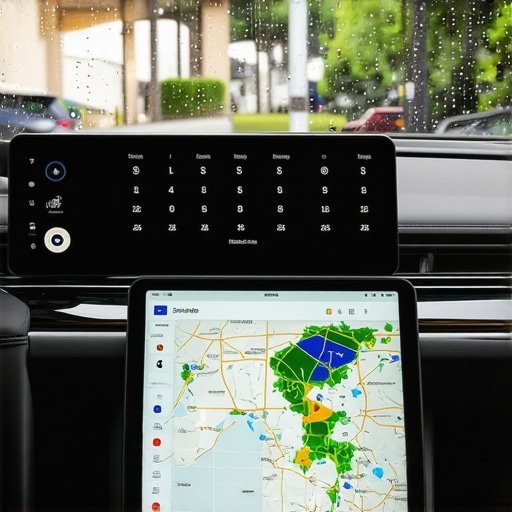
We’ve all stared at a GPS icon that seems to be teleporting across the screen in a desperate attempt to catch up with reality. To prevent this, I always run the accuracy test for modern live tracking links. If the refresh rate is slower than five seconds, I know the driver is using a low-priority data connection, which is a massive red flag for high-stakes arrivals. You need to understand that why safety and timeliness matter in hourly reservation services is because it allows for high-fidelity communication and redundant tracking. I suggest you also how to audit your drivers route history for accuracy and safety after every few trips. Look for patterns: do they take the service road when the highway stalls, or do they just sit in the jam? That data tells you if you’ve found a driver worth keeping on your permanent rotation.
How do I keep my travel logistics running smoothly year-round?
Consistency comes from a feedback loop rather than a set-it-and-forget-it attitude. Every quarter, I review my travel logs to see where the bottlenecks occurred. Usually, the failure isn’t the driver; it’s my own lack of a buffer. I have started implementing stay secure and punctual the essential hourly reservation tips for timely service into my permanent routine, regardless of if the sun is shining or not. Looking forward, I predict we will see the rise of predictive reservation systems that use machine learning to look at your historical delays and automatically book your ride earlier if the weather forecast shifts. We aren’t quite there yet, so for now, the human touch remains the gold standard. My challenge to you: Next time you have a flight during a storm, book an hourly driver for a three-hour block instead of a single point-to-point trip and watch how the stress of the missing car completely evaporates.
Hard Truths I Discovered While Standing in the Rain
After years of managing complex travel logs, the biggest shock was realizing that efficiency is often a trap. Most people aim for the cheapest route, but they ignore the massive hidden cost of a missed connection or a ruined first impression. I’ve learned that mastering the art of reservation and safety requires ignoring the crowd and building your own personal infrastructure. Another realization: drivers are humans, not algorithms. When you treat a driver as a partner through an hourly arrangement, they become an extension of your own team, watching for hazards you’d never see from the backseat.
I also found that why the best drivers prefer fixed schedules over on-demand pings is because it allows them to be proactive rather than reactive. In a storm, reactivity is dangerous. Proactivity—checking tire pressure, verifying door codes, and mapping flood zones—is what actually gets you there. Don’t fall for the hourly rate myth that costs small businesses thousands; the savings of a ride-share app evaporate the moment you have to rebook a flight because your driver canceled in the rain.
Tools That Keep My Schedule Dry
I don’t leave my punctuality to chance. I rely on a few specific resources to ensure ensuring safety first is actually possible. First, the NOAA Radar is non-negotiable; it provides the raw data that consumer weather apps often oversimplify. Second, I suggest Waze for its crowdsourced alerts on localized street flooding, which even high-end GPS units can miss. Finally, I maintain a direct communication channel with my chauffeur to ensure why safety and timeliness matter in hourly reservation services is understood long before the wheels start turning.
Take Back Control of Your Clock
The sky is always going to be unpredictable, but your arrival shouldn’t be. By shifting your mindset from catching a ride to securing a professional service, you eliminate the stress that weather causes. A high-quality reservation, hourly booking, or a focus on on time, safety standards isn’t just a luxury—it’s a shield against the chaos of the city. Start small: next time the forecast looks grey, set your schedule thirty minutes earlier than you think you need to. You will be amazed at how much better you perform when you aren’t racing the clock through a downpour. Have you ever been left stranded by a ride-hailing app during a major storm? Let me know your story below!