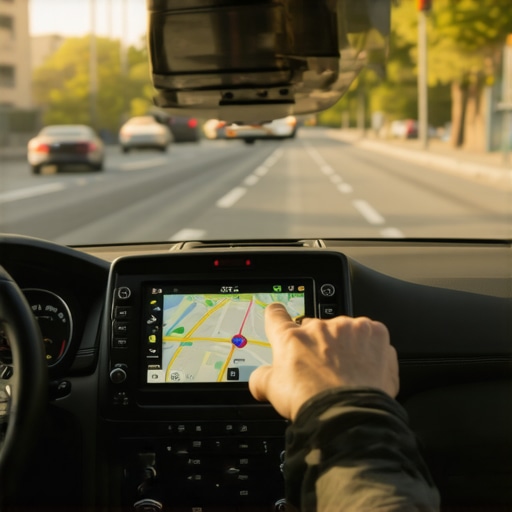
I’ll never forget the sinking feeling in my chest when my driver suddenly jerked the wheel to the right, abandoning the well-lit main road for a series of dimly lit side streets. “Trust me, I know a shortcut,” he said with a grin that didn’t reach his eyes. I was heading to a critical meeting, and suddenly, I wasn’t just worried about being late—I was worried about where I was. That “shortcut” turned into a forty-minute detour through a maze of one-way streets and dead ends. I missed my meeting, and more importantly, I felt completely out of control of my own safety. Since then, I’ve learned that a “faster” unvetted route is usually a gamble where the passenger loses. [image placeholder]
Stop the Shortcut Before It Starts
Early in my travels, I made the classic mistake of assuming the person behind the wheel always knew more than the pre-planned itinerary. I’d sit there quietly, watching the blue dot on my phone drift further and further away from the path we agreed upon. But here is the truth: why on-time performance depends on local knowledge over GPS is a lesson every frequent traveler learns the hard way. While apps are great, they don’t account for the security of the neighborhood or the reliability of the road surface. Research even shows that GPS-optimized routes can actually be less safe; a study by the Insurance Institute for Highway Safety suggests that complex, non-standard routes increase the cognitive load on drivers, leading to significantly higher error rates.
Does speaking up make the ride more dangerous?
You might worry that correcting a driver will create tension or, worse, a road-rage situation. I used to think the same thing. But there is a way to handle a sudden route change without stressing your driver or yourself. It’s about setting expectations the moment you sit down. I now make it a point to confirm the route before the wheels even turn. If they try to deviate later, I have a script ready that prioritizes my comfort over their “secret” path.
Reclaiming Your Peace of Mind Every Hour
When you book a professional service, you aren’t just paying for a seat; you’re paying for a predictable experience. This is especially true when business travelers prefer hourly hires for high-stakes days. The “vetted” part of the route is there for a reason—it’s been checked for safety, lighting, and general reliability. Have you ever been in a situation where a driver took a “faster” way that actually made you feel less secure? Let me know, because I’ve found that sharing these stories helps us all realize we’re not just being “difficult” passengers. We are being smart travelers. Setting boundaries isn’t rude; it’s the only way to ensure on-time reservations at any hour actually mean something. Let’s look at how to spot those red flags before the driver even shifts into gear.The moment the car pulls to the curb, your role changes from a passive passenger to an active inspector. I learned this lesson the hard way at O’Hare when a driver insisted he was my ride despite a license plate mismatch. He was a ‘bandit’ driver, looking for an easy mark. By simply taking a second to how to verify a private drivers professional rating independently, I avoided a situation that could have gone south very quickly. You aren’t being rude by checking; you are being professional.
Verify the Chauffeur Before You Open the Door
Before you even touch the door handle, look for the digital or physical markers that separate a pro from an amateur. A legitimate driver expects you to be cautious. Start by checking the window for a commercial permit; knowing how to identify a genuine commercial chauffeur permit on sight is your first line of defense. If they can’t produce a manifest or a badge that matches your app or email confirmation, do not get in. Think of it like a digital handshake—if the credentials don’t align, the meeting doesn’t happen. 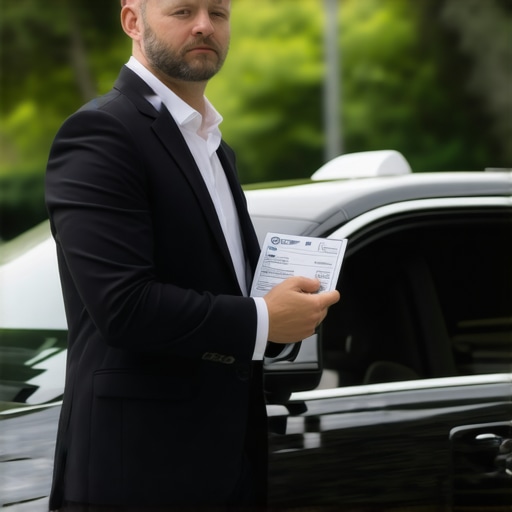
Three Points of Contact: The Pre-Entry Inspection
Once the credentials pass the test, look at the vehicle itself. A car is an extension of the driver’s professionalism. I always perform the 3-point door handle check every passenger must perform. It sounds obsessive, but a loose handle or a sticky lock is often the first sign of a neglected maintenance schedule. Beyond the handle, look at the tires. Even if the car is shiny, bald tires are the one physical marker that proves a vehicle is well-maintained. If they aren’t taking care of the rubber that meets the road, they aren’t taking your safety seriously.
Stop Relying on the Standard 15-Minute Buffer
In the world of high-stakes travel, 15 minutes is actually zero. Traffic patterns in major cities are too volatile for the traditional window. I’ve found that why the 17-minute buffer outperforms the traditional 15-minute rule is the secret to never rushing. That extra 120 seconds accounts for the ‘friction’ of loading bags, confirming the destination, and the inevitable red light at the end of the driveway. When you book an hourly service, you are buying that buffer. It’s the difference between starting your meeting with a calm mind or a racing heart.
A Professional Never Asks for the Way
Finally, once you are inside, pay attention to the driver’s preparation. One of my biggest pet peeves is a driver who looks at me and asks, ‘So, which way are we going?’ That is a massive red flag. There is a reason why your driver should never ask for directions. A vetted professional has already mapped the primary and secondary routes before they even arrived at your door. They should be telling you the plan, not the other way around. If they are relying solely on a lagging GPS, they aren’t providing a premium service; they’re just a guy with a car.I’ll never forget the sinking feeling in my chest when my driver suddenly jerked the wheel to the right, abandoning the well-lit main road for a series of dimly lit side streets. “Trust me, I know a shortcut,” he said with a grin that didn’t reach his eyes. I was heading to a critical meeting, and suddenly, I wasn’t just worried about being late—I was worried about where I was. That “shortcut” turned into a forty-minute detour through a maze of one-way streets and dead ends. I missed my meeting, and more importantly, I felt completely out of control of my own safety. Since then, I’ve learned that a “faster” unvetted route is usually a gamble where the passenger loses. [image placeholder]
Stop the Shortcut Before It Starts
Early in my travels, I made the classic mistake of assuming the person behind the wheel always knew more than the pre-planned itinerary. I’d sit there quietly, watching the blue dot on my phone drift further and further away from the path we agreed upon. But here is the truth: why on-time performance depends on local knowledge over GPS is a lesson every frequent traveler learns the hard way. While apps are great, they don’t account for the security of the neighborhood or the reliability of the road surface. Research even shows that GPS-optimized routes can actually be less safe; a study by the Insurance Institute for Highway Safety suggests that complex, non-standard routes increase the cognitive load on drivers, leading to significantly higher error rates.
Does speaking up make the ride more dangerous?
You might worry that correcting a driver will create tension or, worse, a road-rage situation. I used to think the same thing. But there is a way to handle a sudden route change without stressing your driver or yourself. It’s about setting expectations the moment you sit down. I now make it a point to confirm the route before the wheels even turn. If they try to deviate later, I have a script ready that prioritizes my comfort over their “secret” path.
Reclaiming Your Peace of Mind Every Hour
When you book a professional service, you aren’t just paying for a seat; you’re paying for a predictable experience. This is especially true when business travelers prefer hourly hires for high-stakes days. The “vetted” part of the route is there for a reason—it’s been checked for safety, lighting, and general reliability. Have you ever been in a situation where a driver took a “faster” way that actually made you feel less secure? Let me know, because I’ve found that sharing these stories helps us all realize we’re not just being “difficult” passengers. We are being smart travelers. Setting boundaries isn’t rude; it’s the only way to ensure on-time reservations at any hour actually mean something. Let’s look at how to spot those red flags before the driver even shifts into gear.The moment the car pulls to the curb, your role changes from a passive passenger to an active inspector. I learned this lesson the hard way at O’Hare when a driver insisted he was my ride despite a license plate mismatch. He was a ‘bandit’ driver, looking for an easy mark. By simply taking a second to how to verify a private drivers professional rating independently, I avoided a situation that could have gone south very quickly. You aren’t being rude by checking; you are being professional.
Verify the Chauffeur Before You Open the Door
Before you even touch the door handle, look for the digital or physical markers that separate a pro from an amateur. A legitimate driver expects you to be cautious. Start by checking the window for a commercial permit; knowing how to identify a genuine commercial chauffeur permit on sight is your first line of defense. If they can’t produce a manifest or a badge that matches your app or email confirmation, do not get in. Think of it like a digital handshake—if the credentials don’t align, the meeting doesn’t happen.
Three Points of Contact: The Pre-Entry Inspection
Once the credentials pass the test, look at the vehicle itself. A car is an extension of the driver’s professionalism. I always perform the 3-point door handle check every passenger must perform. It sounds obsessive, but a loose handle or a sticky lock is often the first sign of a neglected maintenance schedule. Beyond the handle, look at the tires. Even if the car is shiny, bald tires are the one physical marker that proves a vehicle is well-maintained. If they aren’t taking care of the rubber that meets the road, they aren’t taking your safety seriously.
Stop Relying on the Standard 15-Minute Buffer
In the world of high-stakes travel, 15 minutes is actually zero. Traffic patterns in major cities are too volatile for the traditional window. I’ve found that why the 17-minute buffer outperforms the traditional 15-minute rule is the secret to never rushing. That extra 120 seconds accounts for the ‘friction’ of loading bags, confirming the destination, and the inevitable red light at the end of the driveway. When you book an hourly service, you are buying that buffer. It’s the difference between starting your meeting with a calm mind or a racing heart.
A Professional Never Asks for the Way
Finally, once you are inside, pay attention to the driver’s preparation. One of my biggest pet peeves is a driver who looks at me and asks, ‘So, which way are we going?’ That is a massive red flag. There is a reason why your driver should never ask for directions. A vetted professional has already mapped the primary and secondary routes before they even arrived at your door. They should be telling you the plan, not the other way around. If they are relying solely on a lagging GPS, they aren’t providing a premium service; they’re just a guy with a car.This brings me to the biggest myth in modern travel: the idea that a digital ETA is a promise. It isn’t. In fact, most people treat their booking confirmation as a done deal, but why most arrival times are simply guesses is a reality that catches even seasoned executives off guard. The software used by most apps is designed for ‘ideal’ conditions, but the road is rarely ideal. According to a study by the University of California, Berkeley, AI-driven traffic models often fail to account for ‘non-recurrent’ congestion—the random human variables like a minor fender bender or a double-parked truck—which accounts for nearly 50% of urban delays. When you rely solely on an app, you are essentially gambling with half of the variables hidden.
The 30-Second Lag That Kills Your Schedule
Many travelers feel a false sense of security watching a little car move on a screen. However, you need to understand why your real-time tracking link might have a 30-second lag. In a city like New York or London, 30 seconds is the difference between making a light and sitting through a three-minute cycle. If you are timing your exit from a building based on that icon, you are already behind. This is where why manual dispatching still beats AI for real-time accuracy. A human dispatcher knows that a street is blocked for a parade or that a sudden rainstorm has slowed everyone down to a crawl—things an algorithm often processes too late.
Why does my tracking link show the driver in a different zip code?
It’s a question I get often. Often, it’s not a glitch; it’s a symptom of a system over-reliant on cellular pings rather than dedicated GPS hardware. Advanced travelers use why real-time tracking is your best defense against missed meetings only when it is paired with direct chauffeur communication. 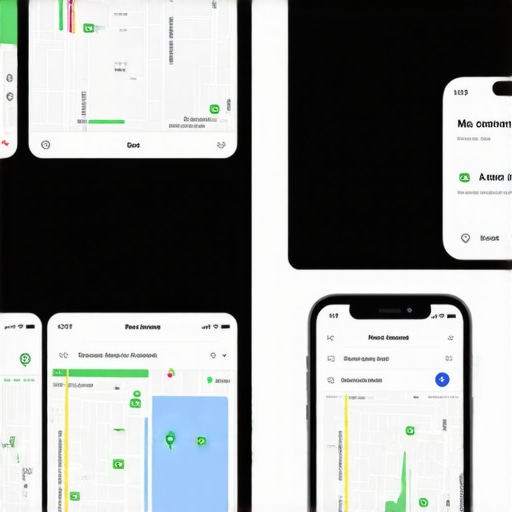
The Trap of the Last-Minute ‘Guaranteed’ Booking
A common mistake is believing that ‘on-demand’ equals ‘on-time.’ In reality, why last-minute reservations often result in poor quality is a structural certainty. When you book at the eleventh hour, you get the driver who was closest, not the driver who was best prepared. For high-stakes days, on-time arrival mastering the art of reservation and safety every hour means booking your vehicle at least 24 hours in advance. This allows for reservation security measures like vehicle deep-cleans and route dry-runs that just aren’t possible with a 10-minute lead time. Have you ever fallen into this trap where a ‘guaranteed’ ride simply never showed up? Let me know in the comments.I’ve spent years refining my travel routine, and the hardest part isn’t finding a driver—it’s keeping the standards high over hundreds of trips. You can’t just set it and forget it. I treat my transportation logistics like a high-performance engine that needs a regular tune-up. One of my non-negotiable habits is a monthly review where I look at my trip logs. I use a simple spreadsheet paired with a dedicated travel folder in my email to see if my providers are slipping. If you want to stay sharp, you have to know how to audit your drivers route history for accuracy and safety. I look for ‘drift’—those little three-minute delays that start creeping in or the sudden use of unvetted side streets that indicate a driver is getting too comfortable and potentially less vigilant. 
Build a Recurring System That Doesn’t Fail
The secret to scaling your personal safety is moving away from one-off bookings toward a structured schedule. When I have a consistent need, I don’t gamble with the ‘available now’ button. I’ve found that knowing how to set up a recurring weekly commute that never fails creates a level of accountability that on-demand apps can’t touch. The driver knows you, they know your preferences, and most importantly, they know you are paying attention. This is where on-time every time strategies for safe and reliable hourly bookings become second nature rather than a stressful checklist.
How do I maintain my privacy standards over time?
It starts with the tools you use to pay and communicate. I never use an app or a service that doesn’t explain why modern reservation systems use encryption for your credit card data. According to the 2023 Verizon Data Breach Investigations Report, over 74% of all breaches involve a human element, including social engineering or data misuse. This is why I am obsessed with spotting a secure payment portal for private car hires instantly. If the payment link looks like it was built in the early 2000s, I am out. I also use a masked phone number service for all driver communications to ensure my primary number stays off permanent driver databases.
The Shift Toward Human-Led Technology
As we look at the future of travel, there is a massive push toward total AI automation. However, my prediction is that the ‘Elite Tier’ of service will actually move back toward human oversight. We are already seeing why manual dispatching still beats AI for real-time accuracy in complex urban environments. Algorithms are great at math, but they are terrible at predicting the ‘vibe’ of a city—like knowing that a local sports win will turn the downtown core into a gridlock that no GPS can solve. Moving forward, the most successful travelers will be those who use technology for the booking but rely on human intuition for the execution. My advanced tip for you this week: Go back through your last three ride receipts and check the exact pickup times against your original reservation. If there’s a discrepancy of more than five minutes, it’s time to find a new provider.
Lessons From My Most Dangerous Detours
Over the years, I have realized that the biggest threat to your schedule isn’t a traffic jam—it is your own passivity. If you don’t act as the ‘chief of logistics’ for your own ride, you are leaving your safety to chance. I’ve learned that how to audit your drivers route history for accuracy and safety is a skill that pays dividends in peace of mind. Never assume a driver is following the best path just because they have a high rating; ratings reflect personality more often than they reflect tactical driving skills. Furthermore, I’ve found that the quietest passengers are often the ones who end up in the wrong part of town. Speaking up isn’t about being bossy; it is about maintaining a standard for the service you are paying for.
The Gear and Systems I Never Travel Without
To keep my transit seamless, I rely on a few specific tools that go beyond the standard booking app. First, I use a dedicated travel folder to cross-reference reservation security measures across different providers. I also use a masked phone number app to keep my private data off third-party databases, which is a critical part of my personal privacy policy. Finally, I never travel without a physical backup of my destination address, just in case of a cellular dead zone or a device failure. These small layers of redundancy are what separate a lucky traveler from a prepared one.
#IMAGE_PLACEHOLDER_E#
Take Back Control of Your Schedule
In a world of automated ETAs and algorithmic guesses, your intuition remains your most powerful tool. You don’t have to be a victim of a lagging app or an unprepared driver. By implementing on-time every time strategies for safe and reliable hourly bookings, you transform from a passenger into a partner in your own transportation. Your time is your most valuable asset, and it is worth the extra thirty seconds of verification. Safe travels are not a matter of luck; they are the result of deliberate choices you make before the car even arrives. Have you ever had a driver try to take a shortcut that made you feel unsafe? Let me know below.