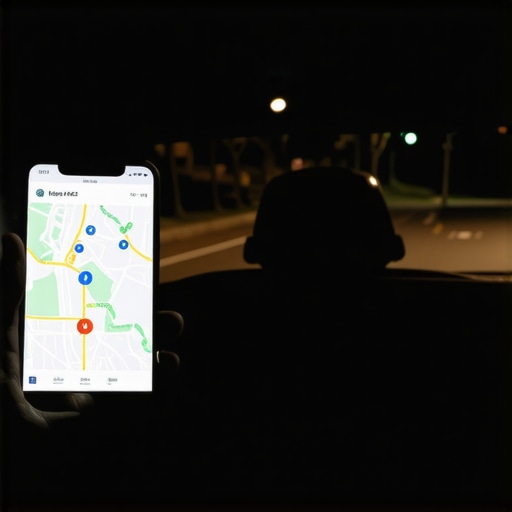
I was sitting in the back of a sleek black sedan last summer, feeling like a bit of a high-roller on my way to a gala. Naturally, I did what most of us do: I snapped a photo of the city lights and posted it to my Instagram story with a live location sticker. I thought I was just being trendy. I did not realize I was actually handing out a digital breadcrumb trail to anyone with an internet connection. By the time I reached my destination, I had three messages from people I barely knew asking why I was heading toward the industrial district. It hit me like a ton of bricks. I was not just sharing a vibe; I was compromising my personal safety in real-time.
Stop Broadcasting Your Vulnerability to the World
We live in an era where oversharing is the default setting, but when it comes to your transit, it is a habit that can have scary consequences. When you blast your private ride details on social media, you are not just showing off a nice car; you are telling the world exactly when you are away from home and exactly where you are stuck in traffic. I learned the hard way that securing your data when sharing tracking links is far more important than getting a few likes. In my early days of booking professional transport, I once sent my full reservation screen—including the driver’s name and license plate—to a public group chat. It was a massive oversight that could have led to identity theft or worse. Today, I want to show you how to maintain that VIP lifestyle without the target on your back side effect. We are going to dive into the specific risks of public location sharing and how to use professional tools to keep your circle tight and your data protected. According to a report by the Identity Theft Resource Center (ITRC), over 80% of identity-related crimes now involve some form of social engineering or oversharing of personal data online.
Is a simple map link really that dangerous?
You might think I am being a bit paranoid. After all, your friends just want to see that you are having a good time, right? But the reality is that digital footprints are permanent. A simple screenshot of your route can reveal your home address, your workplace, and your daily habits. Instead of public posts, I have transitioned to using on-time reservations that allow for private, encrypted sharing with only my emergency contacts. This way, I get the peace of mind of knowing someone knows where I am without inviting the entire internet along for the ride. Have you ever posted an on my way update only to feel a sudden pang of regret about who might be watching? It is a common feeling, and honestly, it is your gut telling you to tighten up your digital security.
Why Privacy and Punctuality Go Hand in Hand
You see, when you are constantly worried about who is tracking your movement, you lose focus on the trip itself. True luxury is not just about the car; it is about the essential hourly reservation tips that keep your schedule tight and your location private. By moving away from public social apps and toward professional reservation systems, you ensure that your movement remains your business. I remember one specific Friday night when I was using a shared ride service, thinking I would save a few bucks, and I live-tweeted the journey. Not only was I dealing with the security risks of shared rides for executives, but I was also inviting every stranger on the timeline to know my exact drop-off point. It was a wake-up call that led me to prioritize mastering the art of reservation and safety over social media clout.
Scrutinize Your Booking Like a Professional Investigator
To keep your movements off the public radar, you have to treat your reservation process with the same level of detail as a security clearance. It starts the moment you decide to book. Instead of firing up an on-demand app that broadcasts your location to every available driver in a three-mile radius, you should be looking at reservation security measures that protect your identity from the jump. I remember a particularly messy evening in Chicago where I tried to book a last-minute ride near a stadium. I was so distracted by the crowd that I didn’t even look at the driver’s profile. I ended up in a vehicle that smelled like stale tobacco with a driver who had no idea where the VIP entrance was. That was the last time I ignored the fact that last-minute reservations often result in poor quality and compromised safety. Now, I verify every detail before I even put my shoes on.
Look for These Marks of a Real Confirmation Email
Your first line of defense is the digital paperwork. A legitimate professional service won’t just send a vague text; they provide a comprehensive overview. You need to know exactly what the signs of a professional booking confirmation email look like—this includes the vehicle’s specific make, the driver’s full name, and an encrypted link for tracking. If the email looks like it was cobbled together in a basement or lacks a formal header, cancel it immediately. Learning how to spot a fake ride confirmation is a skill that has saved me from at least two potentially dangerous situations where ‘ghost’ drivers were hovering near high-end hotels.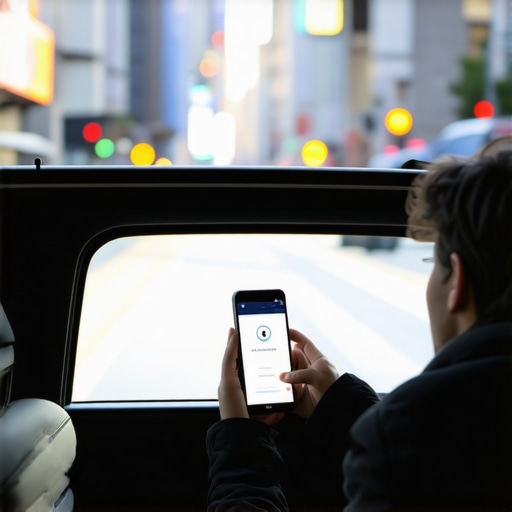
Perform the Five-Second Driver Audit
When the car pulls up, your work isn’t done. Think of the vehicle as a secure perimeter. Before you touch the door handle, you must execute the specific driver verification move that stops identity theft in its tracks: make the driver say your name first, then cross-reference their face with the photo in your secure app. It sounds intense, but it is the only way to ensure you aren’t walking into a trap. I’ve even gone as far as asking to see a digital credential if something feels off. Understanding how to identify a genuine commercial chauffeur permit is your best tool for peace of mind during late-night pickups.
Ditch the Generic 15-Minute Rule
Punctuality is a security feature, not just a courtesy. If you are standing on a curb waiting for a car, you are a target. This is why I have completely abandoned the standard advice of leaving fifteen minutes early. Through trial and error, I found that the 17-minute buffer outperforms the traditional rule because it accounts for the precise lag in GPS updates and driver hand-offs. By timing your exit perfectly, you minimize your exposure time in public spaces. Furthermore, always make sure tracking links are shared with a trusted friend via a private encrypted message rather than a social media story. This ensures that only the people who care about your safety—not the entire world—know your exact progress.One of the biggest mistakes I see travelers make is treating their ride-sharing app like an infallible crystal ball. We have become so conditioned to watching a digital car move across a screen that we forget the map is not the territory. In my experience, relying solely on automated systems is a recipe for a security lapse. You might think you are safe because you see a tracking link, but [why your real-time tracking link might have a 30-second lag](https://privatedriverpro.com/why-your-real-time-tracking-link-might-have-a-30-second-lag) is a detail that most casual users ignore. That half-minute delay is plenty of time for a vehicle to take a wrong turn into an unlit alley without you even noticing on your screen. Have you ever fallen into this trap? Let me know in the comments.
Stop Trusting That Little Green Dot
Everyone tells you that GPS is the ultimate safety tool, but I have found that [why on-time performance depends on local knowledge over GPS](https://privatedriverpro.com/why-on-time-performance-depends-on-local-knowledge-over-gps) is the real secret to VIP security. An algorithm doesn’t know that a specific neighborhood has a high crime rate after midnight or that a particular street is blocked by unmapped construction. I once sat in a vehicle for forty minutes because the driver followed a ‘shortcut’ recommended by an app that led us directly into a massive street festival. A professional chauffeur would have known to avoid that sector entirely. This is [why your estimated arrival time is not a guarantee of service](https://privatedriverpro.com/why-your-estimated-arrival-time-is-not-a-guarantee-of-service); it is merely a mathematical guess that ignores the chaos of the real world.
Does Your App Actually Know the Local Construction Schedule?
Advanced travelers understand that software has its limits. A study by the Texas A&M Transportation Institute found that GPS-based travel time estimates can vary by up to 15% due to unpredictable local factors like school zones or temporary utility work that aren’t updated in real-time. This is where [why manual dispatching still beats AI for real-time accuracy](https://privatedriverpro.com/why-manual-dispatching-still-beats-ai-for-real-time-accuracy) becomes a lifesaver. A human dispatcher can see the big picture and re-route your driver before you even realize there is a problem.
The Trap of the Five-Minute Grace Period
Many people think they can save money by booking point-to-point and just paying a small wait fee if they are late. This is a dangerous ‘oops’ factor. If you are handling high-stakes travel, [the practical tactic for getting a driver to wait during errands](https://privatedriverpro.com/the-practical-tactic-for-getting-a-driver-to-wait-during-errands) is not to hope for the best, but to book an hourly rate. When you book per ride, the driver is incentivized to drop you and move to the next fare. This pressure causes them to rush, which is when safety protocols get skipped. I learned that [why hourly rates are the only way to handle multiple client meetings](https://privatedriverpro.com/why-hourly-rates-are-the-only-way-to-handle-multiple-client-meetings) is about more than just convenience; it’s about having a dedicated professional whose only priority is your security and schedule.  When you [maximize your safety and satisfaction with our precise reservation timing](https://privatedriverpro.com/maximize-your-safety-and-satisfaction-with-our-precise-reservation-timing), you aren’t just buying a ride; you are buying a controlled environment where the variables are managed by experts, not just code.Maintaining that level of precision isn’t a one-time setup; it’s an ongoing discipline. I’ve found that the best way to handle long-term transit is to move beyond one-off bookings and look at the secret to stress-free corporate transportation planning. When you have a dedicated system in place, you stop making the tiny errors that lead to security gaps. For instance, I now use a synced, encrypted calendar that only my primary driver can access. This is exactly how to set up a recurring weekly commute that never fails, ensuring that I never have to stand on a sidewalk looking at my phone like a sitting duck. I’ve even added a physical routine to this digital setup: a quick 10-second check of the vehicle’s exterior for any tracking devices or unauthorized modifications. It sounds like a spy movie, but for high-profile individuals, it is just common sense.
Build a Virtual Wall Around Your Personal Data
One of the specific tools I recommend to all my colleagues is the use of an alias for bookings. You might think it’s overkill, but the security benefit of booking under a corporate alias is massive. It prevents a random driver from knowing your real name and googling your net worth before they even pick you up. According to NIST Special Publication 800-63B, the use of pseudonymization and controlled access to identity data is a cornerstone of protecting high-value targets from social engineering. By keeping your real identity off the chauffeur’s tablet, you add a layer of insulation that most people ignore. I also suggest you audit your monthly travel spend without stress to look for anomalies in your routes or billing that might indicate a compromised account or a service provider who isn’t following the agreed-upon safety protocols. 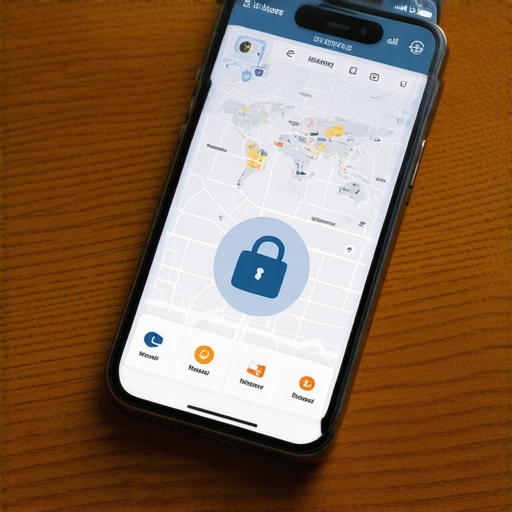
How do I maintain these high safety standards over years of travel?
The secret is never becoming complacent. Even after a dozen successful trips with the same company, I still perform a periodic deep dive into their staff. I make sure I understand the proper way to verify a chauffeurs work history and ensure their background checks are up to date. Safety isn’t a destination; it’s a maintenance schedule. I also rely on how hourly rates stop the stress of traffic jams because it ensures the driver is never rushing to meet a quota. I predict that as AI continues to flood the market with cheap, unvetted ride-hailing options, the real luxury will be human-centric systems where a professional dispatcher actually knows the driver’s family and history. This is the logical reason to hire a chauffeur for full-day meetings rather than trusting an algorithm to find you a stranger. Try this today: The next time you book, use a secondary email address and a professional alias. See how much more anonymous you feel when the driver greets you by a professional title rather than your private name.
The Hardest Lesson I Learned About My Real-Time Vulnerability
Reflecting on my years of travel, the biggest shift wasn’t just using better cars; it was adopting a defensive mindset. First, I realized that my data is as valuable as my physical safety. If you wouldn’t leave your front door wide open, don’t leave your digital breadcrumbs for the world to follow. Second, the cost of a mistake is much higher than the price of an hourly rate. I now know the logic behind choosing a professional chauffeur over on-demand apps because it eliminates the anonymity that criminals thrive on. Lastly, I’ve learned that technology is a tool, not a savior. Always verify the tech against reality by performing the tracking accuracy test for private hire car services yourself to ensure your link isn’t lagging behind your actual location.
The Toolkit That Keeps My Movements Private
I don’t leave my security to chance anymore. My “Invisible Travel” kit includes three main pillars. I use a dedicated hardware-encrypted messaging app for sharing arrival details with family. I also carry a printed copy of the protocol for handling a car breakdown mid-reservation so I’m never scrambling for a plan in a dead zone. Most importantly, I never board without checking the safety token every passenger should check before boarding to confirm the vehicle’s integrity. #IMAGE_PLACEHOLDER_E# These steps might seem like extra work, but they are the difference between a stressful commute and a seamless, secure transition.
The Future of Your Secure Arrival
Taking control of your transportation habits is the ultimate luxury. By prioritizing on-time arrival mastering the art of reservation and safety every hour, you are reclaiming your time and your peace of mind. It is about more than just getting from point A to point B; it is about ensuring that you arrive with your dignity, your data, and your safety intact. In a world that demands you share everything, choose to keep your journey to yourself. When you maximize your safety and satisfaction with our precise reservation timing, you set a standard for excellence that protects you long after the ride is over. Have you ever felt exposed sharing your location in a standard ride-sharing app? Let me know your thoughts in the comments below.