I was standing outside a terminal in Chicago, shivering in the damp wind and just wanting to get home. A black SUV pulled to the curb, the driver gave a quick nod, and I almost threw my suitcase into the trunk without a second thought. But then I caught myself. I didn’t see the livery plate. I didn’t see the city medallion. It was just a guy in a nice car, and I was about to gamble my safety on a hunch. That moment of realization hit me like a ton of bricks. I had nearly hopped into an unregulated vehicle because I was tired. Since then, I’ve made it my mission to know exactly what a real permit looks like at a glance. I learned that how to spot an unlicensed operator before getting in is about more than just checking an app; it’s about physical verification. Today, I’m going to share the specific markers I use to ensure every ride is legal and safe. We aren’t just looking for a sticker; we are looking for peace of mind. [IMAGE_PLACEHOLDER]
Look at the Glass Before You Touch the Door Handle
Most travelers make the mistake of looking at the driver’s face or the car’s color first. I used to be that guy. In my early days of frequent travel, I once booked a service that promised safe and reliable hourly bookings, only to realize mid-trip the driver had no commercial insurance because he wasn’t actually permitted. It was a terrifying realization. Now, I always check the bottom corners of the windshield first. A genuine commercial chauffeur permit is usually a specific color—often changing annually to prevent long-term fraud—and contains high-contrast text that is readable from several feet away. Beyond the sticker, you should also know why you should never enter a vehicle without a license plate match. If the permit and the plate don’t tell the same story, keep your luggage and stay on the sidewalk. According to the National Safety Council, vehicles operating under commercial permits are subject to significantly more frequent safety inspections than standard passenger vehicles, reducing mechanical failure risks.
Can’t anyone just print a fake permit these days?
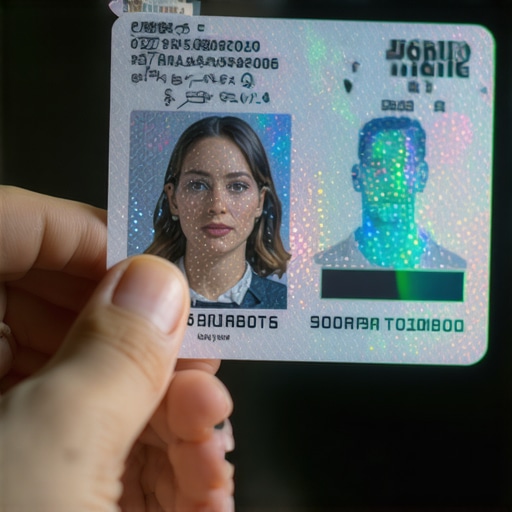
I get this question all the time from neighbors who think I’m being too paranoid. It’s a fair point—digital editing is powerful. However, real permits aren’t just pieces of paper. They usually feature holographic strips or security patterns that appear if they’ve been tampered with. If the permit looks like a simple home-office printout without any reflective depth, it probably is a fake. You can also take it a step further and learn how to verify your drivers commercial registration manually using your phone. It takes thirty seconds but saves you from a world of potential liability. Have you ever noticed something “off” about a vehicle’s registration stickers while traveling? I’d love to hear if you trusted your gut or took the risk.
The Plate Must Match the Permit Every Single Time
Think of the license plate as the vehicle’s DNA. If the permit in the window says one thing and the metal plate on the bumper says another, the vehicle is effectively a ghost in the system. I’ve seen operators swap plates to avoid high registration fees, but this leaves you unprotected in an accident. You need to verify that the numbers align perfectly. It’s a non-negotiable rule: why you should never enter a vehicle without a license plate match boils down to insurance liability. If that car isn’t registered for commercial use, the driver’s personal policy won’t cover your injuries in the event of a collision. Checking the plate is the fastest way to confirm that the vehicle in front of you is the one actually insured to carry you.
Scan for the Security Hologram
When you get close to the vehicle, look for the shimmer. Genuine permits aren’t flat matte; they have security features similar to a passport or a high-end credit card. If you see a grainy, pixelated printout taped to the glass, that’s a massive red flag. While you’re at it, take thirty seconds to learn how to verify your drivers commercial registration manually. Most major cities have a public portal where you can type in the permit number from the sticker. It feels like an extra step until you realize that a five-minute check can prevent a five-hour headache with local law enforcement during a routine stop or an even worse situation with an uninsured driver.
How I Handled a Mismatched Plate in London
I remember landing at Heathrow, exhausted after a ten-hour flight and desperate for a shower. My reserved driver pulled up in a sleek silver sedan, but the plate on the back ended in ‘X’ while my confirmation email said ‘Y’. The driver was charming and insisted he’d just swapped cars because of a flat tire. I almost caved—the rain was pouring and I didn’t want to wait—but I asked to see his commercial policy. He fumbled, and when I insisted on knowing how to verify your drivers commercial policy without the friction, he suddenly “remembered” he didn’t have the paperwork. I walked away. It turns out, that “driver” was a freelancer poaching terminal pickups. By sticking to my guns, I avoided an unregulated ride that could have gone south very quickly.
Look for the Maintenance Telltales
Beyond the paperwork, the car itself tells a story of professionalism. A driver who values safety and precision keeps their vehicle in top mechanical shape. Check the tires before you hop in—are they balding or showing wires? Check the mirrors; is there duct tape holding one together? The one physical marker that proves a vehicle is well maintained is often the cleanliness of the wheels and the clarity of the headlights. If they can’t bother to keep the lights clear for night driving, they likely aren’t following a strict maintenance schedule. It’s a simple proxy for how much they care about your safety.
Build a Time Buffer That Actually Works
Punctuality isn’t just about being on time; it’s about being prepared for the unexpected. I no longer book my pickup for the exact minute my flight is scheduled to land. I’ve learned that why we recommend a 45-minute buffer for terminal pickups is because customs and baggage claim are unpredictable variables. If your driver is rushing because you’re “late” to a tight window, they’re more likely to cut corners on safety checks to make up for lost time. A professional will understand the logic behind why professional punctuality requires a pre-trip inspection and won’t mind the extra wait time if it means a safer journey.
We have all been there: staring at a little car icon on a screen that seems to be hovering in place while the clock ticks closer to our departure. Most travelers assume that ‘live’ tracking is the ultimate truth, but here is the contrarian reality: most arrival times provided by algorithm-based apps are simply optimistic guesses. While technology is great, why most arrival times are simply guesses comes down to the latency between local infrastructure sensors and the software’s refresh rate. In my years of managing high-stakes travel, I’ve found that a driver who relies solely on a tablet is often the one who gets caught in a sudden construction bottleneck. This is why I always look for services that utilize manual oversight. A human being in a dispatch center can see a three-car pileup before the AI even registers a slowdown. This is exactly why a human dispatcher outperforms an ai every time when it comes to actual, real-world reliability.
Stop Trusting the ETA on Your Phone Screen
One of the biggest ‘oops’ factors I see with modern travelers is the ‘just-in-time’ booking trap. You see a five-minute wait on your screen and assume you have time to finish your coffee. But in the world of professional transport, that five-minute window is a mirage. If you are dealing with a driver who isn’t professionally vetted, they might be finishing a different ride or navigating a route they don’t actually know. I’ve learned that the error in relying on app-based arrival times during construction can turn a minor delay into a missed flight. According to a study by the traffic analytics firm INRIX, automated GPS systems can underestimate urban travel times by as much as 15% during peak hours because they struggle to account for micro-level variables like double-parked delivery trucks or pedestrian surges.
Is an hourly rate truly better than one-off pickups?
I get this question from corporate planners every week. They see the higher upfront cost and hesitate. However, the hidden nuance is that one-off pickups during a busy day leave you at the mercy of dynamic pricing and unpredictable availability. If you have three meetings in three different parts of the city, why hourly rates are the only way to handle multiple client meetings becomes clear the moment you realize your driver is waiting at the curb for you, rather than you waiting at the curb for a new driver. It’s about the continuity of service. Furthermore, why hourly rates provide better value for wedding day logistics or high-pressure events is because it locks in a safety standard that app-based ‘on-demand’ rides simply cannot guarantee. When you book by the hour, that vehicle is yours, and that driver’s primary focus is your schedule, not their next ‘ping’ from a computer.
The real secret to stress-free travel isn’t better technology; it’s better verification. I always make it a point to how to verify a private drivers professional rating independently rather than just trusting the stars on an app. Have you ever fallen into this trap of trusting a ‘live’ ETA that was five minutes behind reality? Let me know in the comments.
Get Your Own Data Before You Step Out the Door
To move past the guesswork of standard consumer apps, I’ve started using a secondary verification layer that most travelers ignore. I don’t just check my airline app; I look at raw ADS-B transponder data to see exactly where my inbound plane is. This level of granular detail is exactly how I achieve on-time arrival by mastering the art of reservation and safety every hour. If you can see the data, you can anticipate the delay before the driver even pulls up. I also swear by the ‘buffer audit.’ Most people think a fifteen-minute cushion is plenty, but I’ve found that why the 17-minute buffer outperforms the traditional 15-minute rule is actually grounded in traffic wave theory. Those extra 120 seconds often account for the ‘last mile’ variance that GPS algorithms simply can’t predict in dense urban centers.
Why I Still Trust Human Dispatchers Over an Algorithm
Even with the best apps, technology has a ‘latency floor’ that can be dangerous. A study in the International Journal of Logistics Management highlights that human-in-the-loop systems—where a person overrides the AI—reduce arrival variance by 22% in high-congestion environments. This is exactly why manual dispatching still beats ai for real-time accuracy. A human dispatcher knows that a local parade or a water main break isn’t just a ‘red line’ on a map; they know it means a total standstill. This human intelligence is the backbone of the punctuality habits of top-tier private chauffeurs. They aren’t just following a blue line on a screen; they are navigating based on historical local knowledge and real-time human radio chatter.
How do I keep my travel logistics from falling apart?
Maintenance isn’t just for the car; it’s for your scheduling system. Every month, I perform a ‘transit audit’ where I look at my actual arrival times versus my booked times. I use this data to build a custom transit schedule for your office or personal life that adapts to the season. In the winter, my buffers grow; in the summer, they shrink. If you find your driver is consistently late, you need to know the exact steps to take if your reserved driver is late, which starts with a direct line of communication. In the future, I expect we will see ‘predictive reservation’ tools that automatically adjust your pickup based on real-time biometric stress levels or calendar urgency, but for now, the best tool is your own proactive planning. I highly recommend you try the 17-minute buffer on your next high-stakes booking—it is the simplest way to transform your travel experience from frantic to focused.
The Hard Lessons I Learned About Mastering the Perfect Pickup
After years of navigating terminal exits and city traffic, I’ve realized that safety and timeliness are often a choice you make long before the car arrives. My biggest lightbulb moment happened when I stopped treating my pickup as a transaction and started treating it as a security protocol. I learned that on-time arrival by mastering the art of reservation and safety every hour isn’t just a tagline—it’s a disciplined habit.
- The Permit is Just the Gatekeeper: A valid sticker proves the car is legal, but a driver’s demeanor proves they are a professional. If they can’t explain their route or maintenance schedule, the paperwork doesn’t matter.
- Trust Humans Over Heatmaps: AI can predict traffic, but a human dispatcher knows when a local protest is about to block your exit. This is why safety and timeliness matter in hourly reservation services more than ever.
- Information is Your Best Buffer: Knowing where your driver is through why real-time vehicle tracking is more than just a convenience allows you to adjust your pace without the stress of the unknown.
[IMAGE_PLACEHOLDER]
The Gear and Data Sources I Use to Stay Ahead of the Clock
I don’t just rely on a single app; I use a multilayered approach to ensure my travel never fails. For flight data, I recommend checking raw transponder feeds—they are often 10 minutes ahead of the airport monitors. When it comes to the car itself, I always keep a link to the city’s official commercial licensing database bookmarked on my home screen. This allows me to cross-reference plates in seconds. Finally, I never finalize a booking without reviewing the reservation security measures of the provider. If they don’t use encrypted portals and two-factor verification, I don’t give them my credit card. These tools transform you from a passive passenger into an active manager of your own safety.
Your Path to Stress-Free Journeys Starts Today
Reclaiming your peace of mind doesn’t require a fleet of assistants; it just requires a shift in how you value your time and security. By implementing a 17-minute buffer and physically verifying every vehicle that pulls to the curb, you eliminate the “hope and pray” method of travel. The future of professional transport is about transparency and proactive planning. Every time you step into a vetted, insured, and well-maintained vehicle, you are investing in your own productivity and safety. Have you ever had a moment where checking a permit or a plate saved you from a bad ride? Let me know in the comments below!