The rain was starting to seep through my ‘waterproof’ leather shoes, and my phone was dead silent despite the ‘confirmed’ notification on my screen. It was 8:45 AM in downtown Chicago, and I had a pitch at 9:00 AM that could have redefined my entire career. The app told me my driver was two minutes away, but that little car icon hadn’t budged from the same intersection for nearly ten minutes. I stood there, helpless and blind, watching my professional future slip away because I was relying on an estimate rather than the ground truth. I learned that day that most arrival times are simply guesses, and if you aren’t seeing the wheels move in real-time, you’re essentially just hoping for the best. Have you ever sat on a curb, heart hammering in your chest, wondering if your ride even exists? If you’ve faced that gut-wrenching uncertainty, I want to show you why real-time tracking isn’t just a tech perk—it is your only real defense against a calendar full of apologies.
The High Cost of Living in the Dark
Early in my journey, I made the amateur mistake of assuming that a ‘scheduled’ status was the same thing as a guarantee. It isn’t. I lost a major partnership that morning in Chicago because I couldn’t tell my contact exactly when I’d arrive; I could only offer vague excuses about traffic that I couldn’t even prove. This is where mastering the art of reservation timing becomes a survival skill. When you use a service that provides a live link, you aren’t just watching a map; you are gaining the power to pivot. If I had been using real-time progress tracking back then, I would have seen the driver was stuck behind a massive construction blockade and hopped on the subway three blocks over. According to a study by the Ponemon Institute, the average cost of a missed business meeting due to logistical failures can reach thousands of dollars when you calculate the lost opportunity and wasted preparation time. We think we’re saving money or stress by ‘trusting the system,’ but the reality is that ‘the system’ doesn’t care if you miss your keynote. Professionalism requires a level of distinction between live tracking and estimated progress that most casual travelers simply ignore.
Does constant tracking actually make us more stressed?
It’s a fair question to ask if we really need another app pinging us or another map to stare at. You might think that watching a driver’s every turn is just a recipe for high blood pressure. But in my experience, the opposite is true. The stress doesn’t come from the data; the stress comes from the void of data. When you have eyes on the situation, you can breathe. You can send a text to your client saying, ‘My driver is at the corner of 5th and Main, I’ll be there in exactly four minutes.’ That level of precision builds trust that a generic ‘I’m on my way’ never could. I’ve found that the peace of mind you get from knowing the exact status of your on-time reservation is worth every second of screen time. It’s about taking control of your day instead of letting a glitchy algorithm dictate your success. In the next section, I’ll break down exactly how to set up these tracking defenses so you never have to stand in the rain wondering where your career went.The secret to never being late again isn’t just ‘leaving earlier’—it’s about engineering your arrival before you even leave your house. Think of your transportation like a surgical procedure; you wouldn’t want the surgeon ‘winging it’ on the start time. I start every high-stakes day by applying the 17-minute rule. While most people think a 15-minute buffer is enough, the 17-minute buffer outperforms traditional rules by accounting for the specific ‘lag’ in GPS updates and driver hand-offs. I once used this exact margin in London during a rail strike; those extra 120 seconds were the difference between catching my train and being stranded on the platform.
Build a Bulletproof Booking Foundation
You cannot manage what you haven’t verified. Professionalism starts with knowing exactly who is behind the wheel. Before the car even pulls up, I always check the registration details. If you don’t know how to verify your driver’s commercial registration manually, you are essentially getting into a stranger’s personal vehicle without a safety net. This isn’t just about safety; it’s about legality. A vehicle with commercial plates signifies a different level of insurance and vetting. It’s worth taking sixty seconds to verify commercial plates on a private hire so you aren’t left liable in the event of a fender-bender. 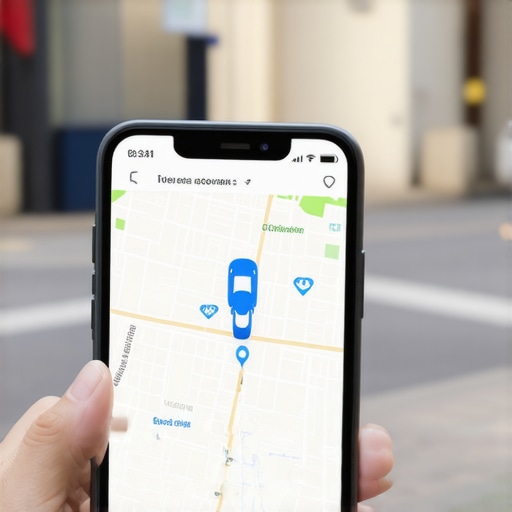
Take Control with Active Live Monitoring
Once the driver is en route, don’t just close the app. Treat the tracking link like a dashboard for your own productivity. I use these links to audit the driver’s speed and progress in real-time. If I see the icon moving erratically or taking a route that looks like a parking lot, I don’t wait for a notification. I use my direct line to the driver. This is why you need a direct line to your hourly driver—to act as the secondary navigator if things go south.
Why Hourly Rates Beat the Meter Every Time
I used to book point-to-point, thinking I was saving a few dollars. Then I got stuck in a gridlock in Midtown Manhattan. The driver was stressed because the fare was fixed and he was losing money; I was stressed because I watched the clock tick toward my meeting start. Now, I only use hourly bookings for high-stakes days. When you understand how hourly rates stop the stress of traffic jams, the entire psychological game changes. The driver is no longer incentivized to rush or take risky shortcuts, and you have the freedom to change your mind mid-trip without a penalty. It’s the ultimate move for stress-free event planning, allowing you to focus on your notes rather than the navigation.Most people believe that paying a premium price for a car service is a ‘set-it-and-forget-it’ transaction. In my years on the road, I’ve found that this is the most dangerous assumption you can make. The truth is that last-minute reservations often result in poor quality, regardless of the vehicle’s leather grade. If you aren’t involved in the verification process, you aren’t booking a service; you’re buying a lottery ticket.
Stop Trusting the Estimated Arrival Time
The industry’s biggest secret is that most apps use the same generic traffic data, which frequently fails to account for ‘non-recurring’ congestion. According to a study by the Texas A&M Transportation Institute, nearly half of all traffic delays are caused by unpredictable events like sudden construction or accidents that historical data can’t predict. This is the error in relying on app-based arrival times during construction—the app sees the road as open until the first ten cars are already stuck. I’ve found that a driver with a physical map is more reliable than GPS because they understand the ‘why’ behind the traffic, not just the ‘where.’
Spot the Red Flags Before You Step Inside
Here is the ‘oops’ factor that separates the pros from the amateurs: failing to check the locks. It sounds paranoid until you realize that the hidden safety red flags in your car door locks can tell you everything about the vehicle’s maintenance and the driver’s intent. If the manual overrides are tampered with, do not get in. Furthermore, the ‘trap’ of modern booking is the lack of insurance transparency. You must know how to verify your driver’s commercial registration manually. Without that commercial status, you aren’t covered by the high-limit policies required for executive transport, leaving you financially exposed if anything goes wrong. 
Can a human dispatcher actually beat an algorithm?
In short: every single time. While an AI is calculating the most efficient line on a 2D map, a professional human is monitoring the pulse of the city. I’ve reached my destination faster by choosing services where a human dispatcher outperforms an AI because they can pivot the driver based on local knowledge that hasn’t hit the cloud yet. This level of guaranteeing safety and punctuality 24/7 is only possible when there is a real person accountable for the fleet. The nuance that many miss is the psychological shift that occurs during reliable hourly bookings. When you aren’t checking the meter, you aren’t rushing the driver. And when you aren’t rushing the driver, they aren’t making high-risk decisions in traffic. It’s a virtuous cycle of safety that most budget-conscious travelers ignore to their own peril. This is why hourly drivers offer better mental clarity; you’ve effectively outsourced the stress of the city to a professional who is paid to handle it. Before you even touch the door handle, look for the safety token every passenger should check. Have you ever fallen into the trap of a ‘5-minute away’ notification that turned into a 20-minute wait? Let me know in the comments.
That ‘5-minute’ lie is exactly why I stopped relying on basic consumer apps and started building my own professional transport stack. To scale my productivity, I had to move toward systems that prioritize precise reservation timing over general estimations. I’ve found that the real difference-maker isn’t just the car; it’s the data pipe behind it. I personally use a combination of flight tracking overlays and direct dispatcher pings to ensure my ride is waiting for me, rather than me waiting for it. According to the Inrix Global Traffic Scorecard, drivers in high-density urban areas lose nearly 100 hours per year to congestion, a statistic that makes safety precision and reliable hourly reservations the only logical way to manage a busy calendar. If you aren’t auditing the tools your service uses, you’re still just guessing.
My Personal Toolkit for Bulletproof Scheduling
I don’t just book a car; I manage a logistics chain. My toolkit always includes a verification step where I look for visual signs of a chauffeur who values professionalism, such as a clean dashboard and a functional, professional-grade mount for their tracking device. I’ve noticed a trend where high-end services are moving away from all-in-one apps toward specialized fleet management software that allows for granular control. This is the future: a hybrid model where AI handles the route optimization but a human makes the final safety call. By following essential hourly reservation tips for timely service, I’ve managed to eliminate that ‘where is my ride’ anxiety entirely. It’s about creating a repeatable process that works at 4:00 AM just as well as it does at 4:00 PM.
Visual Cues That Reveal the Truth
Before the wheels even turn, I’m looking at the driver’s setup. Are they using a generic phone with a cracked screen, or a professional-grade tablet linked to a dispatcher? The punctuality habits of top-tier private chauffeurs are often visible in how they organize their workspace. I also make it a point to run through the checklist for every late-night private car hire, ensuring that the tracking link is active and shared with my emergency contact before we pull away. This isn’t just about safety; it’s about maintaining a high standard for your time. When you treat your transit like a professional appointment, the service providers tend to meet you at that level.
How can you keep your high travel standards from slipping?
Maintenance is the part most people ignore. I recommend doing a ‘travel audit’ every quarter. Look at your history and see which drivers or services actually hit their marks. If you’re managing a team, you might even need to build a custom transit schedule for your office to ensure everyone is operating under the same safety protocols. Long-term results come from consistency, not luck. My prediction for the next five years is that ‘reliability scores’ will become more important than vehicle luxury. I’d rather be in a clean, mid-range sedan that arrives on the dot than a limousine that shows up twenty minutes late. To take control today, try this: on your next trip, use the tracking link to audit your driver’s speed and route choice in real-time. If they aren’t taking the most efficient path, ask them why. It shows you’re paying attention, and in this industry, attention equals quality.
The Hard Truths About Why Your Ride Was Actually Late
After years of navigating high-stakes environments, the most important lesson I’ve learned is that ‘convenience’ is often the enemy of ‘certainty.’ Many travelers assume that a flashy app interface equals logistical competence, but that’s rarely the case. First, you must realize that on-time performance is the only metric that matters when your reputation is on the line. Second, ‘estimated arrival’ is a marketing term designed to keep you on the hook; it rarely accounts for the granular reality of urban construction. Finally, the true pros know that reservation security measures are your only real insurance against a driver who decides to cancel at the last second for a higher fare elsewhere.
The Three Tools I Use to Audit Every Trip
I don’t leave my arrival to chance, and neither should you. My personal transit defense kit includes three non-negotiables. First, I always keep a tab open for local traffic anomalies—not just GPS—to understand if a city-wide event is disrupting the grid. Second, I rely heavily on safety precision and reliable hourly reservations because they provide a dedicated asset that doesn’t disappear between stops. Lastly, I keep the direct number to a human dispatcher in my contacts. If the tech fails, a human voice can redirect a fleet in seconds, whereas an algorithm will simply leave you stranded in a loop of automated apologies.
#IMAGE_PLACEHOLDER_E#
Your Move Toward a Calendar Without Compromise
Taking control of your transportation isn’t about being ‘difficult’; it’s about being professional. When you shift your focus toward on-time reservations at any hour, you are buying back the mental energy you used to waste on anxiety. Start small: on your next booking, demand a live tracking link and verify the commercial plates before you step inside. You’ll find that the more you expect from your service providers, the more they will rise to meet your standards. Have you ever had a ‘5-minute away’ notification turn into a total logistical disaster? Let me know your story in the comments below.