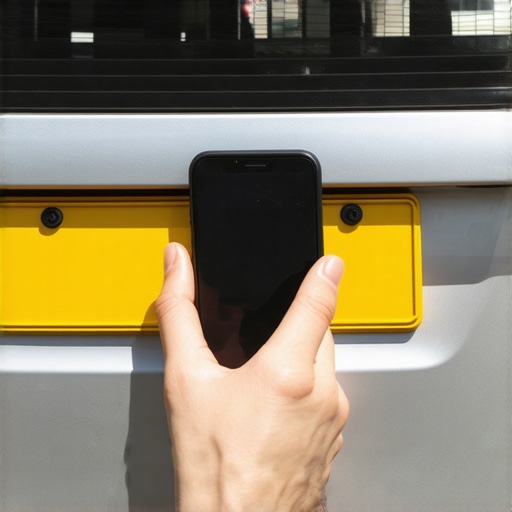
I remember standing on a slick sidewalk at 4 AM, clutching my suitcase like a life raft. I had a flight to catch and had followed my usual routine for how we guaranteed an on-time arrival for a 5 AM flight, yet when the black sedan rolled up, something felt off. The driver was friendly, the car was clean, but the license plate looked exactly like the one on my neighbor’s minivan. No special designations, no livery tags, nothing. In my rush to stay secure and punctual, I almost ignored a massive legal red flag that could have cost me everything if an accident occurred. Today, I am going to show you exactly how to spot the difference so you never have to guess if your ride is legitimate.
Look Closely at the Bumper Before You Load Your Bags
Early in my traveling days, I made the amateur mistake of thinking a sleek car automatically meant a professional service. I once spent forty minutes in a vehicle that I later discovered had zero commercial registration or the proper insurance. It is a terrifying realization. According to the Insurance Information Institute, standard personal auto policies specifically exclude livery or transport-for-hire activities. This means if you are in a car with private plates, you might be riding without any valid insurance coverage at all. You need to know how to background check your private transport company in minutes before you even step off the curb. Have you ever felt that gut-punch of uncertainty when a driver pulls up and the paperwork doesn’t seem to match the vehicle?
Can a regular license plate really put my safety at risk?
The short answer is a resounding yes. While it seems like a small bureaucratic detail, that plate is your only outward proof that the vehicle has passed rigorous commercial inspections and carries the necessary high-limit liability insurance. Without it, you are effectively hitchhiking with a stranger who happens to have a nice app. We are going to dive into the specific alphanumeric codes and plate colors that vary by region but always signal a pro. By the time we are done, you will know exactly how to stay secure and punctual by demanding the right credentials every single time.
Spot the Stealthy Marks of a Real Commercial Vehicle
In most cities, a professional chauffeur vehicle isn’t just a clean car; it is a legally distinct entity. I once had a driver in Miami tell me his livery plates were “in the mail” while he tried to load my bags into a standard sedan. I refused to get in. While it felt awkward standing on the curb, the danger of relying on verbal confirmations for important travel is a risk no professional should take. You need to look for the alphanumeric identifiers like TCP (Transportation Charter Permit), PSC, or Livery designations often printed in small, block lettering on the rear bumper or near the door frame. These numbers are the DNA of a safe ride. They prove the company has filed the necessary paperwork to operate legally. When you know the protocol for verifying your chauffeurs permit, you shift the power dynamic from being a ‘passenger’ to being a ‘client’ who demands standards. 
The Three Minute Physical Audit
Once the car stops, you have a window of about three minutes to judge the mechanical health of the vehicle. You don’t need to be a mechanic; you just need to be observant. I always start with the floor mat check. It sounds trivial, but a driver who ignores salt stains and debris at their feet is likely ignoring the scheduled oil change or brake pads. Next, look at the glass. I use the windshield wiper test—if the blades are frayed or the fluid is bone-dry during a drizzle, it indicates a company that cuts corners on small costs. If they cut corners on a twenty-dollar set of wipers, they are definitely cutting corners on your liability coverage. This physical check is how you guarantee safety and punctuality 24/7 by weeding out the amateurs before the engine even revs.
Verify the Person in the Driver Seat
Identity theft isn’t just for credit cards; it happens in the transport industry too. It is vital to ensure your driver is not using a suspended account or someone else’s credentials. This is why I always ask the driver to confirm my name first, rather than me offering theirs. A professional will have a manifest—either digital or physical. You should also verify the commercial validity of a transit schedule if you are on a multi-stop trip. I once caught a driver who was moonlighting on his ‘off’ hours using a company car without the dispatcher’s knowledge. Because I checked his ID against the reservation on my phone, I avoided a ride that would have had zero insurance coverage if we had entered a fender-bender. By following the 5-point safety check for every nighttime ride, you ensure that every mile of your journey is backed by professional accountability.Most travelers think that an app’s ‘real-time’ ETA is gospel. In reality, it is often a smoothed-over average that ignores the gritty reality of the street. I call this the ‘Ghost Car’ phenomenon. While you are watching a tiny sedan icon glide smoothly across your screen, the real vehicle might be stuck behind a double-parked delivery truck two blocks away. A study from the Journal of Advanced Transportation highlights that GPS-based ETAs in dense urban environments can have a margin of error exceeding 20% due to signal multipath issues. This is why refreshing your tracking app might give you false arrival times—it is trying to catch up to a reality it cannot quite see. When I need to be 100% certain for a keynote or a flight, I rely on why real-time vehicle data is more accurate than estimated times, which uses direct vehicle telemetry rather than just a driver’s smartphone signal.
Stop Trusting the Moving Icon on Your Phone
The trap most high-stakes travelers fall into is choosing point-to-point service for tight schedules because they think it saves money. However, why hourly logistics save more time than point-to-point is actually about the driver’s incentive structure. In a point-to-point model, the driver is incentivized to finish your trip as fast as possible to unlock the next fare. In an hourly model, the driver is your dedicated asset. They are not looking at the next client; they are focused on the road ahead of you. This shift in priority is one of the key reservation security measures that ensure you actually arrive on time. 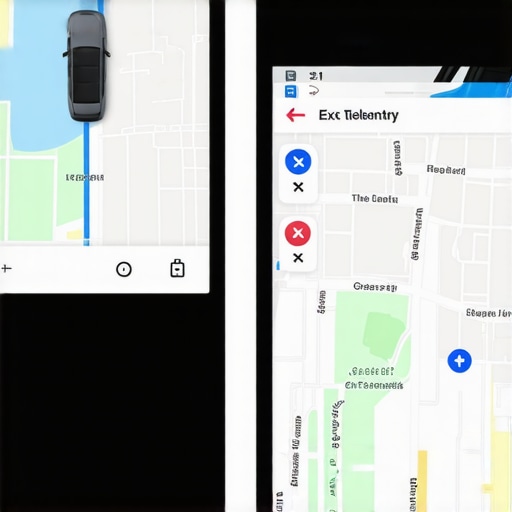
Why does my real-time ETA suddenly jump by ten minutes?
It usually comes down to geofencing lag and pedestrian patterns that standard algorithms ignore. I always check why your real-time ETA should account for pedestrian traffic, especially in downtown cores where a sidewalk crowd can delay a right turn by three light cycles. Amateurs see a clear road on a map; pros see the stadium clearing out two blocks away and adjust the route before the car even moves. By using on-time every time strategies for safe and reliable hourly bookings, you account for these ‘invisible’ variables that apps simply miss. Have you ever fallen into this trap where the app promised five minutes but took fifteen? Let me know in the comments below, because I would love to hear how you handled that stress.To move beyond the ‘Ghost Car’ problem, I have shifted my entire strategy toward why manual reservation checks outperform automated bots in high-stakes scenarios. When I am booking for a keynote or a major flight, I do not just wait for a push notification; I use a secondary verification tool that relies on direct telemetry. This is essentially how to track your drivers real-time progress without an app by requesting a secure web link directly from the dispatch center’s internal logistics software. I have found that this layer of transparency is essential because it bypasses the lag inherent in consumer-facing interfaces. Furthermore, to prevent any administrative hiccups, I have made it a habit to understand why you must demand a physical copy of your trip reservation or at least a downloadable PDF version. In a world where cellular dead zones still exist, having that hard data on hand ensures your driver and the dispatcher are on the same page regarding your on-time every time strategies for safe and reliable hourly bookings. I specifically look for companies that adhere to the ISO 39001 Road Traffic Safety management standard, as it proves they have a systematic approach to fleet maintenance and driver fatigue. 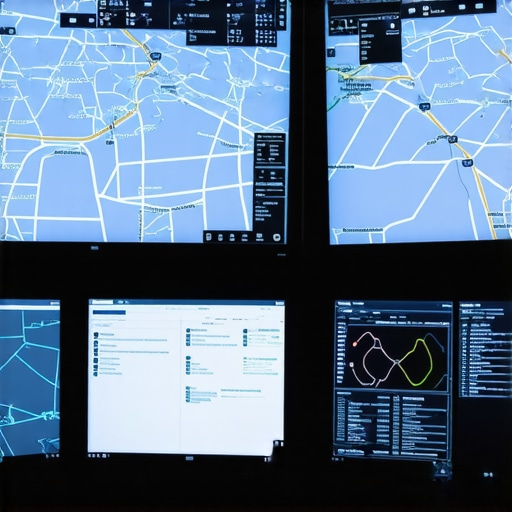
How can I keep my travel logistics bulletproof over the long term?
Maintaining this level of precision for every single trip requires a ‘maintenance mindset.’ I treat my personal travel schedule with the same rigor a pilot treats a pre-flight checklist. This involves ensuring safety and punctuality: top tips for on-time reservations at any hour, such as performing a monthly audit of my preferred providers. I check for consistency in their safety reporting; for instance, I want to see why driver speed alerts are the backbone of passenger safety within their internal fleet policies. If a service becomes vague about their tracking or stops providing specific vehicle identifiers, I move on. This proactive approach is how to audit your online booking for hidden security vulnerabilities before you are standing on a curb at 3 AM. I also recommend a quarterly review of your saved traveler profiles to maximize your safety and satisfaction with our precise reservation timing, ensuring that no outdated credit card info or old gate codes trigger a last-minute delay. Looking toward the future, we are entering the era of ‘Predictive Fleet Intelligence.’ The next generation of transport will not just react to traffic; it will use AI to reposition vehicles based on real-time flight delay patterns and municipal data before the congestion even forms. This shift will make your reservation security measures even more robust, turning ‘on-time’ into a statistical certainty. For your next trip, I challenge you to try this: call the dispatch line 12 hours early and ask for the vehicle’s specific commercial permit number. It is a simple move that establishes you as a client who values professional standards over amateur promises.
Lessons From a Decade on the Curb That Transformed My Travel Routine
Over the years, I have realized that true luxury isn’t the leather seats; it is the absolute certainty that your driver is a vetted professional. One of the hardest truths I learned is that high price tags do not always equal high standards. I now prioritize companies where I can clearly see why on-time performance is the only metric that matters. I have also learned to embrace flexibility; knowing how to handle a route change mid-trip without confusion has saved me from missing three different international connections. Finally, I stopped viewing transport as a commodity and started seeing it as a security service. When you stop hoping for a good ride and start verifying the credentials, your travel anxiety evaporates. #IMAGE_PLACEHOLDER_E#
My Trusted Toolkit for Complex Trips
To keep my logistics bulletproof, I rely on a few specific resources and habits that go beyond any single app. First, I always keep a digital folder of why you must demand a physical copy of your trip reservation for offline access. I also use the hidden advantage of booking a car for the entire evening when I have back-to-back meetings, as it ensures the vehicle remains in my ‘secure bubble.’ For safety standards, I cross-reference my providers with the National Limousine Association (NLA) guidelines to ensure they follow industry-best insurance practices. I personally trust these methods because they have never failed me in cities like London, New York, or Tokyo, where the margin for error is razor-thin.
Your New Standard for Every Journey
You now have the knowledge to distinguish a professional chauffeur from a part-time gig worker. By applying these physical checks and demanding real-time data, you are no longer at the mercy of an algorithm. It is time to prioritize safety precision: the key to reliable hourly reservations for peace of mind for every single trip you take. You deserve a service that respects your time and your life as much as you do. Start demanding the standard you deserve and turn every arrival into a victory. Have you ever spotted a major safety red flag just as a car pulled up? Let me know in the comments below—I would love to hear how you handled that gut feeling!