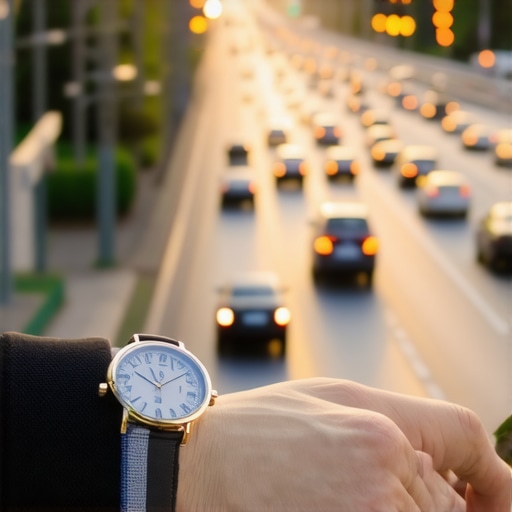
I remember standing on my front porch three years ago, watching the rain lash down while my phone screen showed a ride-sharing icon spinning endlessly in circles. I had a presentation that could make or break my year, yet the ‘3 minutes away’ promise had already stretched into twelve. By the time a car finally pulled up, the driver was stressed, the car smelled like stale fast food, and I was already ten minutes late. That morning was a wake-up call; I realized that relying on the ‘luck of the draw’ during peak hours wasn’t just stressful—it was a professional liability. Since that disaster, I have obsessed over finding a better way to navigate the gridlock.
The Morning My Career Almost Stalled on the Curb
After that rainy-day debacle, I stopped gambling with my schedule. I started looking into strategies for safe and reliable hourly bookings that actually put the passenger in control. The biggest mistake I made early on was assuming that more expensive meant more reliable. It doesn’t. Reliability comes from a system, not a price tag. I used to think I could just hit a button and the world would cater to my timeline, but the truth is that on-demand apps often struggle when the city is at its busiest. According to the INRIX 2023 Global Traffic Scorecard, the average urban driver loses dozens of hours to congestion annually, and most of that is concentrated in predictable ‘peak’ windows that apps simply cannot outsmart without a human touch.
Is a pre-set schedule actually worth the extra planning?
Many of my neighbors ask me if I really need to be this precise. They worry that a fixed reservation lacks the ‘freedom’ of an app. But let me ask you this: Have you ever been left stranded by a driver who ‘ghosted’ you right when the morning rush started? That isn’t freedom; it’s a headache. I found that by using a Monday morning commute strategy that focuses on reserved time slots rather than instant requests, I reclaimed my sanity.
Why Your Current Routine is Lying to You About Traffic
We all like to think we know our city, but peak hour traffic is a living, breathing beast. The ‘estimated time of arrival’ on your phone is a mathematical guess, often ignoring the micro-delays of urban life. By ensuring safety and punctuality through a dedicated hourly service, you aren’t just buying a ride; you are buying a guarantee that someone is already positioned to beat the surge. It’s about moving from a reactive mindset to a proactive one. When you have a professional who has already mapped out the side streets and knows which intersections to avoid, the ‘rush’ suddenly feels a lot less rushed.
Ditch the Waiting Game for a Guaranteed Pickup Window
To get from point A to point B without a heart-rate spike, you have to treat your schedule like a military operation. Think of an on-demand app like a vending machine—convenient, but it often jams or runs out of stock right when you’re desperate. An hourly reservation is more like having a private chef; they are already in the kitchen preparing your meal before you even realize you’re hungry. To master this, you need to implement on-time arrival techniques that shift the burden of timing from your shoulders to the professional behind the wheel.
Why the 12-minute rule saves your sanity
One of the most effective habits I’ve adopted is the 12-minute rule for airport pickups. It’s a simple buffer that accounts for the ‘last-mile’ friction—that awkward gap between closing your front door and actually sitting in the seat. Last winter, I had a 4:30 AM flight during a surprise sleet storm. Instead of checking a map every five seconds, I relied on my 3 AM pickup blueprint. My driver was already idling at the end of the driveway ten minutes early, clearing ice off the door handles. If I had waited to ‘call a ride’ that morning, I would have been stuck in a queue of 50 other panicked travelers. 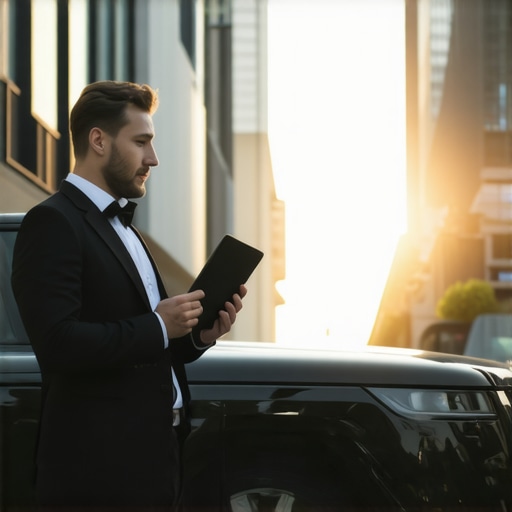
Look for These Red Flags Before You Step Inside
Safety isn’t just about how someone drives; it’s about the credentials they carry before the engine even starts. You wouldn’t board a plane if the pilot didn’t have a license, yet we often hop into unmarked cars without a second thought. I’ve learned to verify safety certifications with a quick, polite question. It’s not about being ‘difficult’; it’s about ensuring the person responsible for your life is actually qualified for the job.
Spotting a pro in a sea of amateurs
Look at the vehicle itself. A professional service uses cars that are clean, maintained, and legally compliant. You should be able to spot a genuine commercial license plate immediately. These plates are the physical proof that the vehicle is insured for hire, which is a massive safety net that casual ride-share apps often lack. I once noticed a driver’s plate didn’t match the commercial requirements for our city; I politely declined the ride. It felt awkward for thirty seconds, but it saved me from a potentially uninsured disaster.
Control the Journey Even When the Map Turns Red
Traffic is inevitable, but getting stuck in it isn’t. Professional drivers don’t just follow a blue line on a screen; they use a red light strategy to navigate around bottlenecks that haven’t even hit the news yet. They are looking three turns ahead. By using an hourly service, you maximize your safety and satisfaction because the driver isn’t rushing to finish your trip to get to the next ‘ping.’ Their only job is your timeline. When the main artery of the city clogged up during a protest last July, my driver didn’t panic. He had already checked the dispatch radio and took a back-road route through the industrial district that wasn’t even appearing as an option on my phone’s GPS. We arrived four minutes early while the rest of the city was at a total standstill.However, even the best route doesn’t help if you’re looking at the wrong map. We’ve all been taught to trust the ‘real-time’ ETA on our smartphones as if it’s gospel, but here’s a hard truth from someone who’s spent years in the back of these cars: those numbers are often a digital mirage. Let’s dig deeper into the mechanics of why your phone fails you in the city center. The ‘Urban Canyon Effect’ is a well-documented phenomenon where skyscrapers block or bounce GPS signals, leading to what engineers call ‘multipath errors.’ A 2022 study by researchers at the University of California, Berkeley, on urban transit reliability found that prediction errors in dense city cores can spike by nearly 30% because of this signal interference. This is exactly the reason your real-time map sometimes lags in the city, showing your driver blocks away when they are actually right in front of you—or vice versa.
Why is a reservation not always a confirmed booking?
This is one of the biggest traps in the travel industry. Most passengers use these terms interchangeably, but they represent two very different levels of security. A ‘reservation’ is often just a request sitting in a digital queue, waiting for a driver to ‘claim’ it. If no one accepts the trip, the app simply cancels on you at the last second. On the flip side, a ‘confirmed’ booking means a specific vehicle and a human being have been assigned to your name. Understanding the difference between a reservation and a confirmed booking is the only way to avoid the ‘no-show’ nightmare during peak hours. This is why I always look for services that prioritize human dispatchers over pure AI scheduling. A human can see a protest or a parade coming and manually shift your driver’s start time; an algorithm just watches the clock hit zero. 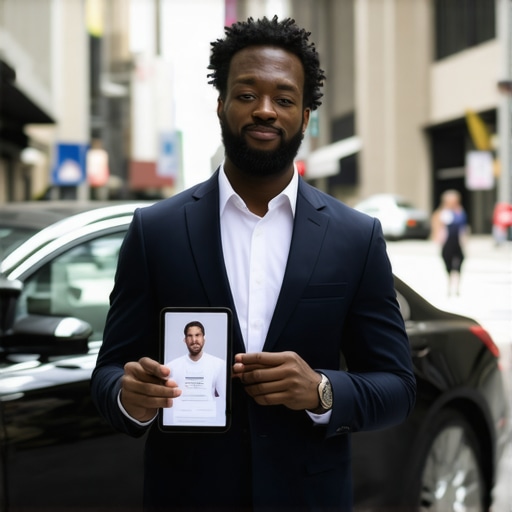 Another nuance that separates the pros from the amateurs is how they handle your data. I’ve seen people get too comfortable and start texting their driver their personal cell or home address. Stop doing that. There is a specific security benefit of masking your phone number through a professional platform. It’s not just about avoiding spam; it’s about professional boundaries. In fact, why your driver should never ask for a personal phone number is a core safety standard. If they are asking for your direct digits, they are bypassing the system that keeps both of you safe and accountable.
The curb-to-door trap that ruins your schedule
Lastly, we need to address the ‘last-mile’ friction that happens before you even see the car. We focus so much on the driving time that we ignore the ‘transition time.’ In my experience, why most transit delays happen between the curb and the door is because people don’t account for elevator waits, security badges, or the time it takes to navigate a massive corporate lobby. If your driver is there at 8:00 but you aren’t at the curb until 8:08, you’ve already lost the battle against peak traffic. Have you ever fallen into this trap of being ready ‘on paper’ but stuck behind a slow elevator? Let me know in the comments.To stay ahead of the city’s chaos, I eventually had to stop relying on the same consumer-grade tech everyone else uses. If you’re using the same map app as the person in the beat-up sedan next to you, you aren’t gaining an advantage; you’re just part of the herd. This is why we use dedicated GPS hardware instead of smartphone apps in the professional world. These units tap into external antennas and satellite arrays that provide sub-meter accuracy, far outperforming the ‘good enough’ signal of a standard iPhone. When I’m in a high-rise, I can see exactly where my driver is idling, not just a vague icon jumping across three different lanes.
Beyond the Smartphone: Why specialized hardware wins
It isn’t just about the map; it’s about the telemetry. High-end services now utilize telematics that monitor engine health and tire pressure in real-time. This level of oversight ensures that your ‘on-time’ reservation doesn’t turn into a roadside breakdown. 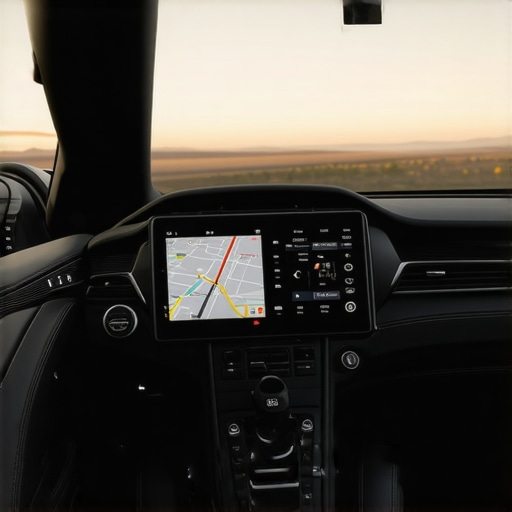 I’ve also learned to perform my own quick audits. Before I even put my bag in the trunk, I do what I call the ‘maintenance sniff test.’ More specifically, I use the windshield wiper test. If a company can’t bother to replace a five-dollar rubber blade, they aren’t checking the brake pads or the transmission fluid either.
The subtle signs your driver cares about maintenance
True reliability is a habit, not a one-off event. Over time, I’ve found that the most consistent safety comes from a blend of human intuition and ‘invisible’ tech layers. For example, why geofencing is the best way to keep your family safe cannot be overstated. By setting up digital perimeters around my home and office, I get an instant notification when the car enters the ‘safety zone,’ allowing me to time my exit perfectly.
How can I keep my travel logistics this tight long-term?
The secret is to stop treating every trip as a new problem to solve. I’ve moved toward a system where I stay secure and punctual by using templates for my most common routes. I know exactly which gate at the airport has the shortest walk and which side-street avoids the school zone at 8:15 AM.
Keeping your digital footprint as safe as your physical route
As we look toward the future, the ‘Human-in-the-Loop’ (HITL) model is going to dominate. While we see a lot of hype about fully autonomous cars, the real gold standard is a driver supported by high-level AI dispatch. This is already reflected in how we’ve secured our booking portal against personal data theft, ensuring that while the tech handles the routing, a human is still watching the screen to prevent errors. According to the IEEE 802.11p standards for Vehicle-to-Everything (V2X) communication, the next five years will see cars ‘talking’ to traffic lights to eliminate idling entirely. Until that’s standard, you need to be your own advocate. I challenge you to try this: the next time you book a ride, ask the service what specific hardware—not just what app—they use for tracking. If they can’t answer, they aren’t the pros you’re looking for.
After years of navigating the urban jungle from the backseat, I’ve realized that the difference between a successful day and a total disaster often comes down to the fifteen minutes before you even leave your house. The systems we choose to trust dictate our stress levels more than the traffic itself. To truly master your schedule, you have to move beyond the mindset of ‘hiring a car’ and start thinking about ‘securing a timeline’.
Lessons the Dispatcher Won’t Mention Out Loud
In my journey toward perfecting my commute, I’ve hit plenty of dead ends. Here are the hard truths that reshaped how I view professional transit:
- Digital confirmation is not human confirmation. I learned early on that the danger of relying on verbal confirmations for important travel or automated app pings is that they lack a fallback. A true pro has a dispatcher watching their back.
- Professionalism has a distinct scent. It sounds strange, but if a car smells like heavy air freshener, it’s usually hiding a lack of maintenance. A clean, neutral-smelling vehicle is the first sign of a driver who respects their machine and your time.
- Peak hours are predictable, not inevitable. Most people view the 8:00 AM rush as a wall. I view it as a puzzle. If you aren’t using a service that employs a dedicated strategy for these windows, you’re just another car in the queue.
A Few Tactics for Your Daily Travel Kit
If you want to ensure your logistics are ironclad, you need a few quick audit tools in your pocket. Before I commit to a long-term relationship with a service, I always perform the floor mat check. It’s the fastest way to judge if a company pays attention to the small details that eventually lead to big safety wins. Additionally, I’ve stopped leaving my schedule to chance on my phone; I now prioritize knowing how to store your trip data securely so that I have a paper trail that doesn’t rely on a third-party app’s cloud. I also recommend keeping a ‘buffer list’—a set of three alternative drop-off points near your frequent destinations in case a sudden road closure hits. This level of ensuring safety first means you are never truly stuck.
#IMAGE_PLACEHOLDER_E#
Stop Letting the Rush Dictate Your Life
You don’t have to be a victim of your city’s infrastructure. By choosing a system built on safety precision and human accountability, you reclaim the mental space needed to focus on your actual work. Whether it’s a high-stakes board meeting or a flight you cannot afford to miss, the peace of mind that comes from a guaranteed on time, hourly, reservation, safety protocol is worth every bit of the extra planning. Don’t wait for the next rainy morning to change your routine; start building a better way to move today. Have you ever been ‘ghosted’ by a driver right when you were already running late? Let me know your worst travel stories in the comments below.