
I remember standing on a soggy street corner in downtown Seattle, clutching a lukewarm latte and staring at my phone as the arrival time for my third ride of the day ticked upward like a countdown I didn’t want to see. I had four more site visits to complete before five o’clock, my laptop battery was in the red, and I was already thirty minutes behind schedule. That day was a logistical disaster. I realized then that my clever strategy of booking individual trips to save a few bucks was actually costing me a fortune in missed connections, lost productivity, and frayed nerves. It was a classic rookie mistake, and it’s one I’ve seen countless others make. Today, I want to show you why ditching the apps for a dedicated car is the only way to handle a heavy itinerary without losing your mind.
Stop Playing Roulette with Your Schedule During Site Visits
The hard truth I learned after that Seattle fiasco is that one-way bookings often lead to unnecessary stress when you have a packed itinerary. When you are jumping between multiple locations, you aren’t just paying for the miles; you are paying for the peace of mind that comes with knowing your car is exactly where you left it. I used to think I was being efficient, but I was actually a victim of the curb-and-door delay. Most transit delays happen between the curb and the door, and those minutes add up fast when you have five stops to make. According to data from the Global Business Travel Association, ground transportation remains one of the top three stressors for professionals on the move, and I felt every bit of that stress until I switched to an hourly model. I made the specific mistake early on of trusting an app’s real-time tracking while my driver was actually lost in a maze-like parking garage. I’ve learned since then that refreshing your tracking app might give you false arrival times that don’t account for the reality of city traffic. Have you ever found yourself standing on a curb in a downpour, watching the three minutes away icon on your phone turn into twelve?
Is keeping a driver on the clock actually worth the extra cost?
I get the skepticism. I used to be a penny-pincher too, calculating every cent. But when you look at the hidden math behind why hourly chauffeurs save money, the numbers start to flip in your favor. You stop paying surge prices during rush hour, you eliminate the dead time spent waiting for a new driver to accept your request, and you gain a mobile office. Personal drivers offer better productivity because you can actually work between stops. An hourly chauffeur can save your productivity by letting you take confidential calls or prep for the next meeting in a private, secure environment rather than a noisy coffee shop. Plus, you’re never truly stuck. Hourly booking prevents you from being stranded in the rain or heat while you wait for a GPS algorithm to find a driver who isn’t actually in the area. We are going to dive into exactly how to book a vehicle that stays with you all day so you can focus on your work instead of your logistics.
Master the Art of the All-Day Booking
Switching to an hourly model is like hiring a personal assistant for your physical movement. To get the most out of it, you need to start with strategies for safe and reliable hourly bookings that prioritize your specific timeline over generic app estimations. I always tell my colleagues that a reservation is just a piece of paper until it is verified. When you are reserving your spot, you aren’t just buying time; you are securing a professional who understands the nuances of local traffic patterns and city bottlenecks. Treating your transportation like a high-stakes meeting ensures that the logistics remain invisible while you focus on your actual work.
Verify the Details Before You Ever Step Inside
I learned the hard way during a marathon of meetings in Chicago that just because a car looks good doesn’t mean it is properly maintained. I spent an entire afternoon listening to a high-pitched metallic chirp at every stoplight because I ignored the brake pad squeal you should never ignore before a long trip. Now, I do a quick thirty-second audit the moment a driver arrives. I check the cleanliness of the cabin and even use the floor mat check to judge the driver’s attention to detail. If the mats are neglected, chances are their safety precision and mechanical upkeep aren’t where they need to be for a high-stakes day.

How to Pivot Your Route Without a Logistics Meltdown
The true beauty of an hourly chauffeur is the absolute flexibility to change your mind mid-stride. I’ve had site visits where a ten-minute walkthrough unexpectedly turned into a two-hour deep dive into architectural blueprints. Instead of panicking about a departing ride-share or a mounting cancellation fee, I simply messaged my driver. Knowing how to handle a route change mid-trip keeps the day moving without the friction of re-booking. You want to focus on on-time arrival for your next appointment, not the mechanics of how you will get there. By applying these essential hourly reservation tips, you transform the back of the car into a mobile sanctuary where you can recharge or take confidential calls between the chaos of different locations.
Most travelers assume that a ‘guaranteed’ reservation means the car is physically waiting for them from the moment they hit ‘book.’ However, the industry’s biggest secret is that a reservation is often just a placeholder in a database until it is manually audited. In my experience, manual reservation checks outperform automated bots every single time. While an AI might miss a local festival closing down three city blocks, a human dispatcher catches it. This is where safety precision starts—long before the engine even turns over. The contrarian truth is that relying solely on technology actually decreases your reliability. While everyone else is staring at a lagging map, a driver with local knowledge beats GPS algorithm timing by knowing which alleyways to avoid and which side-streets open up during shift changes. One massive ‘trap’ I see executives fall into is trusting a casual ‘we will be there’ over the phone. The danger of relying on verbal confirmations is that there is no digital trail if things go sideways. Always demand a physical or digital copy of your trip details. If a company cannot provide a booking confirmation that includes a photo of the driver or vehicle, you are essentially flying blind.
How Do You Verify a Chauffeur is Actually Alert and Ready?
It is not just about the car; it is about the person behind the wheel. According to the National Safety Council, driver fatigue can be just as dangerous as driving under the influence, significantly slowing reaction times and increasing the risk of avoidable collisions. This is why ensuring your driver is not fatigued is a non-negotiable part of high-end travel. I have learned to look for driver safety certification markers immediately. A real pro will not be offended if you ask about their rest cycle or the company’s speed alerts and safety protocols. 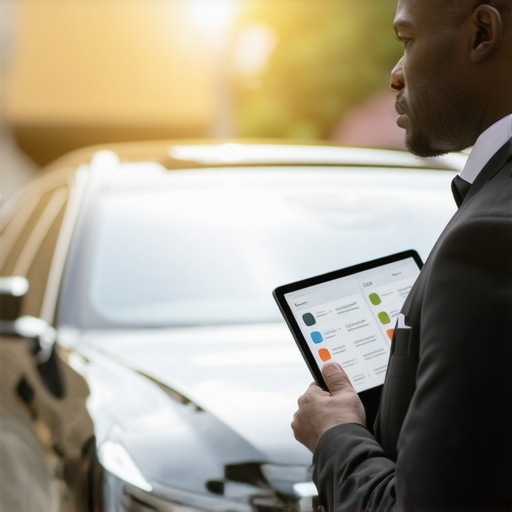 When you step into that vehicle, you are trusting that person with your life and your schedule. This goes beyond simple punctuality; it is about precise reservation timing that accounts for the human element. Don’t settle for a driver who is on their 14th hour of a shift just because the app said they were ‘available.’ Have you ever fallen into the trap of assuming a confirmed booking meant a guaranteed ride? Let me know in the comments. To ensure you never get left behind, always look for essential hourly reservation tips that prioritize your safety over a tech company’s bottom line. For more details on our standards, feel free to contact us directly.
Ditch the Smartphone for Pro-Grade Navigation Tools
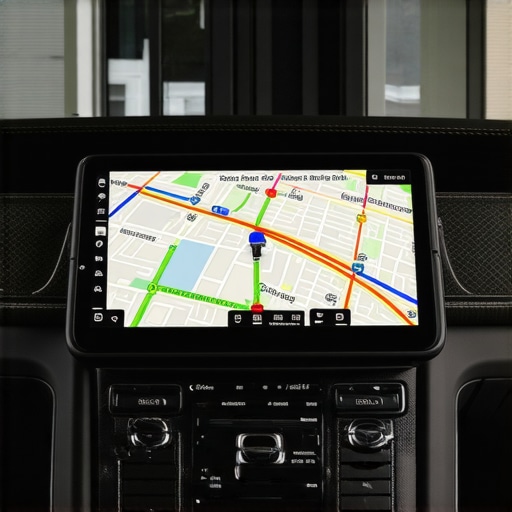
I learned quickly that a driver relying solely on a consumer-grade smartphone for navigation is a liability, not an asset. When you are on a tight hourly schedule, you cannot afford the two-second lag of a cellular map or the risk of a dropped signal in an urban canyon. This is why we use dedicated GPS hardware instead of smartphone apps to ensure the signal remains constant and the routing is calculated with professional-grade precision. These units interface directly with the vehicle’s data, allowing for safety precision that an iPhone simply cannot match. I always look for a service that integrates real-time telemetry, which helps to ensure your hourly driver stays within safe speed limits automatically. According to the National Highway Traffic Safety Administration (NHTSA) 5-Star Safety Ratings guidelines, the integration of advanced driver assistance systems (ADAS) is critical for commercial-grade safety. I make it a habit to how to check a vehicle’s safety rating before I commit to an eight-hour block. If the car isn’t rated to handle a side-impact collision with modern tech, I’m not putting my team in it.
Lock Down Your Data Before You Ever Get in the Car
Maintenance isn’t just about oil changes and tire rotations; it is about maintaining the integrity of your personal information. In my early days, I didn’t think twice about my phone number being visible to every driver on the platform. Now, I prioritize masking your phone number through a secure relay. If you are traveling with a VIP, you must know how to protect your identity when booking for a high-profile guest to prevent unwanted attention or data leaks. I’ve become quite obsessed with seeing exactly how we protected our booking portal against personal data theft, because your itinerary is a map of your life. I suspect we are moving toward a ‘Human-in-the-Loop’ AI era where predictive traffic algorithms are managed by veteran human dispatchers who can override a machine’s bad call before it costs you a meeting. This blend of tech and touch is the only way to truly scale a professional itinerary.
How can I maintain this logistical precision over time?
Consistency comes from a repeatable audit process. You should never just ‘set it and forget it’ with a transportation provider. Every three months, I re-evaluate my go-to services to audit your online booking for hidden security vulnerabilities and ensure their fleet hasn’t aged out of safety standards. Treat your transport like your laptop; it needs regular updates and security patches. My best advice for those looking to level up? Start by performing a deep audit of the security protocols on your next reservation to ensure your data is as safe as your ride.
The Hard Lessons I Learned About Keeping a Tight Schedule
Reflecting on my years of managing complex site visits, I’ve realized that the most expensive mistake you can make is valuing the price of a ride over the value of your own focus. Why safety and timeliness matter isn’t just about showing up; it’s about the cognitive load you shed when you stop being your own dispatcher. One ‘lightbulb’ moment for me was realizing that the difference between a reservation and a confirmed booking is often a manual audit by a human being. I also stopped assuming every car was safe and started looking for why driver speed alerts are the backbone of real protection. Finally, I learned to value my privacy—always check how we protect your personal phone number as a baseline for any service you hire.
The Pro Toolkit for Managing High-Stakes Ground Travel
I don’t just trust any platform; I rely on a specific toolkit to keep my trips secure. First, I always check the vehicle’s safety rating via official guidelines before committing to an eight-hour block. Second, I look for services that prioritize safety precision through human dispatchers rather than just algorithms. Third, for payments, I only use platforms where I can verify a secure gateway to avoid data theft. These aren’t just tips; they are the filters I use to ensure on-time reservations at any hour and maintain my sanity on the road.
Reclaim Your Productivity and Peace of Mind
You deserve a travel experience that supports your work rather than complicating it. By implementing essential hourly reservation tips, you transform your transportation from a gamble into a competitive advantage. It’s time to stop worrying about the curb and start focusing on the boardroom. When you commit to a dedicated driver, you are investing in your own professional success. Have you ever struggled with a logistics meltdown during a multi-stop trip? Let me know below.