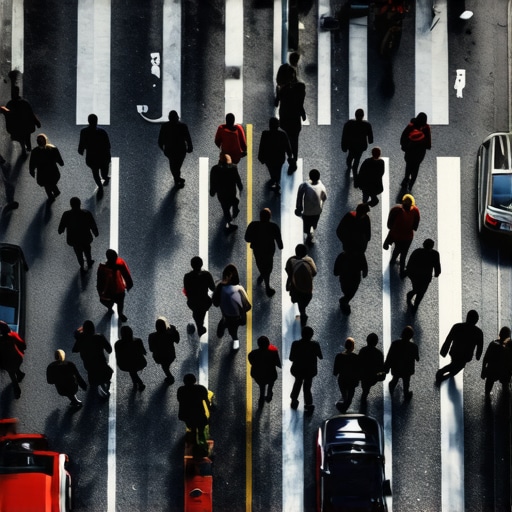
I was sitting in the back of a luxury sedan, staring at a ticking clock on my phone while the driver gently tapped the steering wheel. The GPS insisted I was only two blocks away from the venue, glowing with a reassuring blue line. But those two blocks were a solid wall of human beings. It was a Saturday night, and a local festival had just let out. We weren’t moving. Not because of a car crash or a stalled engine, but because a literal sea of pedestrians was claiming the crosswalks. That was the day I realized that traditional maps are often blind to the most unpredictable variable on the road: us.
The Invisible Wall of Human Traffic
We often think of traffic as a collection of bumpers and brake lights, but in a dense city, the sidewalk is what actually dictates your pace. If you are trying to master the art of on-time arrival, you have to look beyond the road. Most apps calculate your ETA based on the speed of other vehicles. They don’t account for the fact that a surge of people crossing the street can turn a simple right turn into a ten-minute ordeal. This is exactly why real-time vehicle data is more accurate than estimated times provided by generic consumer apps; it requires a layer of local context that algorithms usually miss.
Does micro-managing pedestrian data actually save time?
You might think this is overkill. I certainly did when I first started focusing on high-precision travel. I made the classic mistake of assuming that as long as the road was green on the map, I was safe. I once missed a critical boarding window because I ignored a local parade route. According to the National Association of City Transportation Officials (NACTO), pedestrian-heavy urban environments can reduce vehicle throughput by up to 30% during peak hours, yet most standard GPS algorithms still prioritize road speed over sidewalk density. If you aren’t accounting for the human element, your schedule is built on sand. Learning the real reason your pickup location affects your punctuality is the first step in reclaiming those lost minutes. Have you ever been stuck behind a crosswalk, watching your arrival time climb higher while your car sits perfectly still? It is a frustrating reality that we are going to solve today by shifting how we view urban movement. We will look at how to anticipate these crowds and why most transit delays happen between the curb and the door, rather than on the open highway.
Flip the Script on Urban Gridlock
To stop being a victim of city traffic, you have to start thinking like a logistics manager rather than a passenger. Most people treat a car ride like a passive experience where they wait for the driver to perform a miracle. In reality, reserving your spot how to guarantee safety and punctuality 24-7 requires you to actively shape the environment around the vehicle. This means looking at your pickup and drop-off points with a critical eye, identifying where the human walls are likely to form, and choosing the path of least resistance.
Map Your Path Beyond the Asphalt
I learned this the hard way last autumn during a major tech conference. I had an executive who needed to get from a mid-town hotel to a private terminal in under twenty minutes. The app said sixteen minutes, but the sidewalk was a literal barricade of lanyard-wearing attendees. Instead of fighting the main entrance, I directed the driver to a service alley two blocks north. It felt messy, and the executive was skeptical as we rolled past dumpsters, but we bypassed three major crosswalks that were holding up dozens of other vehicles. That simple pivot saved us twelve minutes of dead-stop waiting. This is why why we use dedicated GPS hardware instead of smartphone apps; professional tools allow us to see through the noise of consumer-grade routing and find those high-efficiency gaps.
Give Your Schedule Air with the 12-Minute Rule
If you want to eliminate the stress of a ticking clock, you need to implement the 12-minute rule for stress-free airport pickups. This isn’t just about leaving early; it’s about creating a buffer that accounts for the ‘curb-to-door’ lag. When you book a ride, your arrival time at the destination isn’t when the wheels stop; it is when you actually walk through the door of your event. If your driver is forced to circle the block because the curb is clogged with pedestrians, your ‘on-time’ arrival is ruined. By building a twelve-minute cushion into your reservation, you allow for the unexpected human surges that even the best data can’t fully predict.
Master the Terminal Drop-Off Game
Airports are the ultimate test of this philosophy. Most people head straight for the departures level because that’s what the signs say. However, depending on the time of day, the specific drop-off point at the terminal that saves 10 minutes might actually be the arrivals level or even a connected parking garage bridge. I recently saved a client from missing a gate close by having the driver drop them at the lower-level baggage claim at 5:00 PM on a Friday. While the upper deck was a parking lot of brake lights, the lower level was ghost-town quiet. To pull this off, you must how to ensure your driver knows your precise gate number well in advance so they can calculate which level offers the fastest access to security. It’s about outsmarting the herd, not just driving faster.
But outsmarting the herd involves more than just picking the right door; it requires debunking the myths of the modern reservation system. Most travelers believe that a ‘confirmed’ status on an app is the end of their planning worries. It isn’t. In my experience, the biggest mistake is treating a reservation like a digital commodity rather than a physical commitment. Everyone tells you that on-demand apps are the peak of convenience, but I have found that why on-demand apps often struggle with prompt airport pickups is because they lack the accountability of a dedicated fleet. You aren’t just booking a car; you are booking a driver’s focus. If that driver is also juggling three other platforms, your safety and punctuality are already compromised.
Stop Trusting the Clock on Your Screen
The ‘On-Time’ trap is a nuance that separates the pros from the amateurs. In the world of high-stakes logistics, a driver arriving exactly at 8:00 AM for an 8:00 AM pickup is technically late. To maximize your safety and satisfaction with our precise reservation timing, a professional should be on-site and ‘staged’ at least ten minutes prior. This isn’t just about being polite; it’s a critical safety buffer. The National Safety Council emphasizes that pre-trip inspections and environmental assessments are vital for preventing collisions. If a driver is rushing to meet a clock, they aren’t performing these checks. This is why driver speed alerts are the backbone of passenger safety and why we insist on early arrival. Have you ever fallen into the trap of booking a ride only to have the driver cancel two minutes before the pickup? Let me know in the comments.

Can an hourly booking actually protect your data privacy?
It’s a nuance that high-profile clients understand, but casual travelers often miss. When you use a generic app, your trip data is frequently sold to third parties. By learning how to store your trip data securely away from third-party apps, you ensure your movements aren’t being tracked for advertising or more nefarious purposes. Always scrutinize the security protocols our booking software uses to protect you. If a service cannot explain how they mask your phone number or protect your profile, they aren’t a professional operation.
The Dangerous Myth of the Verbal OK
One of the most common ‘oops’ factors I see is the reliance on informal communication. I’ve seen countless travelers stranded because they relied on a text message from a driver rather than a formal system update. The danger of relying on verbal confirmations for important travel is that there is no paper trail when things go wrong. Always why you must demand a physical copy of your trip reservation. This document is your only leverage if a driver fails to show or if there is a billing dispute later. Finally, don’t be afraid to ask for credentials. Knowing how to verify a drivers safety certification without being rude is a hallmark of a sophisticated traveler who values their life as much as their time. It’s about building a culture of accountability every time you step into a vehicle.
The Specialized Gear That Keeps Professional Drivers on Schedule
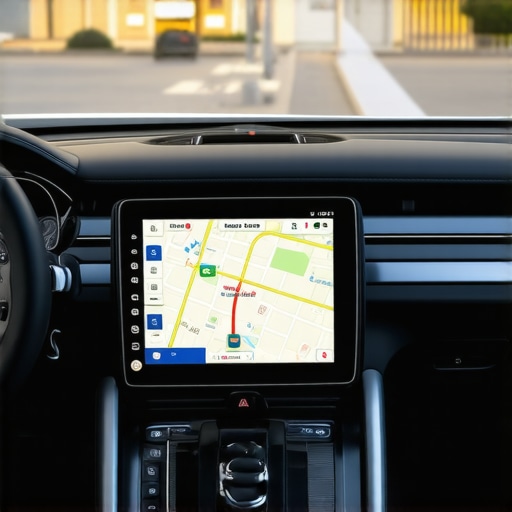
I’ve spent years refining the behind-the-scenes mechanics of high-end travel, and if there’s one truth I’ve learned, it’s that your tools determine your ceiling. You cannot reach elite levels of punctuality if your tech is consumer-grade. Most people assume a smartphone is enough for a driver, but heat-induced battery lag and notification interruptions are silent killers for a professional schedule. This is why we use dedicated GPS hardware instead of smartphone apps. I personally insist on hardware like the Garmin dēzl series because it processes satellite data without the overhead of a multi-tasking OS. It provides safety precision the key to reliable hourly reservations for peace of mind, ensuring that even if a cell tower goes down, the mission stays on track. Professionals don’t rely on ‘bars’ of service; they rely on dedicated silicon that doesn’t blink when the signal drops in a concrete canyon.
How do I maintain a consistent standard for every single reservation?
Consistency is the byproduct of a strict maintenance culture that ignores the ‘if it ain’t broke’ mentality. It starts long before the passenger even sees the door handle. I always perform a quick check of the basics that others overlook because they think they are too small to matter. For example, the windshield wiper test a quick way to check fleet maintenance is a trick I use to judge the overall health of a vehicle’s upkeep. If the wipers are streaking or the fluid is low, it’s a high-probability sign that the oil changes or brake inspections might be lagging too. We also integrate real-time telematics into every vehicle in our fleet to remove human error from the maintenance loop. According to technical data from Geotab—a global leader in commercial telematics—predictive maintenance scheduling based on engine diagnostics can reduce unexpected mechanical failures by nearly 20% compared to reactive repairs. This data-driven approach is why real-time fuel monitoring prevents unexpected roadside stops. When you learn how to book a vehicle that stays with you all day, you are investing in a machine that is as prepared as the person behind the wheel.
The Future of High-Stakes Movement and Scaling
Scaling your travel needs—whether for a solo business trip or a multi-car convoy—requires moving away from the ‘transactional’ mindset of on-demand apps. I’m already seeing a major shift toward AI-integrated predictive route modeling. In the next few years, we won’t just see where the traffic is; we will see where it is going to be based on stadium schedules and flight delays being piped directly into the vehicle’s brain. However, no amount of AI will ever replace the foundational reason why safety and timeliness matter in hourly reservation services: human accountability. The future is a blend of high-tech sensors and human intuition. If you want to scale your own travel efficiency, stop treating transportation like a last-minute chore you squeeze into a calendar gap. Start by demanding a professional standard for every leg of your journey. I challenge you to try this on your next trip: ask your service about their GPS redundancy and their protocol for vehicle staging. If they don’t have a clear answer, they haven’t mastered the tools of the trade. Invest in the right setup, and you’ll find that ‘on-time’ isn’t a miracle—it’s a mathematical certainty.
What a Thousand Gridlocked Streets Taught Me About Real Flow
The most vital realization I’ve had in my years of managing high-stakes travel is that technology is a support, not a savior. If you rely solely on a consumer app, you are surrendering your schedule to a generalized average of everyone else’s failures. I’ve learned that true punctuality is an active pursuit, requiring you to think two steps ahead of the human crowd. This means realizing that on-time every time strategies for safe and reliable hourly bookings aren’t just suggestions; they are the difference between making your meeting and making excuses. I also learned that safety isn’t something you check once; it’s a continuous loop of verification. When I started applying stay secure and punctual the essential hourly reservation tips for timely service, my stress levels plummeted because I stopped hoping for a clear road and started planning for a blocked one.
The High-Precision Toolkit for the Sophisticated Traveler
If you want to move through a city with the same efficiency as a pro, you need to look at the resources that go beyond the basic App Store. I personally trust Geotab for its incredible ability to turn engine diagnostics into predictable maintenance schedules—no one likes a breakdown mid-route. For routing that doesn’t die when the cellular signal drops, a dedicated Garmin dēzl unit is indispensable because it prioritizes satellite lock over cell tower proximity. Most importantly, I recommend auditing your own digital footprint by using reservation security measures how to book safely and arrive on-time to keep your data out of the hands of third-party advertisers. Finally, always consult the National Association of City Transportation Officials (NACTO) guidelines if you really want to understand how city planners dictate the speed of your car through sidewalk design.
#IMAGE_PLACEHOLDER_E#
Take Back Control of Your Most Valuable Asset
Time is the only thing we can’t manufacture more of. When you demand a professional standard for your transportation, you aren’t just paying for a ride; you are buying back those lost minutes of frustration and uncertainty. By ensuring safety first your guide to on-time reservations at any hour, you set a precedent for how your time should be treated. Don’t be afraid to ask the hard questions or switch to a service that values precision as much as you do. The future of your travel is in your hands, and it starts with a single, well-planned reservation. Have you ever missed a flight because of a sidewalk surge or a curb delay you didn’t see coming? Let me know your experience in the comments below.