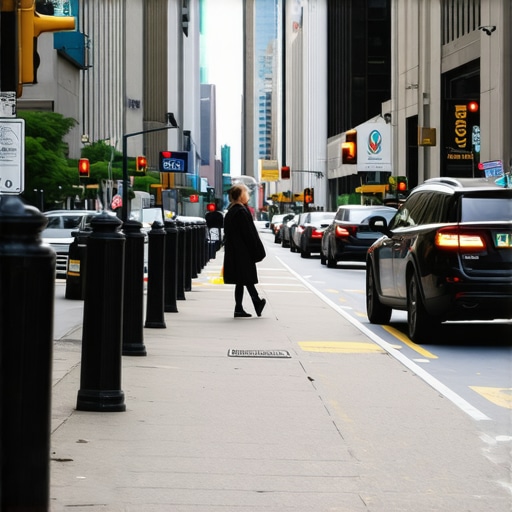
I stood there like a fool outside a massive glass skyscraper, watching a little blue car icon on my phone screen spin in frustrated circles. The driver thought I was on 42nd Street, but I was actually tucked away in a private loading zone on 41st, separated by a concrete wall and a world of confusion. It was raining, I was ten minutes late for a critical presentation, and that single GPS error cost me a seat at the table. We have all been there—standing on a curb, staring at a map that says ‘Your driver has arrived’ while the street in front of you is completely empty. It is not just a minor annoyance; it is a breakdown in the system that costs you time and safety. Today, I am going to show you how to close that gap for good. We are moving past the ‘hope and pray’ method of city travel to a system of precision that guarantees you and your driver find each other in seconds.
Stop Fighting the GPS Ghost
The truth is, your smartphone is often guessing. In dense urban environments, signals bounce off glass and steel, creating ‘multipath errors’ that confuse even the best apps. According to research from the Institute of Navigation, GPS accuracy can drop by over 50 meters in city centers, frequently placing you a full block away from your actual physical location. This is the real reason your pickup location affects your punctuality more than the actual traffic does. Early in my journey as a frequent traveler, I made the mistake of assuming the technology was infallible. I would wait until the last second to head downstairs, only to find my driver at the wrong entrance. Now, I advocate for a much more proactive approach. You need to master the art of the ‘fixed point’ pickup. This involves timing your exit from a high-rise to meet your driver perfectly at a pre-verified spot. When you book an hourly reservation, you are paying for the driver’s ability to navigate these complexities, but you have to give them the right starting line.
Does a manual note really make that much of a difference?
You might think that adding a note to your reservation is overkill, or that the driver will not bother to read it. I used to think the same thing until I realized that why on-demand apps often struggle with prompt airport pickups is usually down to the lack of human-to-human communication. By taking thirty seconds to specify ‘Southwest corner, under the green awning,’ you eliminate the guesswork and ensure your safety by not standing exposed on a busy corner for longer than necessary. If you are heading to a flight, knowing the specific drop-off point at the terminal that saves 10 minutes is great, but getting picked up correctly is where you truly win back your schedule. Have you ever watched your driver drive right past you because the app pinned you to the wrong side of the building?
Stop Guessing and Start Geofencing Your Time
The first step to regaining control of your schedule is acknowledging that the blue dot on your phone is a suggestion, not a law. Urban canyons confuse smartphone GPS, which is the reason your real-time map sometimes lags in the city. To fix this, you must anchor your pickup to a physical landmark that exists independently of a satellite signal. Instead of ‘Current Location,’ choose a hotel porte-cochere or a specific numbered street lamp. I learned this the hard way during a rainy evening in Chicago when three identical black SUVs pulled up to the same hotel curb simultaneously. The chaos was palpable as six different passengers tried to open the same doors. By having already confirmed my driver’s specific parking spot via the app’s note field, I walked straight to the second vehicle while others were still arguing with the first driver. Professional services prioritize this because why real-time vehicle data is more accurate than estimated times often comes down to the quality of the hardware in the car. Professional fleets often rely on external antennas, which is why we use dedicated GPS hardware instead of smartphone apps to ensure that ‘one block away’ actually means 500 feet, not five minutes.
Identify Your Professional Driver in Seconds
Safety and punctuality are two sides of the same coin. You cannot be on time if you are wasting three minutes verifying if the car in front of you is actually your ride. Don’t just look at the make and model; look for the legal markers of a professional. Knowing how to spot a genuine commercial license plate instantly is your first line of defense. In most cities, these plates have specific letter prefixes or colors that separate them from standard commuters.  If you see a vehicle without these markings claiming to be your ‘luxury’ ride, your safety is already compromised. I always perform a quick visual audit as the car approaches: check for the commercial permit on the windshield and ensure the driver doesn’t lead with my name. If they ask ‘Who are you looking for?’ instead of ‘Are you Mr. Smith?’, they are following a protocol that keeps your identity secure. This level of reservation security measures is what ensures you arrive on time without the ‘wrong car’ nightmare.
Why One-Way Bookings Fail the Punctuality Test
If you have a tight schedule with multiple stops, the biggest mistake you can make is booking separate one-way trips. This forces you to restart the ‘find the driver’ game at every single location. Transitioning to a time-based model is the ultimate efficiency hack. You need to understand how hourly transportation eliminates the stress of finding parking or waiting for a new dispatch. When a driver is reserved by the hour, they are essentially your mobile base camp. Why safety and timeliness matter in hourly reservation services becomes clear when you realize the driver stays on-site, monitoring local traffic in real-time, ready to pull up the second you exit the building. This eliminates the ‘5-minute away’ lie told by automated dispatch bots and replaces it with a human who is already idling at the corner.
Most travelers believe that on-demand apps offer the peak of flexibility because you can summon a car at the push of a button. In my experience, this is the first and most expensive mistake you can make when your schedule is non-negotiable. I call it the ‘Flexibility Paradox.’ While you think you are staying agile by not committing to a schedule, you are actually tethering yourself to the whims of a chaotic dispatch algorithm that doesn’t know the difference between a side street and a loading dock. Real agility comes from having a dedicated asset already on the ground, which is the hidden math behind why hourly chauffeurs save executives money. When you book by the hour, you aren’t just paying for a ride; you are paying for the elimination of the transition gaps that eat up to 20% of a business traveler’s day.
The high cost of ‘cheaper’ on-demand apps
The trap many high-stakes travelers fall into is the ‘oops’ factor of assuming an ETA is a guarantee. We have all seen it: the app says ‘3 minutes away’ for ten minutes straight. This happens because most consumer-grade apps rely on smartphone-based GPS, which is prone to latency and signal drift. A study by the Texas A&M Transportation Institute found that in high-density urban areas, travel time reliability—not just speed—is the primary factor in meeting professional deadlines. This is why real-time vehicle data is more accurate than estimated times provided by a standard phone. Professional services bypass this by using integrated vehicle systems. 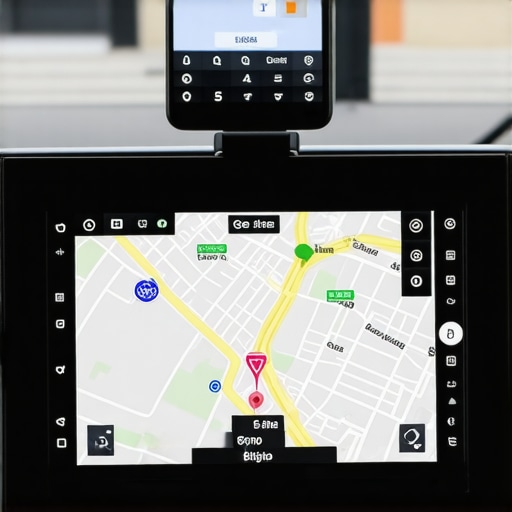 By understanding why we use dedicated GPS hardware instead of smartphone apps, you realize that the ‘ghost car’ on your screen is often a result of poor hardware, not just traffic.
Does your service prioritize hardware over convenience?
Advanced travelers know to look beyond the leather seats. If you want to ensure your safety and schedule, you must verify a driver’s safety certification without being rude by simply asking about their vehicle’s integrated tracking system. Another common ‘trap’ is relying on the ‘I’m outside’ text. I have seen countless meetings missed because a passenger relied on a text that never arrived due to a cellular dead zone. This is the danger of relying on verbal confirmations for important travel. Instead, demand a digital confirmation that includes a live tracking link and a physical trip manifest.
Why the little car on your screen is often a ghost
Expert-level travel management requires moving away from reactive booking. If you are still using one-way bookings for a day with three or more stops, you are essentially gambling with your punctuality. Implementing on-time every time strategies for safe and reliable hourly bookings means you have a driver who has already scouted the secondary exits and ‘secret’ drop-off points that GPS ignores. Following these essential hourly reservation tips for timely service isn’t just about being fancy; it’s about building a protective bubble around your most valuable asset: your time. Have you ever fallen into the ‘ETA trap’ only to find out your driver was two blocks away behind a construction barrier? Let me know in the comments how you handled it.
Maintaining a perfect record of punctuality isn’t just about having a lucky morning; it’s about the silent technology working in the background. While most travelers are stuck refreshing a laggy map on a consumer app, I rely on services that treat telematics like a precision science. According to technical insights from Geotab, a global leader in IoT and connected transportation, real-time engine diagnostics and high-frequency GPS pings are the only way to truly mitigate the risk of mechanical failure before it happens. This is exactly why real-time fuel monitoring prevents unexpected roadside stops—because the system catches a low-fuel warning or a minor sensor glitch before the driver even arrives at your door. 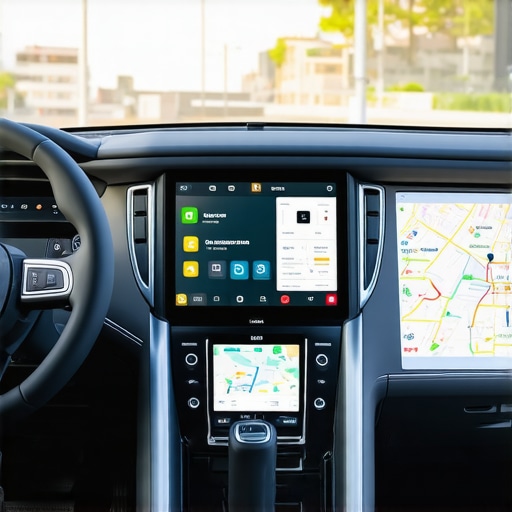
Trust the Hardware Over the Hype
I’ve learned that the most reliable drivers don’t just use a phone on a dash mount; they use integrated vehicle systems that account for ‘dead reckoning’ in tunnels and under bridges where signals die. This technical edge is why professional drivers avoid the shortest routes on GPS in favor of lanes that offer better satellite visibility and smoother traffic flow. If you want to scale your personal travel system, you have to move away from public platforms and toward private, encrypted portals. I always audit my online booking for hidden security vulnerabilities to ensure my location data isn’t being leaked to advertisers. To prevent identity theft, I make sure I know how to verify your payment is processed via a secure gateway every single time. Using the security protocols our booking software uses to protect you means your travel patterns remain your business. When you book through a specialized portal, you should also look at how they handle the documentation. I always insist on having a physical copy of your trip reservation available. This is because why manual reservation checks outperform automated bots often comes down to the details that an app misses, like specific gate codes or loading dock nuances.
How do I maintain this precision over several months of travel?
The secret to long-term success is a consistent feedback loop between the passenger and the dispatch team. I’ve found that why we prioritize human dispatchers over pure AI scheduling is because an algorithm can’t predict a sudden road closure with human intuition. To keep things running smoothly, I recommend a ‘tech check’ every quarter. Ask your provider why your booking confirmation should always include a photo of the vehicle to ensure what arrives matches your security expectations.
The Shift Toward Augmented Chauffeur Services
Looking ahead, I predict we will see a major divergence in the market. While mass-market apps will push for total automation, high-end travel will lean into ‘augmented human’ services—where professional drivers are supported by predictive AI that handles the logistics while the human focus remains on your safety. This hybrid model is already proving that why safety and timeliness matter in hourly reservation services is about more than just driving; it’s about managing a mobile environment. For your next trip, I challenge you to try this: instead of just checking the ETA, ask your driver about their vehicle’s tracking frequency. You’ll instantly know if you’re in a high-performance machine or just another gig-economy car.
Why I Finally Quit the On-Demand App Gamble
Over the years, I have had several lightbulb moments that completely changed how I move through a city. First, I realized that the 12-minute rule for stress-free airport pickups is the absolute minimum buffer you need to account for elevator wait times and terminal crowds. Second, I learned that a driver who communicates proactively is worth ten times more than a fancy app interface. Third, I discovered that why manual reservation checks outperform automated bots is simply because humans can see a parade or a water main break that a satellite misses. I stopped hoping for the best and started demanding precision.
The Pro-Traveler’s Toolkit for Zero Delays
If you want to travel like an insider, you need more than just a credit card; you need a system. I personally rely on these three pillars for every trip: Always use the security protocols our booking software uses to protect you to ensure your data stays private and out of the wrong hands. I never leave home without verifying why you must demand a physical copy of your trip reservation, which serves as my offline backup when phone batteries fail. Finally, I make sure I am using a service that allows me to manage family travel with flexible reservation edits, because plans change the moment kids or luggage are involved. #IMAGE_PLACEHOLDER_E#
Build Your Own Buffer of Certainty
You don’t have to be a victim of a glitchy map or a driver who cannot find the porte-cochere. By shifting your mindset from summoning a ride to securing a professional asset, you eliminate the anxiety that usually accompanies city travel. It is time to maximize your safety and satisfaction with our precise reservation timing and stop settling for good enough. Your schedule is too important to leave to an algorithm that doesn’t care if you are late. Whether you are booking an hourly reservation for a full day of meetings or a quick transfer, the precision you demand is finally within your control. Have you ever been ghosted by a ride-share app while standing in the rain? Share your story in the comments below!