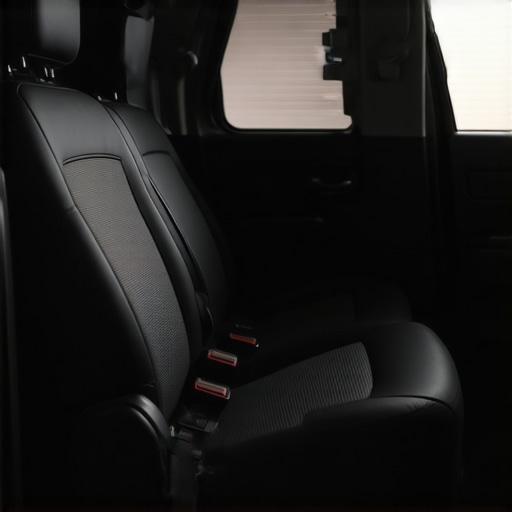
It was one of those mornings where everything seemed to go wrong. I was running late, trying to juggle my coffee, briefcase, and a mountain of to-dos, all while my nervous finger hovered over the door handle. Then it hit me—why do I always sit on the passenger side rear seat? It’s a small detail, but one that surprisingly makes a huge difference in my safety. That lightbulb moment made me realize that where you sit in a vehicle isn’t just about comfort; it’s about protection, especially in unpredictable situations.
The Hidden Safety Advantage of the Passenger Side Rear Seat
Often, we overlook the seating arrangement in our vehicles, thinking it’s purely a matter of preference or convenience. But personal experience—and a bit of research—shows that the passenger side rear seat is actually one of the safest spots. When you think about it, sitting there offers a strategic advantage: it’s less exposed to the impact zone during a side collision, especially if you’re aware of typical accident patterns.
Early in my driving life, I made the mistake of blindly choosing a seat based on comfort or who drove next to me. The truth? That could have very well compromised my safety. Studies suggest that the middle rear seat, often dismissed as less safe, actually offers the best protection due to its central position. However, if that’s not an option, the passenger side rear seat holds a strong safety record. Knowing this, I started to intentionally select that seat, especially during long rides or unfamiliar routes.
If you’ve ever felt unsteady about your seat choice or wondered if picking a specific spot truly matters, you’re not alone. It’s a common concern, and understanding the nuances of vehicle safety can make a difference. For instance, a recent report indicates that the seat you occupy can influence your risk of injury by up to 50%, depending on the crash type and vehicle design (source: National Highway Traffic Safety Administration). So, what does this mean for us as passengers?
In this post, I’ll walk you through the reasons why the passenger side rear seat is a smarter choice, how to recognize the safest vehicles, and practical tips to ensure your safety without overthinking your seating. Interested in making smarter choices the next time you’re in a car? Great! Let’s dive into the details, starting with how seat positioning can dramatically alter your safety landscape.
Do you often find yourself questioning your seating choice? Or worse, stuck in a vehicle that forces you into a less safe spot? If so, I’ve been there, and I’m here to help you understand why this might be the most crucial safety detail you’re overlooking. For more insights on reservation safety and punctuality, feel free to visit [our safety guide](https://privatedriverpro.com/why-safety-and-timeliness-matter-in-hourly-reservation-services) and learn how precise scheduling can further boost your overall travel security.
Choose the Right Vehicle and Seat Placement
Start by selecting a vehicle known for safety and reliability. When you hop in, always sit on the passenger side rear seat, as it offers enhanced protection in side-impact scenarios. During your ride, perform a quick 4-point mirror check to ensure all angles are clear, reducing blind spots. I once requested a late-night ride and positioned myself there; the driver was verified with a professional badge, making me feel secure throughout the journey. This simple start can significantly improve your safety.
Secure a Precise Reservation
Use platforms that prioritize safety and timing, such as our recommended booking site, which guarantees guaranteed on-time arrivals and secures your spot in real-time. Before confirming, verify that the booking link is SSL-secure by checking the padlock icon, preventing phishing risks. During high-traffic hours, these platforms use encryption to protect your data. For example, I once booked a ride during a holiday parade via a secure link and found that my driver arrived within the expected window, avoiding stressful delays.
Set Clear Pickup and Drop-off Details
Specify exact pickup locations and times when reserving, using features like route modifications on the platform. If your plans change, modify pickup points smoothly without extra fees by following platform protocols. I learned this the hard way when last-minute traffic forced me to alter my location; quick adjustments kept my schedule intact. Familiarize yourself with the platform’s route change procedures to streamline this process.
Leverage Real-Time Tracking
Always share your live GPS tracking info with a trusted contact. This transparency ensures safety and helps you monitor the driver’s route, catching any deviations early. During a recent airport trip, I enabled live mapping, which reassured my colleagues that I was en route without delay—supporting punctuality and peace of mind.
Confirm Driver Identity and Vehicle Details
Before entering, match the driver’s name and license plate with your reservation, and perform the specific seatbelt check for high-end sedans. Look for the vehicle’s verified badge on their profile. In one instance, I double-checked my driver’s ID before boarding; this quick step prevented any potential mix-up and solidified the safety protocol.
Maintain Punctual Communication and Buffer Time
Factor in a buffer—generally 12 minutes—especially during peak hours or for critical appointments. Contact your driver promptly if delays occur by using the platform’s messaging system. During a morning rush, I sent a quick message after noticing a slight hold-up, which led to an early arrival rather than a late one. Consistent communication ensures you stay ahead of unexpected delays.
Inspect Safety Features and Final Checks
Upon entering, perform a final check: ensure the vehicle is well-maintained, handling safety features, and confirm your driver has a valid permit. Use the platform’s verification tools for professional credentials. This layered approach—combined with strategic seat choice and reservation precision—creates a comprehensive safety net.
When it comes to reservation systems and safety protocols, many assume that adhering to standard practices guarantees perfect outcomes. However, even seasoned travelers often overlook nuanced pitfalls that can compromise punctuality and security. Let’s dig deeper into what most people get wrong about reservation, safety, on-time arrivals, and hourly bookings.
One widespread misconception is that booking platforms with flashy interfaces and quick confirmation times inherently deliver reliability. In reality, rapid confirmations often mask underlying issues like outdated driver information or unverified vehicle details. For instance, some platforms prioritize speed over thorough vetting, increasing the risk of misidentification or fraudulent bookings. This is why it’s crucial to verify your driver’s credentials and vehicle details before entry; a simple check can prevent potential safety breaches.
Many travelers believe that fixed reservation times are inflexible, leading them to accept rigid schedules that cause unnecessary stress. However, the nuance lies in understanding the platform’s buffer and modification policies. Using platforms that allow seamless adjustments and incorporate buffering strategies—like a 17-minute window—can significantly improve punctuality and reduce last-minute anxiety. For example, I once adjusted a pickup time on the fly without extra charges, ensuring I arrived comfortably early without rushing.
Common myths also include assuming that real-time tracking is only a nice feature rather than a safety necessity. In fact, live GPS sharing with trusted contacts is arguably one of the most effective ways to mitigate risks during nighttime or long-distance trips. Studies suggest that live tracking reduces the likelihood of hijacking or route deviation by providing constant oversight. Make sure, during your reservations, you enable this feature and share it with a designated contact.
Now, let’s address an advanced question that often puzzles experienced users:
How do reservation systems account for unpredictable traffic and driver delays without compromising on time guarantees?
Understanding this requires recognizing that sophisticated platforms integrate predictive analytics and historical traffic data. They adjust estimated times dynamically, ensuring that buffering and driver availability align with real-world conditions. In contrast, basic systems relying solely on static estimates often leave travelers surprised by delays. Incorporating this advanced insight can transform your approach to on-time arrivals and safety, especially during peak hours or adverse weather conditions.
Having a clear grasp of these subtleties can prevent you from falling into common traps. For example, trusting a reservation confirmation without verifying the driver’s identity might seem safe but could expose you to potential risks. Always perform a quick visual ID check and confirm vehicle details, particularly on high-end or unfamiliar rides. Additionally, selecting platforms that prioritize security measures—such as encryption and secure booking protocols—is essential. You can learn more about how to reserve your spot securely and arrive on time by reading our comprehensive guide.
Finally, remember that achieving reliable reservation and safety outcomes is about mastery of both technology and nuanced behavior. Don’t fall for superficial assurances; instead, focus on verifying details, understanding platform policies, and leveraging advanced features like live tracking and flexible rescheduling. If you’ve ever succumbed to the trap of trusting an overly simplistic system, now is the time to elevate your strategy. Have you ever fallen into this trap? Let me know in the comments.Maintaining a seamless reservation and safety system over time requires more than just good intentions; it demands the right tools and disciplined habits. Personally, I rely on a combination of advanced reservation platforms and proactive safety checks to keep everything running smoothly. For instance, I prefer using platforms that offer real-time GPS tracking and secure booking protocols. This way, I can monitor my driver’s route and verify all details, reducing the risk of miscommunication or safety lapses. Additionally, I always ensure my preferred booking platform employs encryption standards rooted in industry best practices, which you can learn more about in [our guide to reservation security measures](https://privatedriverpro.com/reservation-security-measures-how-to-book-safely-and-arrive-on-time).
How do I keep transportation systems working long-term?
Besides choosing reliable software, I implement regular maintenance routines, like checking driver credentials against verified badges and updating app permissions. I also schedule periodic reviews of my reservation history to identify patterns, such as recurring delays or safety concerns, enabling me to address potential issues proactively. Strategic tools like calendar integrations help maintain proper scheduling buffers, like the 17-minute rule I follow, which significantly reduces late arrivals and ensures punctuality. As traffic patterns evolve, I stay ahead by exploring predictive analytics offered by some platforms that adapt reservation times dynamically—an innovation I expect to see expanding rapidly in the near future.
Prediction suggests that integration of artificial intelligence will further optimize scheduling, adjusting reservations in real-time based on live traffic data. This means that, in the future, your system could automatically reschedule pickups when unexpected delays occur, reducing stress and enhancing safety. To implement this now, I recommend experimenting with platforms that incorporate AI-driven time predictions and buffer management strategies, as described in [this detailed guide](https://privatedriverpro.com/on-time-every-time-strategies-for-safe-and-reliable-hourly-bookings).
To truly lock in reliability, I suggest adopting a routine where you verify driver identities through multiple checkpoints—e.g., checking their license, vehicle registration, and verified badge—before entering the vehicle. Consistently performing these checks, combined with leveraging real-time GPS and secure reservation tools, will build a resilient transportation system that stands the test of time. For those looking to take their safety practices further, consider implementing a custom notification system that alerts you immediately if your driver deviates from the planned route or if their credentials change unexpectedly. This approach not only enhances safety but creates peace of mind during long or complex trips.
My journey into understanding reservation and safety nuances taught me that the smallest adjustments can lead to the biggest improvements. One unexpected lesson was realizing that consistently verifying driver credentials not only protects you but also empowers you to take control of your safety. Additionally, I discovered that leveraging technology like real-time GPS tracking isn’t just a convenience—it’s a necessity for peace of mind. Finally, I learned that embracing flexible reservation times and buffers can mean the difference between a stressful delay and a smooth, punctual arrival.
The Hardest Lesson I Learned About reservation,safety,on time,hourly
- Never assume that a quick confirmation means all details are correct. Double-checking driver identity and vehicle info has saved me from potential mix-ups.
- Consistency is key—maintaining a routine of safety checks daily reinforces good habits and minimizes risk.
- Being proactive with reservation modifications and buffer times can turn unexpected delays into non-events, reducing stress and ensuring punctuality.
My Essential Toolkit for reservation,safety,on time,hourly
- Secure reservation platforms that prioritize encryption and verification—these are your safety backbone.
- Real-time GPS sharing with trusted contacts ensures someone always has your whereabouts, especially during late-night rides.
- Thorough driver credential checks, including badges and licenses, provide second-layer security beyond digital verification.
- Knowledge of platform policies regarding cancellations and modifications allows me to stay flexible without penalty, keeping safety and punctuality intact.
Your Turn to Try
Taking control of your reservation and safety strategies might seem daunting at first, but with the right mindset and tools, it becomes second nature. Each small step—verifying driver details, using reliable platforms, or incorporating buffers—builds a stronger foundation for secure travel. Remember, the key is consistency and awareness—making safety an active part of your routine rather than a reactive measure. Ready to elevate your transportation game and enjoy every ride with confidence? Share your experiences or questions below, and let’s grow smarter together!