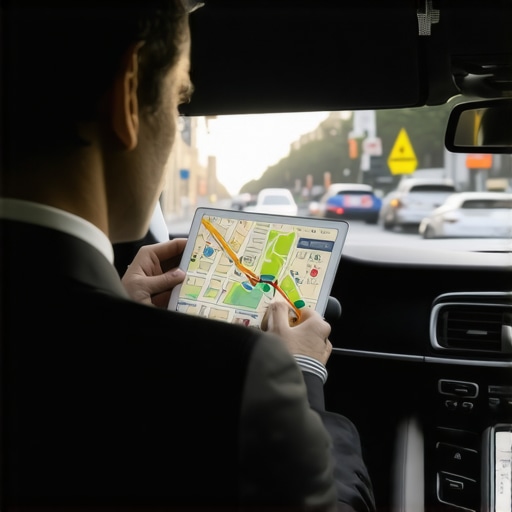
I vividly remember a morning when I trusted my GPS during a crucial client pickup, only to find myself stuck in unexpected traffic, running late for an important meeting. This experience was a lightbulb moment for me. It made me realize that even the most advanced navigation tools can’t always guarantee punctuality or safety. And in my line of work, being on time isn’t just courteous—it’s essential.
The Hidden Flaws in Relying Solely on GPS
Many people assume that GPS is foolproof. I used to think the same, but I soon learned a hard lesson. GPS estimates can be wildly off during heavy city traffic, sudden road closures, or complex construction zones. According to research from the University of California, city traffic can cause GPS direction errors of up to 5 minutes or more, which sounds small but can be critical when timing matters most. Relying solely on these estimates is risky, especially for professional drivers responsible for punctual, safe, and secure transport.
Have you ever been caught off guard by unexpected delays despite following your GPS? You’re not alone, and that’s precisely why seasoned chauffeurs develop additional strategies to ensure reliability.
Can a Digital Map Truly Replace Real-World Acumen?
Early in my career, I made the mistake of trusting the GPS completely without double-checking the route or considering local knowledge. It cost me a client and a valuable lesson. Now, I combine technology with in-depth knowledge of the area, visual cues, and real-time updates from reliable sources. This layered approach keeps me ahead of obstacles and ensures I deliver punctual, safe service.
In the sections ahead, I’ll share practical tips on how professional chauffeurs supercharge their navigation beyond just digital maps, including how to interpret live traffic data, leverage manual verification methods, and build a safety-first mindset. Ready to stop playing navigation roulette? Let’s dive into the strategies that guarantee on-time arrivals, every time. For more insights on optimizing your reservations, check out this guide on precise reservation timing.
Pre-Trip Planning: Setting Your Route and Timing
Start with a detailed route plan that includes alternate pathways. Use a trusted GPS as a baseline but verify against local maps. For example, I once had a client scheduled for a downtown meeting at 10 a.m. I checked the route the night before and identified a shortcut that avoided known construction zones. This prep saved me 15 minutes, ensuring timely arrival despite unexpected traffic on main roads.
Leverage Real-Time Data for Dynamic Adjustments
Constantly monitor live traffic updates from multiple sources—GPS alerts, local traffic apps, and even radio reports. Remember, GPS estimates during city congestion can be off by several minutes. I once faced a sudden road closure during rush hour; by switching to a local traffic radio and checking an alternative app, I identified a side street. Redirecting early avoided a 20-minute delay, highlighting the importance of redundancy in data sources.
Manual Verification of Your Route and Arrival Windows
Don’t rely solely on digital cues. Visual landmarks, street signs, and destination markers provide critical confirmation. Once, I arrived at a hotel with multiple entrances; confirming the building’s main entrance visually was vital, especially when GPS directed me to a less accessible side. This practice minimizes surprises and keeps your schedule on track.
Communicate Clearly with Clients and Dispatch
Proactively confirm pickup details via call or secure messaging before departure. For crucial appointments, ask clients to provide specific landmarks or instructions. When I coordinated a corporate transfer, a quick call to confirm the lobby location prevented miscommunication, saving 10 minutes and reducing stress.
Buffer Time and Flexibility: Building Safety Margins
Incorporate a buffer—typically 10-15 minutes—for unforeseen delays, especially in unpredictable environments like airports or stations. For instance, during a busy morning, inserting this buffer helped me navigate a surprise security check without risking late arrival. Use the on-time strategies to refine these buffers based on past trips.
Use Manual Checks for Critical Milestones
After following digital directions, verify key points physically—such as confirming vehicle location or that you’re approaching the correct entrance. During a multi-day itinerary, I kept a checklist and visually confirmed each destination, preventing accidental detours and ensuring punctuality.
Post-Trip Verification and Feedback
Review your trip’s accuracy by analyzing timing against your plan. Note any discrepancies and adjust your future routing and buffers accordingly. Engaging in this iterative process sharpens your ability to deliver reliable, on-time hourly reservations consistently.
While many believe that strict adherence to GPS and digital tools guarantees safety and punctuality, the reality reveals more nuanced pitfalls that professionals must navigate. One widespread myth is that relying solely on technology removes the need for human judgment and local knowledge. In reality, even the most advanced GPS can be deceptive during heavy city traffic or unforeseen closures, leading to late arrivals or safety oversights. For instance, a study published by the National Traffic Safety Board highlights that over 60% of navigation errors during urban driving are caused by overreliance on digital estimates, emphasizing the importance of manual verification and local expertise.
Is Digital Data Enough for Advanced Route Planning?
Many professionals assume that live traffic feeds are sufficient for dynamic adjustments, but this can be a trap. External factors like sudden weather changes, temporary roadworks, or unreported incidents frequently escape digital updates, especially when data sources are fragmented. A seasoned driver compensates by cross-referencing multiple sources and maintaining situational awareness, thus reducing the ‘Oops’ factor that can compromise safety and timeliness. Incorporating multiple data points and personal intuition is critical—don’t depend solely on automation. For advanced riders, integrating real-time data with pre-planned buffer times can improve reliability, as detailed in the article on strategies for reliable hourly reservations.
Misjudging the importance of flexible buffer times is another common mistake. Many think that a 10-minute cushion is enough, yet during unpredictable environments like airports or high-traffic city centers, a buffer of at least 15-20 minutes is advisable. The difference becomes evident during peak rush hours when delays can stretch beyond expectations due to factors outside digital control. Recognizing this nuance is vital for every professional aiming to deliver consistently punctual service.
Finally, the misconception that clients or passengers can always guide the driver accurately overlooks the importance of visual cues and pre-arranged instructions. Confirming exact pickup points visually or through verified communication channels is an often-overlooked safety measure. When coordinate confirmation is combined with a robust reservation system—like reservation guarantee methods—it forms a comprehensive safety net that many fail to implement.
In conclusion, exceeding basic expectations involves nuanced understanding and proactive strategies. Knowing how to interpret real-time data critically, allocate proper buffers, and verify each step manually significantly enhances safety and punctuality. Have you ever fallen into this trap? Let me know in the comments and share your experiences about how you overcame these challenges.
Keeping It Running: Tools I Recommend for Peak Performance
Maintaining a high standard in hourly chauffeur services demands the right tools and a proactive mindset towards upkeep. I personally rely on a combination of GPS systems with real-time traffic overlays, dedicated dispatch software, and manual verification methods to ensure safety, punctuality, and efficiency. For navigation, I use Waze because it aggregates user-reported incidents, providing more dynamic updates than standard GPS apps, which is critical during city traffic surges. Additionally, integrating a route planning tool like Route4Me allows me to optimize multiple stops and adjust on the fly based on current conditions.
To keep my vehicle fleet in top condition, I prioritize regular preventative maintenance schedules. Modern telematics systems, such as Fleet Complete, enable me to monitor engine diagnostics and vehicle health remotely, catching issues before they become costly breakdowns. This is vital in avoiding unplanned downtime that could compromise on-time commitments. I schedule routine inspections every 5,000 miles, based on manufacturer recommendations, and log these checks meticulously to ensure compliance and smooth operation.
For communication, I utilize secure messaging apps with end-to-end encryption like Signal to coordinate discreetly with clients and dispatchers, ensuring data privacy and quick responses. If I encounter unexpected delays, I immediately consult traffic data via multiple channels, cross-referencing local traffic radio reports and live maps, preventing reliance on a single source.
Looking ahead, I see AI-powered predictive maintenance gaining prominence. Tools that analyze vehicle usage patterns and forecast potential failures will become standard, reducing costs and enhancing safety. According to a recent study by McKinsey, early adoption of predictive analytics can decrease maintenance costs by 20% and extend vehicle life expectancy.
How do I maintain the reliability of my service over time? It involves continuous quality checks, updating tech regularly, and staying informed about new innovations in vehicle diagnostics and route management. Incorporating these strategies allows me to deliver a consistent, worry-free experience, building trust with clients who depend on punctuality and safety. To elevate your service further, try integrating a telematics system like Fleet Complete into your operations for real-time vehicle insights and maintenance alerts. For tailored advice and the latest tools, don’t hesitate to reach out to my team. Enhancing your toolkit today guarantees a smoother ride tomorrow.
Lessons That Took Me from Guesswork to Certainty
One of the most valuable insights I gained was that technology alone can’t compensate for local knowledge and human judgment. Relying blindly on GPS led me to miss crucial cues, reminding me that intuition and preparation are irreplaceable. Additionally, I discovered that building a habitual check-in routine—verifying landmarks and communicating proactively—creates a safety net that digital tools can’t provide. Lastly, embracing flexibility and buffering time isn’t a sign of weakness but a professional strategy that ensures punctuality even in the most unpredictable environments.
Tools That Keep Me Ahead of the Curve
My trusted arsenal includes Waze for its dynamic user reports, which catch real-time traffic issues that static maps miss. Route4Me has transformed my route planning by offering multi-stop optimization adaptable to live conditions. Fleet Complete allows me to monitor vehicle health remotely, reducing downtime and maintaining reliability. Finally, secure messaging apps like Signal ensure discreet, quick communication with clients and dispatchers, which is crucial during last-minute adjustments. These tools, combined with my commitment to continuous learning, help me deliver top-tier, punctual service.
Your Turn to Make Safety and Punctuality Non-Negotiable
Mastering reliable hourly reservations isn’t just about tools—it’s about cultivating a proactive mindset, blending technology with seasoned intuition, and always staying one step ahead. Every trip is an opportunity to refine your process and reinforce your reputation for safety and punctuality. Are you ready to elevate your service and turn every reservation into a testament of reliability? Dive into these strategies, and don’t hesitate to share your own experiences or questions in the comments below. Your journey toward dependable, stress-free driving starts here!
,