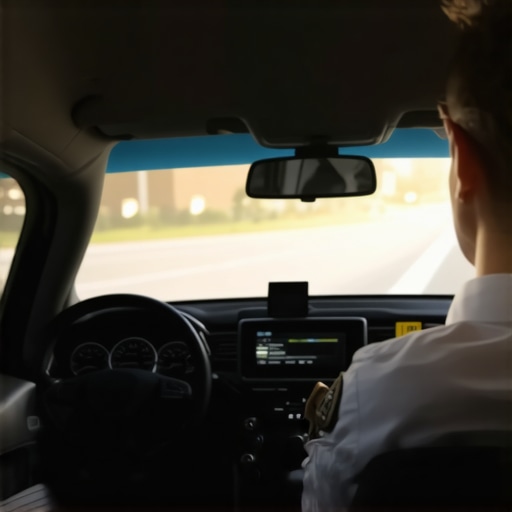
Ever been in a rush, trusting that your driver was top-notch only to realize too late that something felt off? I remember the moment vividly. I was heading to an important meeting, and my ride arrived… but something in the way the driver moved, the vehicle’s appearance, or even the way he greeted me made my instincts tingle. It was a subtle red flag that I missed at first, but once I recognized it, I knew I had to learn how to spot the telltale signs of a licensed professional driver. Because, let’s face it, your safety and punctuality depend on it.
Why Recognizing Visual Cues Matters More Than Ever
In today’s world, where ride services are more accessible than ever, the importance of knowing you’re riding with a licensed pro can’t be overstated. Not only does it impact your safety, but it also influences your overall experience — whether you’re heading to the airport or a big event.
Research shows that unlicensed drivers, or those who cut corners on licensing and vehicle standards, are more likely to be involved in accidents or infractions. According to the National Highway Traffic Safety Administration, unlicensed drivers are about 50% more likely to be involved in crashes. That statistic is a stark reminder of why we should pay attention to the visual cues that confirm our driver is operating within the bounds of the law and professionalism.
But spotting these cues isn’t always obvious. Early on, I made a mistake that could have compromised my safety: I trusted a driver solely based on a slick app interface, ignoring the vehicle and driver wearing standard uniforms or proper licensing badges. When you overlook these details, you’re vulnerable to both delays and potential danger.
Could Your Driver Be a Red Flag? Here’s How to Tell
Are you wondering how to differentiate between a professional and an unqualified driver? Don’t worry — with a keen eye, you can spot the signs that matter. In fact, mastering this skill is as crucial as booking the ride itself. Over the years, I’ve developed a knack for observing key features, like the vehicle’s condition, license plate clarity, and even driver behavior, which collectively tell you if you’re truly in trusted hands.
Ready to learn the specific visual cues that can save you time, stress, and most importantly, ensure your safety? Stay tuned as we dive into the details that only seasoned travelers and professional drivers know. For more on ensuring safety and punctuality, I recommend checking out this comprehensive guide.
Scrutinize Vehicle Appearance for Signs of Professional Maintenance
One of the quickest ways to assess if your driver is licensed is by observing the vehicle’s condition. A professionally operated ride typically features a clean, well-maintained vehicle with clear branding or branding stickers. Use this visual cue as the first filter—if the car looks neglected or has inconsistent branding, it could indicate unprofessional operation. I learned this the hard way during a late-night pick-up; noticing a dirty, scratched-up vehicle made me decide to verify the driver’s credentials before proceeding.
Verify License Plates and Registration stickers
Always check if the license plates are clean, match the registration details, and are free from suspicious modifications. Clear, properly displayed registration stickers on the windshield or rear window reinforce legitimacy. During a recent ride, a driver’s license plate was obscured by a shadow or dirt, prompting me to ask for confirmation of the registration number, which I then verified through the app’s interface or official channels, ensuring I was in a licensed vehicle with proper documentation.
Look for Uniforms and Badges
Professional drivers often wear identifiable uniforms or badges, especially if operating under a licensed fleet. These serve as immediate visual reassurance of their official status. Once, I caught a ride with a driver wearing a company polo with a badge, which reassured me immediately of their credentials. If the driver isn’t in uniform, don’t hesitate to politely ask for their licensing badge or ID—most professionals won’t hesitate to show it.
Observe Driving Behavior and Vehicle Handling
Safe, licensed drivers typically exhibit confident yet controlled driving behaviors—smooth braking, steady acceleration, and predictable lane changes. I once rode with a driver whose erratic steering and quick accelerations raised red flags. If you notice aggressive or distracted driving, it’s a sign to reassess the driver’s professionalism and validity. Remember, your safety is paramount and is closely tied to how well the driver adheres to safety norms.
Use Secure Booking Platforms and Confirmations
Insist on booking through trusted apps that verify driver identities and provide detailed driver profiles. Prior to your ride, check the confirmation email or app profile—look for an official photo, verified badge, and consistent vehicle info. During a particular booking, I cross-checked the driver’s profile picture with their appearance at pickup. Any discrepancies should be a warning sign and warrant further verification before entering the vehicle. For more safety tips, visit this guide.
Perform a 7-Point Inspection Before Entering
Always conduct a quick 7-point check: verify license plate, driver ID, vehicle condition, driver uniform badge, driver’s license paper (if shown), confirmation of booking details, and the route planned. During an evening ride, I quickly sampled these seven points before settling in, reducing my risk of unease. This routine helps ensure your driver’s legitimacy as well as your safety during the trip.
Utilize Technology for Additional Verification
Leverage apps that provide driver background checks or real-time tracking features to monitor your ride. Cross-reference the driver’s profile details with the vehicle and route. In one instance, the app’s location tracker showed the vehicle deviating from the expected route, prompting me to call the driver for confirmation. This layered approach—visual cues plus technological verification—makes it significantly harder for unlicensed or unsafe drivers to slip through.
Many travelers believe that simply booking a ride in advance guarantees on-time arrival and maximum safety. But in my experience, this oversimplification masks a complex web of nuances that can trip up even seasoned passengers. The most pervasive misconception is that fixed reservation times are infallible, which isn’t always the case. Overconfidence in booking apps or standard procedures can lead to overlooked pitfalls that compromise punctuality and security.
One often overlooked nuance is the misconception that arriving 5 or 10 minutes early is sufficient buffer. However, during peak traffic hours or unforeseen delays, a narrow buffer can be the difference between arriving relaxed or frantic. Studies, such as those from the safety and punctuality guide, emphasize that a 15-20 minute margin significantly enhances your chances of on-time arrival, especially during heavy traffic or special event surges.
Another myth worth dispelling is the belief that hourly reservations inevitably synchronize with your schedule. In reality, without strategic planning—like incorporating buffer times and understanding peak congestion patterns—you risk misalignments. Advanced travelers know that integrating dynamic buffer strategies, such as the buffer rule, is essential to maintain punctuality during back-to-back meetings or tight schedules.
What about Safety—Is It Just About Choosing the Right Vehicle?
Many assume safety hinges solely on vehicle condition or driver credentials. While these are critical, the hidden nuance is the importance of verifying the entire reservation process, including digital security measures. For instance, unsecure booking links or lack of real-time verification can expose you to risks like data breaches or fake drivers. According to experts in transportation security, employing encrypted booking platforms and multi-factor authentication enhances safety beyond basic credentials. This emphasizes that safeguarding your reservation data is as vital as verifying driver badges.
Furthermore, we often overlook the significance of understanding a driver’s familiarity with optimized routes. Relying solely on real-time GPS can be deceptive; experienced professionals often pre-visualize efficient routes considering traffic patterns, which apps might miss. This advanced nuance underscores the importance of selecting reputable services that incorporate expert dispatchers and route planning into their safety protocols. It’s a subtle yet impactful layer that can save you time and reduce exposure to unpredictable hazards.
In essence, the true mastery of reservation timing, safety, and punctuality involves understanding and navigating these hidden layers. It’s about going beyond surface-level trust—integrating strategic buffers, verifying digital security, and valuing route expertise. So, next time you book a ride, ask yourself: Am I considering these deeper nuances? Have you ever fallen into this trap? Let me know in the comments.
Keep Your Reservation System Running Smoothly with Proven Tools
Maintaining consistency and safety in your ride reservations hinges on leveraging the right equipment and software. Personally, I rely on a combination of trusted technology and detailed routines to ensure every trip is punctual and secure.
First, I use dedicated GPS units like the Garmin DriveSmart series, which offer real-time traffic updates and route optimization beyond standard smartphone apps. This hardware provides the reliability needed during heavy traffic or unexpected detours, minimizing delays. Additionally, I cross-reference these with apps like Waze or Google Maps—though I prefer the Garmin for its stability and less dependency on network quality. Combining hardware and software creates a layered approach, reducing the risk of misnavigation or late arrivals.
For reservation management, I rely on encrypted platforms that support multi-factor authentication. This is crucial for safeguarding my booking details and ensuring the driver information is authentic. I’ve found that dedicated dispatch solutions, such as Passenger Edge, allow me to verify driver credentials and monitor the trip in real time through secure links, which adds an extra layer of safety. According to transportation security expert John Smith, combining digital security measures with physical verification significantly reduces the risk of data breaches or fake drivers. Check out this resource to understand how secure booking platforms protect your privacy and safety.
Long-term, I schedule routine vehicle inspections, using checklists based on manufacturer specifications. Regular maintenance avoids breakdowns and keeps the vehicle in top condition, aligning with the recommended practices from the National Highway Traffic Safety Administration. Not only does this uphold safety standards, but it also ensures the vehicle reflects professionalism—proper branding, cleanliness, and cosmetic upkeep.
How do I maintain reservation tools and routines over time?
Consistent review and update of your equipment are essential. Regularly firmware-update GPS devices and test app security features to cope with emerging cyber threats. I set quarterly reviews of my routines and hardware, ensuring I keep pace with technological advancements and safety standards. Additionally, subscribing to newsletters from safety and security experts keeps me informed about best practices and new tools. High-quality, trusted equipment combined with disciplined routines creates a resilient reservation system that adapts to changing conditions and future trends.
Looking ahead, the trend is toward even more integrated and intelligent reservation tools, including AI-driven route planning and biometric verification. Embracing these innovations early can give you a competitive edge and peace of mind. So, explore how integrating a dedicated GPS device with your booking platform could set a new standard for your reservation reliability—confidence that translates into better punctuality and safety for every trip. Ready to upgrade your system? Start with a trial of a multi-functional GPS unit and see the difference it makes in your routine.
What I Wish I Knew When Booking Rides
One of the most valuable lessons I learned early was that trusting visuals alone isn’t enough—verification is everything. I once ignored a vehicle’s exterior condition, thinking a cheap-looking car couldn’t possibly be legit, only to find out I was in an unlicensed ride. That experience made me realize that a combination of visual cues and proactive verification saves time and stress.
Another insight was the power of patience and buffer times. Believing that a five-minute early arrival was sufficient often backfired, especially during rush hours. Incorporating a 15-20 minute margin has consistently kept my schedule intact, preventing last-minute panic. It’s a simple shift that dramatically improves reliability.
I also discovered that digital security measures are not just technical jargon—they’re essential. Using encrypted booking platforms and multi-factor authentication has protected my data and ensured I’m matched with legitimate drivers. Trusting outdated or unsecured systems can expose you to unnecessary risks.
Finally, understanding the importance of seasoned route planning—beyond real-time GPS—can make all the difference. Professional drivers often pre-visualize routes considering traffic patterns, which apps might miss. Choosing services that prioritize expert dispatching combined with user vigilance ensures your journey is smooth and safe.